

Reynoldsburg vs Columbus: Quick Cost Structure Snapshot
- Housing entry: Reynoldsburg $217,200 median home vs Columbus $212,500 — nearly identical, but housing type and access patterns differ sharply
- Rent: Reynoldsburg $1,172/month vs Columbus $1,161/month — minimal difference in baseline cost, major difference in what that rent buys you in terms of walkability and amenities
- Utilities: identical rates across both cities (17.59¢/kWh electricity, $11.25/MCF gas) — but exposure varies by housing age and form
- Transportation: same gas price ($3.91/gal), radically different car dependence and bike infrastructure
- Healthcare: Reynoldsburg has pharmacies but no hospital or clinics; Columbus has hospital presence
- Urban form: Reynoldsburg low-rise suburban, Columbus mixed-height with walkable pockets
Reynoldsburg and Columbus sit in the same metro area, share the same utility providers, and show nearly identical housing price medians. Yet the cost experience between these two cities diverges sharply once you account for how people actually move through their day, access services, and manage household logistics. Reynoldsburg offers newer suburban housing stock with predictable car-oriented patterns. Columbus delivers walkable pockets, integrated park access, hospital presence, and notable cycling infrastructure. The decision isn’t about which city costs less overall — it’s about which cost structure aligns with how your household operates in 2026.
For families prioritizing space, newer construction, and suburban predictability, Reynoldsburg concentrates cost pressure in transportation and healthcare access friction. For singles, couples, or families who value walkability, bike commuting, and proximity to medical facilities, Columbus shifts cost pressure toward housing competition in walkable neighborhoods but reduces transportation dependence. Both cities require careful evaluation of where your household’s non-negotiable expenses land — and which tradeoffs you’re equipped to manage.
This comparison explains where cost pressure shows up differently in Reynoldsburg vs Columbus, how the same income feels different depending on your household structure, and which decision factors matter most when choosing between suburban predictability and urban access within the same metro region.
Housing Costs
Reynoldsburg’s median home value sits at $217,200, while Columbus comes in at $212,500 — a difference of less than 3%. On the rental side, Reynoldsburg averages $1,172 per month compared to Columbus at $1,161 per month. The numeric gap is minimal, but what that money buys in terms of housing form, neighborhood walkability, and access to services creates entirely different cost ecosystems.
Reynoldsburg’s housing stock skews toward low-rise, single-family suburban construction. This translates to more square footage per dollar, newer builds with better insulation (lowering utility exposure), and predictable layouts designed for car-dependent households. Families seeking space, yards, and separation from urban density find Reynoldsburg’s housing market straightforward: you’re paying for suburban form, and the tradeoff is transportation dependence and limited walkability. Columbus, by contrast, offers mixed building heights and land-use patterns. Walkable pockets with higher pedestrian-to-road ratios mean renters and buyers in those neighborhoods pay for proximity and reduced car reliance. The housing stock is older on average, which can increase utility volatility in winter heating months, but the tradeoff is access to parks, bike infrastructure, and hospital presence.
For renters, the $11/month difference between cities is negligible, but the decision hinges on whether you’re willing to trade walkability for space. Reynoldsburg rentals typically deliver more square footage and parking, but you’re locked into car ownership for errands, healthcare, and recreation. Columbus rentals in walkable areas may feel tighter, but transportation costs drop if you can bike commute or rely on bus service for daily errands. For first-time buyers, Reynoldsburg offers slightly newer construction with lower maintenance risk in the near term, while Columbus buyers face more variability depending on neighborhood age and building condition. Families prioritizing school access and playground density will find Columbus offers stronger infrastructure (medium school density, medium playground density) compared to Reynoldsburg (low school density, medium playground density), which can reduce the need for private extracurriculars or long drives to parks.
Housing takeaway: Reynoldsburg fits households prioritizing space, newer builds, and suburban predictability, with cost pressure concentrated in transportation and access friction. Columbus fits households willing to navigate older housing stock and tighter competition in walkable neighborhoods in exchange for reduced car dependence and stronger family infrastructure. The entry barrier is nearly identical; the ongoing cost structure diverges based on how much you drive, how often you need healthcare access, and whether your household can function without two cars.
Utilities and Energy Costs
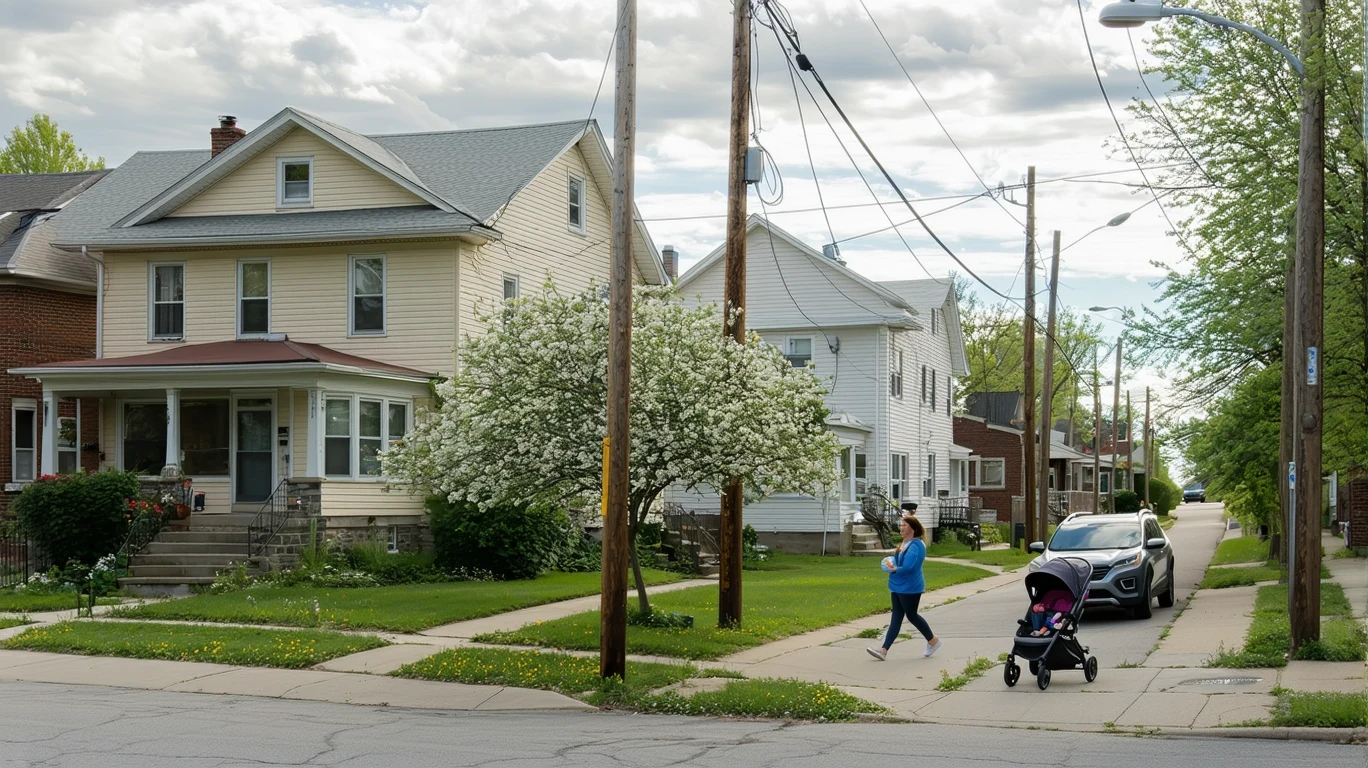
Both Reynoldsburg and Columbus operate under identical utility rate structures: 17.59¢/kWh for electricity and $11.25/MCF for natural gas. The rates are the same, but the exposure differs based on housing age, building form, and household size. Reynoldsburg’s newer, low-rise suburban housing stock generally features better insulation, modern HVAC systems, and energy-efficient windows. This reduces baseline heating and cooling volatility, especially during Ohio’s cold winters and warm, humid summers. Columbus, with its mixed building heights and older housing stock in many walkable neighborhoods, introduces more variability. Older homes with single-pane windows, uninsulated attics, or aging furnaces can see sharply higher natural gas usage during extended heating seasons.
Seasonality drives utility exposure in both cities. Winter heating dominates natural gas bills from November through March, while summer cooling spikes electricity usage from June through August. Reynoldsburg households in single-family homes with larger square footage face higher absolute usage, but predictable efficiency. Columbus households in older multi-family buildings or row homes may see lower absolute usage due to smaller footprints, but higher per-square-foot costs if insulation is poor. Apartments in both cities benefit from shared walls and reduced heating/cooling surface area, but renters should verify whether utilities are included or billed separately — a common source of surprise cost pressure for first-time renters.
Household size amplifies these differences. A family of four in a 2,000-square-foot Reynoldsburg home will experience higher total utility costs than a single adult in a Columbus studio, but the predictability is greater due to newer construction. Conversely, a couple in an older Columbus duplex may face unpredictable winter spikes if the heating system is inefficient or the landlord delays maintenance. Home age matters more than city choice when evaluating utility risk. Households moving into older Columbus neighborhoods should budget for higher winter exposure and consider whether the landlord or homeowner has upgraded insulation, windows, or HVAC in the past decade.
Utility takeaway: Reynoldsburg households experience more predictable utility costs due to newer housing stock, with higher absolute usage offset by efficiency. Columbus households face more volatility, especially in older buildings, but smaller footprints in walkable neighborhoods can reduce total exposure. Families in larger homes feel utility pressure more acutely in both cities, but the risk of surprise spikes is higher in Columbus. Renters should verify utility responsibility and ask about average bills before signing leases in either city.
Groceries and Daily Expenses
Both Reynoldsburg and Columbus show broadly accessible food and grocery infrastructure, with high food establishment density and high grocery density. The structural difference lies in how you access those options and what that access pattern does to your daily spending behavior. Reynoldsburg’s car-oriented layout means most grocery trips involve driving to big-box stores or regional chains, which encourages bulk buying and reduces per-unit costs but locks households into car dependency. Columbus, with its walkable pockets and mixed land use, offers more neighborhood-scale grocery options, corner stores, and food establishments within walking or biking distance. This increases convenience but can also increase spending frequency — grabbing takeout, stopping for coffee, or picking up small grocery runs multiple times per week instead of one large trip.
Price sensitivity plays out differently depending on household size and shopping habits. Single adults in Columbus may find it easier to walk to a grocery store or grab prepared food without firing up a car, which reduces transportation friction but can lead to higher per-meal costs if convenience spending creeps in. Couples in Reynoldsburg benefit from big-box access and the ability to stock up on staples, but every grocery trip requires a car, and the lack of walkable food options means eating out involves deliberate planning rather than spontaneous stops. Families managing larger grocery volumes will find Reynoldsburg’s big-box access more efficient for bulk staples like rice, bread, and milk, but Columbus families in walkable neighborhoods can reduce car trips and integrate errands into daily routines, which lowers transportation costs even if per-item grocery prices feel similar.
The real cost difference isn’t in the price of bread or eggs — it’s in the friction of accessing them. Reynoldsburg households pay for groceries with car trips, time, and gas. Columbus households in walkable areas pay with higher convenience spending and smaller, more frequent purchases. Discount grocery access exists in both cities, but Reynoldsburg’s layout favors households who can plan ahead and buy in bulk, while Columbus rewards households who can walk or bike to neighborhood stores and avoid the temptation of frequent takeout.
Grocery takeaway: Reynoldsburg fits households who prefer bulk shopping, have storage space, and can absorb the transportation cost of car-dependent errands. Columbus fits households who value walkable access and can manage convenience spending discipline. Families feel grocery pressure more acutely in Columbus if they rely on frequent small trips instead of planned bulk runs. Singles and couples in Columbus gain flexibility but must guard against lifestyle creep from easy access to prepared food and dining options.
Taxes and Fees
Property taxes, sales taxes, and local fees in Reynoldsburg and Columbus follow similar regional structures, but the predictability and distribution of those costs differ based on housing type and length of ownership. Both cities rely on property taxes to fund schools, infrastructure, and public services, but Reynoldsburg’s newer suburban housing stock often comes with HOA fees that bundle services like landscaping, trash collection, and sometimes water or sewer. Columbus, with its older housing stock and mixed land use, sees fewer HOA fees but more variability in special assessments, deferred maintenance costs, and city-specific fees for parking permits or waste management in denser neighborhoods.
For homeowners, property tax exposure depends on assessed home value and local millage rates. Reynoldsburg’s slightly higher median home value ($217,200 vs $212,500) translates to marginally higher property tax bills, but the difference is minimal. The bigger distinction is whether your home sits in an HOA community. HOA fees in Reynoldsburg can range from modest ($50–$100/month) to substantial ($200+/month) depending on amenities and services included. These fees are predictable but non-negotiable, and they persist regardless of whether you use the amenities. Columbus homeowners in older neighborhoods typically avoid HOA fees but face higher risk of special assessments for street repairs, sewer line upgrades, or other infrastructure projects that hit homeowners in concentrated bursts rather than steady monthly fees.
For renters, tax and fee exposure is indirect but still relevant. Landlords in both cities pass property tax increases and HOA fees through to tenants via rent adjustments, but the timing and transparency vary. Reynoldsburg renters in HOA communities may see more stable rent increases because landlords can predict their own costs. Columbus renters in older buildings may face sharper rent jumps if the landlord gets hit with a special assessment or deferred maintenance bill. Sales taxes affect both cities equally, but car-dependent Reynoldsburg households may feel the cumulative impact more acutely due to higher transportation spending volume.
Taxes and fees takeaway: Reynoldsburg homeowners face predictable HOA fees in many neighborhoods, which increases ongoing costs but reduces surprise expenses. Columbus homeowners avoid HOA fees but carry higher risk of special assessments and deferred maintenance costs in older housing stock. Renters in both cities should ask about recent rent increases and whether the landlord has flagged upcoming property tax or fee changes. Long-term residents in Reynoldsburg benefit from predictable fee structures, while Columbus residents gain flexibility but must budget for variability.
Transportation & Commute Reality
Gas prices sit at $3.91/gallon in both Reynoldsburg and Columbus, but the transportation cost experience diverges sharply based on urban form and infrastructure. Reynoldsburg’s mixed mobility texture (medium pedestrian-to-road ratio, low bike-to-road ratio) and bus-only transit mean most households depend on cars for daily errands, commuting, and healthcare access. Columbus, with its walkable pockets (high pedestrian-to-road ratio), notable bike infrastructure (high bike-to-road ratio), and bus service, offers more flexibility for households willing to reduce car dependence.
Reynoldsburg households should assume car ownership is non-negotiable. Grocery stores, pharmacies, schools, and healthcare facilities are spread across suburban corridors designed for driving. Even short trips require a car, which means households pay not just for gas but for insurance, maintenance, parking, and the time cost of navigating suburban traffic patterns. Families with multiple drivers face compounded pressure: two cars, two insurance policies, two maintenance schedules. Columbus households in walkable neighborhoods can reduce or eliminate one car if they live near bus routes, bike lanes, or mixed-use corridors. The time cost of commuting may feel similar in both cities, but Columbus offers the option to bike commute or walk to errands, which lowers ongoing transportation expenses even if housing costs in those walkable areas run higher.
Commute patterns matter more than commute distance in this comparison. Reynoldsburg households commuting to Columbus for work face suburban-to-urban drives that concentrate cost pressure in gas, parking fees, and vehicle wear. Columbus households working downtown or in walkable employment centers can bike, bus, or walk, which shifts cost pressure away from transportation and toward housing competition in accessible neighborhoods. Households working remotely or with flexible schedules will find Reynoldsburg’s car-dependent layout less burdensome, but those commuting daily to urban job centers should factor in the cumulative cost of driving as a primary household expense.
Cost Structure Comparison
Housing pressure in Reynoldsburg and Columbus starts at nearly identical entry points — median home values within $5,000, median rents within $11/month — but the ongoing cost behavior diverges based on what that housing buys. Reynoldsburg delivers space, newer construction, and suburban predictability, which lowers utility volatility and maintenance risk but locks households into car dependency. Columbus offers walkable pockets, mixed land use, and proximity to healthcare and parks, which reduces transportation costs but introduces more variability in utility exposure due to older housing stock. Families prioritizing square footage and newer builds will find Reynoldsburg’s housing market straightforward; families prioritizing school density, playground access, and walkability will find Columbus delivers stronger infrastructure despite older building stock.
Utilities introduce more volatility in Columbus, especially for households in older buildings with poor insulation or aging HVAC systems. Reynoldsburg’s newer suburban homes offer predictable energy costs, but larger footprints mean higher absolute usage. The tradeoff is clear: Reynoldsburg households pay for efficiency and predictability, Columbus households pay for variability but gain smaller footprints in walkable areas. Families with young children or multiple occupants feel utility pressure more acutely in both cities, but the risk of surprise winter heating spikes is higher in Columbus.
Transportation patterns create the sharpest cost structure difference. Reynoldsburg households must budget for car ownership as a primary expense — gas, insurance, maintenance, and time. Columbus households in walkable neighborhoods can reduce or eliminate one car, which shifts cost pressure away from transportation and toward housing competition in accessible areas. Singles and couples gain the most flexibility in Columbus; families with multiple drivers face compounded transportation costs in Reynoldsburg. The decision isn’t about which city costs less — it’s about whether your household can function with fewer cars and whether you’re willing to trade suburban space for urban access.
Daily living and grocery costs show similar price levels in both cities, but the access friction differs. Reynoldsburg rewards bulk shopping and planned trips, which lowers per-unit costs but requires car trips. Columbus rewards walkable errands and neighborhood access, which increases convenience but can lead to higher spending frequency. Families managing large grocery volumes will find Reynoldsburg more efficient; singles and couples in Columbus gain flexibility but must guard against convenience spending creep.
The better choice depends on which costs dominate your household. Households sensitive to transportation dependence and healthcare access friction may prefer Columbus. Households sensitive to housing age, utility volatility, and walkability tradeoffs may prefer Reynoldsburg. For car-dependent families prioritizing space and predictability, the difference is less about price and more about where cost pressure concentrates — and whether your household can absorb transportation costs or housing competition in walkable neighborhoods.
How the Same Income Feels in Reynoldsburg vs Columbus
Single Adult
In Reynoldsburg, car ownership becomes non-negotiable first, which means insurance, gas, and maintenance lock in before discretionary spending opens up. Flexibility exists in housing size — you can rent a larger apartment or small house for similar cost — but every errand requires driving, which adds time cost even when gas prices feel manageable. In Columbus, housing competition in walkable neighborhoods tightens first, but transportation flexibility opens up if you can bike commute or rely on bus service, which frees up cash flow for other priorities. The tradeoff is smaller living space versus lower transportation burden.
Dual-Income Couple
In Reynoldsburg, two cars become the default assumption unless both partners work from home or carpool, which doubles transportation exposure before groceries or utilities enter the equation. Predictability improves because housing stock is newer and utility costs are stable, but the lack of walkable healthcare access means even routine appointments require planning and driving. In Columbus, one car may suffice if both partners work near transit or bike routes, which reduces ongoing transportation costs but increases pressure to secure housing in walkable areas where competition drives rent or purchase prices higher. Time cost shifts from commuting to navigating older building maintenance and utility variability.
Family with Kids
In Reynoldsburg, space and newer construction become non-negotiable first, which means families lock into suburban housing costs and car dependency before evaluating school or playground access. Flexibility disappears quickly because every activity — school drop-off, grocery runs, pediatric appointments — requires driving, and the lack of hospital or clinic presence means healthcare trips involve longer distances. In Columbus, school density and playground access improve (medium school density, medium playground density), and integrated park access reduces the need for long drives to recreation, but older housing stock increases utility exposure and maintenance unpredictability. The tradeoff is front-loaded housing competition in walkable family neighborhoods versus ongoing transportation and healthcare access friction in Reynoldsburg.
Decision Matrix: Which City Fits Which Household?
| Decision factor | If you’re sensitive to this… | Reynoldsburg tends to fit when… | Columbus tends to fit when… |
|---|---|---|---|
| Housing entry + space needs | You prioritize square footage, newer construction, and predictable maintenance costs | You value suburban form, larger homes, and lower utility volatility from modern builds | You prioritize walkability, mixed land use, and proximity to parks/schools over square footage |
| Transportation dependence + commute friction | You want to reduce or eliminate car ownership, or you commute to urban job centers | You work remotely, carpool, or accept car dependency as baseline household cost | You can bike commute, rely on bus service, or live near walkable employment centers |
| Utility variability + home size exposure | You want predictable energy costs and efficient heating/cooling in newer builds | You prioritize modern HVAC, insulation, and lower risk of winter heating spikes | You accept older housing stock variability in exchange for smaller footprints and walkable access |
| Grocery strategy + convenience spending creep | You prefer bulk shopping, planned trips, and big-box access over walkable errands | You have storage space, plan ahead, and can absorb car trips for grocery runs | You value walkable grocery access and can manage discipline around frequent small purchases |
| Fees + friction costs (HOA, services, upkeep) | You want predictable monthly fees or prefer to avoid HOA structures entirely | You accept HOA fees for bundled services and predictable cost structure | You prefer avoiding HOA fees but can budget for special assessments and deferred maintenance |
| Time budget (schedule flexibility, errands, logistics) | You want to reduce time spent driving or consolidate errands into walkable routines | You have flexible schedules, work from home, or don’t mind car-dependent errand patterns | You value walkable errands, bike commuting, and reducing time spent in a car daily |
Lifestyle Fit
Reynoldsburg and Columbus offer distinct lifestyle textures that extend beyond housing and transportation into how households experience recreation, healthcare access, and daily routines. Reynoldsburg’s low-rise suburban form and moderate park density (medium band) create a family-oriented environment where outdoor space exists but requires driving to access. Playgrounds meet density thresholds, but school infrastructure sits below typical suburban levels, which may push families toward private extracurriculars or longer drives to specialized programs. The lack of hospital or clinic presence means routine healthcare requires travel to Columbus or nearby medical hubs, which adds time cost and planning friction for families with young children or aging parents.
Columbus, by contrast, integrates parks at high density, with water features present and walkable access throughout many neighborhoods. The city’s mixed building heights and walkable pockets support spontaneous recreation — walking to a park, biking to a playground, or accessing green space without a car. Hospital presence and pharmacy access reduce healthcare friction, which matters acutely for families managing chronic conditions, routine pediatric care, or emergency medical needs. The city’s notable bike infrastructure (high bike-to-road ratio) and strong family infrastructure (medium school density, medium playground density) create a lifestyle where errands, recreation, and healthcare can fold into daily routines rather than requiring dedicated car trips.
For households prioritizing outdoor recreation and spontaneous access to green space, Columbus delivers integrated park systems and water features that reduce the need for weekend drives to regional parks. For households prioritizing suburban predictability, newer housing stock, and separation from urban density, Reynoldsburg offers a quieter, car-oriented lifestyle where space and privacy take precedence over walkability. The cultural and recreational tradeoff is clear: Reynoldsburg fits households who plan their recreation and accept driving as the default mode, while Columbus fits households who value spontaneous access and can navigate urban density.
Reynoldsburg median household income: $68,778/year — higher than Columbus, reflecting suburban household composition and dual-income prevalence. Columbus unemployment rate: 4.0% — stable labor market with diverse employment sectors across healthcare, education, and government.
How this article was built: In addition to public economic data, this article incorporates location-based experiential signals derived from anonymized geographic patterns—such as access density, walkability, and land-use mix—to reflect how day-to-day living actually feels in Reynoldsburg, OH.
FAQ
Is Reynoldsburg or Columbus cheaper for families in 2026?
Neither city is universally cheaper — the cost structure depends on which expenses dominate your household. Reynoldsburg offers slightly higher median home values ($217,200 vs $212,500) but newer housing stock with lower utility volatility. Columbus delivers stronger school and playground density, hospital presence, and walkable infrastructure, which reduces transportation costs but introduces more housing competition in accessible neighborhoods. Families prioritizing space and suburban predictability will find Reynoldsburg fits better; families prioritizing walkability, healthcare access, and park integration will find Columbus reduces ongoing transportation and access friction.
How does transportation cost differ between Reynoldsburg and Columbus in 2026?
Gas prices are identical ($3.91/gallon), but transportation dependence differs sharply. Reynoldsburg’s car-oriented layout and limited bike infrastructure mean most households need at least one car, and families often require two. Columbus offers walkable pockets, notable bike infrastructure, and bus service, which allows some households to reduce or eliminate one car. The cost difference isn’t in gas prices — it’s in whether your household can function with fewer vehicles, lower insurance costs, and reduced maintenance expenses.
Which city has better access to groceries and daily errands in 2026?
Both Reynoldsburg and Columbus show broadly accessible food and grocery infrastructure with high density. The difference is how you access those options. Reynoldsburg rewards bulk shopping at big-box stores, which requires car trips but lowers per-unit costs. Columbus offers walkable grocery access in many neighborhoods, which reduces transportation friction but can increase convenience spending if you make frequent small trips. Families managing large grocery volumes will find Reynoldsburg more efficient; singles and couples in Columbus gain flexibility but must guard against lifestyle creep.
Does Reynoldsburg or Columbus have lower utility costs in 2026?
Both cities operate under identical utility rates (17.59¢/kWh electricity, $11.25/MCF natural gas), but exposure differs. Reynoldsburg’s newer, low-rise housing stock offers better insulation and more predictable energy costs, though larger homes mean higher absolute usage. Columbus households in older buildings face more volatility, especially during winter heating months, but smaller footprints in walkable areas can reduce total exposure. Families in larger homes feel utility pressure more acutely in both cities, but the risk of surprise spikes is higher in Columbus due to older housing stock.
Which city is better for reducing car dependence in 2026?
Columbus offers substantially better infrastructure for reducing car dependence. Walkable pockets with high pedestrian-to-road ratios, notable bike infrastructure with high bike-to-road ratios, and bus service create viable alternatives to driving for daily errands, commuting, and recreation. Reynoldsburg’s mixed mobility texture and low bike-to-road ratio mean car ownership is effectively non-negotiable for most households. Singles and couples in Columbus gain the most flexibility; families in Reynoldsburg should budget for at least one car, and often two, as a primary household expense.
Conclusion
Reynoldsburg and Columbus present nearly identical housing entry costs but radically different cost structures once you account for transportation dependence, healthcare access, and urban form. Reynoldsburg fits households prioritizing suburban space, newer construction, and predictable utility costs, with the tradeoff being car dependency and limited walkability. Columbus fits households willing to navigate older housing stock and tighter competition in walkable neighborhoods in exchange for reduced transportation costs, hospital presence, and integrated park access. The decision hinges on whether your household can function with fewer cars, how much you value healthcare proximity, and whether suburban predictability or urban flexibility aligns with your daily routines.
For families with young children, Columbus delivers stronger school density, playground access, and park integration, which reduces the need for long drives to recreation and extracurriculars. For families prioritizing space and newer builds, Reynoldsburg offers lower maintenance risk and stable utility costs but requires budgeting for transportation as a primary expense. Singles and couples gain the most flexibility in Columbus, where walkable neighborhoods and bike infrastructure reduce car dependence, while Reynoldsburg rewards households who prefer bulk shopping, planned errands, and suburban separation from urban density. Neither city is universally cheaper — the better choice depends on where your household’s non-negotiable expenses land and which cost pressures you’re equipped to manage in 2026.