
Sarah catches the 7:42 a.m. bus from the stop near her apartment complex on the west side of Zionsville, riding into Indianapolis for her job downtown. The route works because she lives near one of the corridors where service runs regularly, and her workplace sits within walking distance of a central stop. For her, public transit in Zionsville isn’t a compromise—it’s a practical choice that eliminates parking costs and commute stress. But she’s also aware that most of her neighbors drive. The bus works for her specific combination of home location, work destination, and schedule flexibility. It doesn’t work for everyone.
How People Get Around Zionsville
Transportation options in Zionsville reflect the town’s suburban layout and proximity to Indianapolis. Most residents rely on personal vehicles for daily mobility, but the picture isn’t uniform. Zionsville has pockets where walking feels natural—sidewalks connect homes to parks, and some neighborhoods offer pedestrian infrastructure that makes short trips on foot feasible. Bike lanes and paths are notably present, giving cyclists real options for recreation and, in some cases, errands.
What newcomers often misunderstand is that these walkable and bikeable areas don’t eliminate the need for a car. They reduce it for certain trips, in certain neighborhoods. The town’s development pattern means that while you might walk to a nearby park or bike to a café in one of the commercial corridors, you’ll still drive for groceries, medical appointments, or anything outside your immediate area. The infrastructure supports multiple modes of transportation, but the car remains the backbone of daily life for most households.
Zionsville’s layout—a mix of residential neighborhoods, corridor-clustered commercial areas, and green space—means that mobility depends heavily on where you live and what you need to do. Residents near the town’s core or along key corridors experience a different transportation reality than those in outer subdivisions. That variation shapes how people think about commuting, errands, and the role of public transit.
Public Transit Availability in Zionsville
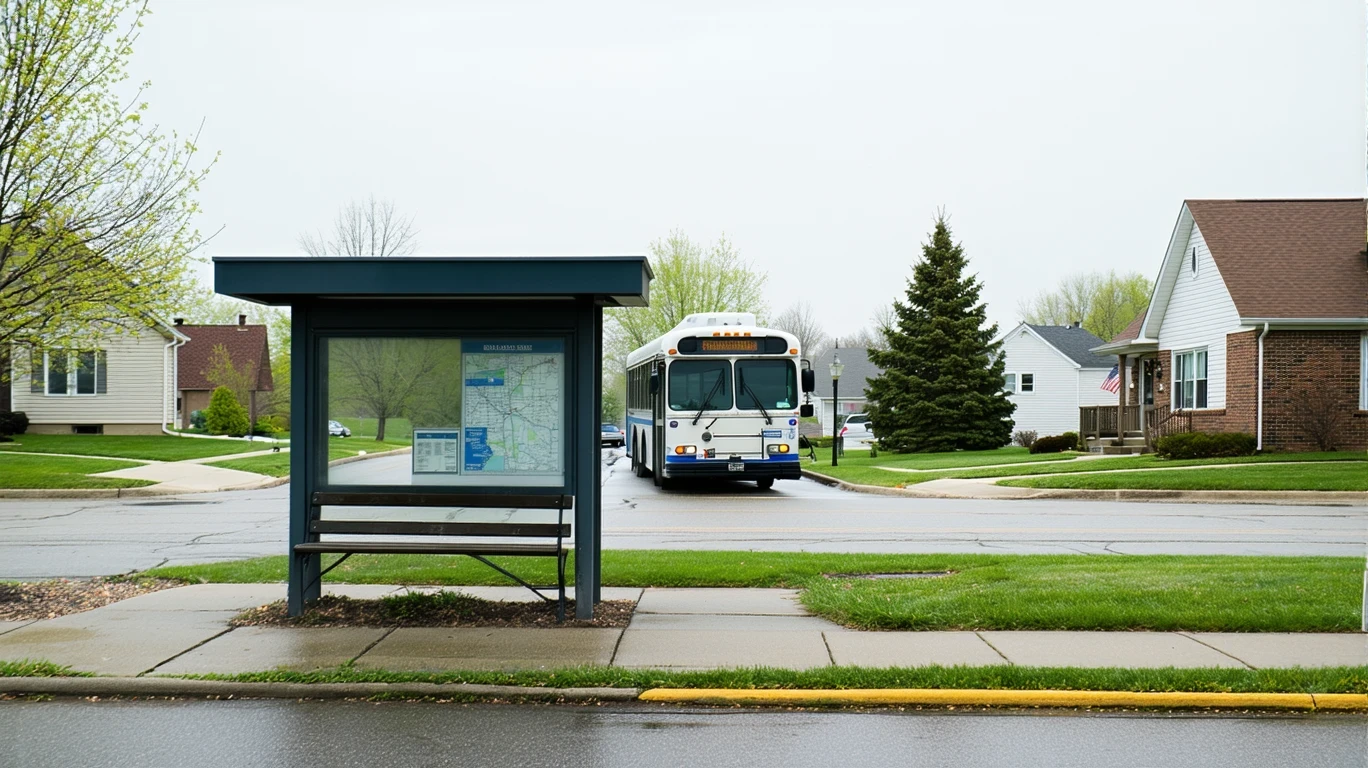
Public transit in Zionsville centers around bus service, often connecting residents to Indianapolis and other parts of the metro area. Systems such as IndyGo provide routes that serve specific corridors, linking Zionsville to employment centers, healthcare facilities, and regional destinations. Transit works best for residents who live near these routes and whose daily destinations align with the coverage area.
Where transit tends to fall short is in outer neighborhoods, off-peak hours, and trips that require multiple transfers or don’t follow a direct corridor. If your home, workplace, and daily errands all sit within well-served zones, transit can be a viable primary mode. If any one of those falls outside the network, you’ll likely need a car to fill the gaps. Coverage isn’t blanket—it’s targeted, and that targeting determines who benefits.
For households without cars, or those trying to minimize driving, understanding the specific routes and their reach is essential. Transit in Zionsville isn’t absent, but it’s also not comprehensive. It serves a role, particularly for commuters heading into Indianapolis, but it doesn’t replace the flexibility and reach of personal vehicles for most residents.
Driving & Car Dependence Reality
Driving is necessary for daily life in Zionsville for the majority of households. The town’s suburban form—residential areas separated from commercial districts, schools spread across different zones, healthcare and services dispersed—means that even with walkable pockets and bike paths, most errands and obligations require a car. Parking is generally available and free, which removes one friction point common in denser cities, but it also reinforces car dependence by making driving the easiest option.
Sprawl isn’t extreme here, but it’s present enough that multi-stop trips—picking up kids, stopping for groceries, running to the pharmacy—become difficult without a vehicle. Commute flexibility also depends on car access. If your work hours shift, or you need to make an unplanned trip, transit schedules and coverage limits become constraints. A car offers control over timing and routing that transit can’t match in this environment.
For families, especially those with children in activities or multiple schools, car dependence intensifies. School density in Zionsville is below typical thresholds, meaning that even within the town, getting kids to and from school often involves driving. Playground and recreational infrastructure is similarly spread out, adding to the transportation load. The tradeoff is space, quiet, and access to green areas—but it comes with the expectation that you’ll drive to reach most of what you need.
Commuting Patterns & Daily Mobility
Commuting in Zionsville typically involves either a drive into Indianapolis or a local trip within the metro area. For those working downtown or in other parts of the city, the commute can be structured around a single destination, which makes transit more feasible if routes align. For others, especially those with jobs in dispersed office parks or industrial areas, driving is the only practical option.
Daily mobility isn’t just about the commute to work. It’s about how people structure their days—dropping off kids, picking up groceries, getting to the gym, meeting friends. In Zionsville, those trips are often spread across different parts of town or into neighboring areas. Proximity to some amenities helps, particularly for residents near the commercial corridors where food and grocery options cluster, but it doesn’t eliminate the need to drive for other errands.
Who benefits from proximity? Renters and owners in the walkable pockets, near bus routes, and close to the corridor-clustered commercial areas. They can walk or bike for some needs and use transit for others. Who absorbs commute friction? Households in outer neighborhoods, those with non-standard work hours, and anyone whose daily routine involves multiple stops across different zones. For them, the car isn’t optional—it’s the only way to manage the logistics of daily life.
Who Transit Works For — and Who It Doesn’t
Transit works for a specific subset of Zionsville residents: those who live near bus routes, work in areas well-served by transit (often downtown Indianapolis), and whose daily needs align with the coverage area. It also works for individuals or couples without children, whose schedules are predictable and whose errands can be batched or handled on foot within walkable pockets.
It doesn’t work well for families with school-age children, given the limited school density and the need to coordinate multiple drop-offs and pickups. It’s also a poor fit for anyone whose job requires a car—sales reps, contractors, home health aides—or whose work hours fall outside peak service times. Peripheral neighborhoods, farther from the core and the main corridors, see little to no transit benefit. For those residents, the conversation about public transit is largely theoretical.
Renters in apartment complexes near transit stops have the best shot at making it work, especially if they’re commuting to a single destination and can handle errands on foot or by bike. Owners in detached homes, particularly those with yards and garages, are more likely to default to driving simply because the infrastructure and lifestyle assume car access. The fit isn’t about preference—it’s about how daily logistics line up with available transportation options.
Transportation Tradeoffs in Zionsville
Choosing between transit and driving in Zionsville comes down to predictability, control, flexibility, and exposure. Transit offers predictability in cost—no fuel price swings, no maintenance surprises—but it limits flexibility. You’re bound to the schedule, the route, and the coverage area. Driving offers control and flexibility but exposes you to fuel costs (currently $3.78 per gallon in Zionsville), maintenance, insurance, and the unpredictability of traffic and parking in busier areas.
For someone like Sarah, the bus removes the stress of driving and the cost of parking downtown. For a family with two working parents and kids in activities, driving is the only way to manage the complexity of overlapping schedules and dispersed destinations. Neither choice is universally better—it depends on household structure, work location, and how much friction you’re willing to absorb in exchange for cost savings or convenience.
Biking adds a middle option for some residents. With notable bike infrastructure, it’s possible to handle certain errands or recreational trips without a car. But biking doesn’t replace driving for most households—it supplements it. The tradeoff is time and weather exposure versus fuel savings and exercise. For short trips in good weather, it’s a real alternative. For longer distances, bad weather, or trips involving cargo (groceries, kids), it’s not.
FAQs About Transportation in Zionsville (2026)
Is public transit usable for daily commuting in Zionsville?
Yes, for residents who live near bus routes and work in areas well-served by transit, typically in Indianapolis. It’s less viable for those in outer neighborhoods, with non-standard hours, or whose jobs require a car.
Do most people in Zionsville rely on a car?
Yes. The town’s suburban layout, dispersed services, and limited transit coverage mean that most households depend on personal vehicles for daily mobility, even in areas with walkable pockets or bike infrastructure.
Which areas of Zionsville are easiest to live in without a car?
Neighborhoods near bus routes and commercial corridors, where walking and biking can handle some errands and transit can cover commutes. Outer subdivisions and areas farther from the core require a car for nearly all trips.
How does commuting in Zionsville compare to nearby cities?
Zionsville offers a quieter, less congested commute than denser parts of Indianapolis, but with more car dependence than urban neighborhoods with extensive transit. The tradeoff is space and calm versus transportation flexibility.
Can you bike for errands in Zionsville?
In some areas, yes. Bike infrastructure is notably present, and certain corridors support biking for errands or recreation. But biking doesn’t replace a car for most households—it supplements it for specific trips in favorable conditions.
How Transportation Fits Into the Cost of Living in Zionsville
Transportation isn’t just a line item—it’s a structural factor that shapes housing choice, time, and flexibility. Living near transit or in a walkable pocket might allow you to reduce or eliminate car ownership, which affects not just fuel costs but also insurance, maintenance, and parking. Living farther out, or with a household structure that requires a car, means absorbing those costs as part of the baseline.
The interaction between housing and transportation is direct. A cheaper rent in an outer neighborhood might come with higher transportation costs and more time spent commuting. A higher rent near the core or a bus route might reduce or eliminate those costs, depending on your work location and daily needs. What a budget has to handle in Zionsville includes not just the dollar cost of getting around, but the time cost, the flexibility cost, and the exposure to volatility in fuel prices and vehicle expenses.
For newcomers, the key is to map your actual daily routine—where you’ll work, where your kids will go to school, where you’ll shop and spend time—and then assess which transportation modes can realistically handle that routine. Transit works for some. Driving works for most. Biking works for certain trips. The goal isn’t to force a fit, but to understand what your specific situation requires and what that means for both cost and lifestyle in Zionsville.
How this article was built: In addition to public economic data, this article incorporates location-based experiential signals derived from anonymized geographic patterns—such as access density, walkability, and land-use mix—to reflect how day-to-day living actually feels in Zionsville, IN.