
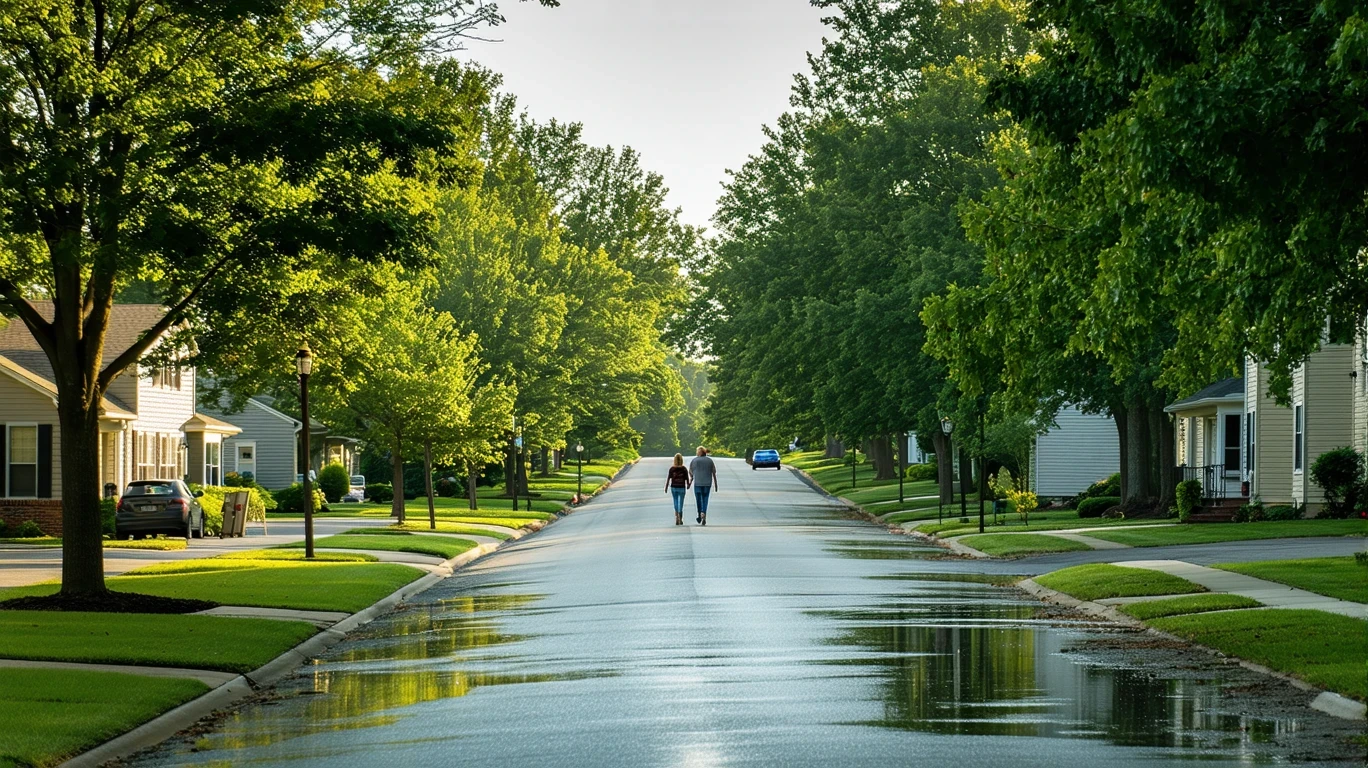
Zionsville and Greenwood sit within the same Indianapolis metro area, share similar access to regional employment hubs, and both offer suburban living with parks, hospitals, and bus service. Yet the cost structure in each city creates fundamentally different financial experiences for households in 2026. The decision between them isn’t about which is “cheaper overall”—it’s about where cost pressure concentrates, how predictable expenses remain, and which household type feels the difference most acutely.
Both cities feature walkable pockets, integrated green space, and mixed land use, but Zionsville commands a significantly higher housing entry point while Greenwood introduces more commute friction for many workers. Families, couples, and single adults each face distinct tradeoffs depending on whether they prioritize lower upfront housing costs, shorter commutes, or access to cycling infrastructure and lower regional price exposure. Understanding how these structural differences shape day-to-day financial pressure—not just headline affordability—is what makes the comparison decision-relevant.
This article explains where costs show up differently in Zionsville and Greenwood, how the same income feels different in each city, and which households are better positioned to manage the dominant cost drivers in 2026.
Housing Costs
Housing is where the structural difference between Zionsville and Greenwood becomes most visible. Zionsville’s median home value sits at $493,900, while Greenwood’s is $226,500—a gap that shapes not just monthly obligations but also the type of household that can access ownership in each city. Renters face a similar pattern: Zionsville’s median gross rent is $1,536 per month compared to Greenwood’s $1,200 per month. These aren’t small variations—they represent fundamentally different entry barriers and ongoing cost exposure.
For renters, the difference shows up immediately in lease-signing requirements and monthly cash flow. Zionsville’s higher rent typically reflects newer construction, proximity to highly rated school districts, and neighborhoods with established cycling infrastructure and walkable access to parks. Greenwood’s lower rent often corresponds to a broader mix of housing stock, including older single-family rentals and apartment complexes near commercial corridors. Renters in Zionsville face higher upfront costs (deposits, first month’s rent) and less flexibility to absorb rent increases, while Greenwood renters gain breathing room in monthly budgets but may encounter longer commutes or less pedestrian-friendly surroundings depending on neighborhood.
Homeownership amplifies these differences. Zionsville’s higher home values require larger down payments, higher monthly mortgage obligations, and greater exposure to property tax assessments tied to home value. Buyers in Zionsville are typically dual-income households or high earners who prioritize access to green space, low regional price parity, and established neighborhoods with mixed land use. Greenwood’s lower home values make ownership accessible to moderate-income families, first-time buyers, and single earners, but the tradeoff often includes older homes with higher heating and cooling exposure, less walkable street networks, and neighborhoods where car dependence is non-negotiable.
| Housing Type | Zionsville | Greenwood |
|---|---|---|
| Median Home Value | $493,900 | $226,500 |
| Median Gross Rent | $1,536/month | $1,200/month |
What these differences mean depends entirely on household composition and income stability. Single adults and young couples in Greenwood can access ownership or rental housing without stretching budgets to the breaking point, preserving flexibility for transportation costs, groceries, and discretionary spending. In Zionsville, the same households face a stark choice: commit a much larger share of income to housing in exchange for walkable pockets and integrated parks, or remain renters longer while building savings. Families with kids encounter limited school and playground density in both cities, so the housing cost difference becomes the dominant factor rather than family-specific amenities.
Housing takeaway: Zionsville’s housing costs create a high entry barrier that favors established, higher-income households prioritizing neighborhood quality and low regional price exposure. Greenwood’s lower housing costs favor first-time buyers, moderate earners, and households willing to trade walkability and cycling access for monthly budget flexibility. The pressure in Zionsville is front-loaded and ongoing; in Greenwood, it’s distributed across transportation and commute time instead.
Utilities and Energy Costs
Utility costs in Zionsville and Greenwood behave similarly in structure but differ in intensity depending on housing type and household habits. Zionsville’s electricity rate is 16.19¢/kWh, slightly higher than Greenwood’s 15.91¢/kWh, while natural gas prices are nearly identical: $10.03/MCF in Zionsville versus $10.25/MCF in Greenwood. These small rate differences matter less than the size, age, and efficiency of the home being heated or cooled, and the length of the heating season in central Indiana.
Both cities experience cold winters and warm summers, meaning households face dual seasonal peaks: heating costs dominate from November through March, while air conditioning drives bills higher from June through August. The difference in exposure comes down to housing stock. Zionsville’s higher median home value often reflects newer construction with better insulation, programmable thermostats, and energy-efficient windows, which dampen seasonal volatility. Greenwood’s lower home values frequently correspond to older single-family homes where heating and cooling systems work harder, windows leak more air, and baseline usage climbs during extreme weather.
Single adults and couples in apartments face more predictable utility costs in both cities, especially in newer multifamily buildings where shared walls reduce heating and cooling loads. Families in larger single-family homes—common in both Zionsville and Greenwood—experience much higher seasonal swings. A 2,500-square-foot home in Greenwood with older HVAC equipment can see utility bills spike during January cold snaps or July heat waves, while a similarly sized home in Zionsville with modern insulation and a high-efficiency furnace maintains steadier costs. The rate difference between cities is negligible; the home itself determines volatility.
Households in either city can reduce exposure through behavioral changes—adjusting thermostats during peak hours, using ceiling fans in summer, sealing windows in winter—but these strategies only go so far in older homes. Renters have less control over efficiency upgrades, meaning those in older Greenwood rentals may face higher seasonal bills despite lower rent. Homeowners in Zionsville who invest in insulation, smart thermostats, or high-efficiency HVAC systems gain long-term predictability, but those upgrades require upfront capital that not all households can deploy immediately.
Utility takeaway: Zionsville and Greenwood have nearly identical energy rates, so utility cost differences are driven by housing age, size, and efficiency rather than city-level pricing. Households in newer homes experience less seasonal volatility in both cities. Families in older single-family homes—more common in Greenwood’s lower-priced housing stock—face higher heating and cooling exposure, especially during extreme weather. Renters in older buildings have the least control and the most volatility, regardless of city.
Groceries and Daily Expenses
Grocery and daily spending pressure in Zionsville and Greenwood reflects differences in regional price parity, store access, and household habits rather than dramatic price gaps on individual items. Zionsville’s regional price parity index is 89, meaning goods and services cost less relative to the national baseline, while Greenwood’s index is 95, closer to national average pricing. This difference shows up subtly in grocery staples, prepared foods, and convenience spending, but it’s not the kind of gap that reshapes a household budget on its own.
Both cities feature corridor-clustered food and grocery access, meaning stores concentrate along commercial strips rather than spreading evenly across neighborhoods. Zionsville’s higher-income demographics support a mix of specialty grocers, organic markets, and prepared food options, while Greenwood’s grocery landscape skews toward big-box retailers, discount chains, and conventional supermarkets. Households prioritizing organic produce, specialty ingredients, or grab-and-go meals may find more options in Zionsville, but they’ll pay for that convenience. Greenwood’s grocery infrastructure favors bulk buying, weekly meal planning, and price-conscious shopping, which works well for families managing larger volumes but requires more time and logistical effort.
Dining out and convenience spending—coffee shops, takeout, quick lunches—introduce another layer of cost differentiation. Zionsville’s walkable pockets and mixed land use make it easier to grab coffee or pick up dinner without driving, but those options tend to price higher due to local demographics. Greenwood’s car-oriented layout means most errands require driving, which adds time friction but often leads to lower per-item costs at chain restaurants and fast-casual spots. Single adults and couples who eat out frequently may feel the price difference more in Zionsville, while families cooking at home in Greenwood benefit from lower grocery baseline costs and bulk-friendly store formats.
Price sensitivity varies by household size and income. Single adults in Zionsville with higher incomes may not notice the regional price parity difference, especially if they value walkable access to cafes and prepared foods. Families in Greenwood managing tight budgets feel every percentage point of savings at the grocery store, making the lower regional price parity and discount-focused retail landscape a meaningful advantage. Couples splitting costs in either city land somewhere in between, with flexibility to choose convenience or savings depending on weekly schedules and cooking habits.
Groceries takeaway: Zionsville’s lower regional price parity (89) theoretically reduces costs, but its higher-income retail mix and specialty store access often offset that advantage for convenience-focused households. Greenwood’s regional price parity (95) sits closer to national average, but its big-box grocery infrastructure and discount retail options favor families and price-conscious shoppers. Households that cook at home and buy in bulk feel less pressure in Greenwood; those prioritizing walkable access to prepared foods and specialty items may prefer Zionsville despite higher per-item costs.
Taxes and Fees
Property taxes, local fees, and recurring charges shape long-term cost exposure in both Zionsville and Greenwood, but the impact varies significantly depending on whether you rent or own, and how long you plan to stay. Indiana’s property tax structure relies heavily on assessed home values, meaning Zionsville homeowners face higher annual property tax bills due to the city’s median home value of $493,900 compared to Greenwood’s $226,500. This isn’t a small difference—it’s a structural cost that compounds every year and affects affordability for long-term residents more than recent movers.
Homeowners in Zionsville pay more in absolute property tax dollars, but they’re also more likely to live in neighborhoods with HOA fees that bundle services like landscaping, trash collection, and shared amenity maintenance. These fees add predictability—households know exactly what they’ll pay each month—but they also reduce flexibility. Greenwood homeowners encounter fewer HOA-governed neighborhoods, meaning lower recurring fees but more responsibility for individual property upkeep and service contracts. The tradeoff is between predictable bundled costs and pay-as-you-go flexibility.
Renters in both cities are indirectly affected by property taxes, as landlords factor those costs into lease pricing, but they avoid the direct exposure homeowners face. Greenwood renters benefit from lower baseline rent, which reflects lower property values and lower tax assessments, while Zionsville renters pay higher rent partly because landlords are covering higher property tax obligations. Local fees—trash collection, water, sewer—are often billed separately in both cities, adding another layer of recurring costs that renters and homeowners alike must manage.
Sales taxes in Indiana apply statewide, so there’s no city-level difference in consumption tax burden. However, households in Zionsville with higher incomes and more discretionary spending may feel less pressure from sales taxes on everyday purchases, while Greenwood households managing tighter budgets notice every percentage point on larger purchases like furniture, electronics, or home improvement supplies. The tax structure doesn’t favor one city over the other—it favors higher earners in both.
Taxes and fees takeaway: Zionsville homeowners face higher property tax exposure due to higher home values, and they’re more likely to encounter HOA fees that bundle services but reduce flexibility. Greenwood homeowners pay lower property taxes and fewer recurring fees, but they take on more individual responsibility for upkeep and services. Renters in both cities avoid direct property tax bills but pay indirectly through rent. Long-term homeowners in Zionsville face compounding tax obligations; those in Greenwood gain more cost predictability over time.
Transportation & Commute Reality
Transportation costs in Zionsville and Greenwood are shaped less by gas prices—which differ only slightly at $3.78/gal in Zionsville versus $3.47/gal in Greenwood—and more by commute patterns, car dependence, and the friction of getting to work, errands, and daily obligations. Greenwood residents face an average commute of 26 minutes, with 39.1% of workers enduring long commutes and only 6.1% working from home. Zionsville lacks comparable commute data in the available feed, but its higher median household income of $152,788 per year suggests a significant portion of residents either work remotely, commute to high-paying jobs in Indianapolis, or have flexible schedules that reduce daily travel friction.
Both cities offer bus service, but neither has rail transit, meaning most households rely on cars for daily mobility. Zionsville’s notable cycling infrastructure (bike-to-road ratio exceeds high thresholds) provides an alternative for short trips, errands, and recreational travel, reducing the need to drive for every task. Greenwood’s cycling infrastructure is present but limited to pockets, meaning most trips—groceries, school drop-offs, medical appointments—require a car. This difference doesn’t just affect gas spending; it shapes time budgets, schedule flexibility, and the mental load of coordinating household logistics.
For single adults, the commute difference matters most. A Greenwood resident commuting 26 minutes each way to Indianapolis spends nearly an hour daily in the car, plus gas, wear-and-tear, and parking costs. A Zionsville resident with a similar commute may offset some of that friction by working from home more frequently or choosing a job closer to home, though this depends entirely on industry and role. Families managing school schedules, after-school activities, and grocery runs feel the car dependence more acutely in Greenwood, where fewer walkable errands options mean every task requires planning, driving, and time.
Dual-income couples in either city face compounding transportation costs if both partners commute, but Greenwood’s longer average commute and higher percentage of long commuters suggest more households are spending significant time and money on transportation. Zionsville’s walkable pockets and cycling infrastructure allow some households to reduce car trips for errands, coffee, or short visits, though this benefit applies only to those living in the right neighborhoods. Car ownership, insurance, and maintenance costs remain non-negotiable in both cities, but the intensity of use—and the time cost of commuting—differs meaningfully.
Cost Structure Comparison
Housing dominates the cost experience in Zionsville, creating a high entry barrier that filters for higher-income households willing to commit significant monthly income to homeownership or rent in exchange for walkable pockets, integrated green space, and lower regional price exposure. Greenwood’s housing costs are substantially lower, making ownership and rental access feasible for moderate earners, but the tradeoff shows up in transportation: longer commutes, higher car dependence, and more time spent managing household logistics. The cities don’t differ dramatically in utilities, groceries, or taxes—they differ in where cost pressure concentrates and which households can absorb it.
Utilities introduce similar seasonal volatility in both cities, but Greenwood’s older housing stock amplifies heating and cooling exposure for families in single-family homes. Zionsville’s newer construction and higher home values often correlate with better insulation and energy efficiency, reducing seasonal bill swings. Groceries and daily spending reflect regional price parity differences (Zionsville at 89, Greenwood at 95), but the retail landscape matters more than the index: Zionsville’s specialty stores and walkable errands access suit convenience-focused households, while Greenwood’s big-box infrastructure favors bulk buyers and price-conscious planners.
Transportation patterns matter more in Greenwood, where 39.1% of workers face long commutes and car dependence is non-negotiable for most errands. Zionsville’s cycling infrastructure and walkable pockets reduce the need to drive for every task, but only for households living in neighborhoods with that access. Commute time, not gas price, drives the real cost difference—both in dollars and in time budget. Families managing school drop-offs, activities, and errands feel this friction more in Greenwood, where fewer tasks can be accomplished on foot or by bike.
For households sensitive to housing entry costs, Greenwood offers a clear path to ownership or rental access without stretching income to the breaking point. For those prioritizing walkability, green space, and lower regional price parity, Zionsville fits better—but only if income supports the higher housing obligation. The decision is less about which city is “cheaper” and more about which cost structure aligns with how a household earns, spends, and manages time. Households that value predictable housing costs and can absorb commute friction may prefer Greenwood; those willing to pay more upfront for reduced car dependence and walkable access may find Zionsville worth the premium.
How the Same Income Feels in Zionsville vs Greenwood
Single Adult
For a single adult, housing becomes the first non-negotiable cost, and the difference between Zionsville and Greenwood determines how much flexibility remains for everything else. In Greenwood, lower rent or mortgage payments leave room for discretionary spending, savings, or absorbing unexpected expenses like car repairs or medical bills. In Zionsville, housing consumes a much larger share of income, meaning less cushion for variability and more pressure to maintain stable earnings. Commute friction in Greenwood adds time cost and mental load, especially for those working long hours or managing irregular schedules. Zionsville’s walkable pockets reduce the need to drive for every errand, but only if the neighborhood supports it—and accessing those neighborhoods requires paying the higher housing premium.
Dual-Income Couple
Dual-income couples face compounding transportation costs if both partners commute, and Greenwood’s longer average commute means more time spent in cars and more exposure to gas price volatility. Housing costs in Greenwood remain manageable, preserving flexibility for dining out, travel, or building savings. In Zionsville, higher housing costs require both incomes to stay stable, but the tradeoff includes walkable access to parks, cycling infrastructure, and less car dependence for errands. Flexibility disappears faster in Zionsville if one income drops or if unexpected costs arise, while Greenwood couples gain breathing room in monthly budgets but sacrifice time to commuting and car-dependent logistics.
Family with Kids
Families encounter limited school and playground density in both cities, so the decision hinges on housing affordability and transportation friction rather than family-specific amenities. In Greenwood, lower housing costs make ownership accessible, but families spend more time driving kids to activities, managing errands, and coordinating schedules around car availability. In Zionsville, higher housing costs dominate the budget, but integrated green space and walkable pockets reduce some logistical friction—though only for families who can afford to live in those neighborhoods. Predictability matters more for families managing multiple cost streams, and Greenwood offers more budget flexibility while Zionsville demands higher, more rigid housing commitments with less room for error.
Decision Matrix: Which City Fits Which Household?
| Decision factor | If you’re sensitive to this… | Zionsville tends to fit when… | Greenwood tends to fit when… |
|---|---|---|---|
| Housing entry + space needs | You need to control upfront costs and preserve monthly flexibility | You can commit a large share of income to housing in exchange for walkable access and lower regional price exposure | You prioritize lower entry barriers and monthly housing costs over neighborhood walkability |
| Transportation dependence + commute friction | You value time budget and want to reduce car dependence for errands | You live in a neighborhood with cycling infrastructure and walkable pockets that reduce driving frequency | You can absorb longer commutes and car-dependent logistics in exchange for lower housing costs |
| Utility variability + home size exposure | You want predictable seasonal bills and less volatility during extreme weather | You buy or rent newer construction with better insulation and energy-efficient systems | You accept higher seasonal swings in older homes and manage exposure through behavioral adjustments |
| Grocery strategy + convenience spending creep | You want walkable access to prepared foods and specialty stores without driving | You value convenience and can absorb higher per-item costs at specialty grocers and cafes | You cook at home, buy in bulk, and prioritize discount retail access over walkable errands |
| Fees + friction costs (HOA, services, upkeep) | You want predictable bundled costs and less responsibility for individual service contracts | You accept HOA fees in exchange for predictable landscaping, trash, and amenity maintenance | You prefer pay-as-you-go flexibility and take on individual responsibility for property upkeep |
| Time budget (schedule flexibility, errands, logistics) | You need to minimize time spent coordinating household tasks and commuting | You live in walkable pockets where errands, parks, and services are accessible without driving every trip | You can absorb commute time and car-dependent errands in exchange for lower monthly housing obligations |
Lifestyle Fit
Zionsville and Greenwood both offer suburban living with access to parks, hospitals, and bus service, but the texture of daily life differs in ways that indirectly shape costs. Zionsville’s walkable pockets and notable cycling infrastructure make it easier to run errands, grab coffee, or visit parks without driving, reducing transportation frequency and preserving time for other priorities. Greenwood’s car-oriented layout requires more planning and driving for most tasks, but its lower housing costs free up budget flexibility that can offset transportation expenses. Both cities feature integrated green space and water features, providing outdoor recreation access without requiring long drives or expensive memberships.
Commute patterns play a major role in lifestyle fit. Greenwood residents face an average commute of 26 minutes, with nearly 40% enduring long commutes, meaning many households spend significant time in cars daily. Zionsville’s higher median household income suggests more remote work flexibility or shorter commutes to high-paying jobs, though this varies widely by industry and role. For families, the limited school and playground density in both cities means lifestyle differences hinge more on housing affordability and transportation friction than on family-specific amenities. Single adults and couples may prioritize walkability and cycling access in Zionsville, while families may value Greenwood’s lower housing costs and willingness to absorb car-dependent logistics.
Cultural and recreational differences are subtle but present. Zionsville’s higher-income demographics support specialty retail, cafes, and prepared food options that cater to convenience-focused households, while Greenwood’s retail landscape skews toward big-box stores and chain restaurants that favor price-conscious shoppers. Both cities have hospitals and pharmacies, ensuring routine healthcare access without long drives. Mixed land use in both cities means residential and commercial areas coexist, though Zionsville’s walkable pockets make that mix more accessible on foot or by bike. Greenwood’s corridor-clustered food and grocery access requires driving to most commercial areas, but the tradeoff is lower housing costs and more budget flexibility for discretionary spending.
Zionsville median household income: $152,788 per year
Greenwood median household income: $75,398 per year
Frequently Asked Questions
Is Zionsville or Greenwood better for first-time homebuyers in 2026?
Greenwood offers a much lower entry barrier for first-time buyers, with a median home value of $226,500 compared to Zionsville’s $493,900. This difference affects down payment requirements, monthly mortgage obligations, and the income level needed to qualify for financing. First-time buyers in Greenwood gain access to ownership without stretching budgets to the breaking point, while those in Zionsville must have higher, more stable income to manage the upfront and ongoing housing costs. The decision depends on whether you prioritize lower entry costs or are willing to pay more for walkable pockets and cycling infrastructure.
How do commute costs compare between Zionsville and Greenwood in 2026?
Greenwood residents face an average commute of 26 minutes, with 39.1% of workers enduring long commutes, meaning more time and gas spent daily. Zionsville lacks comparable commute data, but its higher median household income suggests more remote work or flexible schedules. Gas prices differ slightly—$3.78/gal in Zionsville versus $3.47/gal in Greenwood—but the real cost difference comes from commute time, car dependence, and the mental load of coordinating household logistics. Households in Greenwood absorb more transportation friction; those in Zionsville may reduce car trips through walkable errands access.
Which city has lower grocery and daily living costs in 2026?
Greenwood’s regional price parity index of 95 sits closer to national average pricing, while Zionsville’s index of 89 suggests lower baseline costs. However, Zionsville’s higher-income retail mix and specialty store access often offset that advantage for convenience-focused households. Greenwood’s big-box grocery infrastructure and discount retail options favor families and price-conscious shoppers who cook at home and buy in bulk. The difference isn’t dramatic, but it shows up in how much time and effort households spend managing grocery shopping and meal planning versus paying for convenience.
Do Zionsville and Greenwood have similar utility costs in 2026?
Electricity and natural gas rates are nearly identical: Zionsville charges 16.19¢/kWh and $10.03/MCF, while Greenwood charges 15.91¢/kWh and $10.25/MCF. The real difference comes from housing age and efficiency. Zionsville’s higher home values often reflect newer construction with better insulation, reducing seasonal volatility. Greenwood’s older housing stock can lead to higher heating and cooling exposure during extreme weather. Families in larger single-family homes face more seasonal swings in both cities, but those in older Greenwood homes may see higher bills despite slightly lower rates.
Which city is better for families managing tight budgets in 2026?
Greenwood’s lower housing costs—$226,500 median home value and $1,200 median rent—make it more accessible for families managing tight budgets. Both cities show limited school and playground density, so family-specific amenities don’t