
‘We moved to Zionsville for the schools, but stayed for the neighbors.’
That sentiment captures much of what draws people to Zionsville, IN — and much of what keeps them here. This is a place where median household income sits at $152,788 per year, where the median home value reaches $493,900, and where unemployment hovers around 3.3%. But numbers alone don’t explain the emotional texture of living here. Zionsville tends to work beautifully for families who want a polished, safe suburban environment with strong schools and income peers. It tends to frustrate renters on tight budgets, young professionals craving walkable urban texture, and anyone expecting the spontaneity and variety of a denser city. The tradeoff is clear: you gain community pride, green space, and a certain kind of security — but you give up some convenience, affordability, and cultural variety in exchange.
What It Feels Like to Live Here
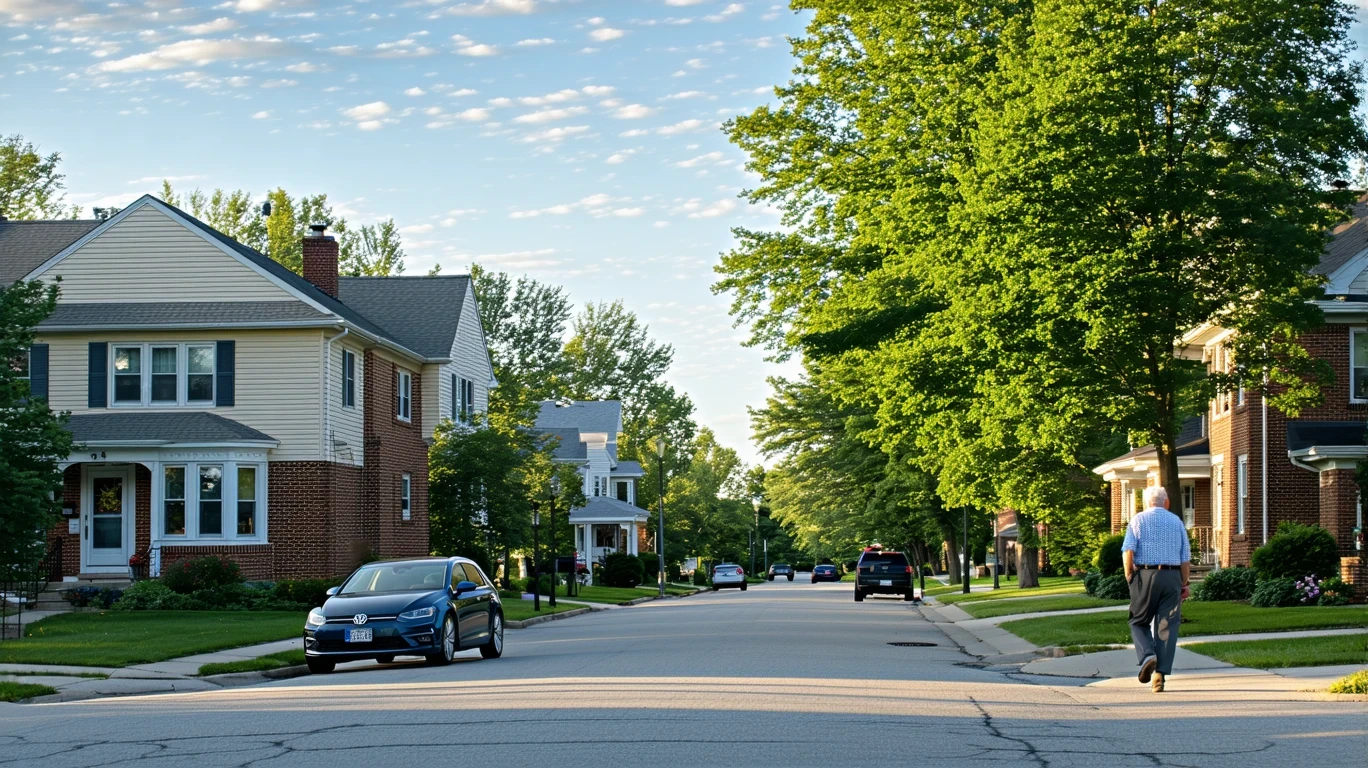
Zionsville’s vibe is rooted in a tension between growth and identity. Long-time residents describe a small-town feel that’s slowly shifting as new developments arrive and the population expands. Newcomers often praise the tree-lined streets, the brick sidewalks in the village, and the sense that neighbors know each other. But that same closeness can feel exclusionary to those who don’t fit the dominant profile: families with school-age children, dual-income households, and homeowners with established equity.
The city’s infrastructure reflects this duality. Park density exceeds high thresholds, and water features are present throughout, creating an integrated outdoor environment that residents genuinely appreciate. Cycling infrastructure is notable, with bike-to-road ratios that exceed typical suburban baselines. Walkable pockets exist, particularly around the village core, where pedestrian-to-road ratios are high. Yet daily errands remain corridor-clustered rather than broadly accessible. Food and grocery density falls into the medium band, meaning you’ll likely drive to specific commercial strips rather than walk to a corner store. This creates a lived experience where you can bike for recreation but still need a car for daily logistics.
For families, the appeal is obvious: safety, schools, and a community that prioritizes youth activities. But the experiential signals reveal a surprising gap. Despite the high income and family orientation, school and playground density both fall below low thresholds. This suggests that while the quality of schools is a major draw, the sheer number of educational and play facilities doesn’t match the concentration found in some peer suburbs. Families here tend to drive to specific schools and parks rather than walk to neighborhood options.
Social Media Buzz in Zionsville
On platforms like Facebook and local community groups, conversation tends to cluster around a few recurring themes: pride in the village character, concern about traffic and growth, and debates over what kind of development fits the town’s identity. The tone is protective — residents want to preserve what makes Zionsville feel distinct, even as they acknowledge the need for new amenities and housing options.
“It’s not the same sleepy town it was ten years ago, but I’m not sure that’s all bad. We have better restaurants now, at least.”
“I love the trails and the parks, but I wish I didn’t have to drive everywhere for groceries. It’s a suburb, I get it, but still.”
“The schools are worth it. That’s the bottom line for us. Everything else is just logistics.”
There’s also a thread of frustration around affordability and exclusivity. Renters, in particular, express feeling like outsiders in a community built for homeowners. The median gross rent of $1,536 per month is steep for those without dual incomes, and the rental stock is limited compared to ownership options. This creates a social dynamic where long-term belonging feels tied to buying in — and buying in requires significant capital.
Local News Tone
Local coverage tends to frame Zionsville through the lens of growth management and community identity. Headlines and story themes often reflect the ongoing negotiation between preservation and progress:
- “Village Character Meets New Development Pressure”
- “Residents Weigh Convenience vs Quiet”
- “Trail Expansions and Green Space Investments Continue”
- “School Quality Remains Top Draw for Newcomers”
- “Traffic Concerns Rise as Population Grows”
The tone is rarely alarmist, but it’s not purely celebratory either. There’s a sense that Zionsville is in transition, and the community is actively trying to shape what comes next. Coverage often highlights amenities — new restaurants, trail connections, park improvements — while also acknowledging the friction that comes with change. The underlying question is always: can Zionsville grow without losing what made it desirable in the first place?
Review-Based Public Perception
On platforms like Google, Yelp, and Nextdoor-style forums, Zionsville earns praise for safety, cleanliness, and a strong sense of community. Families with young children tend to describe it as exactly what they were looking for: a place where kids can play outside, where schools are a point of pride, and where neighbors look out for each other.
But expectations matter. Those who arrive hoping for walkable urban texture, diverse dining options, or vibrant nightlife tend to feel disappointed. The village offers charm, but it’s small and can feel repetitive. Newer planned areas offer modern homes and amenities, but they lack the character and established tree canopy of older pockets. The result is a patchwork experience: some blocks feel like a postcard, others feel like generic suburban sprawl.
“It’s beautiful and safe, but you’ll get bored if you’re not into the family routine. There’s not much for singles or young couples.”
“The parks are amazing. We use the trails constantly. But I do miss being able to walk to a coffee shop or a bookstore without planning it like an errand.”
“It’s expensive, and you need to be okay with that. If you’re stretching to afford it, the pressure shows.”
Healthcare access is strong — a hospital is present, along with pharmacies and clinics — which adds to the sense of security for families and retirees. But the overall infrastructure still assumes car ownership. Bus service is present, but it’s not a primary mode of transportation for most residents. This works fine for dual-car households but creates friction for those relying on transit or trying to reduce car dependency.
Comparison to Nearby Cities
| Aspect | Zionsville | Carmel | Fishers |
|---|---|---|---|
| Overall Vibe | Small-town pride, polished, family-focused | Upscale suburban, more commercial density | Planned, family-oriented, newer feel |
| Walkability | Pockets near village, otherwise car-dependent | More walkable corridors, mixed-use areas | Limited, mostly planned paths |
| Community Tone | Protective, identity-conscious | Ambitious, growth-oriented | Optimistic, newer resident base |
| Cost of Entry | High, homeownership-focused | High, but more rental options | Moderate to high, more variety |
Zionsville sits in a competitive suburban landscape. Carmel offers more commercial density and walkable mixed-use areas, which appeals to those who want suburban safety with more urban amenities. Fishers feels newer and more planned, with a younger demographic and a slightly more optimistic, less identity-protective tone. Zionsville’s edge is its village character and established green space, but that comes with a higher cost of entry and less flexibility for renters or those on tighter budgets. If you value small-town charm and are willing to drive for errands, Zionsville makes sense. If you want more walkable convenience or a broader range of housing options, Carmel or Fishers might feel like a better fit.
What Locals Are Saying
“We love it here. The schools are excellent, the neighbors are friendly, and it feels safe. But you definitely need two cars and a solid income to make it work.”
“I moved here from downtown Indy and it’s been an adjustment. Everything requires planning. You can’t just walk out and grab something. But the trails are beautiful and the parks are top-notch.”
“It’s a great place to raise kids, but if you’re single or don’t have children, you might feel a little out of place. The whole town is built around families.”
“The village is charming, but it’s tiny. You see the same people, eat at the same places. If you need variety, you’ll be driving to Carmel or Indy.”
“I appreciate the quiet and the green space, but I do wish there were more local options for groceries and errands. It’s not walkable in that sense.”
“We’ve been here for twenty years and it’s changed a lot. More traffic, more people, more development. Some of it’s good, some of it feels like we’re losing what made this place special.”
“If you can afford it and you want a safe, polished suburb with good schools, this is hard to beat. Just know what you’re signing up for — it’s not urban, and it’s not cheap.”
Does Zionsville Feel Like a Good Fit?
Zionsville tends to work beautifully for families who prioritize schools, safety, and a strong sense of community. It offers integrated green space, notable cycling infrastructure, and a village core with real character. The income level is high, the unemployment rate is low, and the overall environment feels polished and secure. If you’re a dual-income household with school-age children, a reliable car, and the financial cushion to handle a median home value near half a million dollars, this place will likely feel like exactly what you were looking for.
But it’s not a fit for everyone. Renters on tight budgets will struggle with limited stock and high costs. Young professionals seeking walkable urban texture, spontaneous nightlife, or diverse cultural amenities will feel constrained. Households without car access will find daily logistics frustrating, as errands remain corridor-clustered rather than broadly accessible. And anyone hoping for the density and variety of a true urban environment will need to adjust expectations — or look elsewhere.
The tradeoff is clear: you gain community pride, green space, and a certain kind of suburban security. You give up some convenience, affordability, and cultural variety in exchange. Whether that feels like a good deal depends entirely on what you need from a place — and what you’re willing to drive for.
For more on what a budget has to handle in Zionsville, or to explore whether you can feel comfortable here on your income, or to weigh the real tradeoffs between renting and buying, those guides offer the next layer of detail.
How this article was built: In addition to public economic data, this article incorporates location-based experiential signals derived from anonymized geographic patterns—such as access density, walkability, and land-use mix—to reflect how day-to-day living actually feels in Zionsville, IN.
The perspectives shown reflect commonly expressed local sentiment and recurring themes in public discussion, rather than individual accounts.