
Answer: Plainfield is considered moderately priced in 2026, with median home values around $238,000 and median rent at $1,248 per month. The value proposition depends on housing entry cost versus car dependence, as the city’s mixed walkability and bus-only transit make vehicle ownership a recurring exposure for most households.
When Maya moved to Plainfield in early 2026, she expected the usual suburban tradeoffs: lower rent than downtown Indianapolis, but higher gas bills. What surprised her wasn’t any single line item—it was how the structure of the city shaped where her money went. Groceries required a drive to the corridor clusters. Her bus stop was there, but routes didn’t cover her daily errands. Within two months, she realized her car wasn’t optional—it was load-bearing infrastructure.
That’s the cost reality in Plainfield: not expensive by metro standards, but not simple either. The pressure points aren’t always where newcomers expect them.
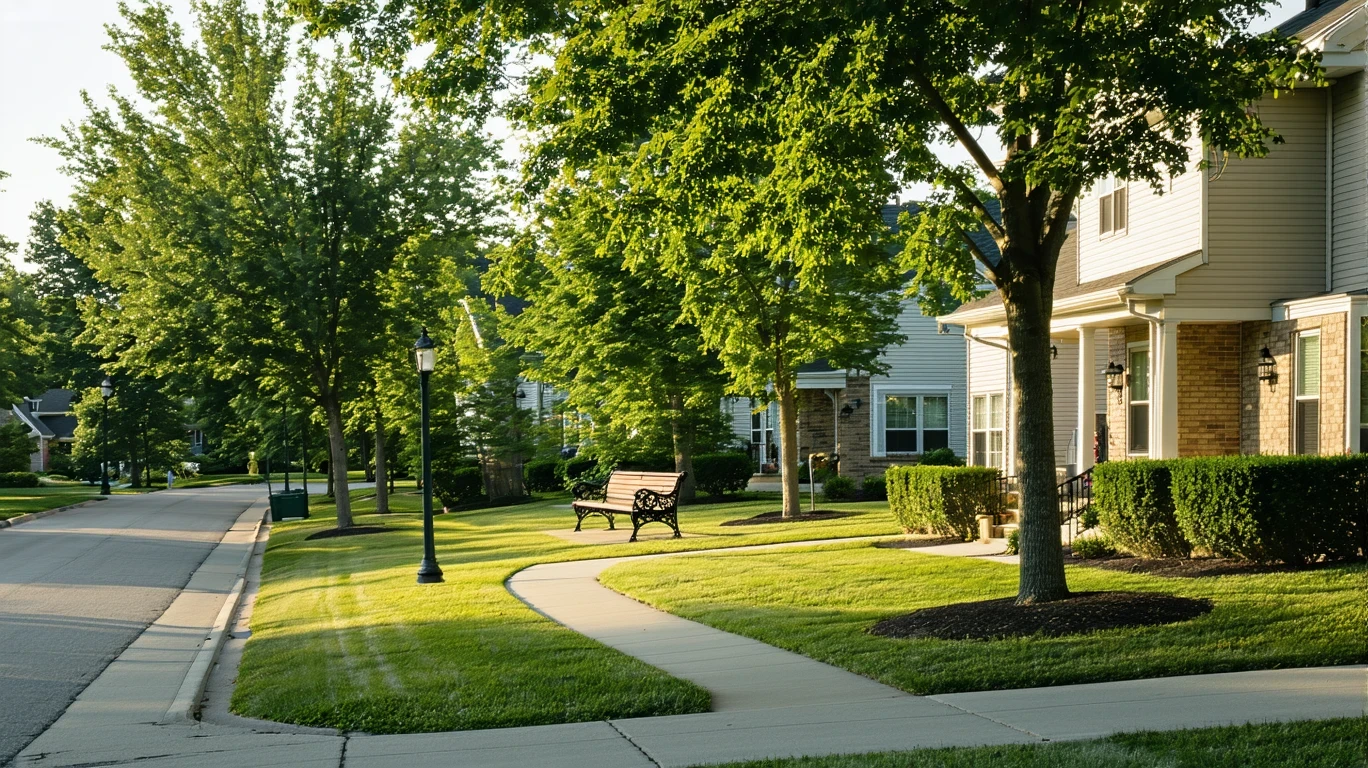
Overall Cost of Living Snapshot
Plainfield sits just below the national baseline for regional price parity, with an index of 95. That means the broad cost structure here runs slightly lower than the U.S. average, but the distribution of costs matters more than the top-line number. Housing dominates the expense profile, followed closely by transportation. Utilities and groceries add moderate, predictable pressure. Day-to-day costs don’t spike the way they do in denser metros, but the city’s spatial layout—corridor-clustered food access, low-rise building character, and limited transit coverage—means households absorb costs through car dependence rather than rent premiums.
Compared to Indianapolis proper, Plainfield offers lower housing entry costs and less competitive rental markets, but that savings gets redistributed into transportation. The unemployment rate of 3.4% signals a stable local economy, though many residents commute into the broader metro for work. The cost structure here rewards those who can lock in housing early and those who’ve already planned for vehicle ownership. It penalizes late-stage renters and anyone hoping to avoid car expenses.
Driver verdict: Housing affordability is the draw; car dependency is the tax. Surprises come from how much logistics—not prices—shape monthly pressure.
Housing Costs (Primary Driver)
The median home value in Plainfield is $238,000, positioning the city as accessible for first-time buyers and households priced out of closer-in suburbs. Median gross rent sits at $1,248 per month, reflecting a market where rental stock exists but doesn’t dominate. This is a city built around ownership, and the rent-to-buy calculus tilts quickly toward buying for anyone planning to stay more than a few years.
Renting in Plainfield works for short-term residents, newcomers testing the metro, or those who need flexibility. But rental availability is corridor-clustered, and landlords here aren’t competing on walkability or transit access—they’re competing on space and parking. Renters pay for suburban layout without the equity upside. Buyers, meanwhile, get more square footage per dollar than in Indianapolis, but they’re also locking into a car-dependent infrastructure and property tax exposure that rises with assessed value over time.
The housing stock is low-rise, with both residential and commercial land use present but separated by design. There’s no dense, mixed-use core where renters can avoid car costs. If you’re renting, you’re still driving. If you’re buying, you’re betting that stable housing costs outweigh transportation and maintenance exposure.
Conclusion: Plainfield is a buying city. Renting is a transitional move, not a long-term cost strategy.
| Housing Type | Cost Anchor | What That Buys You |
|---|---|---|
| Median Home Value | $238,000 | Suburban single-family home, equity-building entry point, car-dependent location |
| Median Gross Rent | $1,248/month | Flexibility and lower upfront cost, but no equity and same transportation exposure as owners |
Utilities & Energy Risk
Electricity in Plainfield runs 16.19¢ per kilowatt-hour. For illustrative context, a household using around 1,000 kWh per month would see a baseline bill near $162 before fees and taxes. That’s a moderate starting point, but the real exposure comes from Indiana’s seasonal extremes. Summers here bring extended heat that drives air conditioning loads. Winters require consistent heating, and while natural gas handles much of that burden, the swings are real.
Natural gas is priced at $10.25 per thousand cubic feet (MCF). In heating months, a household using roughly 1 MCF per month (equivalent to about 100 therms) might see gas charges around $10 to $11 for the commodity alone, before distribution fees and taxes. The volatility isn’t in the rate—it’s in the usage. A mild winter keeps gas bills low. A cold stretch doubles consumption, and there’s no walking away from that exposure if you own or rent a house here.
Utility risk in Plainfield is moderate. It’s not the highest-cost component of living here, but it’s also not static. Households that manage heating and cooling actively—programmable thermostats, weatherization, strategic ventilation—can control the swings. Those who don’t will see bills fluctuate with the weather, and that unpredictability adds friction even when the dollar amounts stay manageable.
Groceries & Daily Costs
Grocery pricing in Plainfield reflects the regional price parity: slightly below national average, but not dramatically cheaper. The pressure comes less from per-item cost and more from access patterns. Food and grocery establishments are corridor-clustered, meaning most households drive to shop. There’s no dense neighborhood retail where you can walk for milk or pick up dinner ingredients on the way home from the bus. The infrastructure assumes car access, and that assumption shows up in how people plan their weeks.
For context, staples like bread, eggs, and chicken run close to or slightly below national norms when adjusted for regional pricing. A pound of ground beef might cost around $6.40, a dozen eggs near $2.38, a half-gallon of milk around $3.82—all derived estimates that reflect the broader price environment rather than observed shelf prices. The point isn’t the precise number; it’s that grocery costs here don’t shock, but they do require logistical planning. You’re not paying a premium per item, but you are paying in time, fuel, and trip consolidation.
Daily costs in Plainfield are predictable and modest. The friction is in the errands themselves, not the prices.
Transportation Reality
Plainfield has bus service, but it’s limited in coverage and route frequency. The city’s mobility texture is mixed—there’s moderate pedestrian infrastructure in some areas, and bike infrastructure exists in pockets—but the overall design is car-oriented. Most households here own at least one vehicle, and many own two. That’s not a lifestyle choice; it’s a structural requirement.
Gas prices sit at $4.07 per gallon. For illustrative context, a commuter driving a typical 25-mile round trip in a vehicle averaging 25 miles per gallon would use about one gallon per day, or roughly $4.07 in fuel. Over a month, that’s around $81 to $101 in gas alone, before insurance, maintenance, or registration. Double that for a two-car household, and transportation becomes a recurring cost exposure that rivals or exceeds rent for some households.
The city’s layout—low-rise, land-use separation, corridor-based commercial clusters—means even short errands often require a car. Walking works in isolated pockets, but it doesn’t connect to grocery stores, clinics, or schools in a way that reduces vehicle dependence. Transit exists as an option for specific commutes, but it doesn’t replace car ownership for most residents.
Transportation is a fixed cost here, not a variable one. Plan for it the way you’d plan for rent.
How this article was built: In addition to public economic data, this article incorporates location-based experiential signals derived from anonymized geographic patterns—such as access density, walkability, and land-use mix—to reflect how day-to-day living actually feels in Plainfield, IN.
Cost Exposure Profiles
In Plainfield, cost exposure is shaped by three structural factors: housing entry versus long-term ownership, transportation dependence, and utility volatility. The city rewards those who can buy early and absorb the transportation overhead without strain. It penalizes renters who stay long-term and households that underestimate vehicle costs.
Low-exposure situations: Homeowners with short or no commutes, households that already own reliable vehicles, and those who can manage heating and cooling costs actively. These residents lock in housing costs, minimize fuel burn, and control the seasonal swings in utilities. Their cost structure is stable and predictable.
High-exposure situations: Renters without equity-building, commuters driving into Indianapolis daily, and households running multiple vehicles or facing frequent maintenance. These residents face compounding costs—rent that doesn’t build wealth, fuel expenses that scale with distance, and utility bills that swing with the seasons. The cost structure here isn’t unaffordable, but it’s layered, and each layer adds friction.
The difference between low and high exposure isn’t income—it’s structure. Own versus rent. One car versus two. Ten-minute commute versus forty. The city’s design makes those distinctions load-bearing.
Frequently Asked Questions
Is Plainfield more affordable than Indianapolis in 2026? Yes, particularly for housing. Median home values and rents in Plainfield run lower than in Indianapolis proper, but transportation costs tend to be higher due to car dependency and commute distances. The affordability advantage depends on whether you’re buying or renting and how far you drive.
What does a typical cost profile look like in Plainfield? Housing dominates, followed by transportation. Utilities add moderate seasonal pressure, and groceries remain predictable but require planning due to corridor-clustered access. The profile favors homeowners with stable commutes over renters or long-distance commuters.
Do utilities cost more in Plainfield than in nearby areas? Not dramatically. Electricity runs 16.19¢ per kWh, and natural gas is priced at $10.25 per MCF—both close to regional norms. The variability comes from seasonal usage, not the rates themselves. Heating and cooling exposure is moderate but manageable with active planning.
What costs tend to surprise newcomers in Plainfield? Transportation. Many newcomers expect to save on housing and assume transit or walkability will offset car costs. In practice, the city’s layout makes vehicle ownership nearly mandatory, and fuel, insurance, and maintenance add up quickly—especially for two-car households.
Are property taxes higher in Plainfield than in nearby suburbs? Property tax rates vary by jurisdiction and assessment, but Plainfield’s median home value of $238,000 suggests moderate tax exposure compared to higher-value suburbs closer to Indianapolis. Buyers should verify local millage rates and exemptions, as tax burden scales with assessed value over time.
Is Plainfield a good value for first-time homebuyers? Yes, if you’re prepared for car dependency and commuting costs. The housing entry point is accessible, and the market isn’t as competitive as closer-in suburbs. But the value proposition depends on locking in a home price that offsets transportation and utility exposure over the long term.
Can you live in Plainfield without a car? Technically yes, but practically no. Bus service exists, but coverage is limited and doesn’t connect residential areas to grocery stores, schools, or most job centers efficiently. Walking and biking infrastructure exists in pockets, but the city’s layout assumes vehicle access for daily errands.
How does Plainfield compare to other Indianapolis suburbs for cost of living? Plainfield tends to be more affordable than closer-in suburbs like Carmel or Fishers, where home values and rents run higher. It’s comparable to other outer-ring suburbs in terms of transportation dependence and utility costs. The tradeoff is lower housing costs in exchange for longer commutes and less walkable infrastructure.
—