
“I thought I could take the bus to work when I moved here—turns out the route doesn’t run early enough, and I’m back to driving every day.”
That’s the reality for many people navigating transportation options in Plainfield in 2026. While public transit exists, the structure of daily life here is built around driving. Understanding how people actually get around—and who benefits from the limited transit that’s available—shapes everything from where you choose to live to how much time and money you spend on the road each week.
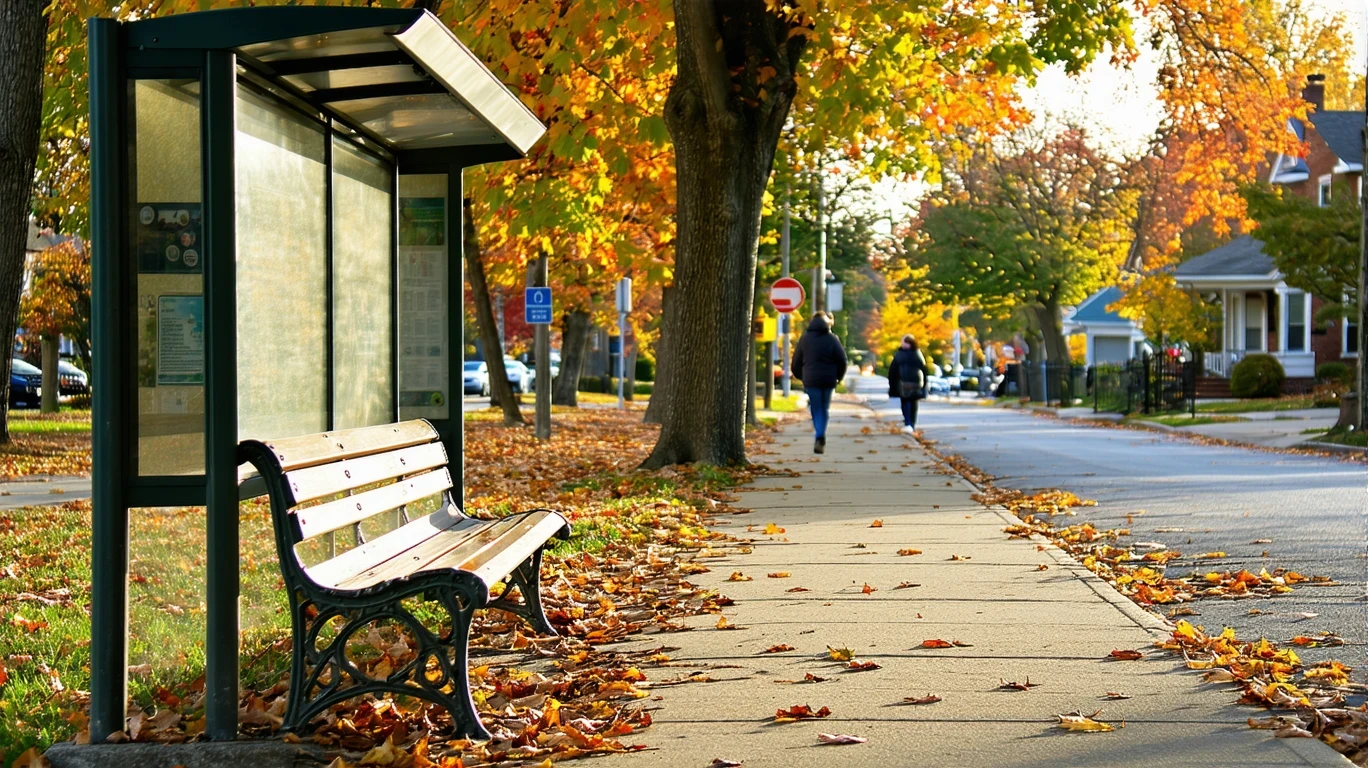
How People Get Around Plainfield
Plainfield operates as a car-first suburb within the Indianapolis metro. The layout reflects low-rise development with mixed residential and commercial land use scattered across corridors rather than concentrated in a dense core. Pedestrian infrastructure exists at moderate levels relative to the road network, but that doesn’t translate into walkable daily errands for most residents. Grocery stores, schools, and workplaces are typically separated by distances that require a vehicle.
Bus service is present, but it functions as a supplemental option rather than a primary mode of transportation for the majority of households. Cycling infrastructure appears in pockets, with bike-to-road ratios in the medium band, but practical cycling for commuting or errands remains limited to specific corridors and favorable weather conditions.
What newcomers often misunderstand is that Plainfield’s suburban form doesn’t just make driving convenient—it makes it necessary. Even residents who live near a bus stop or within a walkable distance of a grocery store find that most other destinations—work, healthcare, schools, social activities—require a car to access efficiently.
Public Transit Availability in Plainfield
Public transit in Plainfield often centers around systems such as IndyGo, though coverage varies by area and is concentrated along specific corridors. Bus service exists, but it’s designed to connect residential areas to commercial zones and regional employment hubs rather than provide comprehensive citywide mobility.
Transit tends to work best for residents living along established routes with destinations that align with bus schedules. That typically means people commuting to predictable shifts in commercial or service sectors, or those running errands during midday hours when frequency is more consistent. Late-night service, weekend coverage, and routes that serve residential neighborhoods away from main corridors are limited or nonexistent.
Where transit falls short is in flexibility and reach. If your job requires early morning starts, variable hours, or locations outside the core service area, the bus becomes impractical. Families managing school drop-offs, daycare pickups, and grocery runs across multiple stops face similar friction. The infrastructure exists, but it’s not built to replace a car for most households—it supplements driving for specific, predictable trips.
Driving & Car Dependence Reality
Driving is not optional for the vast majority of Plainfield residents. The city’s development pattern—low-density residential zones separated from commercial corridors—means that even short errands often require a vehicle. Parking is abundant and free in most areas, which reinforces car use rather than discouraging it.
For households with school-age children, driving becomes even more central. Schools are spread across the area, and while some neighborhoods have bus service for students, extracurricular activities, playdates, and weekend commitments all depend on personal vehicles. Families with two working adults typically need two cars to manage overlapping schedules.
The tradeoff here isn’t about preference—it’s about structure. Plainfield’s layout rewards car ownership with convenience, predictability, and control over time. But that same structure penalizes households without reliable vehicles, limiting access to jobs, healthcare, and services. Gas prices, currently at $4.07 per gallon, add ongoing exposure, but the bigger cost is the upfront requirement: insurance, maintenance, and the vehicle itself.
Commuting Patterns & Daily Mobility
Commuting in Plainfield typically involves driving to employment centers within the Indianapolis metro. Some residents work locally in retail, healthcare, or service sectors, but many commute to jobs in downtown Indianapolis, nearby industrial zones, or office parks scattered across the region.
Single-job commutes are the most straightforward, but households managing multiple jobs, school schedules, or caregiving responsibilities face more complex logistics. The lack of frequent, flexible transit means that each additional stop—daycare, grocery store, pharmacy—requires its own driving segment. Time spent in the car compounds quickly, especially for families without the ability to consolidate trips.
Who benefits from proximity? Residents living near their workplace or along direct routes to major employers gain time and reduce fuel exposure. Those in peripheral neighborhoods or with jobs in opposite directions face longer, less efficient commutes. The structure of Plainfield’s road network and the placement of commercial corridors determine how much friction each household absorbs daily.
Who Transit Works For — and Who It Doesn’t
Public transit in Plainfield serves a narrow but real segment of the population. It works best for individuals with:
- Jobs located along bus routes with consistent schedules
- Flexibility to adjust arrival times based on service frequency
- Limited need for multi-stop errands or off-peak travel
- Housing situated near active bus stops on main corridors
Renters in corridor-clustered areas—where food and grocery options are moderately accessible—may find transit viable for specific trips, especially if they have backup transportation options for emergencies or off-hours needs. Students, part-time workers, and retirees with predictable routines also fit this profile.
Transit doesn’t work well for:
- Families managing school schedules and childcare logistics
- Shift workers with early, late, or variable hours
- Households in residential zones away from main corridors
- Anyone requiring frequent, time-sensitive trips across multiple locations
Homeowners, particularly those in single-family neighborhoods, almost universally rely on personal vehicles. The trade-off between space, affordability, and transit access tilts heavily toward car dependence in Plainfield’s housing market.
Transportation Tradeoffs in Plainfield
Choosing between transit and driving in Plainfield isn’t about comparing costs—it’s about comparing control, predictability, and exposure.
Driving offers:
- Complete schedule flexibility and route control
- Ability to manage multi-stop trips efficiently
- Access to the full range of housing, employment, and services
- Exposure to fuel prices, maintenance, insurance, and upfront vehicle costs
Transit offers:
- Lower upfront costs and no maintenance burden
- Reduced exposure to fuel price volatility
- Dependence on fixed routes and schedules
- Limited coverage and reduced access to jobs, housing, and services outside corridors
For most households, the question isn’t whether to drive—it’s how much driving they can reduce through proximity, carpooling, or trip consolidation. The city’s structure makes full transit dependence impractical for all but a small subset of residents.
FAQs About Transportation in Plainfield (2026)
Is public transit usable for daily commuting in Plainfield?
Public transit is usable for a limited set of commutes—primarily those along established bus routes with predictable schedules and destinations that align with service hours. For most residents, especially those with variable work hours, multiple stops, or jobs outside main corridors, transit alone isn’t practical. It works best as a supplement to driving rather than a replacement.
Do most people in Plainfield rely on a car?
Yes. The city’s low-density layout, separation of residential and commercial zones, and limited transit coverage make car ownership necessary for the vast majority of households. Even residents near bus routes typically own at least one vehicle to manage errands, family logistics, and off-peak travel.
Which areas of Plainfield are easiest to live in without a car?
Areas along main corridors with moderate food and grocery density and direct bus access offer the most car-free viability, but even these require significant compromise. Residents in these zones can manage some errands and predictable commutes via transit, but still face gaps in coverage, schedule limitations, and reduced access to services outside walking distance or bus routes.
How does commuting in Plainfield compare to nearby cities?
Plainfield functions as a suburban extension of the Indianapolis metro, with commuting patterns shaped by the same car-dependent infrastructure common across the region. Compared to denser urban cores with more robust transit, Plainfield offers less flexibility for non-drivers. Compared to more rural areas, it provides moderate bus access along specific corridors, but the overall experience still centers on personal vehicles.
Can you get by with one car in a two-adult household in Plainfield?
It depends on work locations, schedules, and household logistics. If both adults work along the same route or have staggered schedules that allow car-sharing, one vehicle is manageable. But for most households—especially those with school-age children, multiple job sites, or conflicting commitments—two cars provide necessary flexibility and reduce daily friction.
How Transportation Fits Into the Cost of Living in Plainfield
Transportation in Plainfield isn’t just a line item—it’s a structural factor that shapes where you can live, how you spend your time, and what financial exposure you carry. The city’s car-dependent layout means that your monthly budget must account for vehicle ownership, fuel, insurance, and maintenance as non-negotiable expenses for most households.
The tradeoff between proximity and housing cost plays out differently here than in transit-rich cities. Living closer to work or along bus routes can reduce driving, but those locations don’t always offer the space, affordability, or school access that families prioritize. The result is that many households absorb longer commutes in exchange for housing that fits their needs.
Understanding how transportation works in Plainfield means recognizing that mobility shapes daily life in ways that go beyond dollars per gallon. It determines how much time you spend in the car, how much flexibility you have in managing work and family, and how much control you retain over your schedule. For most residents, driving isn’t a preference—it’s the infrastructure reality that makes everything else possible.
How this article was built: In addition to public economic data, this article incorporates location-based experiential signals derived from anonymized geographic patterns—such as access density, walkability, and land-use mix—to reflect how day-to-day living actually feels in Plainfield, IN.