
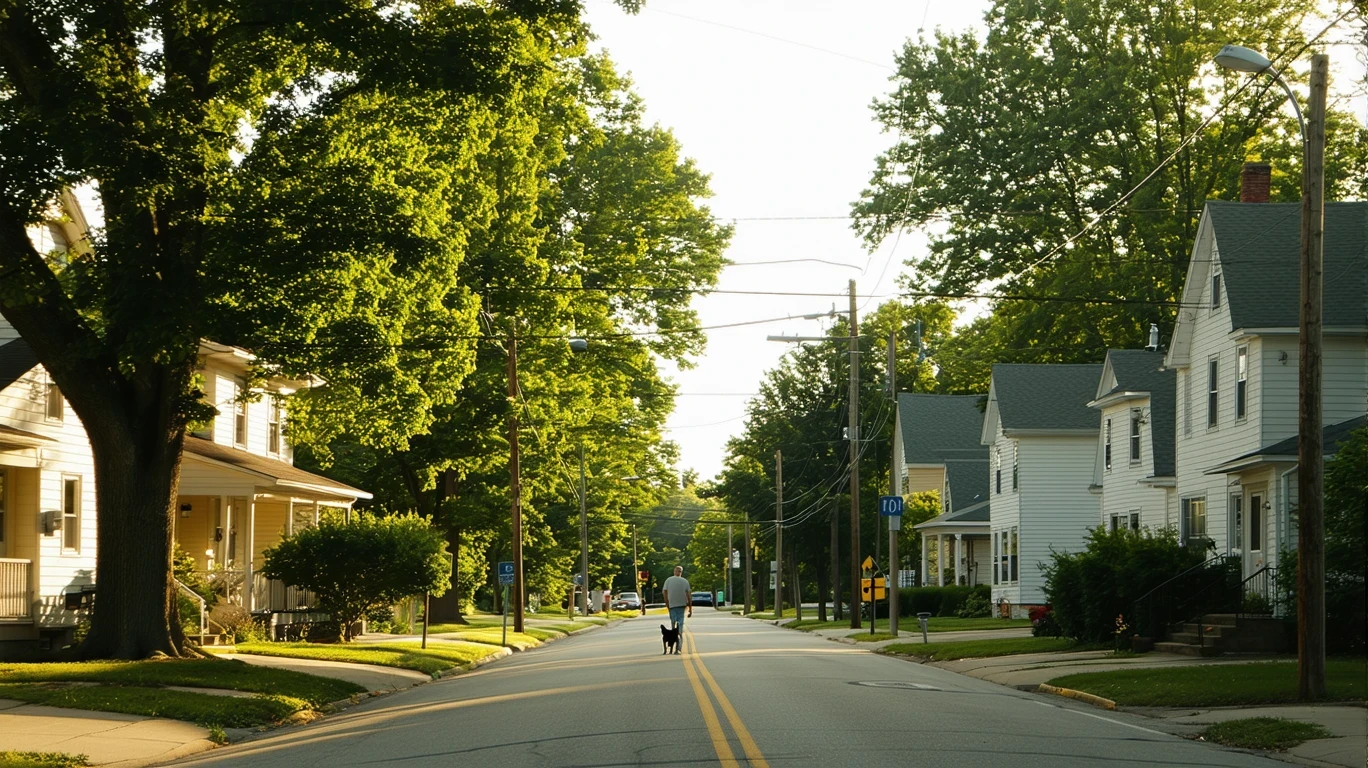
Plainfield vs Fishers, 2026: Housing entry at $238,000 vs $339,000. Rent at $1,248 vs $1,478. Natural gas at $10.25 vs $14.78 per MCF. Gas prices at $4.07 vs $2.79 per gallon. Median income at $77,249 vs $126,548. Same metro, different cost pressures.
Both Plainfield and Fishers sit in the Indianapolis metro area, sharing regional infrastructure, climate exposure, and job market access. Yet the cost experience in each city diverges sharply—not because one is universally cheaper, but because cost pressure concentrates differently depending on what you prioritize. Plainfield offers lower housing entry barriers and moderate ongoing obligations, while Fishers demands higher upfront investment but delivers stronger pedestrian infrastructure, hospital access, and mixed building forms that support different household logistics.
The decision between these two cities in 2026 isn’t about total affordability. It’s about which costs dominate your household, how predictable you need those costs to be, and whether you’re optimizing for entry flexibility or long-term infrastructure access. Families prioritizing space and lower monthly obligations may find Plainfield’s structure more forgiving. Households valuing walkability, cycling infrastructure, and on-site healthcare may absorb Fishers’ higher housing and utility costs in exchange for reduced car dependency and time friction.
Housing Costs
Housing entry in Plainfield centers on a median home value of $238,000, while Fishers sits at $339,000—a structural difference that reshapes down payment requirements, mortgage obligations, and property tax exposure. For renters, Plainfield’s median gross rent of $1,248 per month contrasts with Fishers’ $1,478, creating a $230 monthly gap that compounds over lease terms. These aren’t small variations; they represent fundamentally different housing cost profiles that affect who can enter each market and what ongoing pressure looks like once you’re in.
Plainfield’s lower housing entry reduces the barrier for first-time buyers and households managing tighter cash flow, but it doesn’t eliminate ongoing obligations. Property taxes, insurance, and maintenance still apply, and older housing stock may introduce higher repair volatility. Fishers’ higher home values reflect newer construction, mixed building forms, and proximity to infrastructure that supports walkability and cycling—factors that reduce transportation costs but increase housing-related monthly obligations. The tradeoff isn’t about which city is cheaper; it’s about whether you’re more exposed to housing entry barriers or ongoing utility and transportation costs.
For renters, the $230 monthly difference between Plainfield and Fishers translates to $2,760 annually—a gap that matters more for single adults and younger couples than for dual-income families managing larger household budgets. Renters in Plainfield face lower baseline obligations but may encounter fewer apartment options with modern efficiency features, increasing utility exposure. Renters in Fishers pay more upfront but gain access to newer units, better insulation, and proximity to errands that reduce car dependency. The housing cost difference isn’t just about rent; it’s about what that rent buys in terms of predictability, access, and time savings.
| Housing Type | Plainfield | Fishers |
|---|---|---|
| Median Home Value | $238,000 | $339,000 |
| Median Gross Rent | $1,248/month | $1,478/month |
First-time buyers in Plainfield benefit from lower down payment requirements and reduced mortgage pressure, making entry more accessible for households earning closer to the area’s median income of $77,249. Fishers’ higher home values demand stronger income stability—reflected in the city’s median household income of $126,548—and favor buyers who can absorb higher monthly obligations in exchange for access to infrastructure that reduces other cost categories. Families prioritizing space and lower entry barriers may find Plainfield’s housing structure more forgiving, while households optimizing for walkability and mixed-use access may justify Fishers’ higher housing costs through reduced transportation and time friction.
Housing takeaway: Plainfield’s lower housing entry reduces barriers for renters and first-time buyers, but ongoing exposure to older housing stock and car dependency can offset initial savings. Fishers’ higher housing costs reflect newer construction and infrastructure that supports reduced car reliance, favoring households with stronger income stability who value predictability and access over entry flexibility.
Utilities and Energy Costs
Utility cost exposure in Plainfield and Fishers diverges primarily through natural gas pricing and housing stock age. Plainfield’s natural gas price of $10.25 per MCF contrasts with Fishers’ $14.78 per MCF—a structural difference that amplifies heating costs during Indiana’s cold winters. Electricity rates show smaller variation, with Plainfield at 16.19¢/kWh and Fishers at 17.41¢/kWh, but the combined effect of higher natural gas prices and mixed building forms in Fishers creates more volatile utility exposure for households in larger or older homes.
Heating dominates utility costs in both cities during winter months, when temperatures regularly drop below freezing and heating systems run continuously. Plainfield’s lower natural gas price reduces baseline heating exposure, but older housing stock—reflected in the city’s low-rise building character—often lacks modern insulation and efficient HVAC systems. Fishers’ mixed building forms include newer construction with better thermal performance, but higher natural gas prices increase the cost of heating larger single-family homes. The tradeoff isn’t about which city has lower utility bills; it’s about whether you’re more exposed to fuel price volatility or housing stock inefficiency.
Household size and home type reshape utility exposure significantly. Single adults and couples in smaller apartments face lower baseline usage regardless of city, but Plainfield’s lower natural gas price offers more predictability during peak heating months. Families in larger single-family homes experience higher absolute costs in both cities, but Fishers’ higher natural gas price amplifies exposure for households managing multiple bedrooms, finished basements, and two-story layouts. Newer homes in Fishers may offset some of this pressure through better insulation and programmable thermostats, but older homes in either city introduce repair volatility and efficiency gaps that compound seasonal costs.
Cooling costs remain moderate in both cities compared to heating exposure, but summer humidity and extended warm periods still drive air conditioning usage from June through September. Electricity rate differences between Plainfield and Fishers remain small enough that cooling costs track more closely with home size and insulation quality than with location. Households in older homes—more common in Plainfield’s low-rise neighborhoods—may face higher cooling exposure due to poor attic insulation and single-pane windows, while newer construction in Fishers benefits from modern building codes that reduce baseline usage.
Utility takeaway: Plainfield’s lower natural gas price reduces heating exposure for households in smaller or well-insulated homes, but older housing stock can offset savings through inefficiency. Fishers’ higher natural gas price increases heating costs for larger homes, but newer construction and mixed building forms offer better thermal performance that stabilizes seasonal volatility. Households managing larger spaces or older homes face more unpredictable utility costs in both cities, with Fishers’ higher fuel prices amplifying exposure during peak heating months.
Groceries and Daily Expenses
Grocery and daily expense pressure in Plainfield and Fishers reflects similar regional pricing—both cities share a regional price parity index of 95, indicating costs slightly below the national baseline—but access patterns and shopping infrastructure create different friction points. Plainfield’s corridor-clustered food and grocery establishments concentrate along main commercial routes, requiring car trips for most households. Fishers’ corridor-clustered grocery access follows a similar pattern, but the city’s walkable pockets and notable cycling infrastructure allow some households to reduce car dependency for routine errands, lowering transportation-related grocery costs.
Price sensitivity for grocery staples—bread, milk, eggs, chicken, ground beef—remains consistent across both cities due to shared regional distribution networks and similar cost structures. A pound of chicken costs roughly the same whether you’re shopping in Plainfield or Fishers, but the cost of getting to the store, the frequency of trips, and the availability of discount vs specialty options differ based on neighborhood access and household logistics. Plainfield’s mixed mobility texture supports both walking and driving, but most grocery trips still require a car. Fishers’ higher pedestrian-to-road ratio and bike infrastructure allow some households to walk or cycle to nearby stores, reducing per-trip transportation costs and allowing more frequent, smaller purchases that limit food waste.
Dining out and convenience spending introduce more variability. Both cities offer a mix of chain restaurants and local options, but Fishers’ mixed building forms and land-use diversity support more walkable dining clusters that reduce the friction cost of eating out. Plainfield’s car-oriented layout means most dining trips require driving, adding time and fuel costs that can make convenience spending feel more expensive even when menu prices are similar. Single adults and couples managing smaller grocery volumes may find Fishers’ walkable pockets reduce the cumulative cost of daily errands, while families managing larger shopping trips in both cities rely on car access and benefit more from Plainfield’s lower gas prices.
Household size reshapes grocery pressure significantly. Single adults and couples can optimize around smaller, more frequent trips—an advantage in Fishers if walkable grocery access exists near their home. Families managing weekly bulk shopping trips face similar costs in both cities, but Plainfield’s lower gas price of $4.07 per gallon (compared to Fishers’ $2.79) creates a paradox: Plainfield’s higher gas price increases the cost of car-dependent errands, while Fishers’ lower gas price benefits households who still drive most trips despite better pedestrian infrastructure. The grocery cost difference isn’t about prices on the shelf; it’s about how much time, fuel, and planning each city requires to keep a household fed.
Grocery takeaway: Plainfield and Fishers share similar grocery pricing due to regional distribution, but access friction differs. Plainfield’s car-oriented layout and higher gas prices increase the cumulative cost of errands for households making frequent trips. Fishers’ walkable pockets and cycling infrastructure allow some households to reduce transportation costs for routine grocery runs, but families managing bulk shopping still rely on cars and benefit from Fishers’ lower gas prices. Price sensitivity matters less than access structure and household logistics.
Taxes and Fees
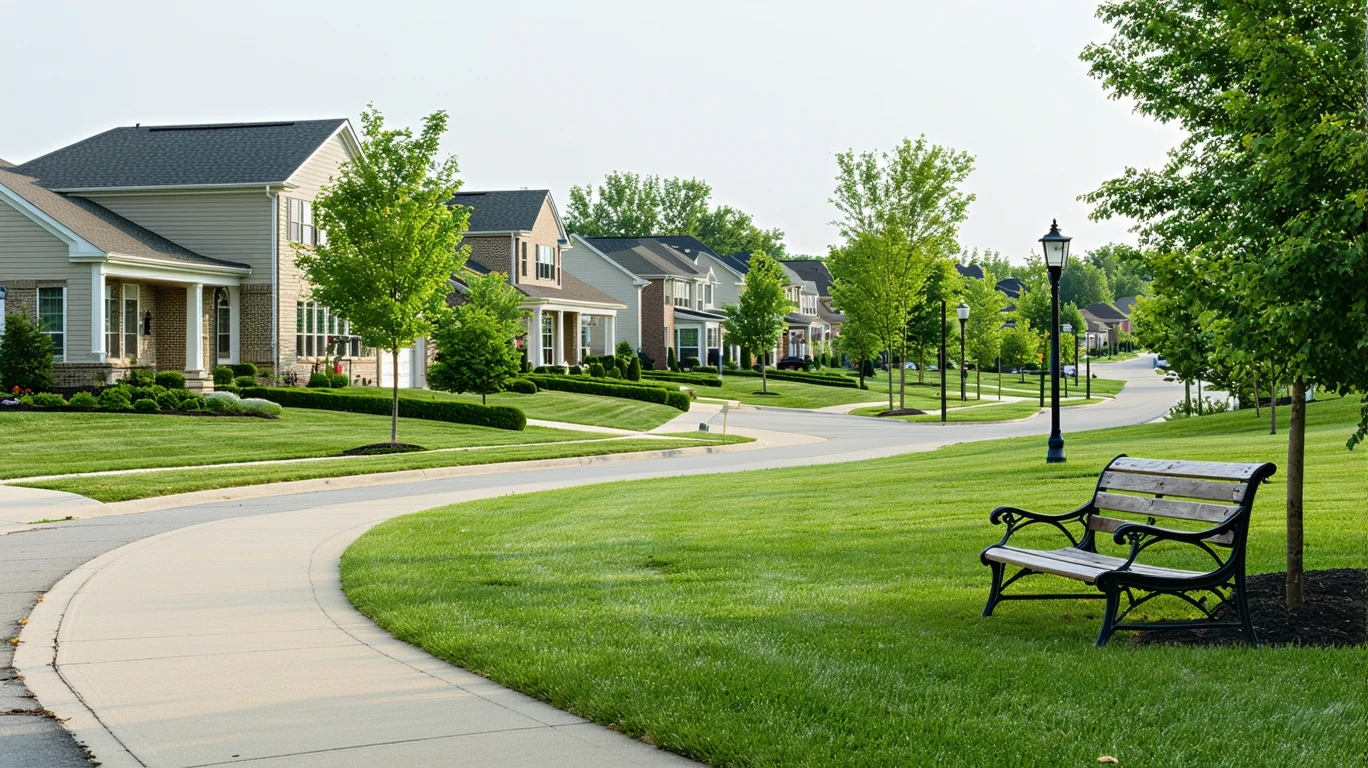
Property taxes in both Plainfield and Fishers follow Indiana’s statewide assessment structure, but the tax burden diverges based on home value and local service funding. Plainfield’s median home value of $238,000 generates lower absolute property tax obligations than Fishers’ $339,000 median, even if effective tax rates remain similar. This difference compounds annually, creating a structural advantage for Plainfield homeowners managing tighter budgets, while Fishers homeowners absorb higher property tax costs in exchange for access to infrastructure that supports walkability, hospital access, and mixed-use development.
Sales taxes remain consistent across both cities due to Indiana’s statewide rate structure, so consumption-based tax exposure doesn’t vary by location. However, local fees—trash collection, water, sewer, stormwater management—can differ based on municipal service structures and whether costs are bundled into property tax bills or billed separately. Plainfield’s lower-density, low-rise development pattern may result in more predictable fee structures, while Fishers’ mixed building forms and newer infrastructure sometimes introduce higher service fees tied to stormwater management and road maintenance in newer subdivisions.
HOA fees introduce another layer of cost variability. Plainfield’s older, low-rise neighborhoods often lack HOA structures, reducing recurring monthly obligations but shifting maintenance responsibility entirely to homeowners. Fishers’ newer developments frequently include HOA fees that bundle landscaping, snow removal, and shared amenity maintenance—costs that increase predictability but reduce flexibility. Households prioritizing lower fixed costs may prefer Plainfield’s structure, while those valuing predictable maintenance obligations may absorb Fishers’ HOA fees as a tradeoff for reduced time friction and upkeep volatility.
Renters face indirect tax exposure through rent pricing, but the structure differs. Plainfield’s lower home values and property tax obligations allow landlords to maintain lower rents while covering tax costs, though older housing stock may introduce higher maintenance pass-through costs. Fishers’ higher property taxes and newer construction push rents higher, but landlords managing newer units face lower repair volatility, creating more stable rent renewal patterns. Long-term residents in both cities benefit from Indiana’s property tax caps, which limit annual increases, but recent movers and renters face market-rate exposure that reflects current tax and fee structures.
Tax and fee takeaway: Plainfield’s lower home values generate lower absolute property tax obligations, favoring homeowners managing tighter budgets and households prioritizing lower fixed costs. Fishers’ higher property taxes reflect higher home values and infrastructure investment, with HOA fees adding predictability but reducing flexibility. Renters in Plainfield benefit from lower baseline rent tied to lower property tax exposure, while Fishers renters pay more but gain access to newer construction and reduced maintenance volatility. The primary difference is magnitude and predictability, not structure.
Transportation & Commute Reality
Transportation cost pressure in Plainfield and Fishers diverges sharply through gas pricing, mobility infrastructure, and car dependency patterns. Plainfield’s gas price of $4.07 per gallon contrasts with Fishers’ $2.79 per gallon—a difference that compounds quickly for households making daily commutes, school runs, and errand trips. Both cities rely heavily on car access for most activities, but Fishers’ walkable pockets and notable cycling infrastructure allow some households to reduce vehicle miles traveled for routine errands, while Plainfield’s mixed mobility texture still requires driving for most trips.
Plainfield’s bus-only transit service provides limited coverage, reducing viability for car-free households and increasing reliance on personal vehicles. Fishers lacks transit signals entirely in the provided data, suggesting even lower public transportation availability and near-total car dependency for commuting and daily logistics. The absence of rail transit in both cities means households managing regional commutes to Indianapolis or other metro employment centers must drive or arrange carpools, with fuel costs becoming a primary transportation expense. Plainfield’s higher gas price amplifies this exposure, particularly for households managing long commutes or multiple vehicles.
Cycling infrastructure offers a meaningful difference. Fishers’ bike-to-road ratio exceeds high thresholds, indicating substantial cycling infrastructure that supports bike commuting and recreational riding in parts of the city. Plainfield’s bike infrastructure exists but remains limited to pockets, reducing viability for households hoping to replace car trips with cycling. For families managing school drop-offs, grocery runs, and activity shuttling, Fishers’ cycling infrastructure offers limited practical relief—most trips still require a car—but single adults and couples may find bike commuting viable for short distances, reducing fuel costs and vehicle wear.
Transportation takeaway: Plainfield’s higher gas price increases ongoing transportation costs for car-dependent households, while limited transit and moderate cycling infrastructure offer few alternatives. Fishers’ lower gas price reduces fuel exposure for households still driving most trips, and notable cycling infrastructure provides some relief for short errands and commutes in walkable pockets. Both cities require car ownership for most households, but Fishers’ infrastructure allows selective reduction in vehicle miles traveled, while Plainfield’s layout assumes near-total car dependency.
Cost Structure Comparison
Housing dominates the cost experience in Fishers, where the $339,000 median home value and $1,478 median rent create higher entry barriers and ongoing obligations that require stronger income stability. Plainfield’s $238,000 median home value and $1,248 median rent reduce housing pressure, allowing households earning closer to the city’s $77,249 median income to enter the market and manage monthly obligations with more flexibility. The housing difference isn’t just about price—it’s about who can access each market and what tradeoffs they accept once they’re in.
Utilities introduce more volatility in Fishers, where natural gas prices of $14.78 per MCF amplify heating costs during Indiana’s cold winters. Plainfield’s $10.25 per MCF natural gas price reduces baseline heating exposure, but older housing stock can offset savings through inefficiency and higher repair costs. Households managing larger homes or older construction face unpredictable utility costs in both cities, but Fishers’ higher fuel prices concentrate exposure during peak heating months, while Plainfield’s lower fuel prices offer more stability for households in well-insulated homes.
Transportation patterns matter more in Plainfield, where higher gas prices of $4.07 per gallon compound car dependency and increase the cumulative cost of commuting, errands, and household logistics. Fishers’ $2.79 per gallon gas price reduces fuel exposure for car-dependent households, and the city’s walkable pockets and cycling infrastructure allow selective reduction in vehicle miles traveled. Families managing multiple vehicles and daily school runs feel transportation pressure more acutely in Plainfield, while Fishers households benefit from lower fuel costs and infrastructure that supports occasional walking or cycling for short trips.
Grocery and daily expense pressure remains similar across both cities due to shared regional pricing, but access friction differs. Plainfield’s corridor-clustered grocery access and car-oriented layout increase the time and fuel cost of routine errands, while Fishers’ walkable pockets reduce friction for households living near commercial clusters. Single adults and couples managing smaller, more frequent shopping trips may find Fishers’ infrastructure reduces cumulative costs, while families managing bulk shopping trips in both cities rely on cars and face similar grocery expenses regardless of location.
The decision between Plainfield and Fishers isn’t about which city costs less overall—it’s about which cost categories dominate your household and how much predictability you need. Households sensitive to housing entry barriers and ongoing rent or mortgage obligations may prefer Plainfield’s lower baseline costs, accepting higher transportation and utility volatility in exchange for entry flexibility. Households prioritizing infrastructure access, walkability, and reduced car dependency may absorb Fishers’ higher housing and utility costs in exchange for lower transportation friction and access to hospital care. For budget-conscious households, the difference is less about price and more about predictability: Plainfield front-loads savings through lower housing costs but introduces ongoing exposure through higher gas prices and car dependency, while Fishers front-loads costs through higher housing entry but offers infrastructure that reduces time friction and selective transportation expenses.
How the Same Income Feels in Plainfield vs Fishers
Single Adult
Housing becomes the first non-negotiable cost, with Plainfield’s lower rent allowing more breathing room for discretionary spending and emergency savings. Flexibility exists in transportation—choosing a fuel-efficient car or limiting trips reduces exposure to Plainfield’s higher gas prices—but car ownership remains mandatory. In Fishers, higher rent absorbs more of the budget upfront, but walkable pockets and cycling infrastructure allow selective reduction in vehicle use, creating time savings that offset higher housing costs. Commute friction matters less for remote workers, but in-office schedules make Fishers’ lower gas prices and occasional bike commuting options more valuable.
Dual-Income Couple
Housing costs still dominate, but dual incomes create more flexibility to absorb Fishers’ higher rent or mortgage obligations in exchange for walkability and hospital access. Non-negotiable costs expand to include two vehicles in Plainfield, where car dependency and higher gas prices increase baseline transportation spending. In Fishers, one household member may reduce car use for errands or short commutes, lowering fuel costs and vehicle wear. Flexibility disappears faster in Plainfield if one income drops or job loss occurs, as lower housing costs don’t fully offset higher transportation exposure and limited transit alternatives.
Family with Kids
Housing space becomes non-negotiable, with Plainfield’s lower home values allowing larger square footage for the same monthly cost compared to Fishers. Flexibility evaporates quickly as school logistics, activity shuttling, and grocery runs require multiple vehicles and frequent trips, amplifying Plainfield’s higher gas prices. In Fishers, higher housing costs and natural gas prices create more predictable but larger fixed obligations, while lower gas prices and walkable pockets reduce cumulative transportation costs for households managing daily errands. The role of commute friction intensifies—time spent driving in Plainfield compounds with higher fuel costs, while Fishers’ infrastructure allows selective walking or cycling for kids’ activities, reducing both time cost and cash cost for routine household logistics.
Decision Matrix: Which City Fits Which Household?
| Decision factor | If you’re sensitive to this… | Plainfield tends to fit when… | Fishers tends to fit when… |
|---|---|---|---|
| Housing entry + space needs | Down payment size, monthly mortgage or rent obligations, property tax exposure | You prioritize lower entry barriers and need more space for the same monthly cost | You have stronger income stability and value newer construction with better efficiency |
| Transportation dependence + commute friction | Gas prices, vehicle miles traveled, time spent driving, transit alternatives | You can limit trips and accept car dependency in exchange for lower housing costs | You value walkable pockets and cycling infrastructure that reduce selective vehicle use |
| Utility variability + home size exposure | Heating costs, natural gas prices, seasonal volatility, housing stock age | You manage a smaller or well-insulated home and benefit from lower natural gas prices | You accept higher natural gas prices in exchange for newer construction and better thermal performance |
| Grocery strategy + convenience spending creep | Errand frequency, car dependency for shopping, access to walkable stores | You manage bulk shopping trips and can absorb higher gas prices for less frequent errands | You make smaller, more frequent trips and benefit from walkable grocery access in select neighborhoods |
| Fees + friction costs (HOA, services, upkeep) | Predictability of maintenance costs, bundled services, property tax obligations | You prefer lower fixed costs and accept responsibility for all maintenance and upkeep | You value predictable HOA-bundled services and newer infrastructure with lower repair volatility |
| Time budget (schedule flexibility, errands, logistics) | Commute duration, errand friction, car dependency, walkability for daily tasks | You have schedule flexibility and can consolidate trips to reduce time and fuel costs | You value infrastructure that allows walking or cycling for select errands and reduces cumulative time friction |
Lifestyle Fit
Plainfield’s mixed mobility texture and low-rise building character create a car-oriented suburban lifestyle where most activities—work, errands, recreation—require driving. The city’s corridor-clustered food and grocery access concentrates along main commercial routes, reducing walkability for daily tasks but offering predictable access for households managing weekly shopping trips. Bus service exists but provides limited coverage, making car ownership effectively mandatory for most households. Green space access remains present, with parks and water features offering recreational options, but reaching them typically requires a short drive rather than a walk from home.
Fishers’ walkable pockets and notable cycling infrastructure support a more varied mobility experience, where some households can walk or bike for errands, dining, or short commutes while still relying on cars for longer trips. The city’s mixed building forms—ranging from low-rise neighborhoods to medium-height developments—create more diverse housing options and land-use patterns that support both suburban family life and more compact living arrangements. Hospital access provides a meaningful lifestyle advantage, reducing travel time for medical care and offering peace of mind for families managing chronic conditions or aging parents. Water features and moderate park density offer similar recreational access to Plainfield, but Fishers’ infrastructure allows more residents to reach parks on foot or by bike.
Both cities share Indiana’s seasonal climate, with cold winters driving heating costs and humid summers requiring air conditioning. Neither city offers rail transit or extensive public transportation, so car ownership remains central to daily life regardless of location. The lifestyle difference isn’t about urban vs suburban—it’s about how much flexibility you have in choosing transportation modes and how much time you spend managing household logistics. Plainfield’s lower housing costs allow more budget flexibility but require accepting near-total car dependency and higher gas prices. Fishers’ higher housing costs come with infrastructure that reduces selective transportation friction and provides hospital access, favoring households who value time savings and occasional walkability over lower entry barriers.
Plainfield unemployment rate: 3.4%
Fishers unemployment rate: 3.3%
Frequently Asked Questions
Is Plainfield or Fishers cheaper for renters in 2026?
Plainfield’s median gross rent of $1,248 per month sits $230 below Fishers’ $1,478, creating lower baseline housing obligations for renters. However, Plainfield’s higher gas prices and car-oriented layout increase transportation costs, while Fishers’ walkable pockets and cycling infrastructure allow some renters to reduce vehicle use for errands. The rent difference favors Plainfield for budget-conscious renters, but total monthly exposure depends on commute patterns, household size, and whether you can access Fishers’ walkable neighborhoods.
Which city has lower utility costs, Plainfield or Fishers?
Plainfield’s natural gas price of $10.25 per MCF creates lower heating exposure compared to Fishers’ $14.78 per MCF, particularly for households managing larger homes during Indiana’s cold winters. Electricity rates differ slightly—16.19¢/kWh in Plainfield vs 17.41¢/kWh in Fishers—but natural gas pricing drives the primary utility cost difference. Households in older homes face higher exposure in both cities due to inefficiency, but Plainfield’s lower fuel prices offer more predictability for heating-dominated months.
Does Fishers’ higher median income mean it’s unaffordable for average earners in 2026?
Fishers’ median household income of $126,548 reflects the city’s higher housing costs and infrastructure investment, but it doesn’t mean average earners can’t live there. Renters earning closer to Plainfield’s median income of $77,249 can access Fishers’ rental market, though higher rent and utility costs require tighter budget management. The income difference signals that Fishers attracts higher-earning households who prioritize walkability, hospital access, and newer construction, while Plainfield’s lower housing entry barriers accommodate a broader income range.
How do transportation costs compare between Plainfield and Fishers for families in 2026?
Plainfield’s gas price of $4.07 per gallon increases fuel costs for car-dependent families managing school runs, commutes, and errands, while limited transit and moderate cycling infrastructure offer few alternatives. Fishers’ $2.79 per gallon gas price reduces fuel exposure, and notable cycling infrastructure allows selective reduction in vehicle use for short trips. Both cities require car ownership for most families, but Fishers’ lower gas prices and walkable pockets reduce cumulative transportation costs for households managing daily logistics, while Plainfield’s higher fuel prices amplify exposure for multi-vehicle families.
Which city is better for first-time homebuyers, Plainfield or Fishers?
Plainfield’s median home value of $238,000 creates lower down payment requirements and reduced mortgage obligations, making entry more accessible for first-time buyers earning closer to the area’s median income. Fishers’ $339,000 median home value demands stronger income stability and higher upfront investment, but newer construction and better infrastructure reduce ongoing maintenance volatility and transportation costs. First-time buyers prioritizing lower entry barriers and budget flexibility may find Plainfield more forgiving, while those valuing walkability, hospital access, and predictable maintenance may justify Fishers’ higher costs through reduced time friction and infrastructure access.
Conclusion
Plainfield and Fishers offer fundamentally different cost structures shaped by housing entry barriers, utility exposure, and transportation infrastructure. Plainfield’s lower home values and rent create more accessible entry points for renters and first-time buyers, but higher gas prices and car dependency increase ongoing transportation costs. Fishers’ higher housing costs reflect newer construction, walkable pockets, and hospital access that reduce selective transportation friction and time costs, favoring households with stronger income stability who value infrastructure over entry flexibility.
The decision between these two cities depends on which costs dominate your household and how much predictability you need. Households sensitive to housing entry barriers, managing tighter budgets, or prioritizing lower fixed costs may find Plainfield’s structure more forgiving, accepting higher transportation exposure in exchange for lower monthly obligations. Households prioritizing walkability, cycling infrastructure, and hospital access may absorb Fishers’ higher housing and utility costs in exchange for reduced car dependency and time savings. Neither city is universally cheaper—the better choice depends on whether you’re optimizing for entry flexibility or long-term infrastructure access, and whether you’re more exposed to housing costs, utility volatility, or transportation friction in your daily life.
How this article was built: In addition to public economic data, this article incorporates location-based experiential signals derived from anonymized geographic patterns—such as access density, walkability, and land-use mix—to reflect how day-to-day living actually feels in Plainfield and Fishers.
==image_