
Is Manor expensive to live in? Manor is considered moderately priced in 2026, with a median home value of $289,000 and median rent of $1,611 per month. The value proposition depends on housing entry cost versus car dependence—transportation exposure rises sharply for households commuting into the Austin core.
Overall Cost of Living Snapshot
Is the true cost of living higher than you think? In Manor, the answer depends less on day-to-day prices and more on how you move through the city and how far you travel for work. Manor sits in the Austin metro with a regional price parity index of 98, meaning overall prices track close to the national baseline. But that average masks the real story: housing entry costs are lower than Austin proper, yet transportation and utility exposure can escalate quickly depending on household structure and commute patterns.
The primary cost driver here is the combination of housing entry and transportation dependence. Manor’s housing costs are accessible relative to the metro core, but the city’s layout and infrastructure require most households to own and operate at least one vehicle. Errands and groceries cluster along corridors rather than distributing evenly across neighborhoods, meaning even short trips require planning and fuel. Utility costs add seasonal volatility, particularly during the extended cooling season driven by triple-digit summer heat.
Compared to Austin’s urban core, Manor offers a lower barrier to entry for homeownership and rent. But the tradeoff is clear: what you save on housing, you spend on getting around. The unemployment rate of 3.5% signals a stable local economy, and the median household income of $96,657 per year suggests a working population with moderate earning power. Yet income alone doesn’t determine affordability here—cost structure is shaped by how far you drive, how many vehicles you operate, and how much cooling your home demands in summer.
Driver verdict: Housing dominates upfront decisions, but transportation and seasonal utility swings create the ongoing pressure. Surprises come from underestimating vehicle dependence and cooling costs during peak summer months.
Housing Costs (Primary Driver)
Housing is the entry point and the anchor. The median home value of $289,000 positions Manor as a more accessible option within the Austin metro, particularly for buyers priced out of the urban core. The median gross rent of $1,611 per month reflects a rental market that serves both transitional households and longer-term renters, though rental stock is less dense than in nearby cities.
For renters, the key exposure is renewal volatility. Lease terms can shift with metro-wide demand, and renters face less control over year-to-year increases. For buyers, the upfront cost is moderate, but ownership brings property taxes, insurance, and maintenance—all of which compound over time in Texas, where property tax rates tend to run higher than in states with income taxes.
The renting-versus-owning calculus here tilts toward ownership for households planning to stay longer than three years, particularly those who value cost predictability and are prepared to manage vehicle expenses. Renters gain flexibility but absorb more uncertainty in housing costs over time.
| Housing Type | Cost Anchor | What That Buys You |
|---|---|---|
| Median Home | $289,000 | Entry to ownership with moderate property tax and insurance exposure |
| Median Rent | $1,611/month | Flexibility with renewal risk and limited control over annual increases |
Conclusion: Manor is a buying city for households seeking metro access without core pricing, and a transitional city for renters who prioritize flexibility over long-term cost control.
Utilities & Energy Risk
Electricity is the dominant utility expense in Manor, driven by the extended cooling season that defines Texas summers. The electricity rate of 15.69¢/kWh is moderate, but usage intensity during peak heat months can push bills significantly higher than winter baselines. Homes without efficient cooling systems or poor insulation face the steepest exposure.
Natural gas, priced at $19.31 per MCF (roughly 100 therms), plays a smaller role here than in colder climates. Heating demand is minimal, with only occasional cold snaps requiring furnace use. The real volatility comes from air conditioning, which runs for months rather than weeks.
Risk classification: moderate to major. Utility costs are not a minor line item in Manor—they are a recurring seasonal exposure that varies sharply by home efficiency, square footage, and household cooling preferences. Renters in older units or homes with poor insulation face the highest bills, while owners can mitigate exposure through efficiency upgrades and thermostat discipline.
Groceries & Daily Costs
Grocery costs in Manor reflect regional pricing adjusted by the area’s near-national price parity. Derived estimates based on national baselines and regional adjustments suggest moderate pressure across staple categories: bread runs around $1.81 per pound, chicken $2.01 per pound, and ground beef $6.60 per pound. Eggs are estimated at $2.45 per dozen, and milk at $3.95 per half-gallon. (Derived estimate based on national baseline adjusted by regional price parity; not an observed local price.)
For households, the grocery impact is less about per-item pricing and more about access friction. Food and grocery options cluster along commercial corridors rather than distributing evenly across residential areas, meaning most trips require a vehicle. Households without easy access to a car face longer travel times and fewer convenient options, raising the effective cost of daily errands.
The takeaway: grocery pricing is moderate, but the structure of the city adds a transportation layer to every shopping trip.
Transportation Reality
Transportation is where Manor’s cost structure diverges sharply from denser metro areas. The city’s layout and infrastructure require most households to own and operate at least one vehicle. Walkable pockets exist—pedestrian infrastructure exceeds typical suburban ratios in some areas—but these zones are limited and do not eliminate car dependence for most residents.
Bus service is present, offering some connectivity within Manor and to nearby areas, but frequency and coverage are constrained. For households commuting into Austin’s core or other metro employment centers, driving is the primary option. Gas prices of $3.62 per gallon translate into recurring fuel costs that scale with commute distance and frequency.
The transportation exposure here is structural, not optional. Households with two working adults often require two vehicles. Families with school-age children add another layer of driving for drop-offs, pickups, and activities. Even errands—groceries, healthcare, dining—require planning and fuel because amenities cluster along corridors rather than within walking distance of most homes.
Bottom line: Transportation is a recurring cost exposure in Manor, and it rises with commute length, vehicle count, and household logistics complexity. This is not a city where you can avoid car ownership without significant lifestyle constraints.
How Daily Life Shapes Costs
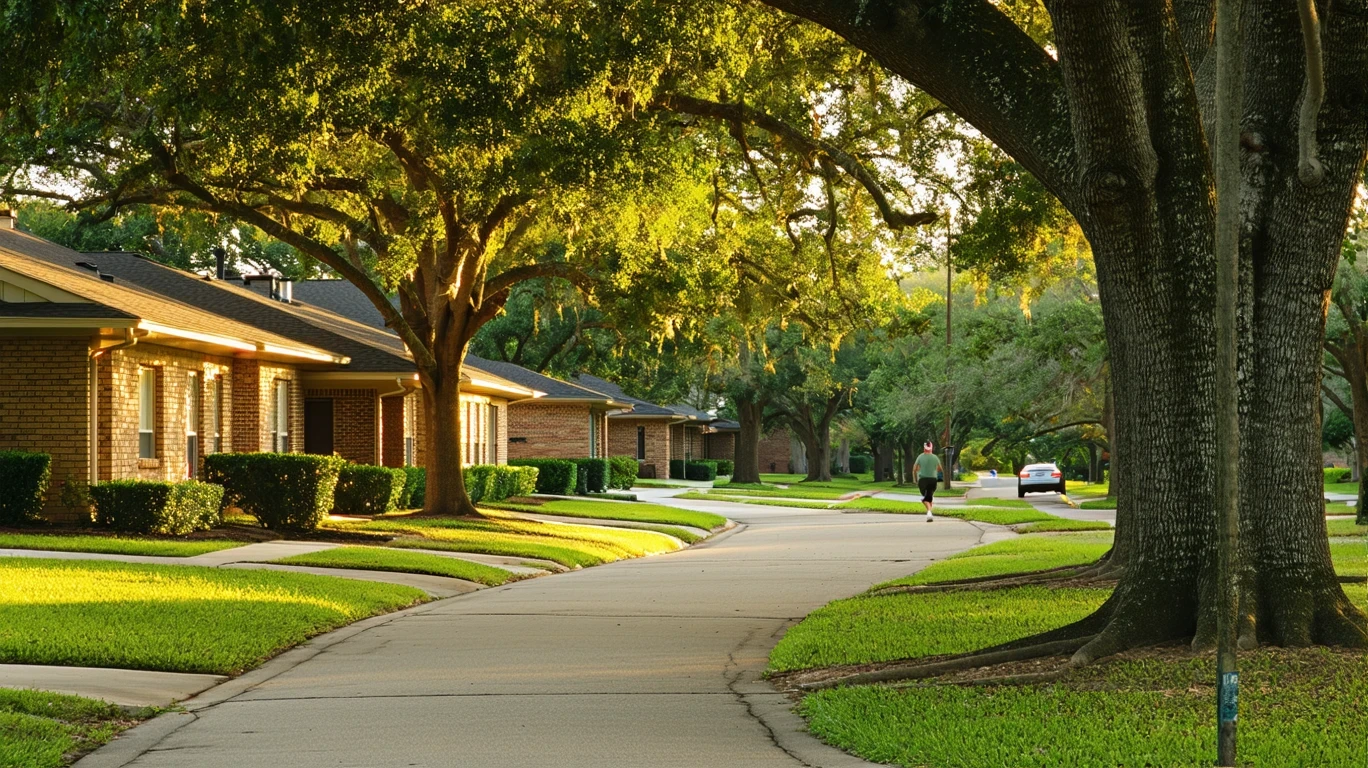
The way Manor is built determines how households spend money, often in ways that aren’t obvious from rent or mortgage figures alone. Errands and groceries don’t distribute evenly across the city—they cluster along commercial corridors. That means even a quick trip for milk or a prescription requires getting in the car, and those short drives add up over weeks and months.
Pedestrian infrastructure exists in pockets, particularly in newer developments, and some areas support walking for recreation or short errands. But for most households, daily logistics depend on vehicle access. Parents managing school runs, workers commuting to jobs outside Manor, and anyone running multiple errands in a day will find themselves planning routes and budgeting time around driving.
Parks and green space are well-integrated throughout the city, offering accessible outdoor options without long drives. But getting to work, restocking the fridge, or picking up a prescription? Those require wheels. The structure of the city doesn’t prevent walkability entirely—it just limits where and when it’s practical.
How this article was built: In addition to public economic data, this article incorporates location-based experiential signals derived from anonymized geographic patterns—such as access density, walkability, and land-use mix—to reflect how day-to-day living actually feels in Manor, TX.
Cost Exposure Profiles
Cost exposure in Manor is shaped by three structural factors: housing entry versus long-term ownership, transportation dependence, and utility volatility. These factors interact differently depending on household composition and behavior, creating distinct exposure profiles.
Low-exposure households own their home, operate a single vehicle, work locally or remotely, and maintain stable household size. These households benefit from predictable housing costs, minimal commute expenses, and controlled utility usage. Their primary financial pressure comes from property taxes and insurance, both of which rise over time but remain manageable with planning.
High-exposure households rent and face annual renewal uncertainty, operate two or more vehicles, commute long distances into the Austin core, or manage complex household logistics (school runs, activities, multi-stop errands). These households absorb compounding costs: rising rent, high fuel expenses, elevated vehicle maintenance, and seasonal utility spikes. Their cost structure is less predictable and harder to control.
The difference between these profiles is not income—it’s structure. A high-earning household with long commutes and multiple vehicles can face more financial pressure than a moderate-income household with short commutes and stable housing. Manor rewards proximity to work, vehicle efficiency, and housing stability. It penalizes long commutes, rental churn, and multi-vehicle dependence.
Frequently Asked Questions
Is Manor more affordable than Austin in 2026? Yes, particularly for housing entry. Manor’s median home value of $289,000 and median rent of $1,611 per month are lower than Austin’s urban core, but transportation costs rise with commute distance, offsetting some of the savings.
What does a typical cost profile look like in Manor? Housing and transportation dominate. Most households spend significantly on rent or mortgage, property taxes, vehicle operation, and fuel. Utilities add seasonal volatility during summer cooling months, and groceries require vehicle access due to corridor clustering.
Do utilities cost more in Manor than in nearby areas? Electricity rates of 15.69¢/kWh are moderate, but usage intensity during extended summer heat can push total bills higher than in cooler climates. Natural gas costs are low due to minimal heating demand.
What costs tend to surprise newcomers in Manor? Transportation dependence and summer cooling costs. Many newcomers underestimate how much they’ll drive for errands and commuting, and how much air conditioning costs during peak heat months.
Are property taxes higher in Manor than in nearby cities? Texas relies heavily on property taxes in the absence of state income tax, so property tax rates tend to be higher than in other states. Rates vary by jurisdiction, but homeowners should expect property taxes to be a significant recurring expense.
Can you live in Manor without a car? It’s difficult. Bus service exists, but coverage and frequency are limited. Most errands, jobs, and amenities require driving, and walkable areas are confined to specific pockets rather than distributed citywide.
Is Manor a good value for renters or buyers? Manor offers better value for buyers planning to stay long-term, particularly those working locally or remotely. Renters gain flexibility but face renewal uncertainty and less control over year-to-year cost increases.
How do grocery costs compare to the rest of Texas? Grocery pricing in Manor tracks close to regional averages, with moderate pressure across staple categories. The bigger factor is access—most grocery trips require a vehicle due to corridor clustering of food retailers.
—