
Can you live in Des Plaines without a car? The short answer: it depends where you land and where you’re going. Des Plaines sits in a mobility middle ground—close enough to Chicago to benefit from rail connections, suburban enough that driving still dominates daily life outside a few key corridors. Transportation options in Des Plaines reflect that duality: rail service opens doors for downtown commuters, but most errands, school runs, and evening plans still assume you’ve got keys in hand.
What newcomers often miss is that Des Plaines isn’t uniformly car-dependent. Certain pockets near transit stations and commercial corridors support a less auto-reliant lifestyle, while peripheral neighborhoods operate more like classic suburbs where a vehicle isn’t optional—it’s infrastructure. Understanding which Des Plaines you’re moving to matters as much as knowing the city name.
How People Get Around Des Plaines
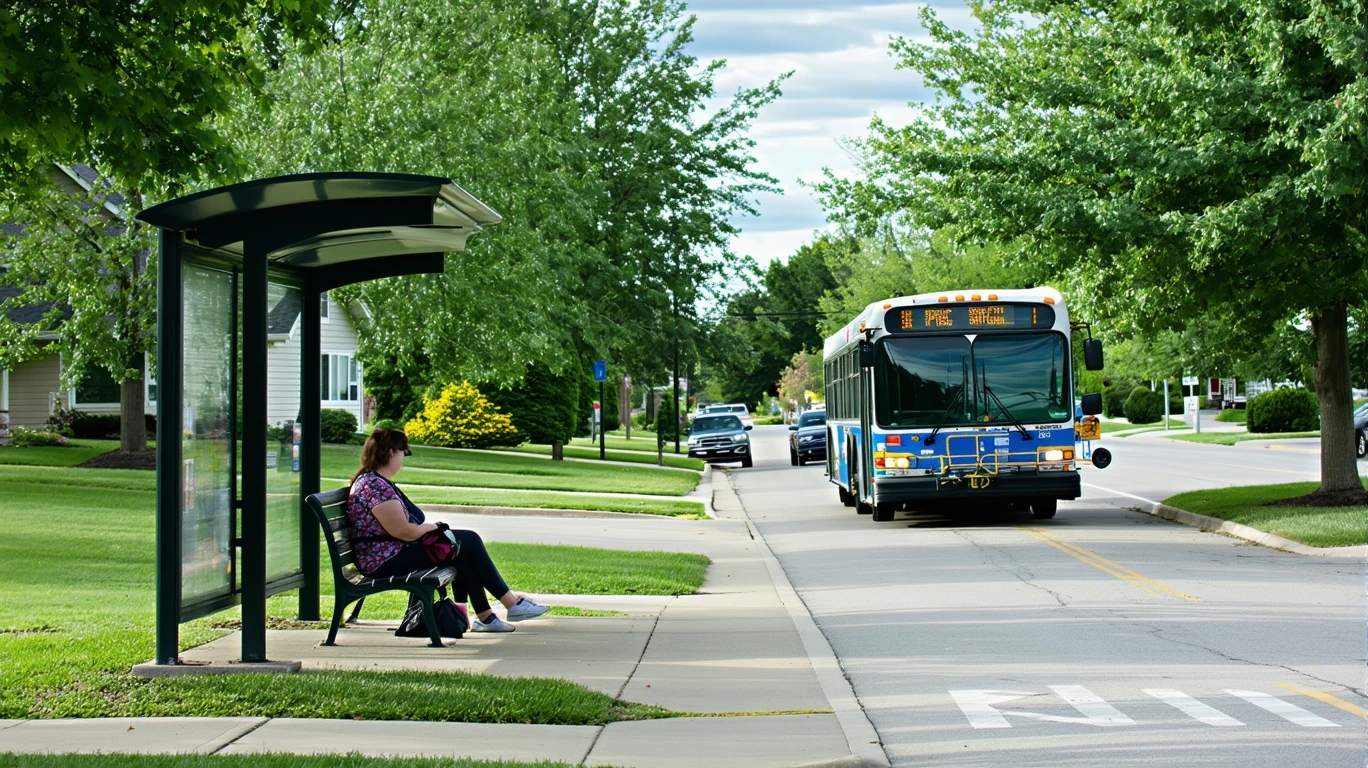
Des Plaines operates on a tiered mobility system. The backbone is rail service—Metra’s North Central Service runs through the city, connecting residents to downtown Chicago and offering a genuine alternative to driving for work commutes. That rail link changes the equation for households near the stations, turning what would be a grinding highway slog into a predictable, schedule-based commute.
But step away from those corridors, and the picture shifts. Most of Des Plaines is built around the car. Streets are wide, destinations spread out, and daily errands—groceries, pharmacies, kids’ activities—typically require driving. The city shows pockets of walkable infrastructure, especially where pedestrian paths and sidewalks are denser, but those areas don’t blanket the entire city. You’ll find neighborhoods where walking to a coffee shop or corner store works fine, and others where the nearest anything is a ten-minute drive.
Cycling infrastructure is more present here than in many comparable suburbs. Bike lanes and paths appear throughout parts of the city, and the ratio of bike-friendly routes to road network is notably high. That doesn’t mean Des Plaines is a bike commuter’s paradise, but it does mean residents who want to cycle for errands or recreation have more options than they might expect in a suburb this size.
Public Transit Availability in Des Plaines
Public transit in Des Plaines often centers around systems such as Metra, which provides the most direct and practical connection to Chicago’s Loop. For residents living near a station, this is the mobility anchor—reliable, predictable, and far less stressful than navigating the Kennedy Expressway during rush hour. Rail service works best for traditional nine-to-five commuters heading into the city; it’s less useful for reverse commutes, off-peak trips, or multi-stop days.
Bus service exists, but coverage is uneven. Some corridors see regular service, while others operate on limited schedules that don’t support spontaneous trips or late-night returns. Transit tends to work well along commercial spines and near denser residential areas, but it thins out quickly in quieter, single-family neighborhoods. If your daily routine involves multiple stops, irregular hours, or destinations outside the main transit corridors, the system starts to feel more like a backup than a primary option.
Transit’s role in Des Plaines is less about replacing the car entirely and more about reducing how often you need it. Households near stations can realistically go car-light—one vehicle instead of two, or no car for the primary commuter. But true car-free living requires either a very specific location or a willingness to structure your entire routine around transit and walking.
Driving & Car Dependence Reality
For most Des Plaines residents, driving isn’t a preference—it’s the default. The city’s layout, like much of suburban Chicago, assumes car ownership. Grocery stores, schools, medical offices, and retail clusters are spaced in ways that make walking impractical and transit coverage incomplete. Parking is abundant and free in most areas, which removes one of the friction points that might otherwise push people toward alternatives.
Car dependence here isn’t about sprawl in the Sun Belt sense—Des Plaines is relatively compact—but about the way destinations are distributed. You might live a mile from a grocery store, but without a sidewalk network or safe crossings, that mile feels longer and less walkable than it would in a denser, older suburb. The car becomes the path of least resistance, especially for families managing multiple stops or time-sensitive schedules.
Commuting by car offers flexibility that transit can’t match. You’re not bound by schedules, you can handle multi-stop days, and you control the route. But that flexibility comes with exposure to traffic volatility, especially for those commuting into Chicago or across the northwest suburbs during peak hours. The Kennedy and the Tri-State can turn a twenty-minute drive into an hour without warning, and that unpredictability becomes part of the daily calculus.
Commuting Patterns & Daily Mobility
Des Plaines sits at a crossroads of commuting patterns. A significant share of residents—nearly half—face long commutes, a reflection of the city’s role as a bedroom community for Chicago and the broader metro area. Many households here are trading proximity for housing affordability or space, absorbing the time cost on the front or back end of the workday.
The average commute clocks in around 29 minutes, which sounds manageable until you factor in variability. That’s the mean, not the mode, and it smooths over the difference between a train rider’s predictable half-hour and a driver’s wildly inconsistent forty-five minutes. Commute time in Des Plaines is less about distance and more about mode and timing. Rail commuters know exactly how long the trip takes; drivers are guessing based on when they leave and what traffic decides to do.
Work-from-home adoption remains relatively low here—under 12% of workers. That means the majority of Des Plaines households are still moving daily, and the infrastructure to support that movement leans heavily on cars and a single rail line. For households with two working adults, the question isn’t whether you need a car, but whether you need two.
Who Transit Works For — and Who It Doesn’t
Transit in Des Plaines works best for a specific profile: individuals or couples commuting to downtown Chicago on a regular schedule, living within walking or biking distance of a Metra station, and whose daily errands can be handled on foot or with occasional car access. For that group, Des Plaines offers a genuinely viable lower-car lifestyle, especially compared to suburbs farther out with no rail service at all.
Transit works less well for families with kids in activities, households with irregular work hours, or anyone whose job is in the suburbs rather than the city. School pickups, evening practices, weekend errands—these don’t align with transit schedules, and the gaps add up quickly. Renters in core areas near stations have the best shot at making transit work day-to-day, while homeowners in peripheral neighborhoods are almost universally car-dependent.
The difference isn’t just about proximity to a station; it’s about the density and mix of destinations around you. If you’re near a corridor where grocery stores, pharmacies, and restaurants cluster, you can patch together a less car-reliant routine. If you’re in a neighborhood where every destination requires a drive, transit becomes a commute-only tool, not a mobility system.
Transportation Tradeoffs in Des Plaines
Choosing between transit and driving in Des Plaines isn’t about picking the “better” option—it’s about matching your mobility needs to the infrastructure that exists. Transit offers predictability and removes the stress of traffic, but it locks you into fixed schedules and limited coverage. Driving offers control and flexibility, but it exposes you to congestion, parking hassles in the city, and the ongoing cost of fuel and maintenance.
For Chicago commuters, the tradeoff often tips toward rail. The time savings during rush hour, the ability to read or work on the train, and the elimination of parking costs downtown make Metra the practical choice. For everyone else—especially those working in the suburbs or managing complex household logistics—the car remains the only realistic option.
The real tradeoff isn’t transit versus driving; it’s where you choose to live within Des Plaines. Proximity to a station or a walkable corridor changes the entire transportation equation, reducing how often you need to drive and opening up the possibility of a one-car or car-light household. Location within the city determines your monthly budget exposure to transportation costs more than any single decision about mode.
FAQs About Transportation in Des Plaines (2026)
Is public transit usable for daily commuting in Des Plaines?
Yes, if you’re commuting to downtown Chicago and live near a Metra station. Rail service provides a reliable, schedule-based option that avoids highway congestion. For suburban commutes or off-peak travel, transit coverage is limited, and driving becomes the more practical choice.
Do most people in Des Plaines rely on a car?
Yes. The majority of residents drive for daily errands, school runs, and commuting. While rail service supports car-light living for some households, the city’s layout and destination spacing make car ownership the norm, especially outside core transit corridors.
Which areas of Des Plaines are easiest to live in without a car?
Neighborhoods within walking distance of Metra stations and near commercial corridors with grocery stores and services offer the best chance of reducing car dependence. These areas combine transit access with walkable errands, though a completely car-free lifestyle still requires careful planning.
How does commuting in Des Plaines compare to nearby cities?
Des Plaines benefits from direct rail access to Chicago, which gives it an edge over suburbs without Metra service. Commute times are moderate but heavily influenced by mode and timing. Compared to deeper suburban areas, Des Plaines offers more transit options; compared to closer-in neighborhoods, it’s more car-reliant.
Can you bike for transportation in Des Plaines?
Cycling infrastructure is more developed here than in many comparable suburbs, with bike lanes and paths present throughout parts of the city. Biking works well for errands and recreation in certain areas, though it’s less practical as a primary commute mode unless your destination is nearby and the route is safe and direct.
How Transportation Fits Into the Cost of Living in Des Plaines
Transportation in Des Plaines isn’t just about getting from A to B—it’s a structural factor that shapes housing decisions, time budgets, and household flexibility. Where you live within the city determines whether you can realistically use transit, how often you’ll drive, and whether a second car is optional or essential. Those choices ripple into fuel costs, vehicle maintenance, insurance, and parking, but they also affect less visible costs like time, stress, and scheduling complexity.
Households near transit corridors gain optionality. They can choose rail for the daily commute and drive only when needed, reducing overall transportation exposure. Families in peripheral neighborhoods don’t have that choice—they’re locked into car dependence by geography, and their transportation costs reflect that reality. The difference isn’t just financial; it’s about control, predictability, and how much of your day gets consumed by logistics.
Understanding how mobility works in Des Plaines helps you make smarter decisions about where to live, how many cars you need, and what tradeoffs you’re willing to accept. Transit access isn’t evenly distributed, and neither is walkability. The city rewards proximity to stations and corridors, and it penalizes distance with time and cost. Knowing that going in makes the difference between a transportation setup that works and one that quietly drains your budget and your patience.
How this article was built: In addition to public economic data, this article incorporates location-based experiential signals derived from anonymized geographic patterns—such as access density, walkability, and land-use mix—to reflect how day-to-day living actually feels in Des Plaines, IL.