
Transportation options in Clermont revolve almost entirely around personal vehicles, with public transit playing a narrow, supplementary role for a small subset of residents. The city’s low-rise, spread-out layout and the way residential and commercial areas are distributed mean that most daily needs—groceries, errands, work commutes—require a car. While bus service does exist and cycling infrastructure is more developed than in many similar-sized communities, neither changes the fundamental reality: Clermont is a car-first environment, and households without reliable vehicle access face significant friction in day-to-day life.
This isn’t a failure of planning or preference—it’s a structural outcome of how the city is built. Homes, schools, and shopping are separated by distances that make walking impractical for most trips, and the density needed to support frequent, comprehensive transit simply isn’t there. For newcomers, especially those relocating from transit-rich metro areas, the adjustment can be jarring. What felt like a quick errand elsewhere now requires planning, a car, and often more time than expected.
How People Get Around Clermont
The dominant mobility pattern in Clermont is driving, and it’s not close. The majority of residents commute by car, run errands by car, and manage household logistics with a vehicle as the central tool. This isn’t about convenience—it’s about necessity. The city’s layout, characterized by single-family neighborhoods, commercial corridors, and limited walkable density, makes car ownership the default for anyone managing a job, a family, or a routine that involves more than one destination per day.
Public transit exists in the form of bus service, but it serves a limited role. Coverage is concentrated along specific corridors, and for most residents—especially those in suburban subdivisions or on the city’s edges—transit isn’t a practical option for daily commuting or errands. Cycling infrastructure is notably present, with bike-to-road ratios that exceed what you’d find in many comparable communities, but this doesn’t translate into bike-primary households. Instead, cycling functions as a recreational amenity or a supplement for short, discretionary trips, not a replacement for car dependency.
What newcomers often misunderstand is that Clermont’s car dependence isn’t about a lack of alternatives in principle—it’s about how those alternatives map onto real daily needs. A household might live near a bus stop and bike lanes, but if grocery stores are spread thin, work is 35 minutes away, and school pickup requires a detour, the car remains indispensable. The city’s structure doesn’t punish non-drivers overtly; it simply makes life without a car exponentially harder.
Public Transit Availability in Clermont
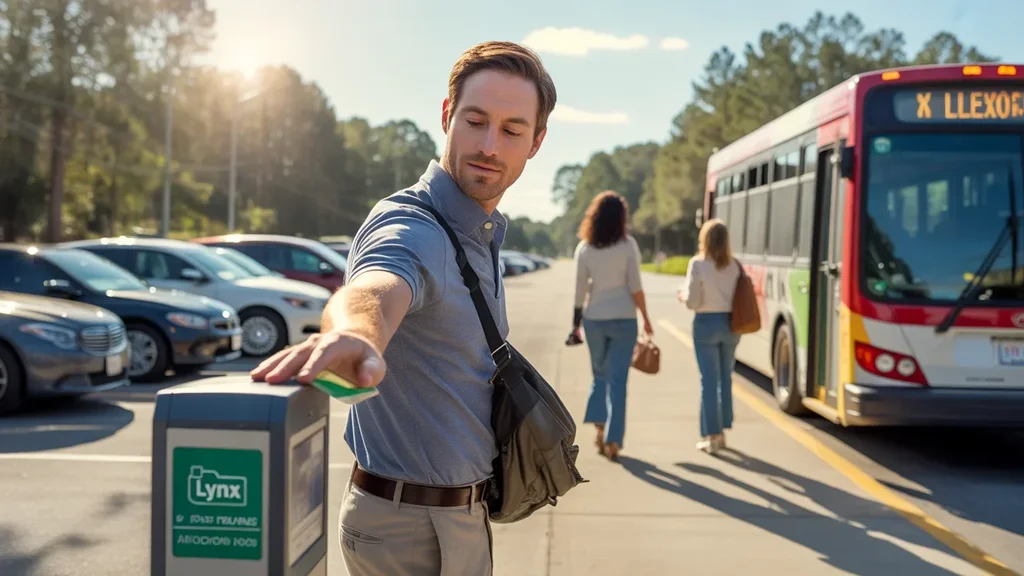
Public transit in Clermont centers around bus service, which provides limited but functional coverage for specific corridors and rider types. The system is not designed to serve the entire city comprehensively, and it doesn’t try to. Instead, it connects key nodes—commercial areas, some residential zones, and regional transfer points—making it viable for riders whose origins, destinations, and schedules align with available routes.
Transit works best for individuals who live near serviced corridors, have flexible arrival times, and don’t need to make multiple stops throughout the day. It’s less viable for families managing school drop-offs, workers with strict start times, or anyone whose daily routine involves errands that span multiple parts of the city. Coverage gaps are significant in suburban neighborhoods, and service frequency means that missed connections or schedule mismatches can add substantial time to a trip.
For households evaluating whether transit can realistically replace a car, the answer is almost always no—not because the service is poorly run, but because the city’s geography and density don’t support transit as a primary mobility tool. Transit in Clermont is supplementary: it helps some people some of the time, but it doesn’t eliminate the need for car access for the vast majority of residents.
Driving & Car Dependence Reality
Driving isn’t optional in Clermont—it’s the foundation of daily life. The city’s low-density, spread-out development pattern means that work, shopping, healthcare, and schools are rarely within walking distance of each other, and often not within biking distance either. Parking is abundant and free in most areas, which removes one of the friction points that makes driving costly or inconvenient in denser cities, but it also reinforces the car-first infrastructure that defines how people move.
Car dependence in Clermont isn’t about preference or lifestyle choice—it’s about structure. Households need vehicles to function, and most need more than one. Single-car households face logistical challenges if work schedules don’t align, if kids need to be in different places at the same time, or if one partner works outside the city while the other manages local errands. Two-car households are the norm, and for families, three vehicles isn’t uncommon once teenage drivers enter the picture.
This creates exposure that doesn’t exist in transit-accessible cities. Households absorb the full cost of vehicle ownership—purchase or lease, insurance, maintenance, registration, fuel—without the option to offset it by relying on public transit for some trips. There’s no fallback. If a car breaks down, daily life stops until it’s fixed or replaced. That’s a different kind of financial and logistical vulnerability than what households face in places where a car is optional.
Commuting Patterns & Daily Mobility
Commuting in Clermont tends to be long, car-dependent, and oriented toward regional employment centers rather than local jobs. The average commute is 35 minutes, and nearly 60% of workers face what’s classified as a long commute—a reflection of the fact that many residents live in Clermont but work elsewhere, often in Orlando or surrounding metro areas. This isn’t a city where most people walk or bike to work; it’s a city where commuting is a significant daily time and cost commitment.
For households with two working adults, commuting patterns often don’t align. One partner might work locally with a short drive, while the other commutes 40 minutes or more to a regional job. This creates scheduling complexity, especially for families managing school drop-offs, after-school pickups, or errands that need to happen during the workday. The lack of viable transit options means these logistics are entirely car-based, and any disruption—traffic, vehicle trouble, weather—has cascading effects.
Remote work has softened this pressure for some households, with about 11% of workers in Clermont working from home. For those individuals, the commute burden disappears entirely, and the calculus around where to live shifts. But for the majority, commuting remains a daily reality that shapes housing decisions, time availability, and household costs in ways that are hard to avoid.
Who Transit Works For — and Who It Doesn’t
Public transit in Clermont works for a narrow slice of residents: individuals without complex daily logistics, whose origins and destinations align with bus routes, and who have schedule flexibility. This might include single adults working near serviced corridors, retirees making occasional trips, or students with predictable, fixed schedules. For these households, transit can function as a viable, if limited, option.
Transit does not work for families managing multiple daily stops, workers with strict schedules or regional commutes, or anyone living in suburban neighborhoods outside the serviced corridors. It also doesn’t work well for households that rely on running errands as part of their daily routine—grocery shopping, picking up kids, medical appointments—because the city’s sparse accessibility for food and services means those trips are spread out and hard to chain together without a car.
Renters living near bus lines might find transit more practical than suburban homeowners, but even then, the tradeoff is significant: longer trip times, limited schedule control, and the inability to make multi-stop trips efficiently. For most households, especially those with children or dual incomes, transit isn’t a realistic substitute for car ownership. It’s a backup option at best, and for many, it’s not an option at all.
Transportation Tradeoffs in Clermont
The tradeoff between driving and transit in Clermont isn’t really a tradeoff—it’s a forced choice. Driving offers control, flexibility, and the ability to manage complex daily logistics, but it comes with the full financial and maintenance burden of vehicle ownership. Transit offers lower direct costs for those who can use it, but it imposes time penalties, schedule constraints, and geographic limitations that make it impractical for most households.
For individuals whose lives fit the narrow corridor where transit is viable, the benefit is real: no car payment, no insurance, no fuel or maintenance costs. But that corridor is small. Most residents face a reality where driving is non-negotiable, and the only real tradeoff is whether to own one car or two—or, for larger families, two or three.
Cycling infrastructure adds a third option, but it’s supplementary rather than primary. Clermont’s bike-to-road ratio is notably high, meaning there are more dedicated paths and lanes than in many similar communities. But cycling doesn’t solve the core problem: distances are too long, errands are too spread out, and the climate—hot and humid much of the year—makes biking a less practical daily option for most people. It’s a recreational asset and a way to reduce car trips for some errands, but it doesn’t replace the need for a vehicle.
How this article was built: In addition to public economic data, this article incorporates location-based experiential signals derived from anonymized geographic patterns—such as access density, walkability, and land-use mix—to reflect how day-to-day living actually feels in Clermont, FL.
FAQs About Transportation in Clermont (2026)
Is public transit usable for daily commuting in Clermont?
Public transit in Clermont is usable for a small subset of commuters whose routes align with available bus service and who have flexible schedules. For most workers—especially those commuting to regional employment centers or managing multi-stop daily routines—transit isn’t a practical primary option. The system exists, but it’s supplementary rather than comprehensive.
Do most people in Clermont rely on a car?
Yes. The vast majority of Clermont residents rely on personal vehicles for commuting, errands, and household logistics. The city’s layout, low density, and limited transit coverage make car ownership essential for most households, and multi-car households are common, especially among families.
Which areas of Clermont are easiest to live in without a car?
Areas near bus corridors and with closer proximity to grocery stores and services are the most viable for car-free or car-light living, but even in those areas, the tradeoffs are significant. Most neighborhoods in Clermont are designed around car access, and living without one requires accepting longer trip times, limited schedule flexibility, and reduced access to jobs and services.
How does commuting in Clermont compare to nearby cities?
Commuting in Clermont tends to be longer and more car-dependent than in denser nearby cities with more robust transit systems. The average commute is 35 minutes, and a majority of workers face long commutes, often to regional employment centers outside the city. This reflects Clermont’s role as a residential community within a larger metro area rather than a self-contained employment hub.
Can you get by with one car in Clermont?
Single-car households are possible but logistically challenging, especially for families or dual-income couples with non-aligned schedules. If both adults work, if kids need transportation, or if daily errands require multiple stops, one car often isn’t enough. Two-car households are the norm, and the city’s infrastructure assumes that level of vehicle access.
How Transportation Fits Into the Cost of Living in Clermont
Transportation in Clermont isn’t just a line item—it’s a structural factor that shapes where people live, how they manage time, and what financial flexibility they have. Because car ownership is non-negotiable for most households, the costs associated with it—purchase or lease, insurance, fuel, maintenance—are unavoidable. There’s no transit fallback that allows households to reduce vehicle expenses, and the commute lengths mean fuel and wear-and-tear costs accumulate faster than in cities where jobs and housing are closer together.
This affects housing decisions in direct ways. Living closer to work or services reduces commute time and fuel costs, but it often comes with higher housing prices. Living farther out might lower rent or mortgage payments, but it increases transportation time and expense. For households evaluating monthly spending in Clermont: the real pressure points, transportation is one of the largest and least flexible categories, and it’s one that doesn’t scale down easily.
For a fuller picture of how transportation costs interact with housing, utilities, and other expenses, the Monthly Budget article provides numeric context and household-specific breakdowns. But the takeaway here is simpler: in Clermont, getting around costs money and time, and there’s no easy way to avoid either. The city’s structure makes cars essential, and that reality shapes nearly every other financial and logistical decision households make.