
Flower Mound sits in the Dallas metro with a median household income of $154,471 per year and a median home value of $467,600. Those numbers suggest affluence, but they don’t explain who feels comfortable here and who doesn’t. Comfort isn’t a single income figure—it’s the point where housing stops forcing compromise, utility swings become predictable rather than stressful, and families can access what they need without constant logistical friction.
This article explains how income pressure actually works in Flower Mound, helping you judge whether your earnings and lifestyle expectations align with the reality on the ground.
What “Living Comfortably” Means in Flower Mound
Comfort in Flower Mound means different things depending on household type, but it consistently revolves around space, access, and predictability. For families, it means living near parks and schools without sacrificing home size or adding commute time. For couples, it often means securing a home that doesn’t consume every dollar of dual income. For single adults, it’s about finding housing that leaves room for savings and lifestyle spending without requiring a second job.
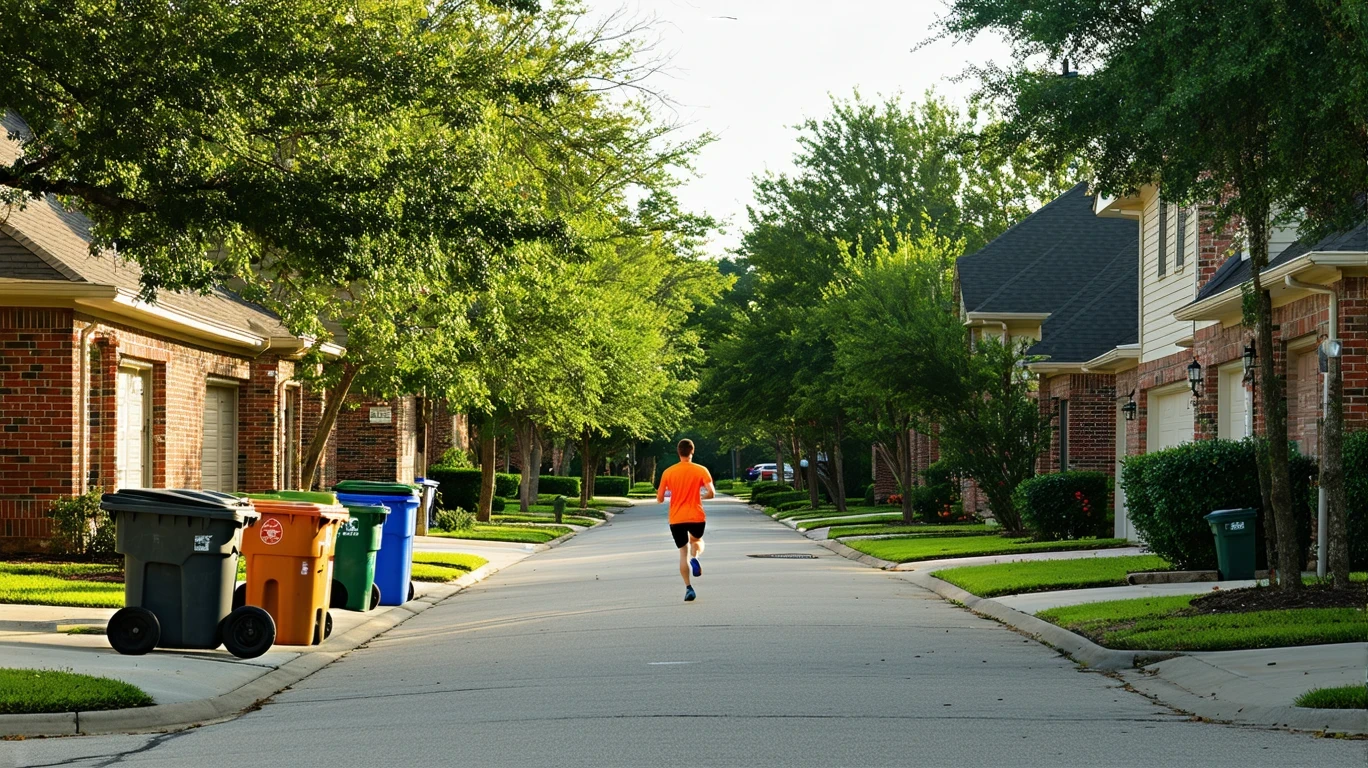
The physical structure of Flower Mound shapes these expectations. Parks are abundant—density exceeds high thresholds—and family infrastructure is strong, with playgrounds widely distributed and schools present throughout. Some neighborhoods feature walkable pockets with higher pedestrian-to-road ratios, but food and grocery options remain corridor-clustered, meaning most households still depend on cars for routine errands. The mixed building heights and presence of both residential and commercial land use suggest a place in transition, not a uniform suburb.
Comfort here also means absorbing the cost of cooling during extended summer heat. Air conditioning isn’t optional, and electricity rates of 16.04¢/kWh mean that households running AC heavily will see bills climb. Natural gas, priced at $25.56/MCF, plays a smaller role given the mild winters, but the seasonal swing in utility costs is real and affects how predictable monthly expenses feel.
What comfort doesn’t mean: living without tradeoffs. Even households well above the median income face decisions about proximity versus space, convenience versus cost, and time versus money. The question isn’t whether tradeoffs exist—it’s whether you have enough income to choose which tradeoffs you’re willing to make.
Where Income Pressure Shows Up First
Housing dominates the financial landscape in Flower Mound. The median home value of $467,600 and median gross rent of $2,039 per month set the baseline, but those figures don’t capture the pressure points. Families seeking space near good schools and parks often face bidding competition, pushing prices higher. Renters find options concentrated in specific corridors, limiting flexibility. Single adults and younger couples may find themselves choosing between proximity to work and housing they can afford without stretching every month.
Utility costs add a second layer of pressure, particularly during summer. Extended cooling seasons mean air conditioning runs for months, not weeks. Households in larger homes or those with older HVAC systems see electricity bills climb significantly. The volatility isn’t catastrophic, but it’s enough to disrupt budgets for households already tight on housing costs. Heating costs remain modest due to mild winters, but the asymmetry—high cooling, low heating—means that annual utility exposure tilts heavily toward summer months.
Transportation pressure in Flower Mound is less about distance and more about dependency. Because food and grocery options cluster along corridors rather than distributing evenly, most households need reliable vehicles for daily errands. Gas prices of $2.49/gal are manageable, but the cumulative cost of driving everywhere—groceries, schools, appointments, dining—adds up. Walkable pockets exist, but they serve only a fraction of residents. For families juggling multiple schedules, car dependency becomes a logistical and financial constant.
For families, the pressure points multiply. Childcare, extracurriculars, and the need for space all compete for income. The strong family infrastructure—abundant parks, accessible playgrounds, and moderate school density—eases some logistical friction, but it doesn’t eliminate the cost of raising children in a place where housing alone consumes a significant share of income. Families at or below the median income often find themselves managing tradeoffs between home size, location, and financial breathing room.
How the Same Income Feels Different by Household
Households at similar income levels experience very different financial pressure in Flower Mound depending on size, expectations, and how they navigate the local structure.
Single adults face the least housing pressure if they’re willing to rent and prioritize flexibility over space. The median gross rent of $2,039 per month is steep, but it’s manageable on a solid individual income, especially if shared housing or smaller units are options. Transportation costs remain moderate—gas prices are reasonable, and some walkable pockets reduce car dependency slightly. The challenge for single adults isn’t survival; it’s building savings and maintaining lifestyle spending while absorbing rent that doesn’t drop just because you’re one person. Comfort arrives when rent no longer dictates every other financial decision.
Couples without children often find Flower Mound more accessible, particularly with dual incomes. Housing tradeoffs become central: buying near parks and schools (even without kids) often means paying a premium, while renting offers flexibility but no equity. Utility swings are easier to absorb with two incomes, and transportation costs split naturally. The pressure point for couples is usually housing—whether to stretch for ownership or accept long-term renting. Comfort emerges when housing costs don’t consume both incomes and when discretionary spending feels possible without guilt or stress.
Families with children face the most complex financial picture. The strong family infrastructure—parks exceeding high density thresholds, playgrounds widely available, and schools distributed throughout—reduces logistical friction, but it doesn’t reduce cost. Housing dominates the budget, and the need for space pushes many families toward higher price points. Utility costs hit harder in larger homes, especially during summer. Car dependency remains unavoidable for errands, and the corridor-clustered food and grocery options mean driving is constant. Comfort for families means housing that doesn’t force compromise on location or size, utility bills that don’t create monthly anxiety, and enough income left over to cover the endless expenses of raising children. Families below the median income often feel the squeeze most acutely, even in a place designed to support them.
The Comfort Threshold (Qualitative)
Comfort in Flower Mound isn’t a single income number—it’s the point where financial decisions stop being forced by scarcity and start being shaped by preference. It’s when housing no longer requires you to choose between space, location, and financial stability. It’s when utility bills during summer heat are predictable and absorbable, not a source of monthly dread. It’s when car dependency feels like convenience rather than a tax on every errand.
For families, the threshold includes the ability to access parks and schools without logistical gymnastics, to afford a home large enough that children aren’t sharing rooms out of necessity, and to have income left after housing and utilities for the relentless costs of raising kids. For couples, it’s the ability to own rather than rent if they choose, to absorb seasonal cost swings without recalibrating the budget, and to save for future goals without cutting into present quality of life. For single adults, it’s housing that doesn’t consume half of gross income, transportation that doesn’t dictate where you can live, and enough margin to build savings and enjoy discretionary spending.
Below this threshold, tradeoffs multiply. Distance versus cost. Space versus budget. Convenience versus planning burden. Above it, choices expand. You’re not immune to financial pressure, but you’re no longer reacting to it constantly. The transition isn’t dramatic—it’s gradual, and it varies by household—but it’s real. Flower Mound can work well for households across income levels, but only if expectations match reality.
Why Online Cost Calculators Get Flower Mound Wrong
Most cost-of-living calculators treat Flower Mound as a data point: plug in the median rent, add estimated utilities, multiply transportation by a fixed formula, and output a total. The problem is that totals don’t explain how life actually works here.
Calculators assume uniform car dependency, missing the walkable pockets that exist in parts of Flower Mound. They treat food and grocery access as evenly distributed, ignoring the corridor-clustered reality that forces most households to drive for routine errands. They underestimate the length and intensity of the cooling season, often using statewide or regional averages that don’t capture how many months air conditioning runs at full capacity. They assign no value to the abundance of parks or the strength of family infrastructure, even though these factors significantly affect household logistics and quality of life for families.
Most importantly, calculators output a single “required income” figure, implying that comfort is universal and predictable. In reality, comfort depends on household size, lifestyle expectations, housing priorities, and tolerance for tradeoffs. A single adult and a family of four can both live in Flower Mound, but their financial experiences will be completely different—even at the same income level.
People feel surprised after moving because they relied on totals instead of understanding pressure points. They didn’t anticipate how much housing would dominate their budget, or how car dependency would add friction to daily life, or how summer utility bills would swing higher than expected. The numbers weren’t wrong—they just didn’t explain what those numbers would feel like in practice.
How to Judge Whether Your Income Fits Flower Mound
Instead of asking “Do I earn enough?”, ask yourself these questions:
- How sensitive are you to housing tradeoffs? If you need space, proximity to parks and schools, and a specific neighborhood, housing will dominate your budget. If you’re flexible on size or willing to rent longer, pressure eases.
- Can you absorb seasonal utility swings? Summer cooling costs are significant and sustained. If a few months of higher electricity bills would disrupt your budget, that’s a warning sign.
- Is time or money your limiting factor? Car dependency is real here. If you value walkability and hate driving for every errand, Flower Mound’s corridor-clustered structure will frustrate you. If you don’t mind driving and prioritize other factors, it’s less of an issue.
- How much financial flexibility do you expect month to month? If you’re already stretched thin on housing and utilities, the cumulative cost of transportation, groceries, and family expenses will feel relentless. If you have margin, those costs become manageable.
- Do you value family infrastructure and outdoor access? If parks, playgrounds, and schools matter to your household, Flower Mound delivers. If those amenities don’t factor into your priorities, you’re paying for something you won’t use.
There’s no pass/fail here. The goal is honest self-assessment. Flower Mound works well for many households, but only when income, expectations, and lifestyle align with the structure of the place.
FAQs About Living Comfortably in Flower Mound
Is Flower Mound affordable for single adults?
It depends on income and housing expectations. The median gross rent of $2,039 per month is steep for one person, but manageable on a strong individual income, especially if you’re willing to consider shared housing or smaller units. Transportation costs are moderate, and some walkable pockets reduce car dependency slightly. The challenge isn’t survival—it’s building savings while absorbing rent that doesn’t scale down just because you’re single.
How much do utilities really cost during summer?
Electricity rates are 16.04¢/kWh, and summer cooling is sustained and intense. Actual bills depend on home size, insulation, and HVAC efficiency, but expect air conditioning to run for months, not weeks. Households in larger or older homes will see higher bills. The key isn’t the rate—it’s the duration and intensity of use. If you’re already tight on housing costs, utility swings can disrupt your budget.
Can families live comfortably below the median income?
It’s possible, but tradeoffs multiply quickly. Housing costs dominate, and the need for space pushes many families toward higher price points. The strong family infrastructure—abundant parks, accessible playgrounds, moderate school density—eases logistics, but it doesn’t reduce cost. Families below the median often find themselves choosing between home size, location, and financial breathing room. Comfort depends on how much flexibility you have and which tradeoffs you’re willing to accept.
Do you need a car to live in Flower Mound?
For most households, yes. Food and grocery options are corridor-clustered, meaning daily errands require driving. Some walkable pockets exist with higher pedestrian infrastructure, but they serve only a fraction of residents. If you hate car dependency or want to live without a vehicle, Flower Mound will frustrate you. If you don’t mind driving and prioritize other factors—parks, schools, space—it’s less of an issue.
How does Flower Mound compare to other Dallas suburbs?
Flower Mound sits at a higher price point than many Dallas suburbs, with a median home value of $467,600 and median household income of $154,471 per year. What you’re paying for: strong family infrastructure, abundant parks, and a mix of walkable pockets and suburban space. If those priorities don’t align with your household, you may find better value elsewhere. If they do, Flower Mound delivers on what it promises—but only if your income supports the entry cost.
How this article was built: In addition to public economic data, this article incorporates location-based experiential signals derived from anonymized geographic patterns—such as access density, walkability, and land-use mix—to reflect how day-to-day living actually feels in Flower Mound, TX.
Flower Mound can work well for some households—but only if expectations match reality. Comfort isn’t guaranteed by income alone. It emerges when your earnings, priorities, and tolerance for tradeoffs align with the structure of the place. If you’re still evaluating whether Flower Mound fits, focus less on totals and more on pressure points. That’s where the real decision lives.
—