
—
Picture two households earning the same salary, one opening their mail in a Dallas apartment, the other in a Frisco subdivision. The Dallas renter sees $1,305 for rent, $180 for electricity, $45 for gas, and a grocery receipt showing $320. The Frisco household opens $1,803 for rent, $195 for electricity, $48 for gas, and a nearly identical grocery bill. Same income, same month—but the cost pressure lands differently, and not just because one number is bigger than another.
Dallas and Frisco sit within the same North Texas metro, share the same regional price environment, and face the same summer heat. Yet the financial experience of living in each city diverges sharply in 2026, driven less by price differences and more by how housing entry costs, transportation infrastructure, and daily logistics interact with household structure. For families weighing space against access, or young professionals trading commute time for walkability, the decision hinges on which costs dominate your day-to-day reality—and which you can control.
This comparison explains where cost pressure concentrates in Dallas versus Frisco, how the same income feels different depending on household type, and which structural trade-offs matter most when choosing between the two cities. It does not calculate total affordability or declare a winner; instead, it clarifies the mechanisms that make one city fit certain households better than the other.
Housing Costs: Entry Barrier vs. Space Access
Housing costs represent the starkest structural difference between Dallas and Frisco in 2026. Dallas shows a median home value of $270,700 and median gross rent of $1,305 per month, while Frisco’s median home value reaches $531,400 with median gross rent at $1,803 per month. These figures reflect not just price differences but fundamentally different housing markets: Dallas offers a mix of older urban stock, mid-rise apartments, and single-family neighborhoods with varied entry points, while Frisco’s housing market skews toward newer suburban construction with higher baseline costs.
For renters, the $498 monthly difference between Dallas and Frisco represents a significant ongoing obligation that compounds over lease terms. Dallas renters gain access to neighborhoods with rail transit, walkable errands infrastructure, and mixed-use corridors—features that reduce transportation and convenience costs elsewhere in the budget. Frisco renters pay more for newer construction, which typically means lower maintenance friction, more predictable utility performance, and access to master-planned community amenities. The trade-off isn’t simply about rent amount; it’s about whether you’re paying for location flexibility or housing predictability.
For prospective buyers, the gap widens further. The $260,700 difference in median home values translates to substantially different down payment requirements, mortgage obligations, and property tax exposure. Dallas buyers can enter homeownership at a lower threshold, but they may face older housing stock with higher maintenance and renovation costs over time. Frisco buyers confront a steeper entry barrier but gain access to newer homes with modern efficiency standards, lower immediate repair risk, and neighborhoods designed around family-oriented infrastructure. First-time buyers sensitive to entry costs will find Dallas more accessible; households prioritizing long-term predictability and space may justify Frisco’s premium.
| Housing Type | Dallas | Frisco | What It Means |
|---|---|---|---|
| Median Gross Rent | $1,305/month | $1,803/month | Frisco renters face higher ongoing obligation; Dallas offers lower entry and more flexibility |
| Median Home Value | $270,700 | $531,400 | Dallas enables earlier homeownership; Frisco requires substantially higher down payment and mortgage capacity |
| Housing Stock Character | Mixed-age, varied density, urban pockets | Newer suburban construction, master-planned | Dallas trades age and maintenance risk for location access; Frisco trades entry cost for predictability |
The housing difference matters most for households where entry cost dominates the decision. Single adults and young couples without children may prioritize Dallas for its lower rent and proximity to employment centers with shorter commutes. Families seeking space, newer construction, and lower long-term maintenance friction may find Frisco’s premium justified by reduced volatility elsewhere. Renters planning to stay short-term benefit from Dallas’s flexibility; buyers planning to stay a decade or more may value Frisco’s newer housing stock and lower ongoing repair exposure.
Housing takeaway: Dallas fits households where entry barrier and location access drive the decision; Frisco fits households where space, predictability, and newer construction justify higher upfront and ongoing costs. The difference is structural, not simply a matter of one city being more or less expensive.
Utilities and Energy Costs: Rate Parity, Usage Divergence
Utility rate structures in Dallas and Frisco remain nearly identical in 2026, reflecting their shared position within the same regional energy market. Dallas electricity rates sit at 16.04¢/kWh, while Frisco rates are 16.11¢/kWh—a negligible difference that disappears in the noise of household usage patterns. Both cities share the same natural gas price of $30.71/MCF, meaning the cost of heating (when needed) and gas appliances operates on identical terms. The meaningful divergence comes not from rates but from how housing stock, home size, and construction age shape energy consumption.
Dallas housing stock includes a substantial share of older apartments and single-family homes built before modern efficiency standards became widespread. Older construction typically means less effective insulation, single-pane windows, aging HVAC systems, and higher baseline energy loss. During North Texas summers—characterized by extended periods of triple-digit heat—older homes in Dallas can experience significant cooling load, translating rate parity into higher absolute usage. Renters in older Dallas apartments may face utility bills that swing unpredictably based on unit placement, building age, and landlord maintenance decisions. Homeowners in older Dallas neighborhoods gain lower entry costs but inherit higher seasonal utility volatility.
Frisco’s newer housing stock generally incorporates modern building codes, better insulation, dual-pane windows, and more efficient HVAC systems. While Frisco homes tend to be larger—increasing total cooling volume—the efficiency gains often offset the size penalty, resulting in more predictable utility performance. Families in newer Frisco homes experience less month-to-month volatility and fewer surprise bills driven by equipment failure or inefficient construction. The trade-off: higher mortgage or rent obligations in exchange for lower utility unpredictability.
Household size and home type amplify these differences. Single adults or couples in Dallas apartments may see lower absolute utility costs due to smaller square footage, even in older buildings. Families in larger Dallas single-family homes face both size and age penalties, with cooling costs spiking during peak summer months. In Frisco, larger homes mean higher baseline usage, but the efficiency of newer construction keeps costs more stable and predictable across the cooling season. Renters in both cities should verify whether utilities are included or billed separately, as this shifts exposure significantly.
Neither city offers a clear utility cost advantage based on rates alone. The decision hinges on whether you prioritize lower housing entry costs (Dallas) and accept higher utility volatility, or pay more upfront (Frisco) for predictable, efficient energy performance. Households sensitive to budget swings—especially those on fixed incomes or tight monthly margins—may find Frisco’s predictability worth the premium. Households with flexibility to absorb seasonal spikes may prefer Dallas’s lower housing barrier despite occasional utility surges.
Utility takeaway: Rate structures are nearly identical; differences emerge from housing age, size, and efficiency. Dallas renters and buyers in older stock face higher utility volatility; Frisco households in newer construction experience more predictable energy costs. The choice depends on whether you value lower entry costs or lower ongoing unpredictability.
Groceries and Daily Expenses: Price Parity, Access Divergence
Grocery pricing in Dallas and Frisco operates within the same regional price environment in 2026, with both cities sharing a regional price parity index of 103. This means staple grocery costs—bread, milk, eggs, chicken, ground beef—track closely across both cities, with differences driven more by store type and shopping behavior than by location-based price gaps. Dallas derived grocery estimates show bread at $1.89/lb, eggs at $2.79/dozen, and ground beef at $6.89/lb, while Frisco shows bread at $1.84/lb, eggs at $2.95/dozen, and ground beef at $6.74/lb—variations too small to meaningfully affect monthly grocery totals. (Derived estimate based on national baseline adjusted by regional price parity; not an observed local price.)
The meaningful difference lies not in pricing but in how grocery access and daily errands infrastructure shape household behavior. Dallas demonstrates high food and grocery establishment density, with options concentrated along mixed-use corridors and distributed throughout urban neighborhoods. This density enables frequent, smaller shopping trips, reduces reliance on bulk purchasing, and allows households to comparison-shop across discount grocers, ethnic markets, and specialty stores within short distances. For single adults and couples, this translates to lower food waste, more flexibility in meal planning, and the ability to adjust spending week-to-week based on budget pressure.
Frisco’s suburban layout typically concentrates grocery options in commercial nodes along major thoroughfares, requiring car trips for most households. While big-box stores and chain grocers remain accessible, the infrastructure favors less frequent, larger shopping trips—a pattern that increases upfront spending per trip and reduces flexibility for households managing tight weekly budgets. Families with children may find Frisco’s layout efficient for bulk purchasing and meal planning, but single adults or couples may experience less day-to-day control over grocery spending due to trip consolidation.
Dining out and convenience spending follow similar patterns. Dallas’s mixed-use corridors and walkable pockets support frequent, lower-cost dining options—tacos, coffee, casual takeout—that integrate into daily routines without requiring dedicated car trips. This accessibility can either reduce costs (by enabling cheaper prepared meals than cooking at home) or increase them (by making impulse dining too convenient). Frisco’s dining options cluster in commercial centers, requiring intentional trips and favoring sit-down or chain restaurants over quick, low-cost alternatives. Households that plan meals carefully may spend less in Frisco by avoiding convenience creep; households that value spontaneous dining access may prefer Dallas’s infrastructure.
Price sensitivity matters more than absolute pricing. Families managing larger grocery volumes benefit from Frisco’s big-box access and bulk-friendly layout, especially if they have storage space and can absorb upfront spending. Single adults and couples with variable income or tight monthly margins benefit from Dallas’s density and trip flexibility, which allows them to adjust spending in real time. Neither city imposes a structural grocery cost penalty; the difference lies in how infrastructure shapes shopping behavior and spending control.
Grocery takeaway: Pricing remains nearly identical across both cities; differences emerge from access density and trip logistics. Dallas fits households that value frequent, flexible shopping and lower convenience friction; Frisco fits households that plan bulk purchases and prefer consolidated trips. The decision depends on household size, budget flexibility, and whether you prioritize day-to-day control or trip efficiency.
Taxes and Fees: Shared Burden, Different Scale

Property taxes in both Dallas and Frisco operate under Texas’s high-property-tax, no-state-income-tax model, meaning homeowners and renters (indirectly) face significant tax obligations tied to housing values. Because Frisco’s median home value exceeds Dallas’s by more than $260,000, Frisco homeowners confront substantially higher annual property tax bills even if the effective tax rate remains similar. This difference compounds over time, creating a larger ongoing obligation for Frisco buyers that persists regardless of income level or household size.
For renters, property taxes remain embedded in rent pricing, but the visibility differs. Dallas renters benefit from lower baseline rent, which reflects lower property values and correspondingly lower landlord tax obligations. Frisco renters pay higher rent partly because landlords pass through higher property tax costs, though this remains invisible in the lease agreement. Renters in both cities should assume property taxes influence rent levels, but the impact scales with housing value—meaning Frisco renters indirectly shoulder higher tax exposure even without owning property.
Sales taxes in both cities remain consistent with Texas state and local rates, meaning everyday purchases—groceries, gas, household goods—carry the same tax burden regardless of location. This parity eliminates sales tax as a decision factor between Dallas and Frisco, though it reinforces Texas’s reliance on consumption and property taxes rather than income-based taxation. Households with higher spending on taxable goods face the same relative burden in both cities.
Fees and assessments introduce another layer of differentiation. Frisco’s newer master-planned communities often include mandatory homeowner association (HOA) fees that bundle services such as landscaping, amenity access, and neighborhood maintenance. These fees add predictable monthly costs but reduce individual maintenance obligations and create uniform neighborhood standards. Dallas neighborhoods vary widely: some include HOA fees, others do not, and older urban areas may lack formal neighborhood associations entirely. Buyers in Dallas gain more control over maintenance spending but absorb more variability and decision-making friction; Frisco buyers trade control for predictability and bundled services.
Utility fees—trash collection, water, sewer—operate similarly in both cities, though billing structures and service bundling vary by neighborhood and housing type. Renters should verify whether these fees are included in rent or billed separately, as this shifts monthly budget predictability. Homeowners in both cities face similar service costs, though newer Frisco developments may include more bundled services through HOA fees, reducing the number of separate bills to manage.
Tax and fee takeaway: Property tax exposure scales with housing value, meaning Frisco homeowners and renters face higher tax-driven costs despite identical rate structures. HOA fees in Frisco add predictability but reduce spending control; Dallas offers more variability and individual decision-making. The difference matters most for long-term homeowners sensitive to ongoing obligations and households that value bundled services over spending flexibility.
Transportation & Commute Reality
Dallas shows an average commute time of 26 minutes, with 40.2% of workers experiencing long commutes and 7.2% working from home. Frisco reports an average commute of 30 minutes, with 20.9% facing long commutes and 8.4% working from home. These figures reveal competing pressures: Dallas offers shorter average commutes but higher exposure to long-commute scenarios, while Frisco shows longer typical commutes but lower long-commute risk. The difference reflects infrastructure and employment distribution rather than distance alone.
Dallas benefits from rail transit infrastructure, with service connecting downtown employment centers, medical districts, and urban neighborhoods. This rail presence enables some households to avoid car dependency entirely, reducing transportation costs to transit fares and occasional rideshare trips. Walkable pockets within Dallas—supported by higher pedestrian-to-road ratios—allow residents in certain neighborhoods to manage daily errands on foot, further lowering car reliance. For single adults and couples living near transit corridors, Dallas’s infrastructure reduces both time cost and cash cost of transportation, even if some workers still face long commutes due to job location mismatches.
Frisco lacks rail transit access and operates primarily as a car-dependent suburb, meaning nearly all households require vehicle ownership for commuting and errands. The 30-minute average commute reflects typical suburban-to-employment-center travel, often along congested highways during peak hours. However, Frisco’s lower long-commute percentage suggests more residents work within reasonable driving distance, likely due to employment growth in nearby suburban office parks and corporate campuses. Families with two working adults may face dual car ownership requirements, compounding insurance, maintenance, and fuel costs.
Gas prices remain nearly identical—Dallas at $2.47/gal and Frisco at $2.41/gal—eliminating fuel cost as a differentiator. The meaningful difference lies in trip frequency and distance. Dallas households near transit or walkable corridors can reduce weekly driving, lowering fuel consumption and vehicle wear. Frisco households face higher baseline driving for commuting and errands, increasing fuel usage and maintenance frequency regardless of gas price parity.
Time cost versus cash cost creates the core trade-off. Dallas offers infrastructure that can reduce car dependency for some households, lowering transportation cash costs but requiring proximity to transit or walkable neighborhoods (which often correlates with higher rent). Frisco requires car ownership and higher baseline driving, increasing cash costs but offering more predictable commute patterns and lower long-commute exposure. Households with flexible work arrangements or remote work options may find Frisco’s layout manageable; households with fixed office schedules and tight budgets may benefit from Dallas’s transit and walkability options.
Transportation takeaway: Dallas offers shorter average commutes and transit infrastructure that can reduce car dependency for some households; Frisco requires car ownership but shows lower long-commute risk. The decision depends on whether you value transit access and walkability (Dallas) or accept car dependency in exchange for lower long-commute exposure (Frisco).
Where Cost Pressure Concentrates Differently
Housing costs dominate the financial experience in both Dallas and Frisco, but the nature of that dominance differs. In Dallas, housing pressure appears as an ongoing obligation—rent or mortgage payments that remain manageable relative to median income but leave less room for other discretionary spending. In Frisco, housing pressure concentrates at the entry point: higher down payments, higher rent deposits, and higher baseline monthly obligations that require substantially more upfront financial capacity. Households with lower savings or tighter monthly budgets face a structural barrier in Frisco that doesn’t exist to the same degree in Dallas.
Utilities introduce more volatility in Dallas due to older housing stock, while Frisco households experience more predictable energy costs thanks to newer construction. This difference matters most for households on fixed incomes or those managing tight monthly margins, where unexpected utility spikes can disrupt budget stability. Dallas households gain lower housing entry costs but absorb higher seasonal utility risk; Frisco households pay more upfront for housing but reduce month-to-month utility unpredictability.
Transportation patterns create divergent cost structures. Dallas households near transit corridors or walkable neighborhoods can reduce car dependency, lowering transportation cash costs and freeing budget space for other categories. Frisco households face near-universal car ownership requirements, increasing baseline transportation spending through fuel, insurance, and maintenance. The trade-off: Dallas offers infrastructure that can lower transportation costs for some households, while Frisco requires higher transportation spending but delivers more predictable commute patterns and lower long-commute exposure.
Daily errands and grocery logistics follow similar patterns. Dallas’s higher food and grocery establishment density enables frequent, flexible shopping trips that allow households to adjust spending week-to-week. Frisco’s suburban layout favors bulk purchasing and consolidated trips, which can reduce convenience spending creep but requires more upfront cash per trip and reduces day-to-day flexibility. Families with storage space and stable income may find Frisco’s layout efficient; single adults and couples with variable income may prefer Dallas’s trip flexibility and density.
The better choice depends on which costs dominate your household’s financial reality. Households sensitive to entry barriers—first-time renters, young professionals, single adults—may find Dallas’s lower housing costs and transit access more manageable despite higher utility volatility. Households with higher income, savings capacity, and family space needs may justify Frisco’s premium through newer housing, predictable utilities, and lower long-commute risk. Neither city offers a universal cost advantage; the fit depends on whether your household prioritizes access and flexibility (Dallas) or predictability and space (Frisco).
How the Same Income Feels in Dallas vs Frisco
Single Adult
In Dallas, housing becomes the non-negotiable anchor, but the lower rent leaves more room for transportation choices and discretionary spending. Flexibility exists in how often you drive versus use transit, how frequently you dine out versus cook, and whether you absorb utility spikes or adjust usage. In Frisco, housing consumes a larger share of gross income immediately, leaving less flexibility elsewhere. Car ownership becomes mandatory rather than optional, and grocery trips require more planning to avoid convenience spending creep. The same income feels tighter in Frisco because more of it disappears into fixed obligations before discretionary decisions begin.
Dual-Income Couple
In Dallas, two incomes can absorb higher utility volatility and create budget space for lifestyle spending, especially if one or both partners work near transit or in walkable neighborhoods. Commute friction remains manageable, and errands accessibility reduces the time cost of daily logistics. In Frisco, two incomes may be necessary just to meet baseline housing and transportation obligations, with less left over for discretionary categories. Dual car ownership becomes the default, and longer commutes eat into schedule flexibility. The same combined income feels more constrained in Frisco because fixed costs scale with housing and transportation requirements, not household size.
Family with Kids
In Dallas, families face trade-offs between housing space and location access. Lower housing costs enable larger homes or more bedrooms, but older construction increases maintenance friction and utility unpredictability. School access and family infrastructure exist but require more research and neighborhood selection. In Frisco, families pay more upfront for housing but gain newer construction, lower maintenance risk, and master-planned amenities designed around family logistics. The same income feels more stretched in Frisco during the entry phase, but ongoing costs become more predictable once housing is secured. Dallas offers more entry flexibility; Frisco offers more long-term stability.
Decision Matrix: Which City Fits Which Household?
| Decision factor | If you’re sensitive to this… | Dallas tends to fit when… | Frisco tends to fit when… |
|---|---|---|---|
| Housing entry + space needs | Down payment capacity, rent deposit, baseline monthly obligation | You need lower entry costs and can accept older housing stock with higher maintenance risk | You have savings capacity and prioritize newer construction with lower ongoing repair friction |
| Transportation dependence + commute friction | Car ownership requirements, transit access, commute predictability | You value transit options and walkable errands infrastructure that can reduce car dependency | You accept car ownership as mandatory and prioritize lower long-commute exposure over transit access |
| Utility variability + home size exposure | Seasonal bill spikes, budget predictability, energy efficiency | You can absorb utility volatility and prioritize lower housing costs over energy predictability | You value stable monthly utility performance and newer construction efficiency despite higher housing costs |
| Grocery strategy + convenience spending creep | Trip frequency, bulk purchasing, impulse dining access | You prefer frequent, flexible shopping trips and value dense errands infrastructure | You plan bulk purchases and prefer consolidated trips that reduce convenience spending temptation |
| Fees + friction costs (HOA, services, upkeep) | Bundled services, maintenance control, predictable monthly obligations | You want control over maintenance spending and can manage variable service costs | You prefer bundled HOA services that reduce decision-making friction and create predictable fees |
| Time budget (schedule flexibility, errands, logistics) | Commute time, errands consolidation, daily logistics complexity | You value shorter average commutes and walkable errands that reduce daily logistics friction | You accept longer typical commutes in exchange for lower long-commute risk and family-oriented layout |
Lifestyle Fit Beyond the Numbers
Dallas operates as a major urban center with distinct neighborhood identities, cultural institutions, and entertainment districts that support varied lifestyles. The city’s rail transit network connects downtown employment hubs, arts districts, and residential neighborhoods, enabling some households to build routines around transit rather than car ownership. Walkable pockets—particularly in areas with higher pedestrian infrastructure density—allow residents to manage errands, dining, and recreation on foot, reducing both transportation costs and daily logistics friction. Families benefit from integrated park access and water features that provide outdoor recreation without requiring long drives, while single adults and couples find dense food and grocery options that support flexible, spontaneous routines.
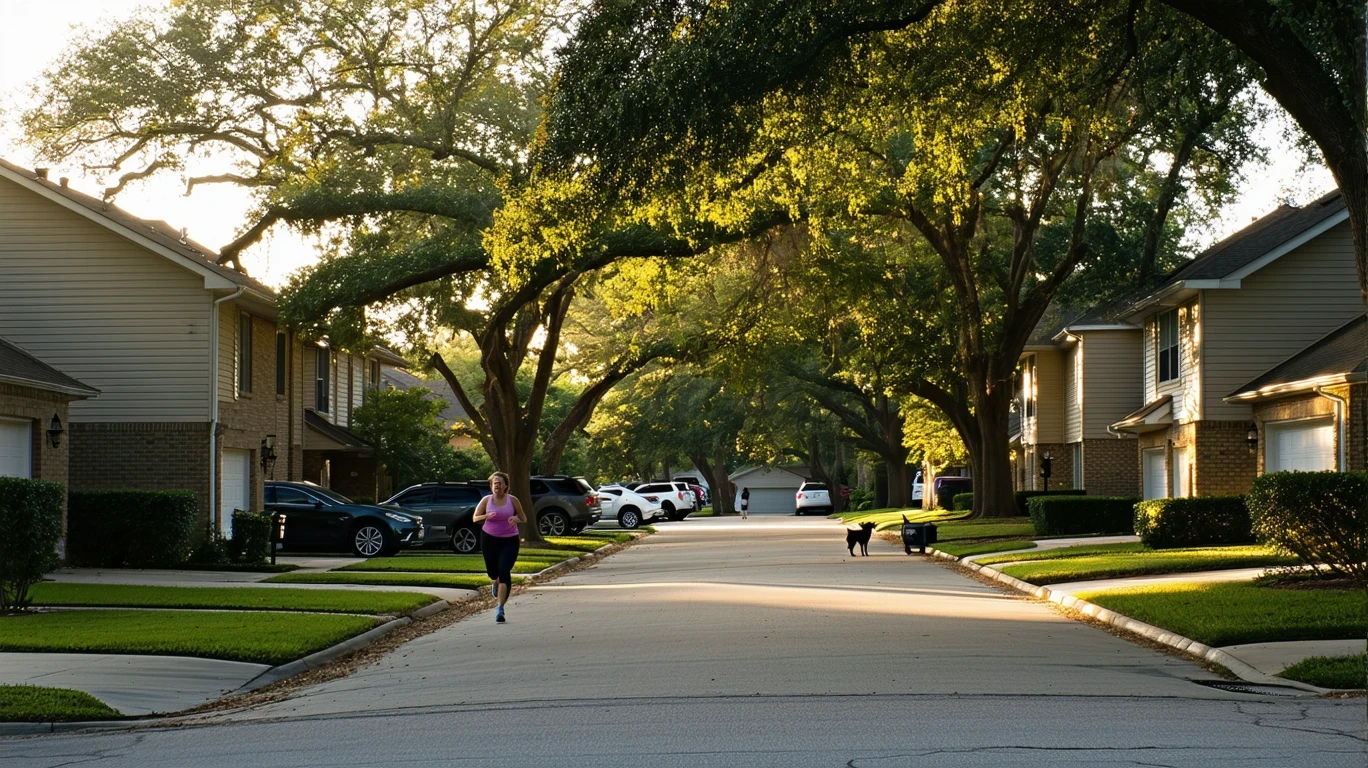
Frisco functions as a master-planned suburban city with newer housing developments, corporate office parks, and family-oriented amenities. The city’s layout prioritizes car access and consolidated commercial nodes, creating a more predictable but less spontaneous daily experience. Families with children may appreciate Frisco’s newer schools, playgrounds, and neighborhood parks designed into residential developments, reducing the need to travel far for family activities. However, the lack of rail transit and lower walkability means nearly all errands and social activities require driving, increasing both time and cash costs for households managing multiple schedules.
Cultural and recreational differences shape lifestyle costs indirectly. Dallas’s more vertical building character and mixed-use corridors support a wider range of dining, entertainment, and social options within short distances, enabling lower-cost spontaneous activities. Frisco’s suburban layout concentrates dining and entertainment in commercial centers, favoring planned outings and sit-down experiences over quick, low-cost alternatives. Households that value spontaneous social access may find Dallas’s infrastructure more aligned with their lifestyle; households that prefer planned, family-oriented activities may find Frisco’s layout more efficient.
Dallas median household income: $63,985 per year | Frisco median household income: $144,567 per year
Dallas average commute: 26 minutes | Frisco average commute: 30 minutes
How this article was built: In addition to public economic data, this article incorporates location-based experiential signals derived from anonymized geographic patterns—such as access density, walkability, and land-use mix—to reflect how day-to-day living actually feels in Dallas, TX.
Frequently Asked Questions
Is Dallas or Frisco more affordable for renters in 2026?
Dallas shows lower baseline rent costs, with median gross rent at $1,305 per month compared to Frisco’s $1,803 per month. This difference reflects housing stock age, density, and access to urban amenities rather than a simple affordability advantage. Dallas renters gain lower entry costs and access to transit and walkable neighborhoods, but may face older housing with higher utility volatility. Frisco renters pay more for newer construction, predictable utilities, and master-planned amenities. The better fit depends on whether you prioritize lower monthly rent or newer housing with reduced maintenance friction.
How do transportation costs differ between Dallas and Frisco in 2026?
Dallas offers rail transit and walkable infrastructure in certain neighborhoods, enabling some households to reduce car dependency and lower transportation cash costs. Frisco operates as a car-dependent suburb, requiring vehicle ownership for nearly all commuting and errands. Gas prices remain nearly identical—$2.47/gal in Dallas versus $2.41/gal in Frisco—so the difference lies in trip frequency and infrastructure access. Dallas households near transit can reduce driving; Frisco households face higher baseline transportation spending through fuel, insurance, and maintenance.
Which city has higher utility costs, Dallas or Frisco?
Utility rates are nearly identical: Dallas electricity costs 16.04¢/kWh, Frisco costs 16.11¢/kWh, and both share the same natural gas price of $30.71/MCF. The meaningful difference comes from housing stock age and size. Dallas’s older housing stock can experience higher cooling costs and more seasonal volatility, while Frisco’s newer construction delivers more predictable utility performance. Households sensitive to budget swings may prefer Frisco’s stability; households prioritizing lower housing entry costs