
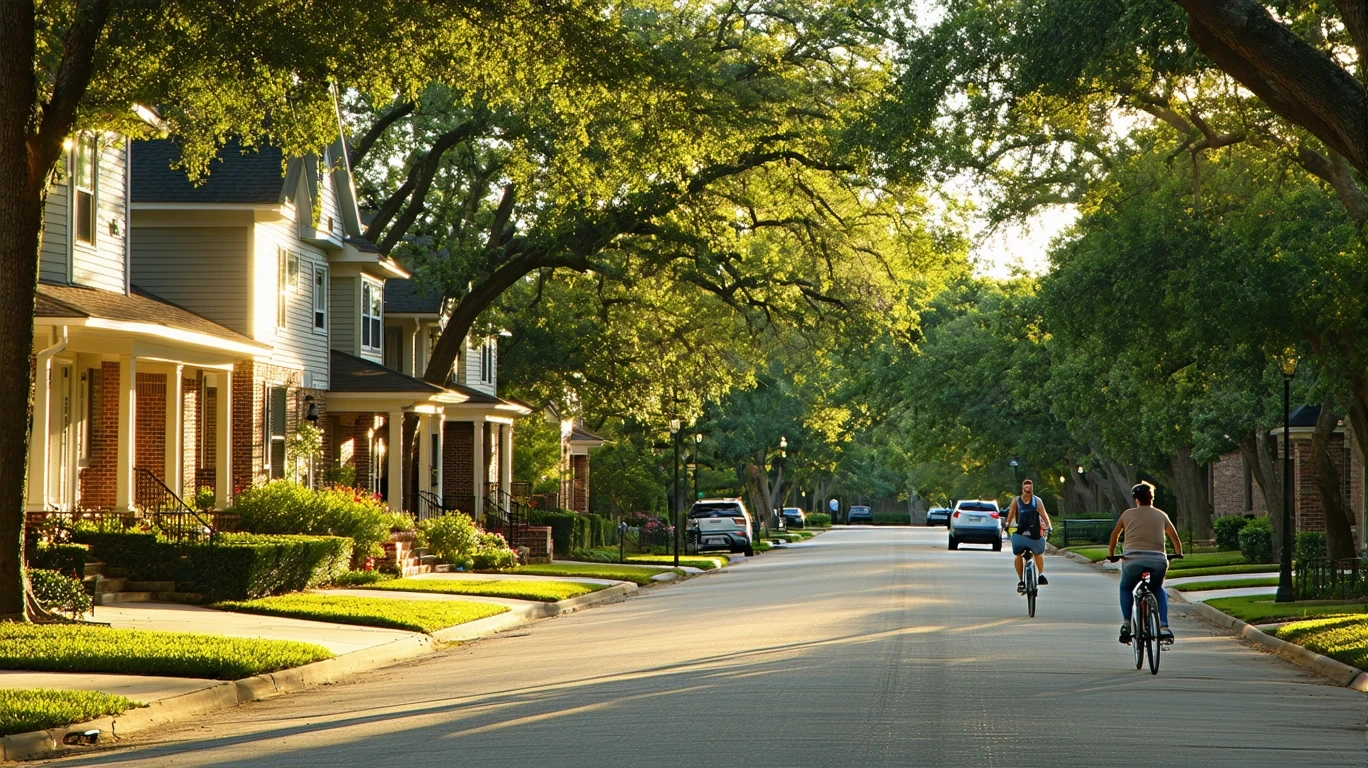
Is Dallas Ready for Your Retirement? A Quick Checklist
- ✅ Hospital and pharmacy access: Hospital facilities and pharmacies present in the area
- ✅ Grocery and errands accessibility: High density of food and grocery establishments
- ✅ Parks and outdoor spaces: Integrated park access with water features
- ✅ Public transit options: Rail service available, reducing car dependency
- ✅ Walkable neighborhoods: Pedestrian infrastructure concentrated in pockets throughout the city
- ⚠️ Climate considerations: Extended cooling season requires utility planning
Why Retirees Choose Dallas
What makes Dallas appealing to retirees who want access without constant driving, healthcare within reach, and outdoor space that doesn’t require a road trip? The city’s structure offers something many retirement destinations struggle to deliver: the ability to run errands, reach medical care, and enjoy green space without being entirely car-dependent. That combination—practical accessibility paired with infrastructure that supports aging in place—is what draws retirees who want autonomy and convenience in equal measure.
Dallas earns a retirement suitability score of 78 out of 100, reflecting strong performance in healthcare access, errands infrastructure, and outdoor amenity availability. The score accounts for the presence of hospital facilities, the high density of grocery and food establishments that reduce trip frequency, integrated park access, and rail transit that offers an alternative to driving. These factors create a retirement environment where daily logistics don’t require constant planning, and where losing the ability to drive doesn’t immediately mean losing independence.
The city’s layout supports retirees who prioritize walkable access in specific neighborhoods, proximity to healthcare without long commutes, and the ability to manage household needs—groceries, prescriptions, routine appointments—without navigating sprawling distances. For retirees evaluating where to settle, Dallas offers infrastructure that reduces friction in daily life, which becomes more valuable as mobility and energy levels shift over time.
Healthcare Access for Seniors
Hospital facilities are present in Dallas, and pharmacies are widely available, which means access to both emergency care and routine prescription management doesn’t require long drives or complex logistics. For retirees managing chronic conditions or facing unexpected health events, proximity to hospital-level care and reliable pharmacy access reduces the stress and time cost of medical management. The presence of hospital infrastructure also signals access to specialists, surgical services, and coordinated care networks that support aging patients with multiple providers.
Medicare acceptance rates in Texas are generally strong, and Dallas’s healthcare infrastructure reflects a system accustomed to serving older patients. Urgent care facilities, physical therapy providers, and specialty senior care options are part of the broader medical landscape, though the density and convenience of these services will vary by neighborhood. Retirees who need regular physical therapy, cardiology follow-ups, or diabetes management will find that the city’s healthcare footprint supports ongoing care without requiring travel to distant metro centers.
Drive times to major medical centers vary depending on where you live within Dallas, but the presence of hospital facilities within the city limits means that emergency access and specialist appointments are manageable for most residents. For retirees weighing healthcare access as a primary factor, Dallas delivers the infrastructure needed to age in place without sacrificing medical support. Prescription access through local pharmacies, coupled with delivery options that have expanded in recent years, further reduces the logistical burden of medication management.
Senior-Friendly Amenities and Services
The high density of food and grocery establishments in Dallas translates into something concrete for retirees: fewer trips, shorter distances, and more options within a manageable radius. When errands are broadly accessible, it means you’re not planning your week around a single grocery run or rationing pharmacy visits. This structure reduces the cognitive and physical load of household management, which becomes more significant as energy and mobility shift. The ability to pick up a few items without a major expedition preserves autonomy and reduces reliance on others.
Rail transit is present in Dallas, offering an alternative to driving for retirees who want to reduce car dependency or who anticipate a future where driving becomes less feasible. Transit access doesn’t eliminate the need for a car in most cases, but it does provide optionality—especially for retirees living near transit corridors who want to attend events, visit family, or access services without navigating traffic or parking. Senior shuttle services, ride-sharing programs, and paratransit options further expand mobility for those who need door-to-door support.
Integrated park access, supported by high park density and the presence of water features, gives retirees outdoor space that doesn’t require a drive to enjoy. Parks within walking distance or a short trip support daily routines—morning walks, social meetups, or simply time outside—that contribute to physical and mental health. Libraries, community centers, and lifelong learning programs through local institutions offer intellectual engagement and social connection, which are protective factors against isolation as social circles naturally contract in retirement.
Cost of Living for Retirees
Housing costs in Dallas reflect a median home value of $270,700, which positions the city as accessible compared to many metro areas but not inexpensive. For retirees downsizing from larger homes or relocating from higher-cost regions, this price point may offer breathing room. For those on fixed incomes or modest retirement savings, it requires careful evaluation of what’s affordable without stretching budgets thin. Condos, single-family homes in established neighborhoods, and 55+ communities each carry different cost structures, and property taxes in Texas—where there is no state income tax—are a significant line item that doesn’t disappear in retirement.
Texas does not tax Social Security benefits, pension income, or retirement account withdrawals, which improves the after-tax position for retirees compared to states with income taxes. However, property taxes are higher to compensate for the lack of income tax revenue, and retirees should expect annual property tax bills that require planning. Senior exemptions and freezes are available in Texas for homeowners over 65, which can limit increases and provide some cost predictability, but the baseline tax burden remains a factor in long-term affordability.
Utility costs in Dallas are shaped by an extended cooling season, with electricity rates of 16.04¢/kWh driving summer bills higher for retirees who need consistent climate control. Older adults are more vulnerable to heat exposure, so reducing air conditioning use isn’t always a safe option. Natural gas prices of $30.71/MCF affect heating costs during occasional cold snaps, though heating expenses are far less dominant than cooling. Some utilities offer senior rate programs or budget billing plans that smooth out seasonal swings, which can help retirees manage cash flow on fixed incomes.
Medicare supplement costs, prescription expenses, and out-of-pocket healthcare spending vary widely by individual health status, but retirees should budget for these as ongoing fixed costs. The availability of pharmacies and healthcare infrastructure in Dallas supports cost management through competition and access, but the expenses themselves remain a central part of retirement budgeting.
Monthly Retirement Budget in Dallas
Here’s what a typical monthly retirement budget might look like in Dallas:
| Category | Modest Lifestyle | Comfortable Lifestyle |
|---|---|---|
| Housing (mortgage/rent, insurance, taxes) | $1,200–$1,500 | $1,800–$2,400 |
| Healthcare (Medicare supplement, prescriptions, co-pays) | $400–$600 | $600–$900 |
| Food (groceries, occasional dining) | $350–$500 | $550–$750 |
| Transportation (car, insurance, gas, maintenance) | $300–$450 | $450–$650 |
| Utilities (electric, gas, water, internet) | $200–$300 | $250–$400 |
| Entertainment & Recreation | $150–$250 | $300–$500 |
| Miscellaneous (personal care, clothing, household) | $150–$250 | $250–$400 |
| Total | $2,750–$3,850 | $4,200–$6,000 |
Estimates based on average senior spending patterns and local costs. Ranges reflect illustrative context and do not include one-time expenses or major healthcare events.
Community and Social Opportunities
Senior centers, recreation programs, and volunteer opportunities in Dallas provide structure and connection for retirees who want to stay engaged. Walking groups, hobby clubs, and faith communities offer regular social touchpoints that counter isolation, which is a significant health risk in retirement. The integrated park access and water features in the city create natural gathering spaces where informal social interaction happens—morning walkers who become acquaintances, dog owners who chat at the park, neighbors who meet on trails.
Cultural activities, seasonal events, and intergenerational programs give retirees opportunities to participate in community life beyond age-segregated settings. Libraries and community colleges offer lifelong learning classes, lecture series, and workshops that support intellectual engagement. For retirees who value learning and curiosity, these resources provide low-cost or free ways to stay mentally active.
Proximity to family is a major factor for many retirees choosing Dallas, and the city’s accessibility for visiting relatives—supported by rail transit, walkable neighborhoods in pockets, and a well-connected road network—makes it easier for adult children and grandchildren to visit without logistical friction. For retirees who prioritize being near family or who want to remain involved in grandchildren’s lives, Dallas’s infrastructure supports that goal without requiring constant driving or complex coordination.
Aging in Place Considerations
Aging in place—staying in your home as mobility, health, and care needs change—requires both physical infrastructure and access to services. In Dallas, the presence of walkable pockets means that some neighborhoods support aging in place better than others. Retirees in areas with high pedestrian infrastructure, nearby grocery access, and transit options have more flexibility as driving becomes harder or less desirable. Those in car-dependent areas will need to plan for transportation alternatives or consider relocation before mobility loss becomes a crisis.
Home modification services—ramps, grab bars, stairlifts, widened doorways—are available through contractors and aging-in-place specialists, though costs and timelines vary. In-home care availability, from part-time assistance with daily tasks to full-time skilled nursing, is part of the broader care landscape in Dallas. Assisted living options exist for retirees who need more support than home care can provide but don’t require nursing home-level medical supervision.
Climate considerations matter for aging in place. The extended cooling season and occasional winter cold snaps mean that retirees need reliable climate control and backup plans for power outages. Older adults are more vulnerable to heat-related illness, so homes without adequate cooling or retirees who try to save money by limiting air conditioning use face real health risks. Emergency services and disaster preparedness resources are available, but retirees should have plans in place for extreme weather events, especially if they live alone or have limited mobility.
Walkability in pockets rather than citywide means that aging in place is more feasible in some Dallas neighborhoods than others. Retirees evaluating where to settle should prioritize areas with pedestrian infrastructure, nearby errands access, and transit options if they want to reduce future reliance on driving. The presence of parks and outdoor space within walking distance supports daily routines that contribute to physical and mental health as mobility declines.
FAQs About Retirement in Dallas
What’s the average cost of retirement in Dallas?
A modest retirement lifestyle in Dallas typically requires $2,750–$3,850 per month, while a more comfortable lifestyle runs $4,200–$6,000 per month, covering housing, healthcare, food, transportation, utilities, and discretionary spending. These ranges reflect illustrative context and vary based on housing choices, health status, and lifestyle preferences. Property taxes and cooling costs are significant line items that retirees should plan for, especially on fixed incomes.
How good is healthcare access for seniors?
Healthcare access in Dallas is strong, with hospital facilities present and pharmacies widely available. This infrastructure supports both emergency care and routine management of chronic conditions without requiring long drives or travel to distant metro centers. Medicare acceptance is generally robust, and the presence of specialists, urgent care, and physical therapy providers means that retirees can access coordinated care locally. For retirees prioritizing healthcare proximity, Dallas delivers the infrastructure needed to age in place with medical support.
Are there active senior communities?
Yes, Dallas supports active retirement through senior centers, recreation programs, walking groups, and volunteer opportunities. The integrated park access and high density of outdoor spaces create natural venues for social interaction and physical activity. Lifelong learning programs, cultural events, and hobby clubs offer engagement beyond age-segregated settings. For retirees who want to stay socially and intellectually active, Dallas provides the amenities and infrastructure to support that goal.
What are the tax implications of retiring in Texas?
Texas does not tax Social Security benefits, pension income, or retirement account withdrawals, which improves after-tax income for retirees compared to states with income taxes. However, property taxes in Texas are higher to compensate, and retirees should expect significant annual property tax bills. Senior exemptions and freezes are available for homeowners over 65, which can limit increases and provide cost predictability, but the baseline tax burden remains a factor in long-term affordability. There is no estate tax in Texas.
Making the Move: Is Dallas Right for Your Retirement?
Dallas offers retirees a combination of healthcare access, errands infrastructure, and outdoor amenity availability that supports aging in place without constant logistical friction. The presence of hospital facilities, high grocery and food density, integrated park access, and rail transit creates an environment where daily life doesn’t require exhaustive planning or total car dependency. For retirees who value autonomy, convenience, and access to medical care, Dallas delivers infrastructure that reduces the burden of household management as mobility and energy shift over time.
The city’s advantages—broadly accessible errands, walkable pockets, and strong healthcare infrastructure—are most valuable to retirees who prioritize practical access over sprawling space or rock-bottom costs. The extended cooling season and property tax burden require planning, but the lack of state income tax and the availability of senior exemptions provide some financial relief. For retirees evaluating cost of living in Dallas: the tradeoffs behind the total, the key question is whether the infrastructure and access justify the cost structure on a fixed income.
Retirees who thrive in Dallas tend to be those who value walkable neighborhoods, want healthcare within reach, and appreciate outdoor space that doesn’t require a drive. Those who prefer car-free living citywide, need rock-bottom housing costs, or want to avoid summer heat exposure may find better fits elsewhere. The decision comes down to whether Dallas’s infrastructure—hospital access, errands density, park integration, and transit options—aligns with your priorities for aging in place and maintaining independence as needs change.
How this article was built: In addition to public economic data, this article incorporates location-based experiential signals derived from anonymized geographic patterns—such as access density, walkability, and land-use mix—to reflect how day-to-day living actually feels in Dallas, TX.