
Can you live in Dallas without a car? For most people, the answer is no—but the full picture is more nuanced than that. Dallas is a sprawling metro where mobility depends heavily on where you live, where you work, and how flexible your schedule is. While public transit exists and rail service is present, the city’s layout and development pattern mean that driving remains the dominant way people get around. Understanding how transportation actually works here—and who it works for—is essential before you move.
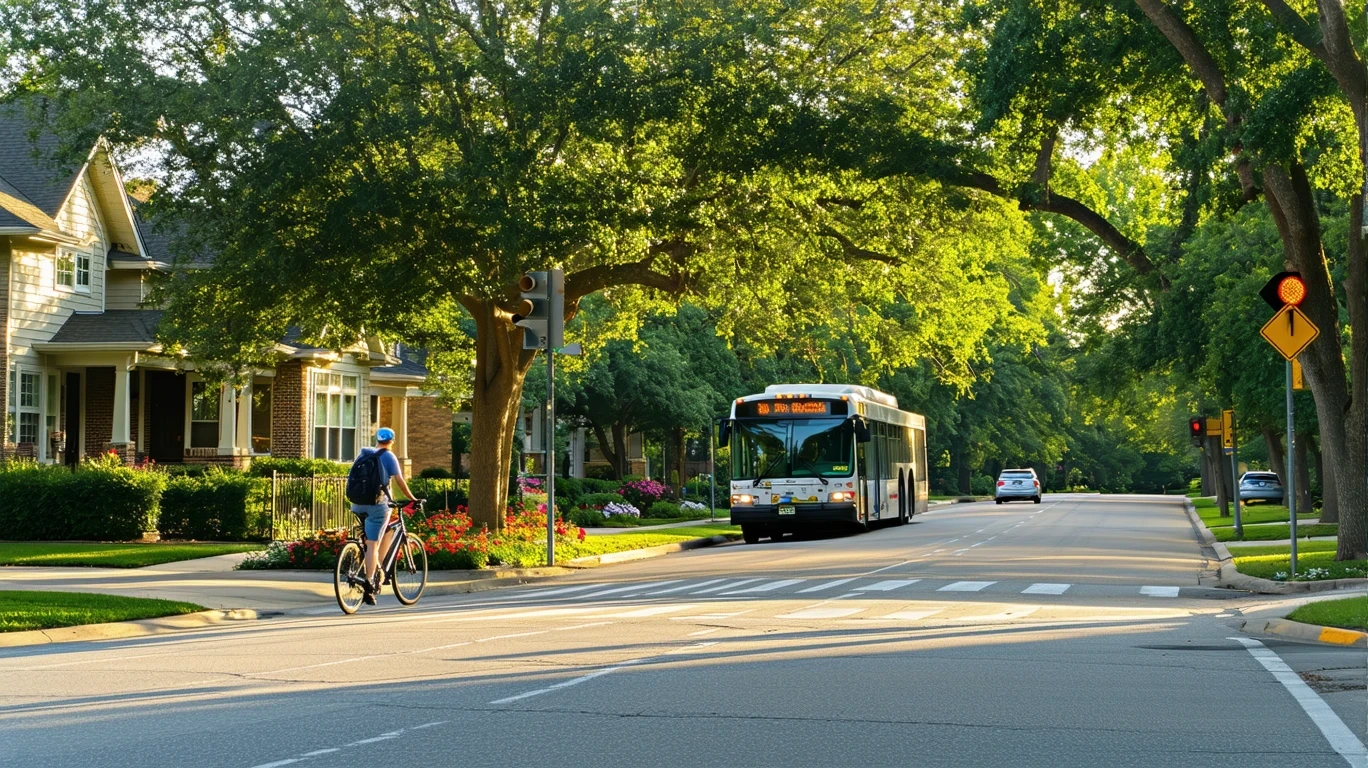
How People Get Around Dallas
Dallas operates as a car-first city with pockets of transit viability. The metro covers a vast geographic area, and most neighborhoods, job centers, and daily destinations are designed with driving in mind. Parking is widely available, roads are built for volume, and the assumption in most areas is that residents will own a vehicle.
That said, Dallas isn’t uniform. The city has areas with substantial pedestrian infrastructure, high food and grocery density, and rail access. These walkable pockets—primarily in and near the urban core—support a different kind of daily life, one where errands, dining, and some commutes can happen without a car. But these areas are the exception, not the rule, and even residents in transit-accessible neighborhoods often keep a vehicle for flexibility.
What newcomers often misunderstand is the scale. Dallas feels less like a single city and more like a collection of districts and suburbs stitched together by highways. Transit can work beautifully if your home and workplace both sit along a rail line. But if either endpoint is outside the core or requires a transfer, the time and logistics tilt heavily in favor of driving.
Public Transit Availability in Dallas
Public transit in Dallas often centers around systems such as DART (Dallas Area Rapid Transit), which operates both bus and rail service across parts of the metro. Rail is present and serves key corridors, connecting downtown Dallas to surrounding areas, the airport, and some suburban nodes. For people who live and work along these lines, rail can be a practical, reliable option.
Bus service exists throughout the city, but coverage and frequency vary significantly by neighborhood. In denser areas close to downtown or along major corridors, buses run regularly and connect to rail stations. In outer suburbs and residential zones, service is sparser, and routes may not align well with typical commute patterns or errand needs.
Transit works best for people whose daily routines fit within the rail network’s geography. If you’re commuting from a station-adjacent apartment to a job downtown, or moving between walkable districts during the day, the system can handle much of your mobility. But if your job is in a suburban office park, or you need to make multiple stops across different parts of the metro, transit becomes far less practical.
Late-night and weekend service is more limited than weekday peak hours, which affects shift workers, service industry employees, and anyone whose schedule doesn’t align with traditional commute times. Transit also doesn’t extend meaningfully into many of the residential suburbs that ring the city, leaving those areas almost entirely car-dependent.
Driving & Car Dependence Reality
For most Dallas residents, driving isn’t optional—it’s structural. The metro’s size, the distance between home and work, and the dispersed nature of shopping, healthcare, and schools all reinforce car dependency. Highways like I-35E, I-30, and the Dallas North Tollway function as the primary connective tissue of the region, and daily life is organized around the assumption that you can drive.
Parking is generally abundant and often free, especially outside the urban core. Even in denser neighborhoods, street parking or small lots are common, and residential buildings typically include dedicated spaces. This removes one of the friction points that makes car ownership impractical in other cities.
Sprawl is both a cause and a consequence of car dependence. Because the metro is so spread out, destinations that would be a short trip in a compact city become 20- or 30-minute drives in Dallas. And because driving is the norm, development continues to prioritize road access and parking over walkability or transit proximity.
Commute flexibility is one advantage of driving in Dallas. You’re not constrained by rail schedules, bus routes, or transfer points. You can leave when you want, stop where you need to, and adjust your route in real time. For households with children, multiple jobs, or irregular schedules, that flexibility is often non-negotiable.
Commuting Patterns & Daily Mobility
Commuting in Dallas typically involves a single-destination drive, often along a highway or major arterial road. The metro’s average commute is 26 minutes, which is moderate by national standards, but the experience varies widely depending on where you live and work. Core-to-core commutes can be quick and transit-friendly. Suburb-to-suburb commutes, especially those that cross the metro, can stretch much longer and almost always require a car.
About 40.2% of workers face long commutes, a reflection of the metro’s geographic spread and the mismatch between where affordable housing is located and where jobs are concentrated. For many households, accepting a longer commute is the tradeoff for accessing lower rent or a larger home.
Only 7.2% of workers work from home, meaning the vast majority of residents are commuting regularly. This reinforces the importance of understanding your transportation options before choosing where to live. Proximity to your workplace—or to a transit line that serves it—has a direct, daily impact on time, cost, and stress.
Multi-stop commutes are common for parents, caregivers, and anyone managing errands alongside work. Dropping kids at school, stopping for groceries, or picking up a prescription all become harder without a car, especially in areas where services aren’t clustered or walkable. In neighborhoods with high food and grocery density, some of this friction disappears. But in most of Dallas, a car is the tool that makes a complex day manageable.
Who Transit Works For — and Who It Doesn’t
Transit works well for a specific slice of Dallas residents: those who live in or near the urban core, have access to a rail station, and commute to a destination the system serves directly. If you’re renting in a walkable neighborhood with high errands accessibility, working downtown or along a transit corridor, and comfortable with fixed schedules, you can build a low-car or car-free life.
It also works for people who use transit for part of their routine but keep a car for flexibility. Commuting by rail during the week and driving on weekends is a common pattern, especially among younger professionals and couples without children.
Transit doesn’t work well for families with school-age children, especially those in suburban neighborhoods where schools, activities, and services are spread out. It also falls short for anyone whose job is outside the core or requires travel between multiple sites during the day. Shift workers, especially those with early-morning or late-night hours, often find that service doesn’t align with their needs.
Homeowners in outer suburbs face the steepest car dependence. These areas were built around driving, and retrofitting them with transit or walkability isn’t realistic in the near term. For these households, transportation means car ownership, fuel costs, and the time spent in traffic.
Transportation Tradeoffs in Dallas
Choosing between transit and driving in Dallas isn’t just about cost—it’s about control, predictability, and how your day is structured. Transit offers lower direct expenses and eliminates parking concerns, but it requires living and working in specific parts of the metro and accepting schedule constraints. Driving offers flexibility and access to the entire region, but it comes with fuel exposure, maintenance needs, and the time spent navigating traffic.
For people who value spontaneity and need to move freely across the metro, driving is the clear choice. For those who prioritize simplicity, lower transportation involvement, and are willing to shape their housing and job decisions around transit access, rail-based mobility can work.
The tradeoff also shows up in housing. Living near a rail station often means higher rent or home prices, denser surroundings, and less space. Living farther out usually means more room and lower housing costs, but longer commutes and near-total car dependence. Neither option is inherently better—it depends on what you’re optimizing for.
FAQs About Transportation in Dallas (2026)
Is public transit usable for daily commuting in Dallas?
Yes, but only if your home and workplace both align with the rail network or a strong bus corridor. Transit works well in the urban core and along specific routes, but it doesn’t serve most of the metro effectively. If you’re commuting from a suburb to another suburb, or traveling outside peak hours, driving is usually the only practical option.
Do most people in Dallas rely on a car?
Yes. The metro’s size, layout, and development pattern make car ownership the norm for the vast majority of residents. Even people who live in transit-accessible neighborhoods often keep a vehicle for errands, weekend trips, or flexibility.
Which areas of Dallas are easiest to live in without a car?
Neighborhoods in and near downtown, particularly those with rail station access and high grocery and food density, are the most viable for car-free or car-light living. Walkable pockets with mixed land use—where residential and commercial spaces are integrated—support daily errands and short trips without driving.
How does commuting in Dallas compare to nearby cities?
Dallas has moderate average commute times, but the metro’s sprawl and car dependence are more pronounced than in some peer cities. Compared to more compact metros, Dallas offers less transit coverage and requires more driving for routine activities. However, traffic congestion is generally less severe than in larger coastal cities, and highways provide relatively fast access across the region during non-peak hours.
Can you get by with one car in a two-person household in Dallas?
It depends on your work locations, schedules, and daily routines. If both people work along the same corridor, or one works from home, a single car can work. But if jobs are in different parts of the metro, or if your household involves school drop-offs, errands, and irregular hours, two cars often become necessary.
How Transportation Fits Into the Cost of Living in Dallas
Transportation isn’t just a line item—it’s a structural factor that shapes where you can live, how you spend your time, and what tradeoffs you’re forced to make. In Dallas, mobility decisions ripple through housing choice, job access, and daily logistics. Choosing to live near transit might raise your rent but lower your need for a car. Choosing to live farther out might reduce your housing cost but add commute time and fuel exposure.
Because Dallas is car-dependent for most residents, transportation becomes a fixed, recurring commitment rather than a flexible expense. You’re not choosing whether to spend on transportation—you’re choosing how much control, time, and flexibility you’re willing to trade for it.
For a clearer sense of how transportation costs fit alongside housing, utilities, and other expenses, see A Month of Expenses in Dallas: What It Feels Like. That article breaks down the full picture and helps you understand where money actually goes in this metro.
Dallas rewards people who understand its geography and plan accordingly. If you’re moving here, start by mapping your workplace, your likely housing options, and the transit lines or highways that connect them. That exercise will tell you more about your real transportation options than any general advice can.
How this article was built: In addition to public economic data, this article incorporates location-based experiential signals derived from anonymized geographic patterns—such as access density, walkability, and land-use mix—to reflect how day-to-day living actually feels in Dallas, TX.