
Is Jurupa Valley the kind of place you grow roots—or just pass through? For many, this Inland Empire city represents a practical compromise: more space than you’d find closer to the coast, a quieter pace than neighboring Riverside or Ontario, and housing that doesn’t require a six-figure down payment. But the emotional experience of living here depends heavily on what you’re trading up from—and what you’re willing to give up.
Jurupa Valley sits in a curious position. It’s a city that incorporated relatively recently, still figuring out its identity as it grows. The vibe isn’t polished or curated; it’s functional, evolving, and deeply car-oriented in most areas, though pockets of walkable infrastructure are beginning to emerge. People who thrive here tend to be those who value affordability, space, and the ability to shape their own routine without relying on a dense urban core. People who struggle often miss the spontaneity, variety, and pedestrian texture they left behind.
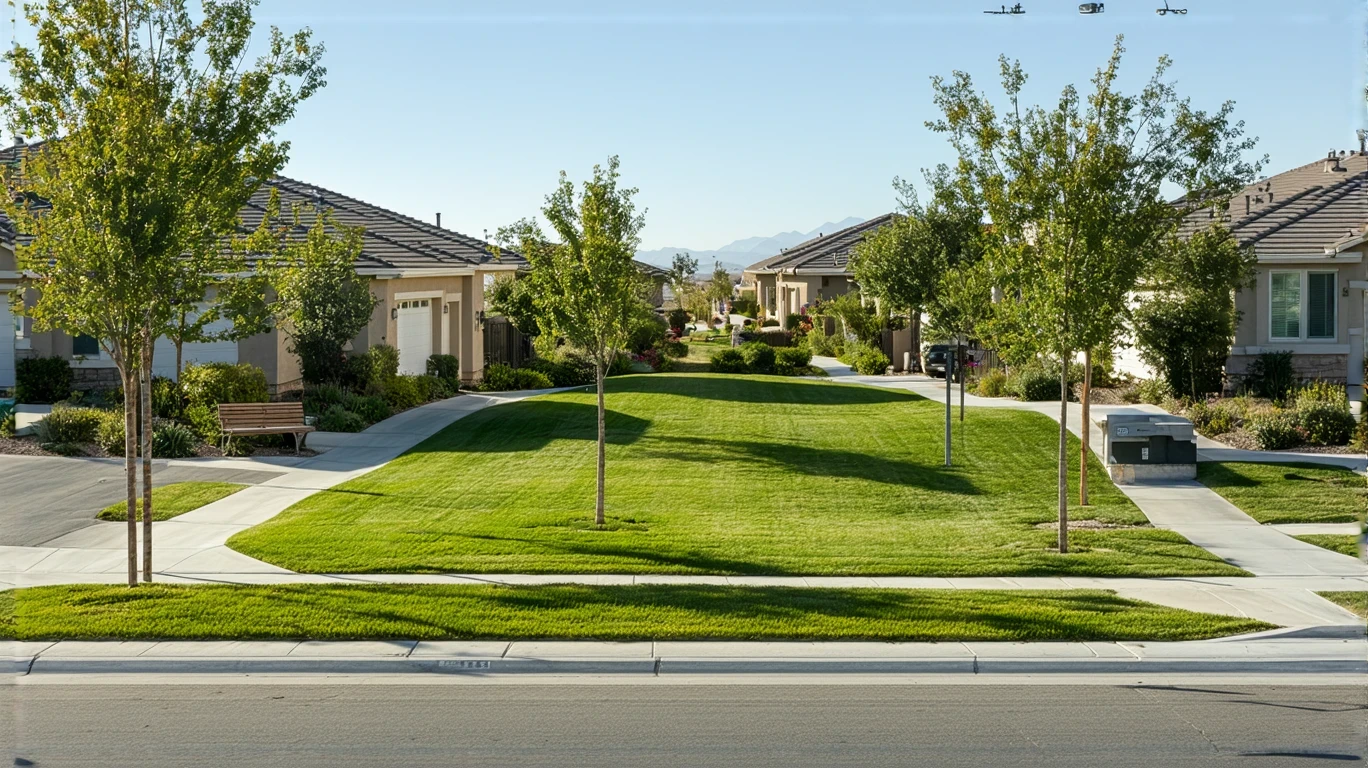
What Defines the Emotional Landscape
The overall sentiment in Jurupa Valley reflects a community in transition. Long-time residents describe a place that used to feel rural and unincorporated, where everyone knew their neighbors and the rhythm of life was slow. Newer arrivals often frame it as a stepping stone—a place to buy their first home, raise kids in relative quiet, and build equity before deciding whether to stay or move on.
What tends to feel rewarding here: the ability to afford a yard, a driveway, and breathing room. The sense that you’re not competing for every square foot. The relief of escaping the density and expense of Orange County or Los Angeles without leaving Southern California entirely. For families, the low-rise neighborhoods and open sky can feel like a reset.
What tends to feel limiting: the need to drive everywhere for errands, dining, and entertainment. The sense that the city lacks a center—a place where people gather, linger, or run into each other by accident. The awareness that schools, parks, and healthcare options require more planning and research than they might elsewhere. And for those who value spontaneity, the realization that “going out” often means leaving town.
Who feels at home: families prioritizing space over walkability, commuters with flexible schedules, homebuyers who’ve been priced out of coastal markets, and residents who prefer quiet predictability over urban texture.
Who feels restless: walkability-first households, young professionals seeking nightlife and dining variety, non-drivers or transit-dependent individuals, and parents who want top-tier schools within walking distance.
Social Media Buzz in Jurupa Valley
On platforms like Facebook and Reddit, Jurupa Valley discussions tend to cluster around a few recurring themes: housing affordability, commute logistics, and the tension between growth and identity. The tone is rarely celebratory or defensive—it’s more pragmatic, with residents weighing tradeoffs openly.
One common thread: “It’s not fancy, but we can actually afford to live here.” There’s a quiet pride in making it work, in finding value where others see sprawl. Another frequent sentiment: “You need a car for everything, but at least there’s parking.” The car dependency isn’t usually framed as a dealbreaker—it’s accepted as part of the bargain.
A third theme surfaces around amenities: “We drive to Riverside for dinner, Corona for shopping, Ontario for the airport.” There’s an acknowledgment that Jurupa Valley functions as part of a broader ecosystem, not a self-contained destination. For some, that’s liberating—no pressure to keep up with a curated downtown. For others, it’s a source of low-grade frustration.
The emotional tone across social media is neither enthusiastic nor bitter. It’s measured. People describe the city as a place that works if you know what you’re getting—and doesn’t pretend to be something it’s not.
Local News Tone
Local coverage of Jurupa Valley tends to frame the city through the lens of growth, infrastructure, and evolving identity. Headlines and story angles often reflect the tension between development and community character, as well as the practical challenges of a relatively young municipality.
Recurring topic buckets include:
- “Community Debates What Growth Should Look Like”
- “New Amenities Arrive as Town Identity Evolves”
- “Residents Weigh Convenience vs Quiet”
- “Infrastructure Updates Aim to Catch Up with Population”
- “Families Find Space and Value in Inland Empire”
The framing is rarely celebratory or alarmist. Instead, it reflects a city still figuring out what it wants to be—and how to balance the needs of long-time residents with the expectations of newcomers. The tone suggests a place where change is constant but not yet settled, where the future feels open-ended rather than predetermined.
Review-Based Public Perception
On platforms like Google, Yelp, and Nextdoor, Jurupa Valley reviews tend to split along expectation lines. Those who moved here seeking suburban affordability and space often express satisfaction. Those who expected walkable amenities, dining variety, or a cohesive downtown often express disappointment.
Common praise centers on housing value, lot sizes, and the ability to escape the density of neighboring cities. Residents appreciate the quieter streets, the lack of traffic congestion within neighborhoods, and the sense that they’re not living on top of their neighbors. For families with young children, the yards and driveways feel like a luxury.
Common complaints focus on the need to drive for nearly every errand, the limited local dining and entertainment options, and the sense that the city lacks a gathering place or identity anchor. Some reviews note that newer planned areas feel more cohesive and maintained, while older pockets can feel overlooked or inconsistent in upkeep.
Healthcare access also surfaces in reviews. While clinics and pharmacies are present, the absence of a local hospital means that serious medical needs require travel to Riverside or another nearby city. For some, this is a minor inconvenience; for others—especially families with young children or aging parents—it’s a source of anxiety.
The overall review sentiment suggests that Jurupa Valley delivers well on affordability and space, but underdelivers on spontaneity, walkability, and local texture. Expectation management is key: if you arrive hoping for a self-contained community with a vibrant downtown, you’ll likely feel let down. If you arrive hoping for a quiet, affordable base with access to the broader Inland Empire, you’ll likely feel you got what you paid for.
Comparison to Nearby Cities
| Dimension | Jurupa Valley | Riverside | Corona |
|---|---|---|---|
| Overall Vibe | Quiet, car-oriented, evolving identity | Established downtown, more urban texture | Suburban polish, family-friendly amenities |
| Walkability | Emerging in pockets, mostly car-dependent | Walkable downtown core, mixed elsewhere | Limited, designed for driving |
| Dining & Nightlife | Sparse, often requires leaving town | Diverse, concentrated downtown | Chain-heavy, some local spots |
| Housing Affordability | More accessible, larger lots | Higher prices, more competitive | Mid-range, newer developments |
| Community Feel | Transitional, still forming | Established, layered history | Polished, planned community vibe |
Jurupa Valley sits between Riverside’s established urban character and Corona’s polished suburban appeal. If you prioritize affordability and space over walkability and dining variety, Jurupa Valley offers a compelling trade. If you want a cohesive downtown or a city that feels “complete,” Riverside delivers more texture—but at a higher cost. If you prefer newer developments and family-friendly amenities with a suburban sheen, Corona may feel more polished—but less affordable and less open-ended.
The choice often comes down to what you’re willing to trade: Jurupa Valley asks you to accept car dependency and limited local texture in exchange for lower housing costs and more breathing room. Riverside asks you to pay more for walkability and established character. Corona asks you to accept chain-dominated retail in exchange for newer infrastructure and a more curated suburban experience.
What Locals Are Saying
“We moved here from Orange County and finally have a backyard. The kids can play outside without us hovering. Yeah, we drive more, but we’re not spending every weekend stuck in traffic just to get to the grocery store.”
“It’s quiet, maybe too quiet. There’s no coffee shop to walk to, no place to just hang out. If you want to do anything, you’re getting in the car. That gets old.”
“I’ve lived here since before it was even a city. It’s changed a lot, but it still feels like home. People know each other. It’s not flashy, but it’s real.”
“The schools aren’t great, and that’s been hard. We’re looking at private options or maybe moving once our oldest hits middle school. It’s the one thing we didn’t plan for.”
“For the price, you can’t beat it. We got a house we could never afford in Riverside, and we’re only 20 minutes away when we need something. It’s a trade, but it’s worth it for us.”
“I work remotely, so the commute doesn’t matter. What matters is space, quiet, and not feeling like I’m living in a shoebox. Jurupa Valley gives me that.”
“It feels like a place people land, not a place people choose. That’s not a criticism—it’s just the vibe. You come here because it works, not because you fell in love with it.”
Does Jurupa Valley Feel Like a Good Fit?
Jurupa Valley doesn’t ask you to fall in love. It asks you to be practical. The city works best for households who value affordability, space, and the ability to build equity without sacrificing access to the broader Inland Empire. It works for families willing to drive for schools, errands, and entertainment in exchange for larger lots and quieter streets. It works for commuters who can absorb the time cost of car dependency in exchange for housing tradeoffs that pencil out.
It tends to frustrate households who prioritize walkability, spontaneity, and local texture. It tends to disappoint those who want a cohesive downtown, a thriving dining scene, or top-tier schools within walking distance. And it tends to feel temporary for young professionals or non-drivers who find themselves relying on others for mobility.
The emotional profile of Jurupa Valley is one of pragmatic compromise. It’s a city that delivers on affordability and space, but underdelivers on vibrancy and self-contained amenities. It’s a place where people build equity, raise families, and make it work—but rarely describe as their dream destination.
If you’re weighing whether Jurupa Valley fits your life, start by asking: What am I trading up from, and what am I willing to give up? If the answer is “I’m trading density and expense for space and affordability, and I’m willing to drive,” you’ll likely find alignment. If the answer is “I want walkability, variety, and a sense of place,” you’ll likely feel friction.
For a clearer sense of where money goes each month, or to explore what drives quality of life in practical terms, the related resources below offer grounded context. Jurupa Valley isn’t for everyone—but for the right household, at the right time, it’s exactly enough.
How this article was built: In addition to public economic data, this article incorporates location-based experiential signals derived from anonymized geographic patterns—such as access density, walkability, and land-use mix—to reflect how day-to-day living actually feels in Jurupa Valley, CA.
The perspectives shown reflect commonly expressed local sentiment and recurring themes in public discussion, rather than individual accounts.