
Answer: Palm Harbor is considered moderately priced in 2026, with a median home value of $319,300 and median rent of $1,567 per month. The main exposure is car dependency and cooling-season utility volatility rather than day-to-day prices.
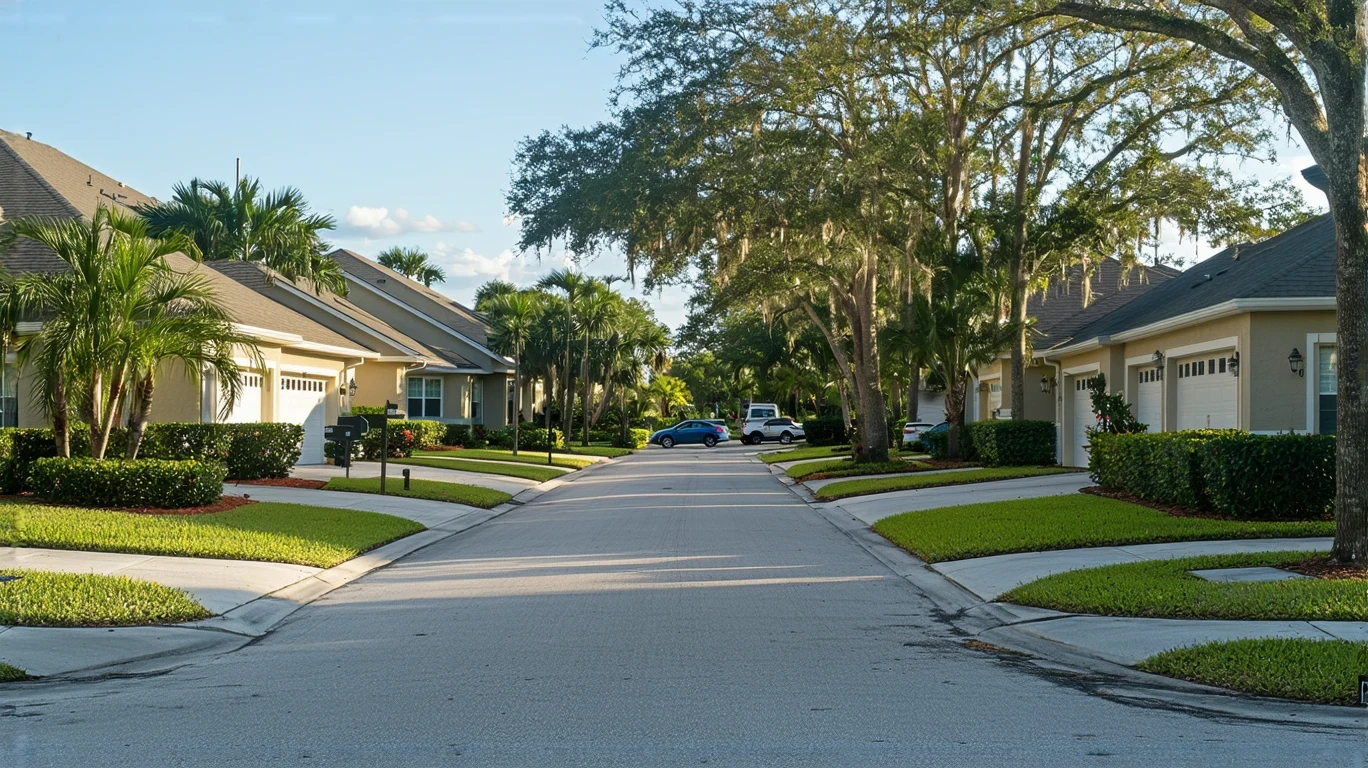
When Maya pulled into Palm Harbor for the first time, the tree-lined streets and tidy single-family homes felt immediately different from the dense apartment corridors she’d left behind in Tampa. She’d done the math on rent—$1,567 seemed manageable—but within two months, she realized the real cost structure here wasn’t just about the lease. It was the 27-minute commute each way, the $4.22-per-gallon gas she was burning through twice a week, and the electric bill that spiked to triple digits the moment summer humidity settled in. Palm Harbor wasn’t expensive in the flashy sense. It was expensive in the structural sense: the kind of place where your biggest costs aren’t prices, but dependencies.
Overall Cost of Living Snapshot
Palm Harbor operates at a regional price parity index of 126, meaning the overall cost structure runs about 26% above the national baseline. But that number alone doesn’t tell you where the pressure actually lands. Housing dominates the financial landscape—whether you’re buying or renting—but the shape of costs here is defined more by what you need to function than by what things cost on the shelf. Groceries, gas, and electricity all carry premiums, but none of them create the same threshold effect as securing a place to live or maintaining a vehicle to get anywhere beyond your immediate neighborhood.
Compared to the broader Tampa metro, Palm Harbor sits in the middle tier: not as expensive as beachfront communities, not as budget-friendly as inland exurbs. The unemployment rate of 3.3% signals a stable local economy, but income alone doesn’t determine whether this place works for you. The verdict is structural: housing entry cost and car ownership create the primary financial threshold; utility volatility and commute distance determine ongoing exposure.
Housing Costs (Primary Driver)
At $319,300, the median home value in Palm Harbor reflects a market built around ownership. This isn’t a city where most people rent long-term by choice—it’s a place where renting often functions as a transitional step before buying or a fallback when ownership isn’t feasible. The $1,567 median rent isn’t low, but it’s also not the headline number that defines the market. What matters more is that rental inventory tends to be limited, and lease renewals can shift quickly based on broader metro demand.
For buyers, the entry cost is moderate to high depending on down payment capacity and mortgage rates. Property taxes, insurance, and maintenance aren’t itemized in the feed, but they layer onto the base mortgage in ways that can surprise first-time owners. For renters, the challenge isn’t just the monthly check—it’s that housing pressure in Palm Harbor often pushes people toward either ownership or relocation, with fewer middle paths.
| Housing Type | Cost Anchor | What That Buys You |
|---|---|---|
| Median Home Purchase | $319,300 | Single-family home, likely suburban layout, ownership equity but ongoing maintenance exposure |
| Median Rental | $1,567/month | Apartment or smaller single-family, limited inventory, often transitional |
Conclusion: Palm Harbor is primarily a buying market. Renting is viable short-term, but the cost structure and inventory dynamics favor ownership for those planning to stay.
Utilities & Energy Risk
Electricity in Palm Harbor costs 15.92¢ per kilowatt-hour, which sits above the national average and reflects Florida’s cooling-dominated climate. The current temperature of 77°F might feel pleasant, but that’s the exception, not the rule. For most of the year, air conditioning isn’t optional—it’s the baseline condition for habitability. Summer months drive the highest usage, and even modest homes can see bills climb sharply when humidity locks in and thermostats run continuously.
Natural gas is priced at $23.62 per MCF, but heating demand in Palm Harbor is minimal. The real utility story here is about cooling exposure, not heating. Unlike northern climates where energy costs swing between summer and winter, Palm Harbor’s utility pressure is concentrated in one long, relentless season. That creates predictability in one sense—you know when the spike is coming—but it also means there’s no off-season relief.
Risk classification: major. Utility costs in Palm Harbor aren’t just a line item—they’re a structural exposure that scales with square footage, insulation quality, and thermostat discipline. Renters in older units without efficient HVAC face the highest volatility; owners can mitigate through upgrades, but the baseline pressure remains.
Groceries & Daily Costs
Grocery costs in Palm Harbor reflect the regional price premium, with staples running noticeably higher than the national baseline. Ground beef sits at $8.49 per pound, milk at $5.07 per half-gallon, and eggs at $3.15 per dozen. Derived estimate based on national baseline adjusted by regional price parity; not an observed local price. These aren’t crisis-level prices, but they add up over the course of a month, especially for larger households or anyone cooking most meals at home.
The bigger story is access. Food and grocery options in Palm Harbor tend to cluster along commercial corridors rather than distribute evenly across neighborhoods. That means some residents can walk to a store, but most will drive. The car dependency that defines transportation here also shapes day-to-day costs—every grocery run, every errand, every forgotten item becomes a trip that burns gas and time.
Transportation Reality
The average commute in Palm Harbor is 27 minutes, and 41.3% of workers face what’s classified as a long commute. Only 7.2% work from home, which means the vast majority of residents are on the road daily. Gas prices currently sit at $4.22 per gallon, and while that’s subject to fluctuate, the underlying reality doesn’t change: Palm Harbor is a car-dependent place. Bus service exists, but it’s limited in scope and frequency. There’s no rail. For most people, getting to work, running errands, or accessing healthcare means owning and operating a vehicle.
This isn’t just about commute time—it’s about recurring exposure. A 27-minute drive might not sound extreme, but multiply it by two trips per day, five days a week, and factor in gas, insurance, maintenance, and depreciation, and transportation becomes one of the largest non-housing costs in the household structure. The presence of walkable pockets and some cycling infrastructure offers relief in specific neighborhoods, but those areas are the exception. For the majority of Palm Harbor, the car is non-negotiable.
Cost Exposure Profiles
Palm Harbor’s cost structure creates distinct exposure profiles depending on how you enter the housing market and how far you need to travel. Low-exposure situations typically involve ownership (avoiding rent volatility), short commutes (minimizing fuel and vehicle wear), and energy-efficient housing (reducing cooling-season spikes). High-exposure situations stack the opposite: renting in an older unit with poor insulation, commuting 30+ minutes each way, and running multiple vehicles.
The difference isn’t just about income—it’s about how many dependencies you’re managing simultaneously. Someone who owns a well-insulated home near their workplace faces a fundamentally different cost environment than someone renting farther out and driving daily. Both might have similar grocery or gas prices, but their structural exposures diverge sharply.
What makes Palm Harbor distinct is that the city’s layout and infrastructure push most households toward the higher-exposure end of that spectrum. The strong family infrastructure—schools and playgrounds are present and accessible—makes it appealing for households with children, but those same households often face the highest transportation and utility costs. The tradeoff is space, stability, and access to family-oriented amenities in exchange for car dependency and cooling-season volatility.
Frequently Asked Questions
Is Palm Harbor more affordable than Tampa in 2026? Palm Harbor tends to be less expensive than Tampa’s urban core for housing, but transportation costs can offset that advantage depending on commute distance. The cost structure favors those who work locally or remotely.
What does a typical cost profile look like in Palm Harbor? Most households face moderate to high housing costs (either mortgage or rent), significant transportation expenses due to car dependency, and elevated utility bills during cooling season. Grocery costs run above the national average but aren’t the primary pressure point.
Do utilities cost more in Palm Harbor than in nearby areas? Electricity rates in Palm Harbor are above the national average and reflect Florida’s cooling-dominated climate. Utility costs tend to be comparable to other Tampa-area suburbs, with summer months driving the highest exposure.
What costs tend to surprise newcomers in Palm Harbor? The biggest surprises are usually transportation-related—how much driving is required for daily errands and how quickly gas and vehicle maintenance add up. Cooling-season electric bills also catch people off guard if they’re coming from milder climates.
Are property taxes higher in Palm Harbor than in Clearwater? Property tax rates vary by jurisdiction and are not included in the available data, but both cities are in Pinasco County and share similar tax structures. The bigger difference is usually home value, which affects the total tax bill.
Is Palm Harbor a good place for renters or buyers? Palm Harbor is structured more for buyers than renters. Rental inventory is present but limited, and the market dynamics favor ownership for anyone planning to stay more than a few years.
How does car dependency affect the overall cost of living in Palm Harbor? Car dependency is one of the defining cost factors. Most residents need a vehicle for work, errands, and healthcare, which means ongoing exposure to fuel prices, insurance, and maintenance. Public transit exists but doesn’t replace the need for personal transportation for most households.
What’s the biggest cost driver in Palm Harbor? Housing is the largest single cost, but the combination of car ownership and utility volatility creates the most ongoing financial pressure. The cost structure here is less about high prices and more about high dependencies.
How this article was built: In addition to public economic data, this article incorporates location-based experiential signals derived from anonymized geographic patterns—such as access density, walkability, and land-use mix—to reflect how day-to-day living actually feels in Palm Harbor, FL.