
Riverview sits in the Tampa metro area with a median household income of $87,383 per year, median rent at $1,757 per month, and a regional price level 26% above the national baseline. Those numbers suggest a stable, middle-income suburb—but they don’t explain who feels stretched and who doesn’t. Comfort here depends less on hitting a specific earnings threshold and more on how well your household structure, commute tolerance, and daily routines align with the way Riverview is actually built.
What “Living Comfortably” Means in Riverview
Comfort in Riverview means your housing choice doesn’t force a brutal commute, your cooling bills don’t dictate summer behavior, and running errands doesn’t require military-grade route planning. It means one surprise expense—a car repair, a medical bill—doesn’t trigger a cascade of tradeoffs elsewhere. It’s not about luxury; it’s about operating without constant friction.
Riverview’s climate demands year-round air conditioning, not just summer relief. Electricity here runs 15.80¢ per kilowatt-hour, and Florida’s extended heat and humidity mean cooling systems work harder and longer than in drier or more temperate places. Comfort includes absorbing those swings without adjusting the thermostat every time the bill arrives.
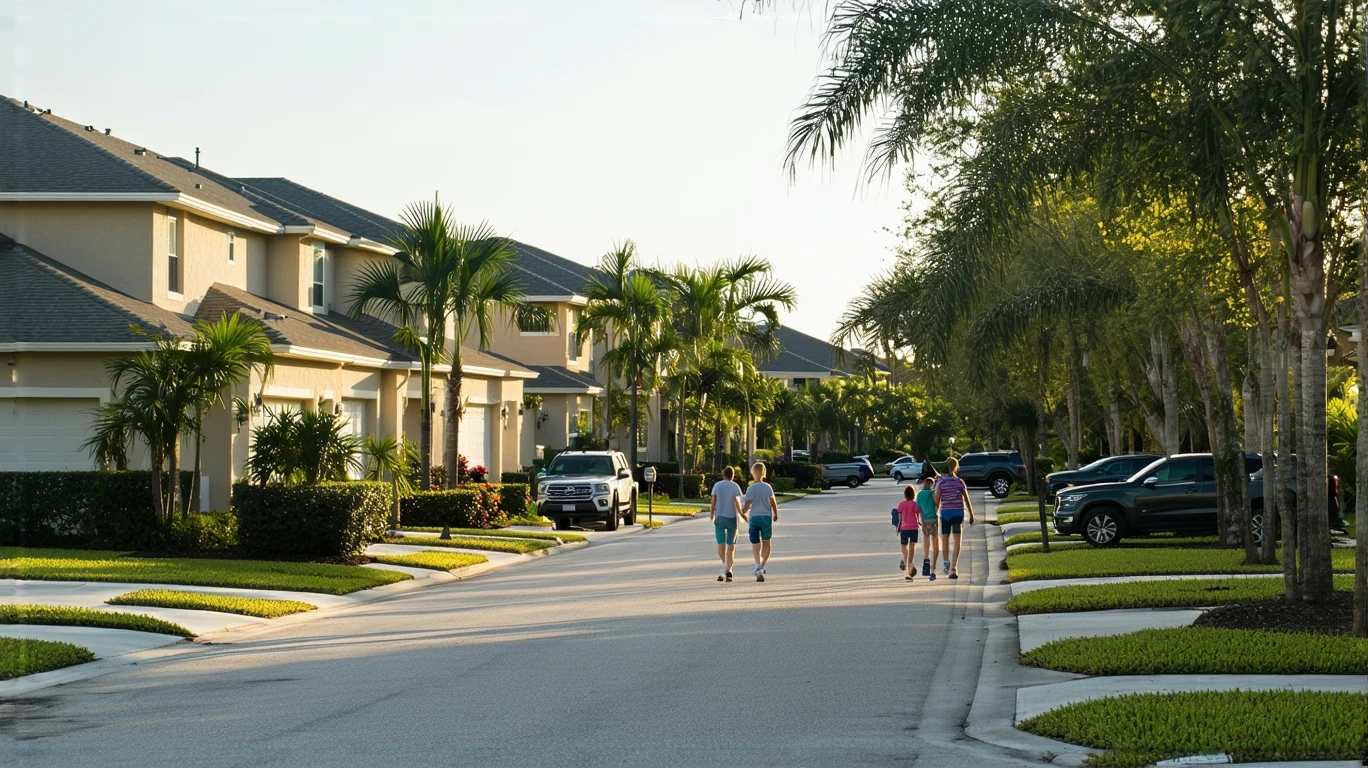
The city’s structure also shapes expectations. Riverview is low-rise with mixed land use, but groceries and services cluster along corridors rather than spreading evenly. That means some neighborhoods enjoy walkable access to daily needs, while others require intentional car trips. Comfort here often hinges on whether your home sits in a pocket with easy access or in a zone where every errand is a deliberate expedition.
Where Income Pressure Shows Up First
Housing dominates the pressure map. Median rent sits at $1,757 per month, and median home values reach $292,700. For renters, that monthly figure becomes the baseline against which every other cost gets measured. For buyers, it’s not just the mortgage—it’s insurance, taxes, and maintenance in a climate that stresses roofs, HVAC systems, and exterior finishes.
Transportation adds a second layer. Riverview’s average commute runs 34 minutes, and 60.8% of workers face long commutes. Gas costs $3.95 per gallon, and most households depend on cars because transit is bus-only with limited coverage. The time cost and fuel cost compound: longer commutes mean more fill-ups, more wear, and less flexibility to shift routes or schedules when something goes wrong.
Utilities create volatility. Florida’s heat isn’t seasonal—it’s structural. Air conditioning runs most of the year, and humidity keeps the system cycling even when outdoor temperatures moderate. Bills swing with weather, and households without cushion feel every swing.
For families, pressure multiplies. Schools are present at moderate density, but playgrounds fall below thresholds, and there’s no hospital in town—only clinics. That means serious medical needs require travel, adding time and logistics to an already tight schedule. Errands don’t happen on the way home; they require planning, and that planning costs time families often don’t have.
How the Same Income Feels Different by Household
A single adult earning the median income can cover rent and utilities without panic, but the monthly expenses leave limited room for surprises. Commute costs hit harder because there’s no one to share the fuel bill or split vehicle expenses. Errands become a solo operation, and corridor-clustered grocery access means some trips feel inefficient. Transit exists, but bus-only service doesn’t offer the flexibility to skip car ownership entirely.
Couples at the same household income level—whether one earner or two—gain flexibility. Shared housing costs ease the burden, and dual incomes create breathing room for irregular expenses. But coordination becomes a factor: if both partners commute in opposite directions, transportation costs don’t halve—they multiply. Riverview’s long commute dominance means many couples spend significant time apart during the week, and that affects everything from meal planning to errands logistics.
Families face compounding friction. Larger housing needs push costs higher, whether renting or buying. School-age children add healthcare, activity, and logistics demands. The absence of a local hospital means serious care requires travel, and corridor-clustered errands don’t accommodate quick stops between school pickup and dinner. Families at the median income often find themselves making tradeoffs that single adults and couples don’t face: location versus space, commute time versus housing cost, convenience versus budget.
The Comfort Threshold (Qualitative)
Comfort arrives when you stop making those tradeoffs reflexively. It’s the point where you can choose a home based on fit rather than just affordability, where a high utility month doesn’t force you to skip something else, where your commute is a known cost rather than a variable threat. It’s when errands happen because you need them, not because you’ve optimized a route to save gas.
In Riverview, that threshold varies by household type. Single adults reach it when transportation and housing costs stabilize and leave room for savings. Couples hit it when both partners can work without commute costs erasing the second income. Families find it when school proximity, healthcare access, and errands logistics stop dictating every decision.
The threshold isn’t a number. It’s the absence of constant recalibration.
Why Online Cost Calculators Get Riverview Wrong
Most calculators treat Riverview as a generic Tampa suburb and assume uniform access to services, predictable commutes, and stable monthly costs. They miss the corridor-clustered grocery pattern, which means convenience varies wildly by neighborhood. They don’t account for Florida’s extended cooling season or the humidity that keeps HVAC systems running even in mild weather. They assume transit viability that doesn’t exist for most residents.
Calculators also ignore time costs. A 34-minute average commute doesn’t sound extreme on paper, but when 60.8% of workers face long commutes, that average hides a reality where many households spend hours per day in transit. Fuel costs, vehicle wear, and lost time don’t appear in static budget models.
People feel surprised after moving because the cost structure doesn’t match the summary. A rent figure that seemed manageable becomes tight when combined with a long commute and corridor-based errands. A home price that fit the budget becomes stressful when cooling bills swing with the weather and maintenance demands pile up.
Riverview works well for some households—but only when expectations align with how the city actually functions.
How to Judge Whether Your Income Fits Riverview
Ask yourself: How sensitive are you to housing tradeoffs? If you need both space and a short commute, Riverview will force a choice. Homes closer to job centers cost more or offer less square footage. Homes farther out ease the housing budget but add commute time and fuel costs.
Can you absorb seasonal utility swings without adjusting behavior? Florida’s climate isn’t optional. If a high cooling bill in July means turning off the AC or skipping other expenses, the financial pressure will be constant.
Is time or money your limiting factor? Riverview’s long commutes and corridor-clustered errands mean you’ll spend one or the other. If your income allows you to live closer to work or services, you buy time. If not, you’ll spend time to preserve money.
How much flexibility do you expect month to month? If your budget requires every dollar to land in the right category at the right time, Riverview’s volatility—utility swings, fuel costs, irregular maintenance—will create stress. If you have cushion to absorb irregularity, the same costs feel manageable.
Do you need hospital proximity, or is routine care enough? Riverview has clinics and pharmacies, but no hospital. Families with young children or anyone with chronic conditions will travel for serious care. That’s a time cost and a logistics cost.
Can you operate without robust transit? Riverview offers bus service, but it’s limited. If you’re planning to avoid car ownership or minimize driving, the city’s structure will fight you.
FAQs About Living Comfortably in Riverview
Is the median household income enough to live comfortably in Riverview?
It depends entirely on household type and expectations. A couple at the median income with no children and moderate commutes can live comfortably. A family at the same income level will feel pressure from housing size needs, longer commutes, and errands logistics. Comfort isn’t about the number—it’s about how well your structure fits the city’s.
What’s the biggest cost surprise for people moving to Riverview?
Utility volatility and commute costs. Florida’s extended cooling season means air conditioning isn’t a summer expense—it’s a year-round baseline. And Riverview’s commute patterns mean many households spend more on fuel and vehicle maintenance than they anticipated, especially if they chose housing based on price rather than location.
Can you live in Riverview without a car?
Technically, yes—there’s bus service. Practically, no. Groceries and services cluster along corridors, and transit coverage is limited. Most households depend on cars for errands, commutes, and healthcare access. If you’re planning to avoid car ownership, Riverview will make that difficult.
How do families manage healthcare without a hospital in town?
Routine care happens locally through clinics and pharmacies. Serious or emergency care requires travel to nearby hospital facilities, which adds time and logistics complexity. Families with young children or chronic conditions build that travel time into their planning, but it’s a friction point that doesn’t show up in cost calculators.
Does Riverview feel affordable compared to the rest of the Tampa metro?
Riverview offers more space for the money than closer-in Tampa neighborhoods, but that space comes with tradeoffs: longer commutes, more car dependency, and corridor-clustered services. It feels affordable if you value space and can absorb the time and fuel costs. It feels expensive if you prioritize convenience and short commutes.
How this article was built: In addition to public economic data, this article incorporates location-based experiential signals derived from anonymized geographic patterns—such as access density, walkability, and land-use mix—to reflect how day-to-day living actually feels in Riverview, FL.
—