
It’s Sunday evening in Riverview, and you’re mapping out meals for the week—chicken and rice twice, ground beef tacos, a few egg breakfasts, sandwiches for lunch. You know what you need. The question is where you’ll shop, because in Riverview, that decision shapes what you’ll actually spend more than the list itself. Grocery costs here don’t follow a single price point; they follow a pattern of access, store choice, and how tightly you’re watching each line item. For families buying in volume and singles grabbing essentials on the way home, the pressure feels different—but it’s always there.
Riverview sits in a region where prices run roughly 26% above the national baseline, and that shows up clearly in the grocery aisle. It’s not extreme, but it’s not neutral either. Combined with a household income structure where the median sits at $87,383 per year, most residents have room to absorb grocery costs without crisis—but not without noticing. And because day-to-day costs here include other pressures—housing, utilities, commuting—groceries become one of the few expenses households feel they can control through effort and planning.
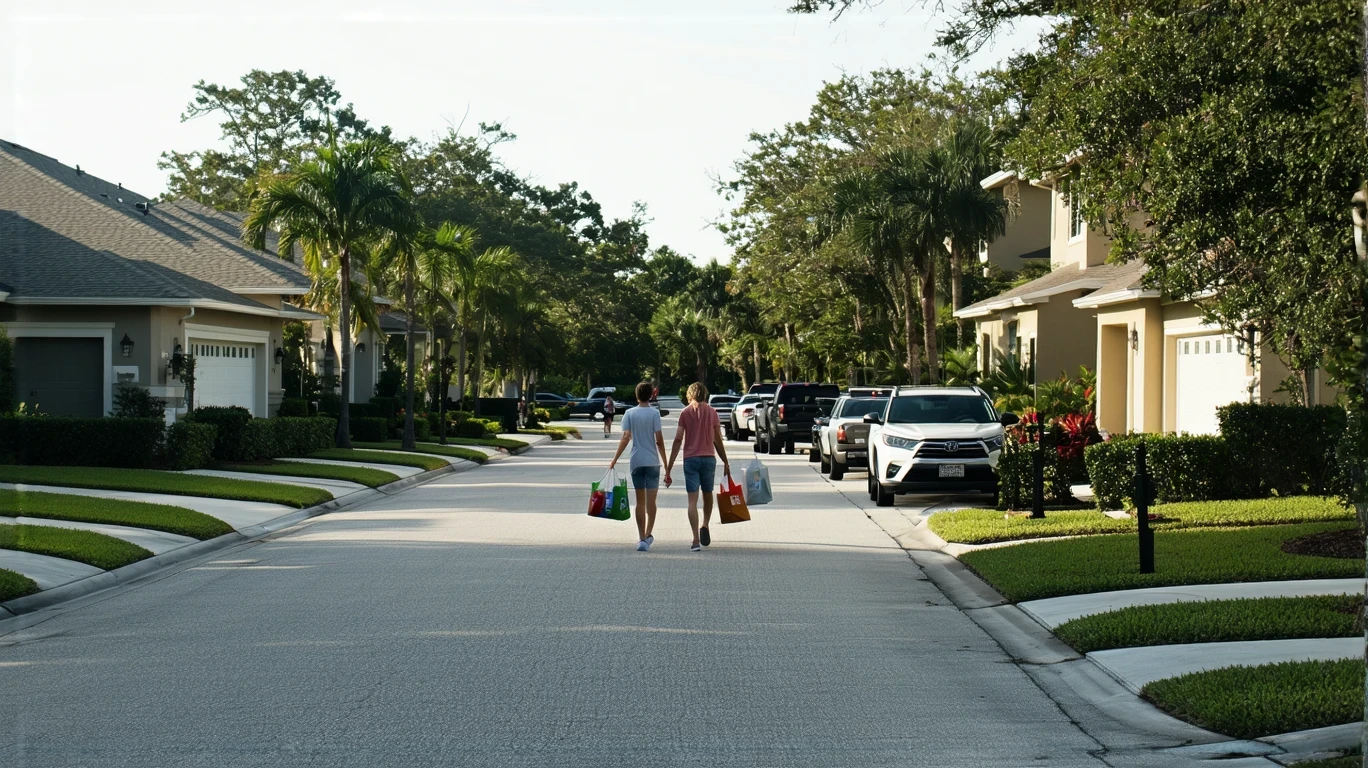
How Grocery Costs Feel in Riverview
Grocery prices in Riverview reflect the broader cost structure of the Tampa metro area: moderately elevated, shaped by distribution networks that serve a sprawling suburban region, and sensitive to the seasonal tourism and population flux that touches the entire Gulf Coast corridor. For a household buying staples week over week, the experience is one of steady, predictable pressure rather than sticker shock. Bread, eggs, chicken, and rice all cost more than they would in lower-cost metros, but not so much more that substitution becomes necessary. The pressure comes from volume and frequency, not individual items.
Singles and young professionals notice grocery costs most when they’re shopping without a plan or grabbing prepared items for convenience. A few quick stops at mid-tier stores add up faster here than in cities with tighter price competition or denser discount presence. Families with children, on the other hand, feel the pressure in absolute terms: feeding four people three meals a day means even small per-unit premiums compound across dozens of items every week. The difference between discount-tier and premium grocery shopping isn’t marginal for a family—it’s structural.
What makes Riverview distinct is how grocery access is organized. Food and grocery options tend to cluster along commercial corridors rather than distribute evenly across neighborhoods. That means most households drive to shop, and the store they choose is a deliberate decision rather than a default. There’s no walk-to corner market for most residents, and no single dominant grocer that sets the price floor for everyone. Instead, shopping here requires route planning, and that planning creates opportunity: households willing to drive a bit farther or split trips between stores can reduce costs meaningfully, while those prioritizing convenience pay a modest premium for it.
Grocery Price Signals (Illustrative)
These prices illustrate how staple items tend to compare locally—not a full shopping list, and not a guarantee of what any single store charges on any given week. They’re derived from regional price patterns and offer a sense of relative positioning rather than checkout-level accuracy. What they show is where Riverview sits in the broader price landscape: moderately elevated across the board, with proteins carrying the highest per-unit cost and pantry staples like rice remaining accessible even for tighter budgets.
| Item | Price |
|---|---|
| Bread | $2.28/lb |
| Cheese | $6.03/lb |
| Chicken | $2.56/lb |
| Eggs | $2.96/dozen |
| Ground Beef | $8.44/lb |
| Milk | $5.12/half-gallon |
| Rice | $1.34/lb |
Derived estimate based on national baseline adjusted by regional price parity; not an observed local price.
Ground beef stands out as the most expensive item per pound, which is typical but worth noting for households that build meals around it. Chicken offers a lower-cost protein alternative, and rice remains one of the most budget-friendly staples available. Eggs and milk sit in the middle—not cheap, but not prohibitive. Cheese, often overlooked, quietly adds up for families using it regularly. The pattern across these items isn’t about any single price being out of line; it’s about the cumulative effect when you’re filling a cart with enough food to last a week or more.
Store Choice & Price Sensitivity
In Riverview, grocery cost pressure doesn’t follow a single average—it follows the tier of store you choose. Discount grocers anchor the low end, offering no-frills environments, limited selection, and prices that can run meaningfully below mid-tier chains. Mid-tier stores dominate the corridor landscape, offering broader selection, familiar brands, and moderate pricing that most households default to. Premium grocers, where present, cater to shoppers prioritizing organic options, prepared foods, or specialty items, and their pricing reflects that focus.
For families buying in volume, the gap between discount and mid-tier stores isn’t trivial. A household filling a cart with two weeks of staples will notice the difference immediately, and over the course of a year, consistent discount shopping creates measurable room in the budget. Singles and couples, buying smaller quantities and fewer items per trip, feel less absolute impact but still benefit from intentional store choice—especially if they’re splitting trips between a discount grocer for staples and a mid-tier store for variety.
What complicates the decision is access. Because grocery options cluster along corridors rather than spreading evenly across neighborhoods, the nearest store isn’t always the cheapest, and the cheapest store isn’t always convenient to your commute or errands route. Households that treat grocery shopping as a standalone trip have more flexibility to optimize for price. Households trying to fold it into an already tight schedule often prioritize convenience, and that convenience carries a cost. The tradeoff isn’t right or wrong—it’s a matter of how much time and planning capacity you have relative to how tightly you’re managing the budget.
What Drives Grocery Pressure Here
Grocery costs in Riverview are shaped by the same forces that drive the broader cost structure: regional price parity that runs above the national baseline, a sprawling suburban geography that increases distribution costs, and a household income profile that creates demand for mid-tier and premium options alongside discount presence. The result is a market where prices aren’t uniform and competition doesn’t automatically push everything toward the floor. Instead, price variation across stores becomes the primary lever households use to control costs.
Household size amplifies pressure in predictable ways. A single person buying for one can absorb moderately elevated prices without restructuring their budget. A family of four buying the same items in quadruple volume feels the premium much more acutely, and over time, that pressure either pushes them toward discount stores or forces tradeoffs elsewhere in the budget. Income matters, but not as much as volume. A household earning well above the median can still feel grocery costs tightly if they’re feeding multiple people and not paying attention to where they shop.
Seasonal variability exists but operates quietly in Riverview. Florida’s climate means produce availability stays relatively stable year-round compared to northern metros where winter imports drive prices up sharply. What does shift is demand around tourism seasons and population flux, which can tighten supply chains and nudge prices upward temporarily. Households shopping consistently at the same stores may not notice week-to-week swings, but they’ll see gradual drift over months, especially in categories like dairy and proteins that respond quickly to regional demand shifts.
Practical Ways People Manage Grocery Costs
The most effective strategy households use in Riverview is intentional store selection. Shopping discount grocers for pantry staples, proteins, and dairy, then supplementing with mid-tier stores for specific items or variety, creates cost control without eliminating choice. It requires an extra stop, but for families managing tight budgets, that extra stop translates directly into reduced pressure. Singles and couples can achieve similar results by batching discount trips less frequently and filling gaps with smaller mid-tier runs.
Meal planning reduces waste and prevents the kind of unplanned shopping that drives costs up quickly. Knowing what you’ll cook for the week means buying only what you’ll use, and it creates opportunities to build meals around sale items or lower-cost staples like rice, beans, and chicken. Households that plan also avoid the convenience premium of grabbing prepared foods or eating out when they realize there’s nothing ready at home. The discipline isn’t about deprivation—it’s about predictability and control.
Buying in bulk works for nonperishables and household staples, but only if you have storage space and upfront cash flow to absorb the larger purchase. Families with room to stock up on rice, canned goods, and frozen proteins can smooth out costs over time and reduce per-unit prices meaningfully. Smaller households or those in tighter living situations may not have that flexibility, which means they pay a modest premium for buying in smaller quantities more frequently. The strategy isn’t universally accessible, but where it fits, it helps.
Avoiding prepared and convenience foods is one of the simplest ways to reduce grocery spending, though it requires time and willingness to cook from scratch. Pre-cut vegetables, marinated proteins, and ready-to-eat meals all carry labor premiums that add up quickly. Households with time to prep and cook can redirect that premium toward higher-quality ingredients or simply reduce their total grocery outlay. Households without that time face a real tradeoff: pay for convenience, or stretch an already tight schedule even further.
Groceries vs Eating Out (Directional)
The tradeoff between cooking at home and eating out in Riverview isn’t just about price per meal—it’s about time, effort, and how much margin exists in the household budget for convenience. Cooking at home consistently will always cost less than restaurant meals or takeout, but the gap depends on what you’re cooking and where you’re shopping. A household buying discount-tier staples and cooking simple meals creates significant savings compared to eating out multiple times a week. A household shopping premium grocers and buying prepared items narrows that gap considerably.
For families, eating out regularly becomes expensive quickly, especially when feeding multiple people. Even casual dining or fast-casual options add up to more than a home-cooked meal using staples like chicken, rice, and vegetables. The calculus shifts for singles and couples, where the time cost of cooking for one or two people sometimes feels disproportionate to the savings, particularly if leftovers go to waste. The decision isn’t purely financial—it’s about how much energy and time you have left after work, commuting, and everything else.
What matters most is recognizing that grocery costs and dining costs aren’t isolated. Households that let groceries spoil because they’re too tired to cook end up paying twice: once for the unused food, and again for the restaurant meal that replaced it. Managing that cycle—buying only what you’ll realistically use, planning meals around your actual schedule, and treating eating out as intentional rather than default—creates more control than optimizing any single category alone.
FAQs About Grocery Costs in Riverview (2026)
Is it cheaper to shop in bulk in Riverview? Buying in bulk reduces per-unit costs for nonperishables and staples like rice, canned goods, and frozen proteins, but only if you have storage space and upfront budget to absorb larger purchases. Families with room to stock up benefit most; smaller households may not see enough savings to justify the space and cash flow tradeoff.
Which stores in Riverview are best for low prices? Discount-tier grocers consistently offer the lowest prices on staples, while mid-tier chains provide broader selection at moderate cost. Premium stores cater to specialty and organic shoppers but carry higher baseline pricing. The best approach for most households is splitting trips: discount stores for volume staples, mid-tier for variety and specific items.
How much more do organic items cost in Riverview? Organic and specialty items typically carry premiums compared to conventional options, though the exact gap varies by category and store tier. Households prioritizing organic products will find them more accessible at premium grocers, but the cost difference can be significant for families buying in volume. Selective organic purchasing—focusing on high-priority items—helps manage the tradeoff.
How do grocery costs for households in Riverview tend to compare to nearby cities? Riverview sits within the Tampa metro area’s broader price structure, where regional price parity runs moderately above the national baseline. Nearby cities with similar suburban profiles and corridor-based grocery access tend to show comparable pricing, though denser urban areas may offer more store competition and tighter price ranges. The difference is rarely dramatic, but households moving between metros notice the shift.
How do households in Riverview think about grocery spending when cooking at home? Most households treat grocery costs as one of the few flexible line items in their budget—something they can control through store choice, meal planning, and intentional shopping. Cooking at home consistently reduces costs compared to eating out, but the savings depend on what you buy and where you shop. Families managing tighter budgets prioritize discount stores and staple-based meals; households with more margin often prioritize convenience and variety.
Does Riverview’s climate affect grocery costs? Florida’s year-round growing season helps stabilize produce availability and pricing compared to northern metros where winter imports drive costs up sharply. Seasonal demand shifts tied to tourism and population flux can nudge prices temporarily, but the effect is gradual rather than dramatic. Households shopping consistently won’t see sharp week-to-week swings, though longer-term drift in categories like dairy and proteins does occur.
How does grocery access in Riverview shape shopping habits? Because food and grocery options cluster along commercial corridors rather than spreading evenly across neighborhoods, most households drive to shop and treat store choice as a deliberate decision. There’s no default walk-to market for most residents, which means shopping requires planning and often involves route optimization. Households willing to make an extra stop for discount pricing can reduce costs meaningfully; those prioritizing convenience pay a modest premium for it.
How Groceries Fit Into the Cost of Living in Riverview
Grocery costs in Riverview don’t exist in isolation—they sit alongside housing pressure, utility volatility, and commuting expenses as part of the broader household budget. For most families, groceries represent one of the few categories where intentional effort translates directly into reduced spending. You can’t negotiate your rent or mortgage, and you can’t control electricity rates, but you can choose where you shop and what you buy. That makes grocery costs a lever, and for households managing tight budgets, pulling that lever consistently creates meaningful room elsewhere.
The tradeoff is time and planning capacity. Optimizing grocery spending requires knowing what you’ll cook, comparing store options, and sometimes making multiple stops. Households with margin in their budget often choose convenience over optimization, and that’s a rational decision when time is scarce. Households without that margin don’t have the same choice—they have to plan, and they have to execute, because the savings aren’t optional. Understanding where money goes each month helps clarify whether grocery optimization is necessary or just helpful.
For a complete picture of how groceries interact with rent, utilities, transportation, and other recurring costs, the monthly budget breakdown offers the full structure. This article focuses on food price pressure and how households manage it, but total spending requires seeing all categories together. What matters most is recognizing that grocery costs in Riverview are moderate, manageable, and responsive to effort—but they’re not negligible, and they don’t optimize themselves. The households that feel the least pressure are the ones treating grocery shopping as a deliberate financial decision, not a default errand.
How this article was built: In addition to public economic data, this article incorporates location-based experiential signals derived from anonymized geographic patterns—such as access density, walkability, and land-use mix—to reflect how day-to-day living actually feels in Riverview, FL.