
Apopka is considered moderately priced in 2026, with housing entry costs lower than Orlando proper but transportation exposure elevated by commute distance and car dependency. The value proposition depends on housing entry cost versus vehicle ownership and fuel volatility rather than day-to-day price differences.
Overall Cost of Living Snapshot
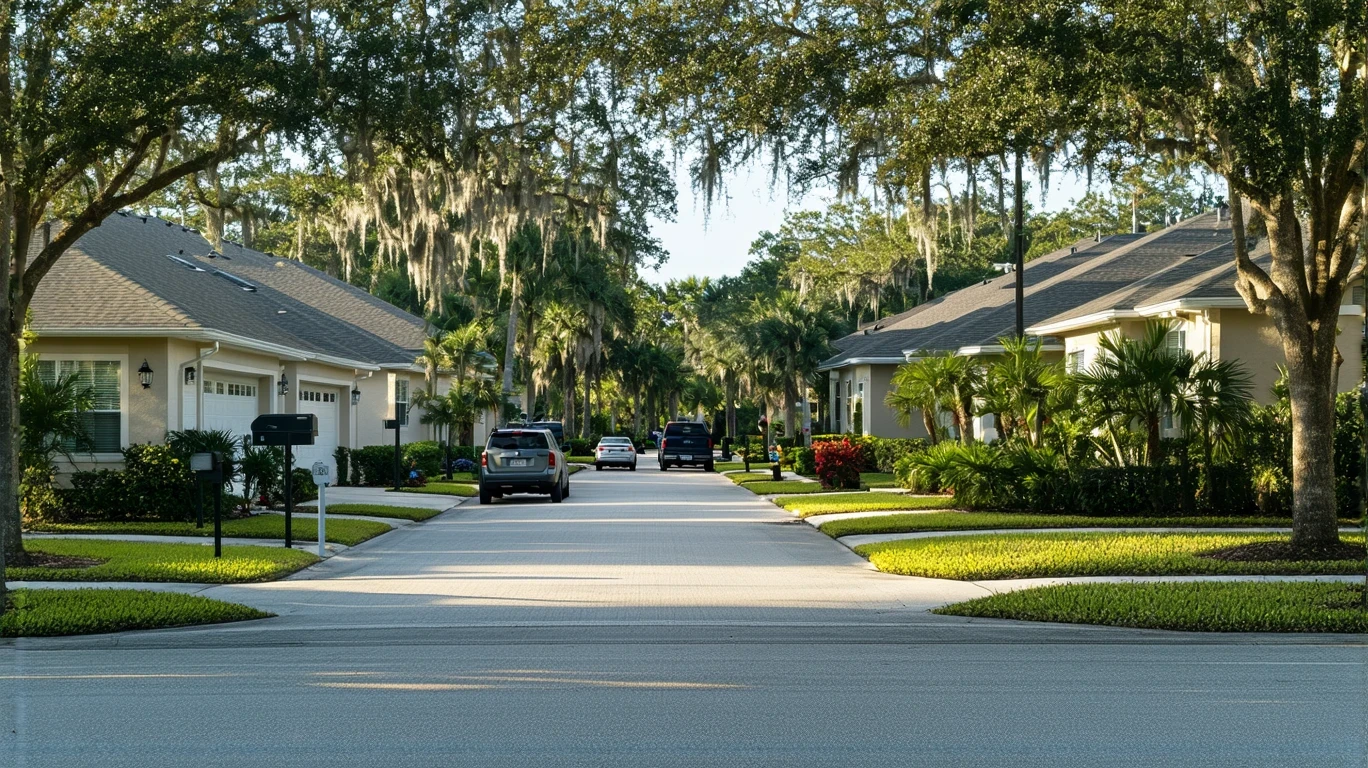
Apopka sits northwest of Orlando, functioning primarily as a suburban commuter city where cost pressure is shaped more by distance and structure than by price premiums. The dominant financial exposures here are housing entry barriers and transportation dependency, not elevated grocery or utility rates. This is a place where the decision to live affordably hinges on your ability to absorb commute time, vehicle costs, and seasonal cooling bills rather than on whether everyday purchases cost more.
The cost structure reflects a classic suburban tradeoff: lower housing entry in exchange for higher recurring transportation exposure. Apopka attracts households willing to drive farther in order to buy or rent at a lower threshold than they would face closer to Orlando’s core. The surprise for many newcomers is not that housing is expensive—it’s that the savings on rent or mortgage can be offset quickly by fuel, vehicle maintenance, and the time cost of commuting.
Driver verdict: Housing entry cost and car dependency dominate financial pressure in Apopka. Surprises come from underestimating commute frequency, summer cooling intensity, and the recurring nature of vehicle ownership in a place where nearly every errand requires a car.
Housing Costs (Primary Driver)
Housing in Apopka is structured around ownership. The city draws buyers seeking single-family homes at lower entry points than they would find in Winter Park, Maitland, or downtown Orlando. The value proposition is straightforward: you trade proximity and walkability for square footage and yard space, with the assumption that you’ll drive to work, errands, and most activities.
Renting exists but plays a secondary role. Apopka’s rental market serves transitional households—people new to the area, those saving for a down payment, or workers on short-term assignments. The rental stock skews toward smaller complexes and single-family homes offered by individual landlords rather than large apartment communities. If you’re renting here, you’re likely doing so as a stepping stone, not as a long-term lifestyle choice.
The housing decision in Apopka is less about renting versus owning and more about whether the lower entry cost justifies the transportation and time costs that come with suburban distance. Ownership is the dominant path, and the city’s appeal is strongest for households ready to buy and willing to commute.
Conclusion: Apopka is an ownership-oriented city. Renting is possible but limited. The financial logic favors buyers who can absorb commute costs in exchange for housing entry savings.
| Housing Type | Cost Anchor | What That Buys You |
|---|---|---|
| Single-family home (ownership) | Lower entry than Orlando core | Yard space, garage, suburban privacy, commute distance |
| Rental (apartment or house) | Transitional pricing | Flexibility, smaller footprint, limited walkability |
| Townhome or condo | Mid-range ownership | Lower maintenance, shared walls, HOA structure |
Utilities & Energy Risk
Utility costs in Apopka are driven almost entirely by electricity, with exposure concentrated in the long cooling season that stretches from late spring through early fall. Central Florida’s heat and humidity create sustained demand for air conditioning, and households here should expect elevated summer bills as a structural reality rather than an anomaly. Cooling is not optional—it’s a baseline cost of living in this climate.
Natural gas plays a minimal role. Most homes rely on electric heating for the rare cold snaps that occur in winter, and water heating is often electric as well. This means your utility volatility is tied to a single fuel source, and that source is subject to both weather intensity and rate changes from the provider. There’s no seasonal switching between heating fuels or meaningful diversification of energy risk.
The risk here is moderate but persistent. You won’t face the extreme seasonal swings of northern heating climates, but you also won’t enjoy the low baseline costs of temperate regions. Apopka’s utility exposure is steady, predictable in direction, and tied to how well your home handles heat retention and cooling efficiency.
Risk classification: Moderate. Electricity dominates, cooling season is extended, and efficiency upgrades directly control exposure. Volatility is seasonal but not extreme.
Groceries & Daily Costs
Grocery costs in Apopka reflect the broader Orlando metro market, with access to national chains, regional grocers, and discount retailers spread across the suburban landscape. The cost pressure here is not about premium pricing—it’s about the time and fuel cost of reaching stores, especially if you’re trying to comparison shop or access specialty items. Everyday staples are widely available, but the suburban layout means most shopping trips require a car and often involve navigating traffic on major corridors.
Households in Apopka typically shop at a mix of familiar chains, and the pricing environment is competitive enough that careful shoppers can find value. The friction comes from distance and frequency: if you’re making multiple trips per week or trying to consolidate errands across different parts of town, the transportation cost can quietly erode the savings you’re capturing on groceries themselves.
Daily costs beyond groceries—household supplies, personal care, dining out—follow the same pattern. Prices are not elevated, but access requires planning and driving. The cost structure rewards households that can batch errands, plan trips efficiently, and tolerate the time cost of suburban sprawl.
Transportation Reality
Transportation in Apopka is a recurring exposure, not a one-time decision. This is a car-dependent city where nearly every activity—commuting to work, running errands, accessing healthcare, taking kids to school—requires a personal vehicle. Public transit exists in limited form, but it is not a viable primary mode for most households. The transportation question here is not whether you need a car, but how many cars your household requires and how far you’ll be driving them.
Commute norms in Apopka skew toward Orlando and its surrounding employment centers. Many residents face round-trip commutes that add up quickly in both time and fuel costs, especially if work schedules require peak-hour travel on congested routes. The financial impact is not just the fuel itself—it’s the accelerated vehicle depreciation, maintenance frequency, and the opportunity cost of time spent behind the wheel instead of at home or elsewhere.
For households evaluating Apopka, transportation must be modeled as a recurring monthly exposure, not a background cost. Fuel prices fluctuate, vehicles require upkeep, and the distance you drive directly shapes your financial flexibility. The lower housing entry cost that draws people to Apopka can be offset rapidly if your household runs two vehicles with long daily commutes.
Transportation as exposure: High dependency, recurring fuel and maintenance costs, commute distance amplifies financial pressure. This is not a city where you can reduce transportation to a minor line item.
Cost Exposure Profiles
Cost exposure in Apopka is dominated by two structural factors: housing entry decisions and transportation dependency. The city’s value proposition is built on the assumption that you’re willing to trade proximity for affordability, and that tradeoff plays out differently depending on your household structure, work location, and vehicle situation.
Low-exposure situations: Households with short commutes, remote work arrangements, or jobs located within Apopka itself face the least financial pressure. Owning a home with strong cooling efficiency and minimal vehicle dependency allows you to capture the housing savings without absorbing the full transportation and utility costs that define suburban life here. Single-vehicle households with predictable schedules and low mileage can stabilize their recurring costs and benefit from Apopka’s lower entry barriers.
High-exposure situations: Households requiring two vehicles, long daily commutes into Orlando, or frequent trips across the metro area face compounding costs. Renters paying transitional rates without building equity absorb both housing and transportation costs without the offsetting benefit of ownership appreciation. Families with school-age children may face additional driving for activities, appointments, and extracurriculars, further amplifying vehicle dependency. Homes with older HVAC systems or poor insulation add utility volatility on top of transportation pressure.
The financial reality in Apopka is not about whether costs are high in absolute terms—it’s about whether your household structure aligns with the city’s cost drivers. Ownership, vehicle efficiency, and commute distance determine whether Apopka delivers affordability or simply shifts cost pressure from housing to transportation and utilities.
Frequently Asked Questions
Is Apopka more affordable than Orlando in 2026? Apopka typically offers lower housing entry costs than Orlando’s core neighborhoods, but transportation expenses rise due to commute distance and car dependency. The affordability advantage depends on whether your household can absorb the recurring costs of vehicle ownership and fuel.
What does a typical cost profile look like in Apopka? The typical cost profile is shaped by moderate housing entry, high transportation dependency, and steady utility exposure driven by summer cooling. The financial pressure is structural rather than price-driven, meaning your household situation determines total cost more than the city’s baseline pricing.
Do utilities cost more in Apopka than nearby areas? Utility costs in Apopka are comparable to the broader Orlando metro region, with electricity dominating due to extended cooling season demands. The cost difference between Apopka and nearby cities is minimal—what varies is how efficiently your home handles heat and how much cooling you require.
What costs tend to surprise newcomers in Apopka? Newcomers are often surprised by how quickly transportation costs accumulate, especially if both adults in a household commute daily. Summer cooling bills and the time cost of driving to most errands also catch people off guard if they’re accustomed to walkable or transit-served neighborhoods.
Are property taxes higher in Apopka than in Winter Park? Property tax rates vary by jurisdiction and assessed home value, but Apopka generally offers lower assessed values than Winter Park, which can result in lower absolute tax bills even if rates are similar. The tax advantage is part of the broader housing affordability tradeoff.
Is Apopka a good choice for renters or buyers? Apopka is structured around ownership. Renters will find options, but the city’s value proposition is strongest for buyers willing to trade commute distance for lower entry costs and more space. Renting here works best as a transitional step rather than a long-term plan.
How does car dependency affect monthly costs in Apopka? Car dependency in Apopka translates into recurring fuel, maintenance, insurance, and depreciation costs that can rival or exceed housing savings. Households should model transportation as a major monthly exposure, not a background expense, especially if multiple vehicles or long commutes are involved.
What’s the biggest financial risk of moving to Apopka? The biggest risk is underestimating the compounding effect of transportation and utility costs. If you focus only on the lower housing entry and ignore the recurring costs of commuting, cooling, and vehicle dependency, the financial advantage of living in Apopka can disappear quickly.
How this article was built: This analysis was developed using place-aware contextual reasoning about Apopka’s functional role as a suburban commuter city, regional climate patterns, and typical cost structures in Central Florida. No supplemental quantitative data feeds were available for this article, so all conclusions reflect qualitative interpretation of structural cost drivers rather than localized measurements.