
‘We moved to Altamonte Springs for the schools, but stayed for the neighbors.’
That sentiment captures something essential about life here: Altamonte Springs wasn’t necessarily anyone’s childhood dream destination, but it quietly delivers on the practical promises that matter most to suburban households. Nestled in the Orlando metro area, this mid-sized Florida city occupies an interesting middle ground—close enough to urban energy to feel connected, far enough to offer breathing room and lower housing pressure. But does that translate into happiness, or just convenience?
The answer depends entirely on what you’re hoping to feel when you come home at the end of the day. Altamonte Springs tends to reward people who value function over flair, who prioritize good schools and short commutes over walkable downtowns and late-night culture. It frustrates those who crave spontaneity, texture, and the kind of neighborhood life where errands happen on foot and third places emerge organically. Understanding the city’s emotional profile means understanding its tradeoffs—and who tends to feel at home within them.
The Emotional Landscape of Altamonte Springs
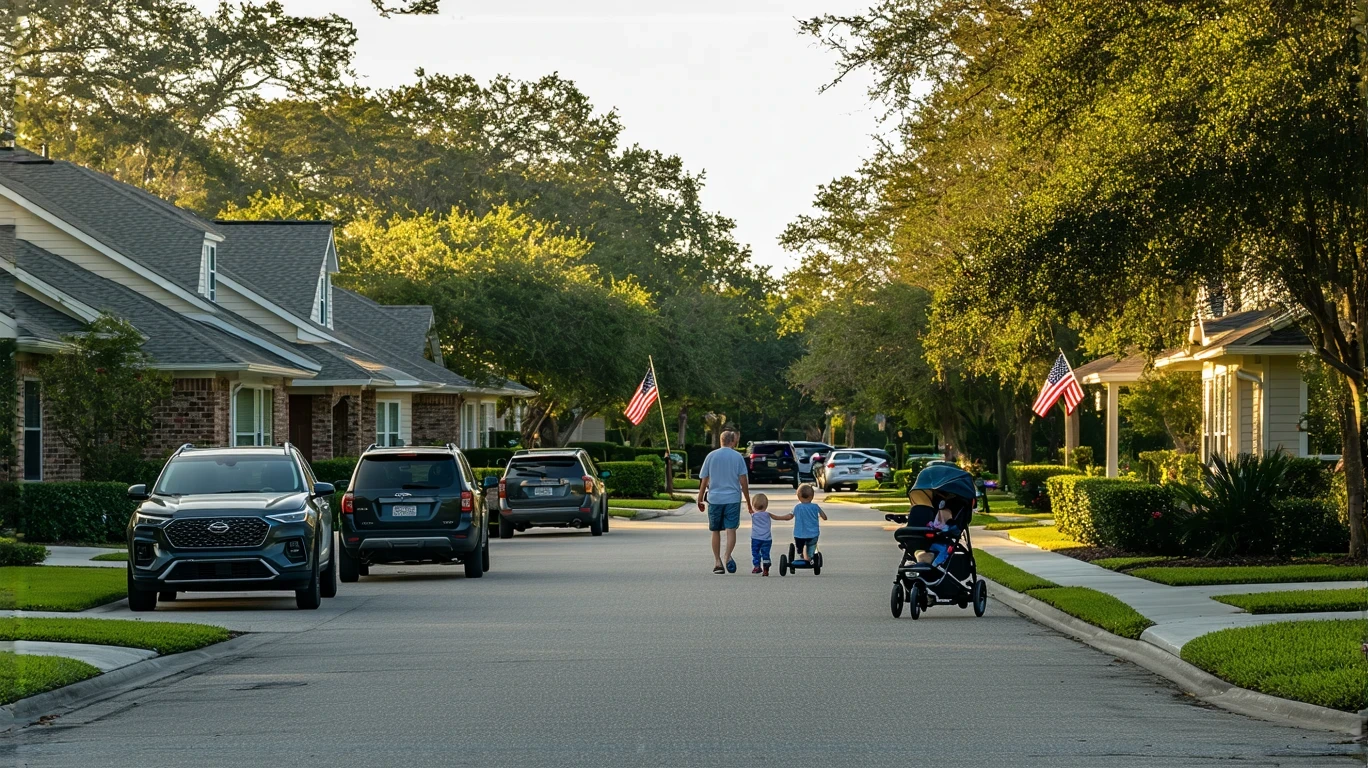
Altamonte Springs feels like a city that works well without demanding much attention. The infrastructure is there: schools are accessible, parks exist, clinics handle routine healthcare needs, and bus service connects residents to the broader metro. The urban form reflects a mix of building heights and land uses, with both residential and commercial spaces woven throughout. Some neighborhoods offer surprisingly high pedestrian-to-road ratios, creating pockets where walking feels natural rather than rebellious. But the overall structure still leans on cars for most daily errands, with food and grocery options clustered along commercial corridors rather than distributed evenly across neighborhoods.
For families seeking suburban stability, this setup tends to feel reassuring. There’s a rhythm here: drive to the grocery store, pick up kids from school, spend weekends at one of the area’s parks or near the water features that dot the landscape. The cost of living sits at a moderate level for the metro area, with median household income at $61,714 per year and median rent at $1,474 per month. Homeownership remains accessible compared to nearby urban cores, with median home values at $247,200. The unemployment rate of 3.1% signals economic stability, and the warm climate—currently 70°F—means outdoor routines stay consistent year-round.
But for those who moved here hoping for urban texture or a strong sense of place identity, Altamonte Springs can feel frustratingly generic. The walkable pockets exist, but they’re not the norm. The bus service helps, but without rail transit, car dependency remains the default for most households. The mixed-use development is present, but it doesn’t yet create the kind of spontaneous street life that makes a city feel alive. The result is a community that functions smoothly but doesn’t always inspire deep emotional attachment.
What People Are Talking About Online
Public discussion about Altamonte Springs tends to orbit around a few recurring themes: proximity to Orlando, the balance between growth and suburban character, and the tension between convenience and identity. On platforms like Reddit and local Facebook groups, residents express a kind of pragmatic contentment—appreciation for what works, mild frustration with what’s missing.
“It’s not exciting, but it’s solid. Good schools, reasonable rent, and I can be in downtown Orlando in twenty minutes when I need to be.”
That sentiment appears frequently: Altamonte Springs as the reliable supporting actor rather than the star. People value the access it provides without the intensity or cost of living directly in Orlando. But there’s also a thread of restlessness, especially among younger residents and those who moved from denser cities.
“I thought I’d adjust to driving everywhere, but I miss being able to walk to a coffee shop or grab dinner without planning it like an expedition.”
The corridor-clustered errands accessibility means that while amenities exist, reaching them requires intentionality. For households accustomed to spontaneous neighborhood routines, this shift can feel isolating. The bike infrastructure exists in pockets, but it’s not yet robust enough to serve as a primary mode of transportation for most residents.
“We love the parks and the fact that our kids can bike around the neighborhood safely. It’s not walkable like a city, but it’s not a total car prison either.”
This middle-ground experience—neither fully car-dependent suburb nor walkable urban neighborhood—defines much of the local conversation. People who arrive with suburban expectations tend to feel satisfied. Those who arrive hoping for urban texture tend to feel compromised.
How Local Coverage Frames the City
Local news and community coverage in Altamonte Springs tends to focus on growth, infrastructure evolution, and the ongoing negotiation between development and character preservation. The tone is generally constructive but occasionally wary, reflecting a community that’s watching its identity shift in real time.
Typical coverage themes include:
- “New Mixed-Use Development Brings Retail and Dining Options”
- “Residents Weigh Convenience Against Increased Traffic”
- “City Expands Park Access as Population Grows”
- “Community Debates Future of Suburban Character”
- “Local Clinics Add Services as Healthcare Demand Rises”
These frames reveal a city in transition—adding amenities and density while trying to retain the suburban feel that originally attracted residents. The absence of a hospital locally means healthcare stories often focus on clinic expansions and the need to travel for emergency or specialized care. Transportation coverage tends to emphasize road improvements and bus route adjustments rather than transformative transit investments.
The overall editorial tone suggests a community that’s functional and improving, but not yet sure what it wants to become. There’s pride in proximity to Orlando, but also a desire to be more than just “the affordable option nearby.”
What Reviews and Public Perception Reveal
On platforms like Google Reviews, Yelp, and neighborhood apps, Altamonte Springs earns steady but not enthusiastic marks. The praise tends to focus on reliability: good schools, safe neighborhoods, accessible shopping. The criticism tends to focus on blandness: limited dining variety, car dependency, lack of distinctive character.
People who moved here for suburban family life tend to leave positive reviews:
“Great place to raise kids. The schools are solid, the neighborhoods feel safe, and there’s enough to do without feeling overwhelmed.”
People who moved here expecting more urban amenities or walkability tend to express disappointment:
“It’s fine if you like strip malls and chain restaurants, but don’t expect much local flavor or walkable neighborhoods.”
Newer planned areas tend to receive higher marks for design and amenities, while older pockets are described as functional but dated. The park density and water features earn consistent appreciation, especially from families with young children and retirees seeking outdoor access without long drives.
The healthcare access—clinics and pharmacies but no hospital—creates a recurring note of caution in reviews. Residents appreciate the routine care options but emphasize the need to plan for emergencies or specialist visits elsewhere.
How Altamonte Springs Compares to Nearby Cities
| Aspect | Altamonte Springs | Orlando | Winter Park |
|---|---|---|---|
| Overall Vibe | Pragmatic suburban convenience | Urban energy with cultural variety | Upscale charm with walkable downtown |
| Walkability | Pockets of pedestrian infrastructure | Strong in core neighborhoods | Highly walkable in central areas |
| Transit Access | Bus service only | Bus and SunRail commuter rail | Bus and SunRail access |
| Housing Costs | Moderate for metro area | Higher in desirable neighborhoods | Premium pricing throughout |
| Dining & Nightlife | Chain-heavy with some local spots | Diverse and vibrant | Curated and upscale |
| Family Infrastructure | Schools and parks present | Variable by neighborhood | Strong schools, limited park space |
Altamonte Springs occupies a distinct position in the Orlando metro landscape. It offers more affordability and suburban structure than Winter Park, but less walkability and cultural texture. It provides more space and lower housing pressure than Orlando, but less transit access and urban energy. For households prioritizing school quality, safety, and manageable commutes, Altamonte Springs often emerges as the practical winner. For those prioritizing walkability, nightlife, or distinctive neighborhood character, Orlando or Winter Park tend to feel more aligned—despite the higher costs.
The choice often comes down to whether you value access to urban amenities or immersion in them. Altamonte Springs gives you the former; Orlando and Winter Park offer more of the latter.
Voices from the Community
“We moved here from a bigger city and honestly, it took a year to adjust. But now that we have our routines down—favorite parks, reliable grocery stores, a few good restaurants—it feels like home. It’s not exciting, but it’s stable, and that matters more than I thought it would.”
— Young family, relocated from out of state
“I work remotely and chose Altamonte Springs because I wanted lower rent without being too far from Orlando. It’s fine, but I do feel isolated sometimes. Everything requires a drive, and the social scene is pretty limited unless you’re willing to commute into the city.”
— Remote worker, early 30s
“For retirees, this place is ideal. The weather is great year-round, the parks are well-maintained, and the clinics handle most of what we need. We drive to Orlando for specialists, but that’s not a big deal. The cost of living is manageable on a fixed income, which is huge.”
— Retiree couple, moved from the Midwest
“I love that my kids can bike around the neighborhood safely and that the schools are good. But I do wish there were more local coffee shops or places to walk to. It feels a little sterile sometimes, like everything is designed for cars first and people second.”
— Parent of two, lived here five years
“Altamonte Springs is what you make of it. If you’re looking for a quiet, affordable base near Orlando, it’s great. If you’re looking for a city with its own strong identity, you’ll probably be disappointed. It’s more of a landing pad than a destination.”
— Long-time resident, works in Orlando
“The bus service is better than I expected, but it’s still not enough if you don’t have a car. I manage, but it limits where I can work and how spontaneous I can be. If they ever bring rail out here, it would change everything.”
— Transit-dependent resident, service industry worker
“We chose Altamonte Springs over Winter Park because we wanted more space for the money. No regrets. The schools are just as good, the parks are great, and we’re still close enough to everything that matters. It’s not fancy, but it works.”
— Family of four, first-time homebuyers
Does Altamonte Springs Feel Like a Good Fit?
Altamonte Springs doesn’t ask you to fall in love with it. It asks you to appreciate what it does well: provide stable housing, decent schools, accessible parks, and proximity to Orlando without the full cost or intensity of urban living. For families prioritizing function over flair, for commuters seeking affordability within the metro, for retirees wanting warm weather and manageable day-to-day costs, this city tends to deliver quiet satisfaction.
But for those seeking a strong sense of place, spontaneous walkability, or vibrant cultural texture, Altamonte Springs can feel like a compromise. The walkable pockets exist, but they’re not the norm. The mixed-use development is present, but it hasn’t yet created the kind of street life that makes a city feel alive. The transit service helps, but car dependency remains the default for most households.
The emotional profile here is pragmatic rather than passionate. People stay because it works, not because it captivates. If that sounds like a limitation, it might be. If it sounds like relief, you’ve probably found your fit.
Understanding whether Altamonte Springs aligns with your needs means understanding what you’re willing to trade. If you’re trading urban texture for suburban stability, lower housing costs for car dependency, proximity to culture for distance from intensity—this city makes that trade cleanly. If those tradeoffs feel like losses rather than choices, the restlessness you feel in online discussions will likely become your own.
For more insight into how these tradeoffs play out in daily routines and household logistics, explore what quality of life factors matter most in Altamonte Springs.
How this article was built: In addition to public economic data, this article incorporates location-based experiential signals derived from anonymized geographic patterns—such as access density, walkability, and land-use mix—to reflect how day-to-day living actually feels in Altamonte Springs, FL.
The perspectives shown reflect commonly expressed local sentiment and recurring themes in public discussion, rather than individual accounts.