
Is Altamonte Springs expensive to live in? Altamonte Springs is considered moderately priced in 2026, with a median home value of $247,200 and median rent of $1,474 per month positioning it as accessible relative to many Florida metros. The value proposition depends on housing entry cost versus car dependence, as most households require vehicle ownership to manage daily logistics efficiently.
You’re staring at a spreadsheet trying to figure out whether Altamonte Springs fits your budget, but the numbers don’t tell you what actually drives expenses here. Is it the rent? The commute? The summer electric bill? Understanding the cost structure means knowing which categories create pressure and which stay predictable—because in Altamonte Springs, the biggest expense isn’t always the most obvious one.
Overall Cost of Living Snapshot
Altamonte Springs operates at a regional price parity index of 101, meaning overall costs track closely with the national baseline. This is a city where housing and transportation form the twin pillars of household expense, with utilities adding seasonal but manageable pressure during the extended cooling season. The unemployment rate sits at 3.1%, reflecting a stable local economy with consistent job access in the broader Orlando metro area.
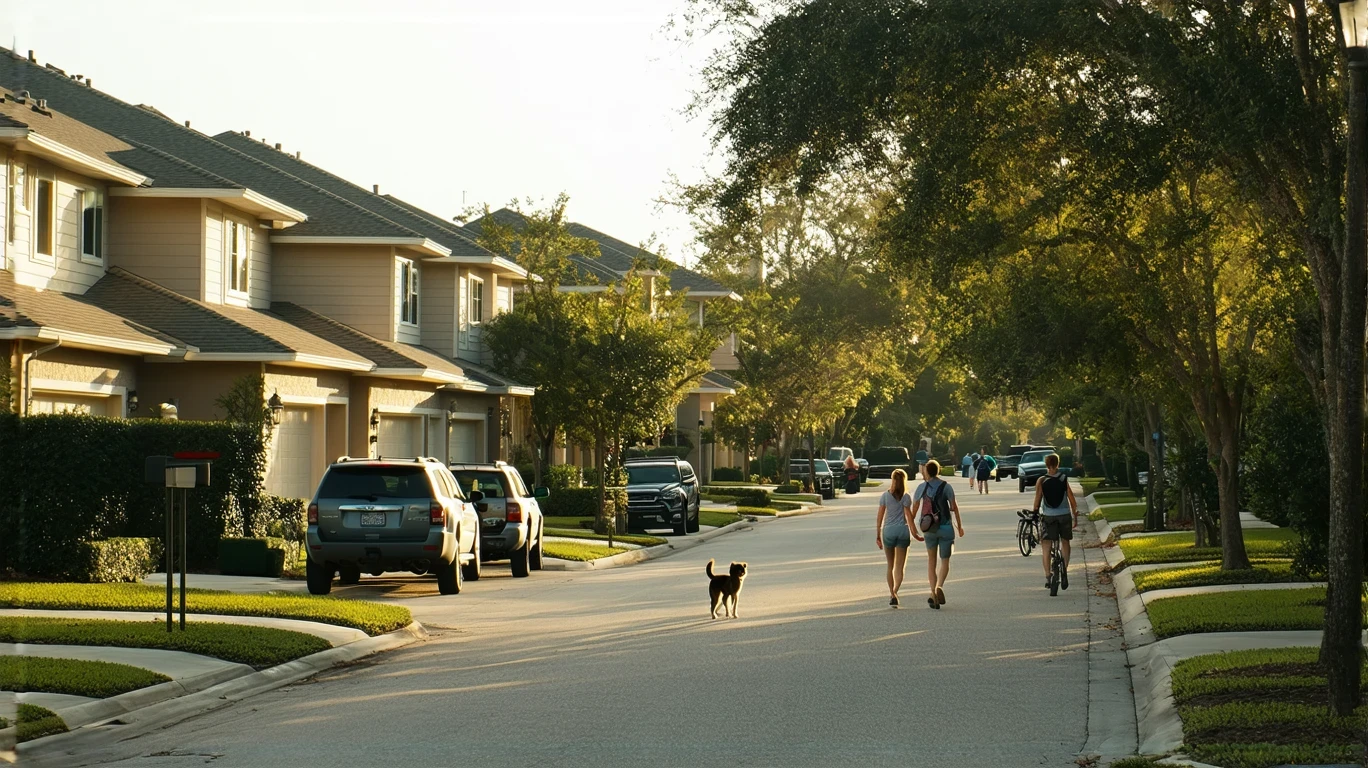
The shape of costs here is suburban and car-oriented. While walkable pockets exist—particularly where pedestrian infrastructure is denser—most households depend on a vehicle to reach grocery stores, workplaces, and services efficiently. Food and grocery options are corridor-clustered rather than broadly accessible, meaning errands require planning or short drives rather than spontaneous walks. Bus service is present, but the lack of rail transit limits car-free viability for most residents.
Compared to nearby Orlando, Altamonte Springs offers lower housing entry costs without sacrificing proximity to employment centers. The primary cost driver is the combination of housing entry (whether renting or buying) and the recurring expense of vehicle ownership. Surprises tend to come from underestimating transportation costs—fuel, insurance, maintenance—and the summer spike in electricity usage when air conditioning runs continuously in Florida’s hot, humid climate.
Driver verdict: Housing entry and car dependency dominate the cost landscape. The city rewards households that can minimize commute distance and manage vehicle expenses, while penalizing those who assume walkability or transit will reduce transportation costs.
Housing Costs (Primary Driver)
Housing is the largest single cost anchor in Altamonte Springs. The median home value of $247,200 reflects a market that is accessible for buyers with stable income and down payment capacity, particularly compared to higher-cost Florida metros. Median gross rent of $1,474 per month positions rental housing as a viable option for households seeking flexibility or unable to commit to ownership.
The renting versus owning decision hinges on time horizon and financial readiness. Renting offers predictability in monthly outlay and avoids exposure to property tax increases, insurance volatility, and maintenance surprises. Owning locks in a mortgage payment (assuming a fixed-rate loan) and builds equity, but introduces long-term obligations including property taxes, homeowners insurance (which can be volatile in Florida), HOA fees where applicable, and ongoing maintenance. For households planning to stay three to five years or longer, ownership often delivers better value. For those in transition or uncertain about long-term plans, renting preserves flexibility without the friction of selling.
Altamonte Springs functions as a buying city for established households and a renting city for those in transition or early career stages. The housing stock includes a mix of single-family homes, townhomes, and apartment complexes, with land use patterns showing both residential and commercial zones integrated throughout the city.
| Housing Type | Cost Anchor | What That Buys You |
|---|---|---|
| Median Home Value | $247,200 | Ownership entry with equity-building and long-term cost control, but exposure to taxes, insurance, and maintenance |
| Median Gross Rent | $1,474/month | Flexibility and predictable monthly cost, but no equity and exposure to renewal increases |
Utilities & Energy Risk
Electricity is the dominant utility expense in Altamonte Springs, driven by the extended cooling season and Florida’s hot, humid climate. The local electricity rate of 15.70¢ per kilowatt-hour (kWh) is moderate, but consumption volume during summer months creates the real pressure. A typical household using 1,000 kWh per month would face an illustrative baseline cost of approximately $157 before fees and taxes—but actual usage often exceeds this during peak cooling months when air conditioning runs continuously.
Natural gas, priced at $32.82 per thousand cubic feet (MCF), plays a minimal role in most Altamonte Springs households. Heating demand is rare, and many homes rely on electric heat pumps rather than gas furnaces. For homes with gas water heaters or cooking appliances, usage remains low and predictable year-round.
The risk profile for utilities in Altamonte Springs is moderate. Summer electricity bills can swing significantly based on thermostat settings, insulation quality, and household size. Older homes with poor insulation or inefficient HVAC systems face higher exposure. Newer construction or homes with energy-efficient upgrades reduce usage intensity, but the structural reality remains: cooling dominates the utility budget from May through October.
Households can reduce exposure by managing thermostat settings, using programmable or smart thermostats, and ensuring HVAC systems are well-maintained. However, the climate imposes a floor on cooling costs that cannot be eliminated—only managed.
Groceries & Daily Costs
Grocery costs in Altamonte Springs track closely with the regional price parity index of 101, meaning prices align with national baselines after adjusting for local cost structure. Derived estimates based on national data and regional adjustments suggest moderate grocery pressure: staples like bread, chicken, and rice remain accessible, while proteins like ground beef and dairy products like cheese reflect typical Florida pricing.
The practical impact depends on household size and shopping habits. Larger households face greater cumulative grocery expense, but the per-person cost structure remains consistent. The city’s corridor-clustered food and grocery accessibility means most residents drive to supermarkets rather than walking to neighborhood stores. This adds a small but recurring transportation cost to grocery shopping, particularly for households making frequent trips.
Grocery stores in the area include familiar chains and regional options, offering a range of price tiers from budget to premium. Households that plan weekly shopping trips and buy in bulk can reduce per-unit costs, while those relying on convenience stores or frequent small trips face higher cumulative expense.
Transportation Reality
Transportation is a structural cost in Altamonte Springs, not an optional one. The city’s car-oriented mobility texture means most households require at least one vehicle to manage daily logistics—commuting, errands, medical appointments, and social activities. While walkable pockets exist and some cycling infrastructure is present, these serve limited areas and do not eliminate the need for a car.
Bus service is available and provides connectivity within the city and to nearby Orlando, but frequency and coverage are not sufficient for most households to rely on transit as their primary mode. The absence of rail transit further limits car-free viability. For households without a vehicle, daily life requires significant planning, time investment, and reliance on rideshare services, which quickly become expensive.
Fuel prices in the area are currently $2.73 per gallon, which is moderate but subject to seasonal and geopolitical volatility. A typical commuter driving 25 miles round trip in a vehicle averaging 25 miles per gallon would use approximately one gallon per day, translating to roughly $2.73 per workday in fuel alone—before accounting for insurance, maintenance, registration, and depreciation.
The transportation exposure is recurring and unavoidable for most households. Two-vehicle households face double the insurance, maintenance, and fuel costs. Single-vehicle households must coordinate schedules carefully, which can limit flexibility and increase time pressure. The key tradeoff is commute length: shorter commutes reduce fuel and time costs, while longer commutes amplify both.
Cost Exposure Profiles
Cost exposure in Altamonte Springs is shaped by three primary factors: housing entry, transportation dependence, and utility seasonality. Understanding which exposures dominate your situation determines how much financial margin you need and where surprises are most likely to emerge.
Low-exposure profile: A household that owns a home with a fixed-rate mortgage, works within a short commute distance, and operates one well-maintained vehicle faces predictable costs. Monthly housing is stable, transportation is contained, and utility bills—while elevated in summer—are manageable with efficient cooling practices. This profile benefits from the city’s moderate cost structure and stable economy.
High-exposure profile: A household that rents and faces annual renewal increases, commutes 30+ miles each way, and operates two vehicles faces compounding pressures. Rent increases are unpredictable, fuel and maintenance costs scale with mileage, and insurance premiums for two vehicles add recurring expense. Summer utility spikes amplify pressure during months when discretionary spending is already constrained. This profile is vulnerable to volatility in multiple categories simultaneously.
The distinction is structural, not income-based. A high-income household with a long commute and two vehicles faces higher absolute costs than a moderate-income household with a short commute and one vehicle. The city rewards proximity, vehicle efficiency, and housing stability—not just earning power.
Renters face exposure to lease renewal increases, which can vary significantly based on market conditions and property management practices. Owners face exposure to property tax adjustments, insurance premium changes, and maintenance events (roof, HVAC, water heater). Both groups face utility seasonality, but owners have more control over efficiency upgrades that reduce long-term exposure.
How Day-to-Day Living Actually Works Here
The structure of Altamonte Springs shapes daily routines in ways that aren’t visible in a cost spreadsheet. Because grocery stores and services are corridor-clustered rather than broadly accessible, most households drive to run errands—even short ones. A trip to the supermarket, pharmacy, and gas station might involve three separate stops along a commercial corridor, each requiring a car. Walking or biking to these destinations is possible in some neighborhoods, but the infrastructure supports it only in pockets, not citywide.
This pattern means transportation isn’t just about commuting to work; it’s woven into every aspect of household logistics. Parents drive kids to school or the bus stop. Medical appointments require a car. Social activities, dining, and entertainment almost always involve driving. For households with two working adults, coordinating vehicle access becomes a daily negotiation unless both have cars.
The presence of parks and water features provides outdoor recreation options, and school density supports families with children, but accessing these amenities still typically requires a short drive rather than a walk. The mixed building heights and integrated residential-commercial land use create a suburban environment that feels more varied than a purely residential subdivision, but it doesn’t eliminate car dependence.
Bus service exists and connects key corridors, but for most households, relying on it as a primary mode would double or triple commute times and limit schedule flexibility. The result is a city where convenience and time efficiency are directly tied to vehicle ownership—and where households without cars face significant friction in managing daily life.
Frequently Asked Questions
Is Altamonte Springs more affordable than Orlando in 2026? Altamonte Springs generally offers lower housing entry costs than Orlando, with a median home value of $247,200 and median rent of $1,474 per month. However, car dependency is similar in both cities, so transportation costs remain a recurring factor regardless of location.
What does a typical cost profile look like in Altamonte Springs? A typical household faces moderate housing costs (either rent or mortgage), recurring transportation expenses (fuel, insurance, maintenance for at least one vehicle), and seasonal utility pressure during summer cooling months. Grocery costs align with national baselines, and the local economy supports stable employment access.
Do utilities cost more in Altamonte Springs than nearby areas? Electricity rates in Altamonte Springs are moderate at 15.70¢ per kWh, but consumption volume during Florida’s extended cooling season drives total utility expense. Costs are comparable to other Central Florida cities with similar climate exposure.
What costs tend to surprise newcomers in Altamonte Springs? Newcomers often underestimate the recurring cost of vehicle ownership—fuel, insurance, and maintenance—especially if moving from a city with strong transit. Summer electricity bills also surprise households unfamiliar with continuous air conditioning usage in hot, humid climates.
Are property taxes higher in Altamonte Springs than nearby cities? Property tax rates vary by jurisdiction and are influenced by local millage rates, school district funding, and county assessments. Altamonte Springs is located in Seminole County, and prospective buyers should verify current tax rates and exemptions (such as homestead) during the home search process.
Can you live in Altamonte Springs without a car? Living without a car in Altamonte Springs is challenging for most households. While bus service exists and some neighborhoods have walkable pockets, the corridor-clustered layout of grocery stores and services means daily logistics require significant time investment and planning without a vehicle.
How much does commuting cost in Altamonte Springs? Commuting costs depend on distance and vehicle efficiency. With gas prices currently at $2.73 per gallon, a 25-mile round-trip commute in a vehicle averaging 25 MPG costs approximately $2.73 per workday in fuel alone, before accounting for insurance, maintenance, and depreciation.
Is Altamonte Springs a good value for renters or buyers? Altamonte Springs offers good value for buyers planning to stay long-term, as the median home value of $247,200 is accessible relative to many Florida metros. Renters benefit from flexibility and predictable monthly costs, but face exposure to lease renewal increases over time.
How this article was built: In addition to public economic data, this article incorporates location-based experiential signals derived from anonymized geographic patterns—such as access density, walkability, and land-use mix—to reflect how day-to-day living actually feels in Altamonte Springs, FL.
—