
Mia stood in her shared apartment near the Federal Way Transit Center, laptop open to a spreadsheet comparing her monthly costs to what her friends were paying in Seattle’s University District. She’d chosen Federal Way specifically—close enough to commute to her Seattle campus via light rail, but far enough to escape the premium rents and chaotic parking that defined traditional college neighborhoods. For students willing to trade the classic campus-adjacent experience for lower costs and a quieter home base, Federal Way offers a compelling suburban alternative.
Why Students Choose Federal Way
Federal Way doesn’t fit the traditional college town mold—there’s no major residential campus here, no stadium dominating the skyline, and no fraternity row. Instead, it functions as a commuter-friendly suburb for students attending institutions in Seattle, Tacoma, or nearby Highline College. What makes Federal Way attractive is its combination of rail transit access, relatively affordable rent compared to Seattle proper, and a built environment that supports daily life without a car in certain pockets. Students here tend to be pragmatic: they’re optimizing for lower housing costs and manageable commutes rather than the immersive social scene of a traditional campus town.
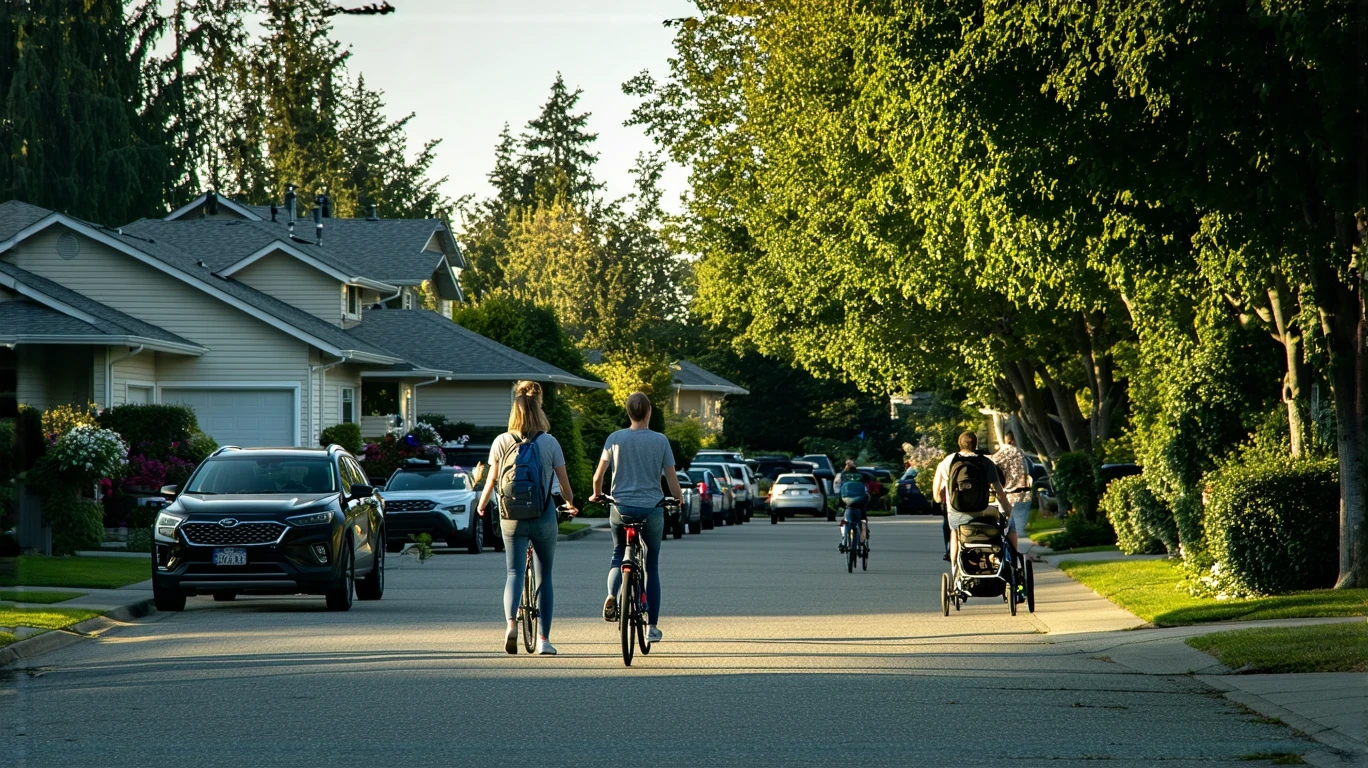
The city’s experiential character supports this lifestyle. Federal Way has integrated parks and green spaces that provide study-friendly outdoor environments, broadly accessible grocery and food options that reduce the need for long shopping trips, and notable cycling infrastructure alongside its rail service. The urban form is more vertical than typical sprawl, with mixed residential and commercial land use creating neighborhoods where errands, transit, and housing coexist. For students who value financial breathing room and don’t mind a 30–40 minute commute to campus, Federal Way delivers a functional, less expensive base of operations.
Housing Options for Students
Because Federal Way isn’t a college city, there’s no on-campus housing to consider and very few purpose-built student apartment complexes. Instead, students enter the general rental market, competing with young professionals and families for standard apartments, shared houses, and basement units. The median gross rent in Federal Way is $1,660 per month, but students typically reduce that burden significantly by sharing. A two-bedroom apartment split between roommates might run each person $800–$900, while a room in a shared house can sometimes be found for less, especially in neighborhoods farther from the transit center.
Lease terms are typically 12 months, though some landlords offer flexibility for students on academic calendars. Deposits usually equal one month’s rent, and many landlords require proof of income or a co-signer—common for students without full-time employment. Roommate-finding happens informally: campus housing boards, Facebook groups for Seattle-area students, and Craigslist remain the primary channels. Unlike traditional college towns, there’s no centralized student housing office or dedicated off-campus listing service, so students need to be proactive and start searching several months before move-in.
Proximity to transit is the key variable. Apartments within walking distance of the Federal Way Transit Center command a premium because they eliminate the need for a car and shorten the commute to Seattle campuses. Neighborhoods farther out may offer lower rent but require a car or bus transfer, adding time and cost to the daily routine. Students should weigh the rent savings against the cost of car ownership—insurance, gas at $4.72 per gallon, and parking fees—before choosing a cheaper unit in a less connected area.
Getting Around: Transportation and Campus Access
Federal Way’s greatest asset for commuter students is its rail transit connection to Seattle. The Link light rail extension provides direct service to the University of Washington, downtown Seattle, and other major employment and education hubs. For students attending UW, Seattle University, or Seattle Central College, this transforms Federal Way from a distant suburb into a viable home base. The commute takes roughly 45–60 minutes depending on the campus, but it’s predictable, doesn’t require parking, and allows for study or work time in transit.
The city also has bus service and notable bike infrastructure, with bike-to-road ratios that exceed typical suburban levels. In walkable pockets near the transit center, students can manage daily errands—groceries, coffee shops, pharmacies—on foot or by bike. However, outside these areas, the city’s texture shifts toward car-oriented development, and students without vehicles may find themselves constrained. Ride-sharing is an option for occasional trips, but at Seattle-area rates, frequent Uber or Lyft use adds up quickly.
Parking availability is generally good compared to Seattle, where on-campus and street parking are scarce and expensive. Students who do own cars will find that most apartment complexes include at least one space, and street parking is typically unrestricted. The tradeoff is that owning a car here often feels necessary for students living outside the transit-served core, whereas in a traditional college town, walking or campus shuttles might suffice.
Student Cost of Living
Living in Federal Way as a student means navigating a different cost structure than you’d face in Seattle’s University District or Capitol Hill. Rent is lower, but you’re also farther from campus, which introduces commuting costs and time. Groceries and daily expenses benefit from the city’s broadly accessible food infrastructure—high-density grocery and food establishments mean competitive pricing and less need to travel for basics. However, entertainment and social options are more limited locally, so students often travel to Seattle for nightlife, concerts, or cultural events, adding transportation costs.
Part-time job opportunities exist but aren’t as concentrated as in a true college town. The local unemployment rate is 4.1%, and retail, food service, and logistics jobs are available, particularly near the transit center and commercial corridors. Typical student wages in Washington hover around $16–$18 per hour for entry-level work, thanks to the state’s minimum wage laws. Students who can secure campus jobs in Seattle may find better pay or more flexible hours, but the commute eats into available work time.
Textbook costs, entertainment, and personal expenses don’t vary much by location, but students in Federal Way should budget for transit passes (ORCA cards offer student discounts) and occasional ride-sharing or gas if they own a car. The key financial advantage here is housing: every $200–$300 saved per month on rent compared to Seattle neighborhoods compounds over an academic year, creating meaningful budget relief for students managing tuition, loans, and living costs simultaneously.
Table: Monthly Student Budget in Federal Way
Here’s what a typical monthly student budget might look like in Federal Way:
| Expense Category | Shared Housing | Solo Living |
|---|---|---|
| Rent (utilities included or separate) | $850 | $1,400 |
| Electricity (illustrative, ~500 kWh) | $35 | $65 |
| Groceries and food | $300 | $350 |
| Transportation (transit pass or gas) | $100 | $150 |
| Textbooks and supplies (averaged) | $80 | $80 |
| Entertainment and social | $120 | $150 |
| Personal care and miscellaneous | $80 | $100 |
| Total | $1,565 | $2,295 |
Estimates based on average student spending patterns and local costs; before fees, taxes, or variable expenses.
Student-Friendly Amenities and Services
Federal Way’s amenity landscape reflects its suburban, family-oriented character rather than a student-centric ecosystem. There are no dedicated student unions or campus-adjacent coffee shops with late-night study hours, but the city does offer public libraries, chain coffee shops with Wi-Fi, and quiet parks that function well as study spaces. The integrated green space access—parks distributed throughout the city at high density—means students can find outdoor environments for reading, group projects, or mental health breaks without traveling far.
Fitness options include commercial gyms (24 Hour Fitness, Anytime Fitness) and the city’s community center, which offers drop-in rates and recreational programs. There are no student-specific discounts widely advertised, but some businesses near Highline College may offer deals. Healthcare access is routine and local: clinics and pharmacies are present, but there’s no hospital in Federal Way itself. Students needing specialized care or emergency services will travel to nearby cities, and those accustomed to on-campus health centers will need to establish care with local providers or continue using campus services if their school offers them.
Job opportunities exist in retail and food service, particularly in the commercial zones near the transit center and along major corridors. The mixed land use and more vertical urban form create pockets of activity where students can find part-time work within biking or transit distance. However, the density of student-oriented employers—bookstores, campus bars, tutoring centers—is minimal. Students seeking internships or career-relevant experience will likely commute to Seattle or Tacoma, where larger employers and professional networks are concentrated.
Social Scene and Nightlife
Federal Way’s social scene is not built around college students. There are no campus events, student organizations, or intramural sports leagues based here. Students living in Federal Way typically maintain their social lives on campus or in Seattle, treating their apartment as a place to sleep, study, and save money rather than a hub of activity. This works well for students who are older, more independent, or focused on academics and work, but it’s a poor fit for those seeking the immersive, always-on social environment of a traditional college town.
Local nightlife is limited and skews toward family dining and casual bars rather than student-oriented venues. There are no college bars, late-night diners, or music venues that cater to the 18–24 demographic. Students who want concerts, clubs, or cultural events travel to Seattle, which is accessible via light rail but requires planning around the train schedule and adds cost. The dating scene and social networking opportunities are similarly constrained—most socializing happens on campus or in Seattle’s neighborhoods, not in Federal Way itself.
That said, the city’s parks and outdoor spaces do support informal socializing. Students who enjoy hiking, biking, or outdoor recreation will find Federal Way’s integrated green space a genuine asset. Group study sessions in parks, weekend bike rides, or casual meetups at coffee shops are all viable, but they require students to be self-directed and comfortable creating their own social structure rather than plugging into an existing campus culture.
Safety and Practical Considerations
Federal Way’s safety profile is typical of a mid-sized suburban city. There’s no campus security presence, and students living off-campus are responsible for their own safety in the same way any resident would be. The city has standard emergency services, and the transit center and surrounding walkable pockets are generally well-lit and active during commute hours. Students should use common sense: avoid walking alone late at night in isolated areas, secure bikes and belongings, and be aware of surroundings when using transit.
Academic support services are campus-based, not locally available in Federal Way. Students will access tutoring, writing centers, and advising at their Seattle or Tacoma institutions, which means planning trips to campus around those resources. The lack of a local college infrastructure also means no student-specific legal aid, housing advocacy, or emergency funds—students are navigating the general rental and service markets without the safety net that campus towns often provide.
Internship and career services are similarly campus-dependent. Federal Way’s economy includes retail, logistics, and service jobs, but students seeking professional internships or career-track positions will commute to Seattle or Tacoma. The average commute time of 33 minutes reflects the city’s role as a bedroom community, and students should factor that time into their schedules when balancing classes, work, and internships.
FAQs About Student Life in Federal Way
What’s the average cost of student living in Federal Way?
Students sharing housing typically spend $1,500–$1,700 per month on rent, utilities, food, and transportation combined. Solo living pushes that closer to $2,300–$2,500. The primary savings come from lower rent compared to Seattle neighborhoods near campus.
How safe is it for students to live off-campus?
Federal Way is as safe as most suburban areas, but students should exercise standard precautions. There’s no campus security or student-specific safety infrastructure, so renters are responsible for their own security and should choose well-lit, active neighborhoods near transit if possible.
Are there good part-time job opportunities?
Retail, food service, and logistics jobs are available, particularly near the transit center. However, the density of student-oriented employers is low, and many students commute to Seattle for campus jobs or internships that offer better pay or career relevance.
What’s the social scene like for college students?
Federal Way doesn’t have a student-centered social scene. Most students maintain their social lives on campus or in Seattle, using Federal Way as a quiet, affordable home base. This works well for independent, commuter-focused students but poorly for those seeking an immersive college town experience.
Making the Decision: Is Federal Way Right for Your College Years?
Federal Way works best for students who are pragmatic about tradeoffs. If you’re attending a Seattle-area campus and want to reduce your monthly spending in Federal Way by $300–$500 compared to living in the University District or Capitol Hill, and you’re comfortable with a 45–60 minute commute via light rail, Federal Way delivers meaningful financial relief. The rail connection makes the commute predictable, and the city’s walkable pockets, integrated parks, and broadly accessible groceries mean you can manage daily life without a car if you choose housing strategically.
However, Federal Way is not a substitute for a traditional college town. There’s no campus culture here, no student nightlife, and no dense network of student services and employers. You’ll spend significant time commuting, and your social life will likely center on campus or Seattle rather than your neighborhood. For students who value independence, lower costs, and a quieter living environment, that’s a fair trade. For those who want to be immersed in campus life 24/7, it’s a poor fit.
Parents evaluating Federal Way should understand that their student will need to be self-sufficient and comfortable navigating a general rental market without campus housing offices or student-specific protections. The financial savings are real, but they come with increased responsibility for transportation planning, lease negotiation, and time management. Students who thrive here tend to be older, more focused, or balancing school with significant work commitments—those for whom the cost of living in Federal Way makes the difference between financial stress and stability.
How this article was built: In addition to public economic data, this article incorporates location-based experiential signals derived from anonymized geographic patterns—such as access density, walkability, and land-use mix—to reflect how day-to-day living actually feels in Federal Way, WA.