
“I thought I could take the train everywhere when I moved here. Turns out, I use it twice a week — and drive the rest.”
That’s the reality for many people navigating transportation options in Carrollton. The city sits in a mobility middle ground: rail service exists, walkable pockets offer real convenience for errands, and yet most daily life still hinges on having a car. Understanding how people actually get around here — and who benefits from transit versus who absorbs commute friction — is essential for anyone considering a move to Carrollton in 2026.
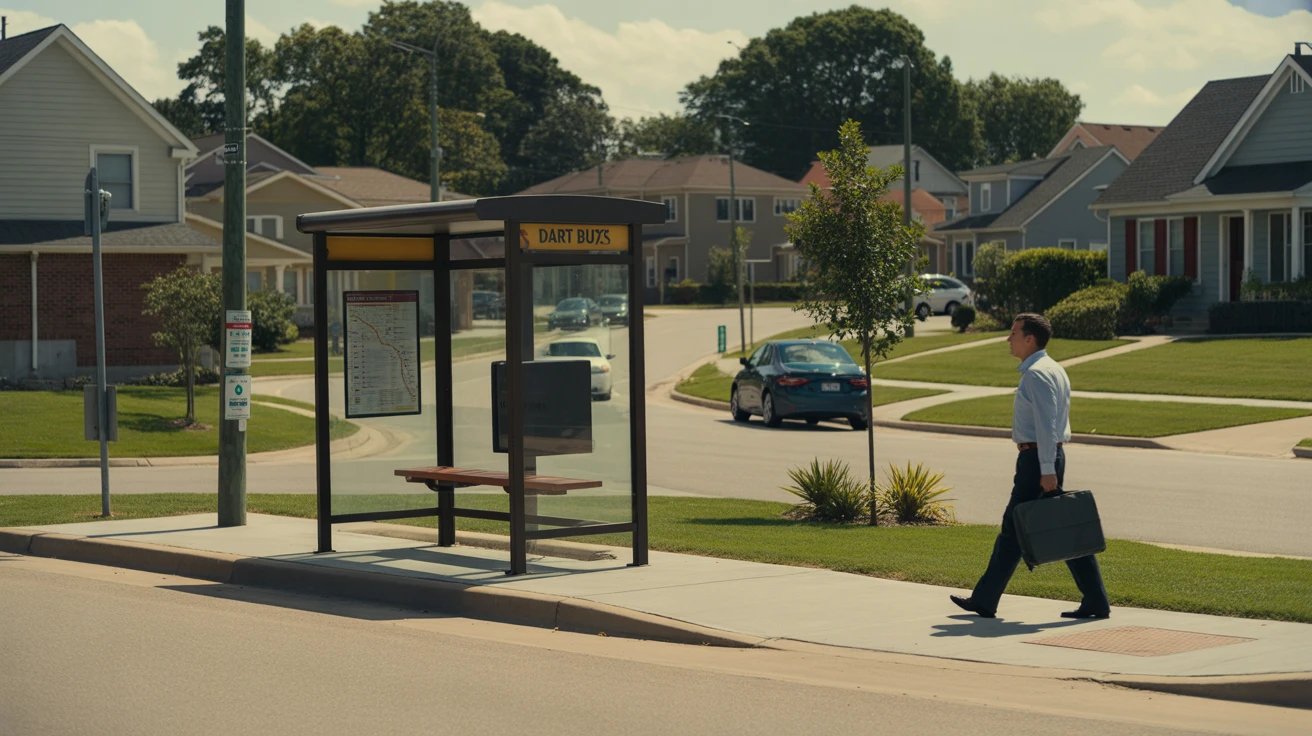
How People Get Around Carrollton
Carrollton’s transportation landscape reflects its role as a suburban city within the Dallas metro. The dominant pattern is car-first, but not car-only. Rail service connects parts of the city to regional employment centers, and certain neighborhoods support walking for groceries, coffee, and routine errands. But these advantages are geographically concentrated. Move a few blocks in the wrong direction, and the car becomes non-negotiable.
What newcomers often misunderstand is that Carrollton isn’t uniformly suburban. The city contains pockets where pedestrian infrastructure is dense and land use is mixed — places where you can walk to a grocery store, grab lunch, and catch a train without needing your keys. But these pockets don’t connect seamlessly. Between them, the city reverts to low-rise, car-oriented development where sidewalks thin out and distances stretch.
The result is a transportation system that works well for specific household types — those who live near rail stations, work along transit corridors, or structure their lives around a small geographic radius. For everyone else, driving dominates.
Public Transit Availability in Carrollton
Public transit in Carrollton often centers around systems such as DART (Dallas Area Rapid Transit), which operates rail service through parts of the city. The presence of rail is a meaningful advantage, particularly for commuters heading to downtown Dallas, Richardson, or other rail-served job centers. For those households, transit isn’t theoretical — it’s a daily tool that reduces car dependency and simplifies commute logistics.
But rail coverage is corridor-based, not citywide. If you live within walking distance of a station, transit becomes viable. If you don’t, the system becomes harder to use. Bus service exists, but it functions primarily as a connector rather than a standalone solution for most residents. Late-hour coverage is limited, and multi-stop trips often require careful planning.
Transit works best in Carrollton’s denser, mixed-use areas — places where errands, housing, and stations align. In the city’s outer neighborhoods, where development is more spread out and pedestrian infrastructure is sparse, transit becomes impractical for daily life. The system isn’t absent, but it’s not universally accessible either.
Driving & Car Dependence Reality
For most households in Carrollton, driving is the default. The city’s layout — low-rise, spread out, and built around road networks — makes car ownership a practical necessity for anyone managing multi-stop days, school drop-offs, or errands beyond the walkable core areas.
Parking is generally abundant and free, which removes one of the friction points common in denser cities. Commute flexibility is high: you can leave when you want, route around delays, and handle errands on the way home. But that flexibility comes with exposure to fuel costs, maintenance, insurance, and the time cost of sitting in traffic during peak hours.
Car dependence in Carrollton isn’t about personal preference — it’s about infrastructure. The city’s geography and development pattern make driving the most reliable way to navigate daily life for the majority of residents. Even households near rail stations often keep a car for weekends, errands, and trips that don’t align with transit routes.
Commuting Patterns & Daily Mobility
Commuting in Carrollton varies widely depending on where you live and where you work. The average commute runs about 24 minutes, but that figure masks significant variation. More than one-third of workers face long commutes, often because their jobs sit outside the rail-served corridor or require travel to suburban office parks that transit doesn’t reach efficiently.
Single-destination commuters — those heading to downtown Dallas or another rail-accessible job center — benefit most from transit. Their daily pattern is predictable, and the train handles the bulk of the trip. Multi-stop commuters, on the other hand, absorb more friction. If your day includes daycare drop-off, a job in Plano, and a grocery run on the way home, transit becomes impractical. The car is the only tool that handles that complexity.
Work-from-home rates in Carrollton are low — just 3.1% of workers report remote arrangements. That means the vast majority of residents are making daily trips, and those trips shape household logistics, time budgets, and transportation costs in ways that vary significantly by neighborhood and job location.
Who Transit Works For — and Who It Doesn’t
Transit in Carrollton works best for renters and younger professionals living near rail stations, particularly those commuting to downtown Dallas or other transit-rich employment centers. For these households, proximity to the station reduces car dependency, simplifies commutes, and opens up neighborhoods that might otherwise feel isolated.
Families with school-age children face a different reality. School boundaries, activity schedules, and multi-stop logistics make car ownership nearly unavoidable, even for households near transit. The train might handle the work commute, but it doesn’t solve the 4 p.m. pickup or the weekend soccer game across town.
Households in Carrollton’s outer neighborhoods — where pedestrian infrastructure is thinner and stations are farther away — rarely find transit practical for daily life. The system exists, but the distance and time cost of accessing it make driving the more reliable choice. For these residents, transit becomes an occasional option rather than a primary tool.
Transportation Tradeoffs in Carrollton
Choosing between transit and driving in Carrollton isn’t about cost alone — it’s about predictability, control, and flexibility. Transit offers fixed costs and removes the variability of fuel prices and maintenance. But it also limits flexibility. You’re bound by schedules, routes, and coverage gaps. If your day doesn’t align with the system’s structure, transit becomes a constraint rather than a convenience.
Driving offers control. You leave when you want, route around delays, and handle multi-stop days without coordination. But that control comes with exposure: fuel price swings, maintenance surprises, insurance premiums, and the time cost of traffic during peak hours. For households managing complex logistics — school, work, errands, activities — driving is often the only tool that works.
The tradeoff isn’t universal. Households near rail stations with single-destination commutes face a different calculus than families in outer neighborhoods managing multi-stop days. Geography, household structure, and job location determine which mode makes sense, and for many Carrollton residents, the answer is “both, depending on the day.”
FAQs About Transportation in Carrollton (2026)
Is public transit usable for daily commuting in Carrollton?
Yes, but only for specific households. If you live near a rail station and commute to a transit-served job center, the system works well. If you live farther out or need multi-stop flexibility, driving becomes necessary.
Do most people in Carrollton rely on a car?
Yes. The city’s layout, low work-from-home rates, and limited transit coverage make car ownership the default for most households. Even residents near rail stations often keep a car for errands and weekend trips.
Which areas of Carrollton are easiest to live in without a car?
Neighborhoods near rail stations with dense pedestrian infrastructure and mixed land use offer the best chance of reducing car dependency. These areas support walking for errands and provide direct rail access to regional job centers.
How does commuting in Carrollton compare to nearby cities?
Carrollton’s average commute time is moderate, but the share of long commutes is significant. The city offers rail access that some nearby suburbs lack, but it’s not as transit-rich as core Dallas neighborhoods. The tradeoff depends on where you work and how much flexibility you need.
Can you get by without a car in Carrollton?
It’s possible for a narrow slice of households — those living near rail stations, working along transit corridors, and willing to structure errands around walkable areas. For most residents, especially families and those in outer neighborhoods, car ownership is necessary for daily life.
How Transportation Fits Into the Cost of Living in Carrollton
Transportation in Carrollton isn’t just a line item — it’s a structural factor that shapes where you can live, how you spend your time, and what tradeoffs you’re willing to accept. Proximity to rail can reduce car dependency and open up housing options that might otherwise feel isolated. But for most households, driving remains the primary tool for managing daily life, and that reality carries ongoing exposure to fuel, maintenance, and time costs.
Understanding how mobility works in Carrollton helps clarify which neighborhoods fit your household structure and which commute patterns are sustainable long-term. If you’re trying to understand how transportation costs fit into your monthly budget, the key is recognizing that those costs aren’t just about fuel — they’re about access, flexibility, and the time you’re willing to trade for proximity.
Carrollton offers real transit access for those positioned to use it, and that’s an advantage many suburban cities lack. But it’s not a car-free city, and pretending otherwise leads to frustration. The households that thrive here are the ones who understand the system’s strengths and limitations — and structure their lives accordingly.
How this article was built: In addition to public economic data, this article incorporates location-based experiential signals derived from anonymized geographic patterns—such as access density, walkability, and land-use mix—to reflect how day-to-day living actually feels in Carrollton, TX.