
A couple earning $85,000 combined feels stretched in Carrollton. A single professional at $70,000 feels fine. A family at $110,000 debates whether they can stay. The difference isn’t the paycheck — it’s how housing tradeoffs, utility exposure, and transportation friction interact with what each household expects from daily life.
This article explains how income pressure actually works in Carrollton, who tends to feel comfortable, and why the same earnings can produce very different experiences depending on household structure and lifestyle expectations.
What “Living Comfortably” Means in Carrollton
Comfort in Carrollton isn’t about luxury. It’s about having enough margin that a hot summer doesn’t force you to choose between cooling your home adequately and paying other bills on time. It’s being able to absorb a rent increase without immediately searching for a new place. It’s having transportation options that don’t require you to calculate every trip in terms of gas money and time lost.
Locals define comfort as the point where housing costs stop dictating location compromises, where utility swings become predictable rather than destabilizing, and where discretionary spending — eating out occasionally, replacing something that breaks, taking a weekend trip — becomes possible without monthly recalculation.
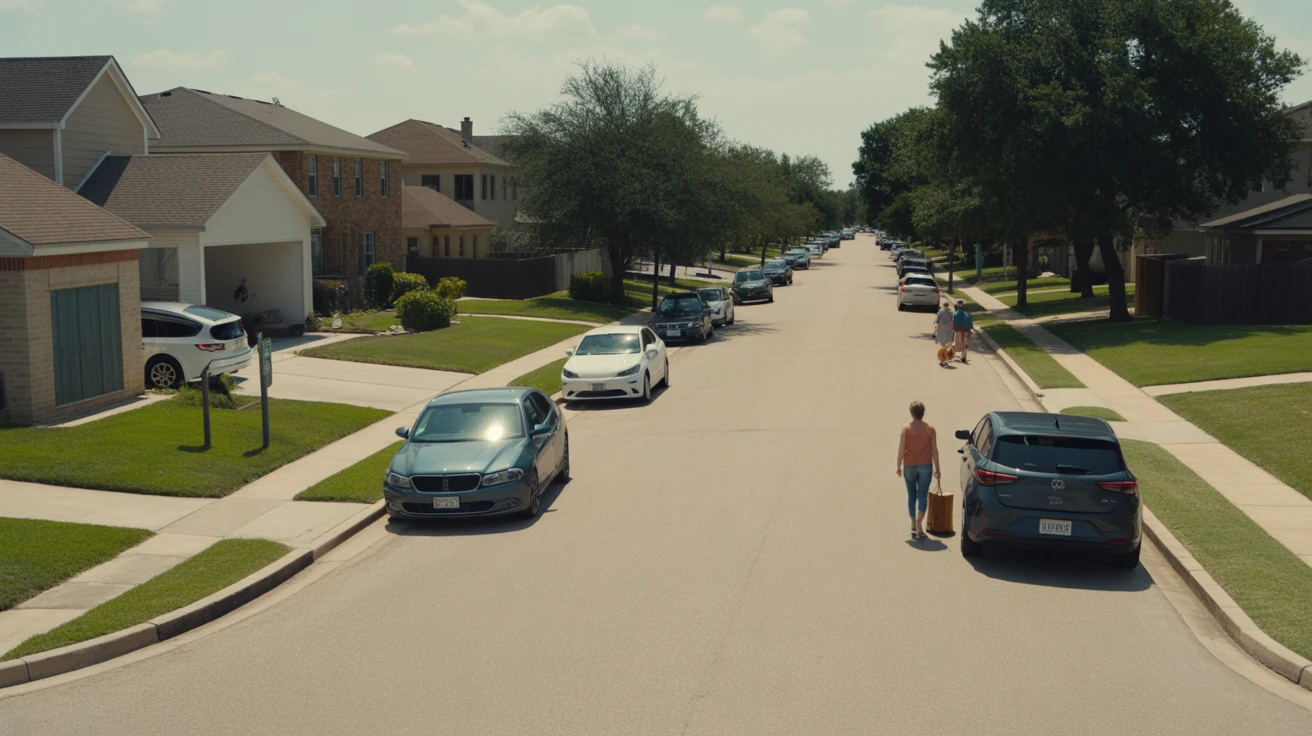
Carrollton sits in a climate zone with extended cooling seasons and occasional winter heating needs. Homes here are low-rise, typically single-family or low-density residential, with mixed commercial and residential land use creating pockets of walkability. The city has rail transit access, broadly accessible grocery and food options, and integrated green space. But school density is below typical thresholds, and while some areas support walking and biking, car ownership remains the norm for most households.
Comfort here means your income can handle that structure without constant adjustment.
Where Income Pressure Shows Up First
Income pressure in Carrollton doesn’t announce itself as a single overwhelming expense. It accumulates across several simultaneous demands, each one reasonable on its own but collectively difficult to balance.
Housing Tradeoffs
The median gross rent is $1,555 per month. The median home value is $327,300. For renters, that monthly figure represents the baseline cost of stable housing without considering utilities, parking, or renters insurance. For prospective buyers, the home value translates into mortgage payments, property taxes, insurance, and maintenance — none of which are optional or deferrable.
Households earning below the median household income of $95,380 per year often face a choice: accept a longer commute to access lower rent or home prices elsewhere, or pay a larger share of income to stay close to work, transit, or preferred amenities. Neither option is wrong, but both impose tradeoffs that shape daily life.
Families face additional pressure. School density in Carrollton is below typical thresholds, meaning proximity to a preferred school often narrows housing options further. Playground access is moderate, but parents frequently prioritize school boundaries over park access, which can push housing costs higher within specific neighborhoods.
Utility Volatility
Carrollton experiences triple-digit summer heat and extended cooling seasons. Electricity is billed at 16.11¢ per kWh, and natural gas costs $30.71 per MCF. These rates are not extreme, but the intensity and duration of cooling demand means that summer utility bills can double or triple compared to milder months.
Households living in older or poorly insulated homes, or those in larger spaces, face higher exposure. The difference between a $120 electric bill in April and a $280 bill in August is not a rounding error — it’s a recurring seasonal pressure point that requires either behavioral adjustment (keeping the thermostat uncomfortably high) or budget flexibility (absorbing the swing without cutting other expenses).
Comfort means you can cool your home adequately without stress. Pressure means you’re making daily calculations about thermostat settings and whether to run the AC overnight.
Transportation: Time vs. Money
Carrollton has rail transit and some walkable pockets with high pedestrian-to-road ratios and accessible grocery options. But the urban form remains low-rise and car-oriented for most residents. The average commute is 24 minutes, and 36.5% of workers have long commutes.
Gas prices are $2.42 per gallon — relatively low — but transportation costs aren’t just fuel. They include car payments, insurance, maintenance, parking, and the opportunity cost of time spent driving. Households that can access rail transit or live in walkable areas reduce both direct costs and time friction. Those who cannot face a compounding expense: the car itself, the fuel, the upkeep, and the hours spent commuting that could otherwise be used for rest, family time, or side income.
Comfort means transportation is a solved problem. Pressure means it’s a daily negotiation between time, money, and logistics.
Family-Specific Pressure Points
Families with children face intensified versions of all the above. Housing costs rise with the need for more space. Utility exposure scales with occupancy and square footage. Transportation becomes less flexible — school drop-offs, pickups, and activity schedules often require car ownership even in areas with transit access.
Carrollton’s family infrastructure is present but not comprehensive. Playgrounds exist in moderate density, and parks are well-integrated, but school proximity is not guaranteed. Families often find themselves choosing between housing affordability and school access, or between commute length and neighborhood fit.
Childcare, extracurriculars, and healthcare (though a hospital is present locally) add layers of recurring cost that don’t appear in basic budget calculators but define whether a household feels comfortable or constantly behind.
How the Same Income Feels Different by Household
Households at similar income levels often experience very different pressure depending on size, structure, and expectations.
Single Adults
A single adult earning $60,000 to $75,000 can often find comfort in Carrollton, particularly if they rent a one-bedroom apartment or share housing. The median rent of $1,555 is manageable on that income if utilities, transportation, and discretionary spending remain moderate.
Single adults benefit from Carrollton’s accessible errands infrastructure. Grocery and food options are broadly available, reducing the need for long trips or bulk shopping. Walkable pockets and rail transit offer alternatives to constant car use, though most still own vehicles. Utility costs are lower in smaller spaces, and summer cooling exposure, while real, is easier to absorb in a 700-square-foot apartment than a 1,800-square-foot house.
Pressure emerges when rent increases, when car repairs hit, or when lifestyle expectations (dining out, travel, saving for a home) exceed what’s left after fixed costs. But the structure of daily life in Carrollton — errands accessibility, transit options, integrated green space — reduces friction enough that single adults often feel more comfortable here than in less accessible suburbs.
Couples Without Children
Couples earning $80,000 to $110,000 combined typically experience less housing pressure than single adults or families. Splitting rent or a mortgage payment makes the median home value or rent more accessible, and dual incomes create buffer against utility swings and transportation costs.
Couples benefit from Carrollton’s mixed-use urban form and walkability in certain areas. Errands are less of a logistical burden, and the presence of parks and green space supports recreational variety without requiring long drives. Healthcare access is strong, with a hospital and pharmacies present locally.
Comfort for couples often hinges on whether both partners work locally or face long commutes, and whether they plan to stay renters or buy a home. The median home value of $327,300 is attainable for couples at the higher end of this income range, but it requires stable employment, manageable debt, and tolerance for the maintenance and tax costs that follow.
Pressure increases if one partner loses income, if housing costs rise faster than wages, or if the couple begins planning for children and realizes that Carrollton’s school density and family infrastructure will require more deliberate location choices.
Families With Children
Families earning $95,000 to $130,000 face the most complex cost structure. Housing needs expand with children — more bedrooms, more space, often a yard. Utility exposure scales with square footage and occupancy. Transportation becomes less flexible, as school schedules and activities often require car ownership and frequent driving despite the presence of rail transit.
Carrollton’s family infrastructure is present but not comprehensive. Playground density is moderate, and parks are well-integrated, but school density is below typical thresholds. This means families often cannot choose housing based solely on affordability or commute — they must also consider school boundaries, which can narrow options and push costs higher.
Families also face recurring costs that don’t appear in standard budgets: childcare, extracurriculars, healthcare copays, school supplies, clothing, and food costs that scale with the number of people in the household. Summer utility bills hit harder in larger homes, and transportation costs multiply when multiple vehicles become necessary.
Comfort for families means earning enough that housing, utilities, transportation, and child-related expenses can all be covered without monthly stress. Pressure means constantly choosing between competing priorities — paying for summer camp or saving for a home repair, upgrading to a better school district or keeping the commute manageable.
Families at the lower end of this income range often feel stretched. Those at the higher end often feel stable but not wealthy, with little room for unexpected expenses or long-term savings beyond retirement contributions.
The Comfort Threshold (Qualitative)
There is no single income figure that guarantees comfort in Carrollton. But there is a recognizable transition point, and it’s defined by the disappearance of specific frictions.
Comfort begins when:
- Housing costs stop forcing location compromises. You can choose where to live based on preference, not just affordability or school boundaries.
- Utility swings become absorbable without behavior change. You cool your home adequately in summer without calculating the bill impact daily.
- Transportation offers real choice. You can live near work, use transit when convenient, or drive without worrying about fuel costs eating into grocery money.
- Discretionary spending becomes possible without monthly recalculation. You can replace something that breaks, eat out occasionally, or take a weekend trip without immediately checking account balances.
- Saving becomes plausible. You’re not just covering expenses — you’re building a buffer against future uncertainty.
For single adults, this threshold often arrives between $65,000 and $80,000, depending on housing choices and lifestyle expectations. For couples, it’s typically between $90,000 and $120,000 combined. For families, it’s often $110,000 to $140,000 or higher, depending on the number of children, school priorities, and housing size.
These are not requirements. They are observations about when households stop feeling constant pressure and start feeling stable.
Why Online Cost Calculators Get Carrollton Wrong
Most cost-of-living calculators present Carrollton as a series of monthly line items: rent, utilities, transportation, food, healthcare. They sum these into a total and compare it to your income, often concluding that if you earn above a certain threshold, you’ll be “comfortable.”
This approach fails because it treats all expenses as equally flexible and all households as interchangeable. It doesn’t account for:
- Seasonal utility volatility. A calculator might estimate $150/month for electricity year-round, but that’s not how cooling costs work in Carrollton. Summer bills can be double or triple that figure, and the pressure comes from the swing, not the average.
- Housing tradeoffs that aren’t captured in medians. The median rent of $1,555 doesn’t tell you whether that gets you proximity to good schools, walkable errands, or a reasonable commute. Families often pay more than the median to access those things, while single adults or couples may pay less by accepting tradeoffs.
- Transportation as a time-money-logistics tradeoff. Calculators estimate fuel costs but ignore the hours spent commuting, the need for multiple vehicles in car-dependent areas, or the freedom that comes from living near rail transit or walkable infrastructure.
- Lifestyle expectations that vary by household. A single adult who walks to the grocery store, takes the train to work, and cooks at home will feel comfortable at a much lower income than a family of four who drives everywhere, prioritizes a specific school district, and faces recurring child-related expenses.
Calculators also don’t account for how Carrollton’s structure — its walkable pockets, accessible errands, integrated parks, and rail transit — reduces friction for some households while remaining invisible to others who live in car-dependent parts of the city.
People feel surprised after moving because they trusted a total instead of understanding the forces that drive day-to-day pressure.
How to Judge Whether Your Income Fits Carrollton
Instead of asking “Is my income high enough?”, ask these questions:
How sensitive are you to housing tradeoffs?
If you need to live in a specific school district, close to work, or in a walkable area, your effective housing cost will likely be higher than the median. If you’re willing to commute longer, live in a less walkable area, or rent instead of buy, you’ll have more flexibility.
Can you absorb seasonal utility swings?
If a $150 increase in your summer electric bill would require you to cut other expenses or adjust your thermostat to uncomfortable levels, that’s a sign of pressure. If you can absorb that swing without stress, you’re closer to comfort.
Is time or money your limiting factor?
If you can afford to live close to work or near rail transit, you’ll save time and reduce transportation friction. If you need to minimize rent or mortgage costs by living farther out, you’ll spend more time commuting. Neither is wrong, but the tradeoff shapes daily life.
How much flexibility do you expect month to month?
If you expect to eat out regularly, travel occasionally, replace things when they break, and save for future goals, you need income well above what’s required to cover fixed costs. If you’re comfortable with a tighter budget and fewer discretionary expenses, you can feel stable at a lower income.
Do you have dependents, and what do they require?
Children amplify every cost category. They require more space (higher housing costs), more cooling and heating (higher utilities), more transportation (often a second vehicle), and recurring expenses that don’t fit neatly into budget categories. If you have or plan to have children, your comfort threshold is higher.
How much do you value access to parks, errands, and transit?
Carrollton offers strong access to grocery stores, food options, parks, and rail transit in certain areas. If you value those things and can afford to live near them, they reduce daily friction and can make a moderate income feel more comfortable. If you live in a car-dependent part of the city, you’ll need to budget for the time and money that driving requires.
There’s no scoring system here. The goal is to understand which pressures you’re willing to accept and which ones would make daily life feel unsustainable.
How this article was built: In addition to public economic data, this article incorporates location-based experiential signals derived from anonymized geographic patterns—such as access density, walkability, and land-use mix—to reflect how day-to-day living actually feels in Carrollton, TX.
FAQs About Living Comfortably in Carrollton
Is $80,000 a year enough to live comfortably in Carrollton?
For a single adult or a couple without children, $80,000 can provide stability, particularly if housing costs are kept moderate and transportation is managed efficiently. For a family with children, $80,000 will likely feel stretched, especially if school proximity or larger housing is a priority. Comfort depends on household size, expectations, and how much margin you need to feel secure.
Why do families feel more financial pressure in Carrollton than single adults?
Families face compounding costs: larger housing needs, higher utility exposure, reduced transportation flexibility, and recurring child-related expenses like childcare and extracurriculars. Carrollton’s school density is below typical thresholds, which can force families to prioritize location over affordability. Single adults benefit from lower fixed costs, smaller utility bills, and greater ability to use walkable infrastructure and transit.
Does living near rail transit actually reduce costs in Carrollton?
It can, but not for everyone. If you work along a transit line and can avoid owning a second vehicle, you’ll save on car payments, insurance, fuel, and maintenance. But most households in Carrollton still own cars because the city’s low-rise, mixed-density structure means many errands and activities require driving. Transit access is more valuable for reducing commute costs than for eliminating car ownership entirely.
How much do summer utility bills actually increase in Carrollton?
The increase depends on home size, insulation, and cooling habits, but it’s common for electric bills to double or triple during peak summer months compared to spring or fall. A household paying $100 in April might pay $250 or more in August. The pressure comes not from the absolute cost but from the recurring seasonal swing, which requires either budget flexibility or behavioral adjustment.
Can you live comfortably in Carrollton without a car?
It’s possible in specific areas with high walkability, accessible grocery and food options, and proximity to rail transit, but it’s uncommon. Most of Carrollton’s urban form is low-rise and car-oriented, and many jobs, schools, and activities are not easily reachable without driving. Households without cars typically need to live in one of the walkable pockets and accept limitations on where they can work and what they can access conveniently.
Final Thought
Carrollton can work well for some households — but only if expectations match reality. Comfort here isn’t about hitting a specific income target. It’s about understanding which costs dominate pressure, which tradeoffs you’re willing to make, and whether the city’s structure — its accessible errands, transit options, green space, and family infrastructure — aligns with how you actually live.
If your income allows you to absorb housing costs, utility swings, and transportation demands without constant recalculation, Carrollton offers stability and access. If it doesn’t, the same income that feels comfortable elsewhere may feel stretched here.