
Allen Transportation Snapshot
| Metric | Value |
|---|---|
| Average Commute Time | 30 minutes |
| Work From Home | 7.7% |
| Long Commute (60+ min) | 21.5% |
| Current Gas Price | $2.41/gal |
How People Get Around Allen
Understanding transportation options in Allen starts with recognizing what kind of place this is: a car-oriented suburb north of Dallas with growing internal walkability but minimal public transit infrastructure. Most residents depend on personal vehicles for work commutes, school runs, and regional errands, though the city’s layout increasingly supports walking and cycling for trips that stay within neighborhood boundaries.
Newcomers often assume that proximity to Dallas means access to regional transit networks, but Allen operates primarily as a drive-to suburb. The 30-minute average commute reflects the reality that many residents work elsewhere in the metro area—Plano, Richardson, Dallas proper—and rely on highways rather than trains or buses to get there. What makes Allen distinct from older, denser suburbs is the presence of walkable pockets and notable cycling infrastructure, which reduce the need for short car trips within the city but don’t replace the car for longer regional travel.
The transportation structure here shapes daily routines in specific ways. Households that can consolidate errands locally benefit from broadly accessible grocery and food options, meaning fewer mid-week drives for basics. But the 21.5% of workers facing long commutes—60 minutes or more—experience a different reality, one where transportation becomes a daily time cost and a source of scheduling friction, especially for families managing multiple drop-offs or staggered work hours.
Public Transit Availability in Allen
Public transit plays virtually no role in daily mobility for Allen residents. The city lacks the rail stations, frequent bus service, or regional connections that would make transit a practical option for commuting or errands. While some regional systems operate in the broader Dallas metro area, coverage does not extend meaningfully into Allen, and residents cannot rely on buses or trains for routine transportation needs.
This absence is not an oversight—it reflects Allen’s development pattern as a low-density, post-war suburb built around highway access rather than transit corridors. The street network, land use, and residential density were designed with the assumption that households would own cars, and that assumption remains accurate today. For someone moving from a city with subway or light rail access, the adjustment is immediate: there is no fallback option if a car is unavailable.
Transit’s limited role also means that households cannot trade car ownership for transit passes, a strategy that works in denser cities. In Allen, going car-free is functionally impossible for working adults, and even reducing to one vehicle per household requires careful coordination and often limits job market access for one partner.
Driving & Car Dependence Reality
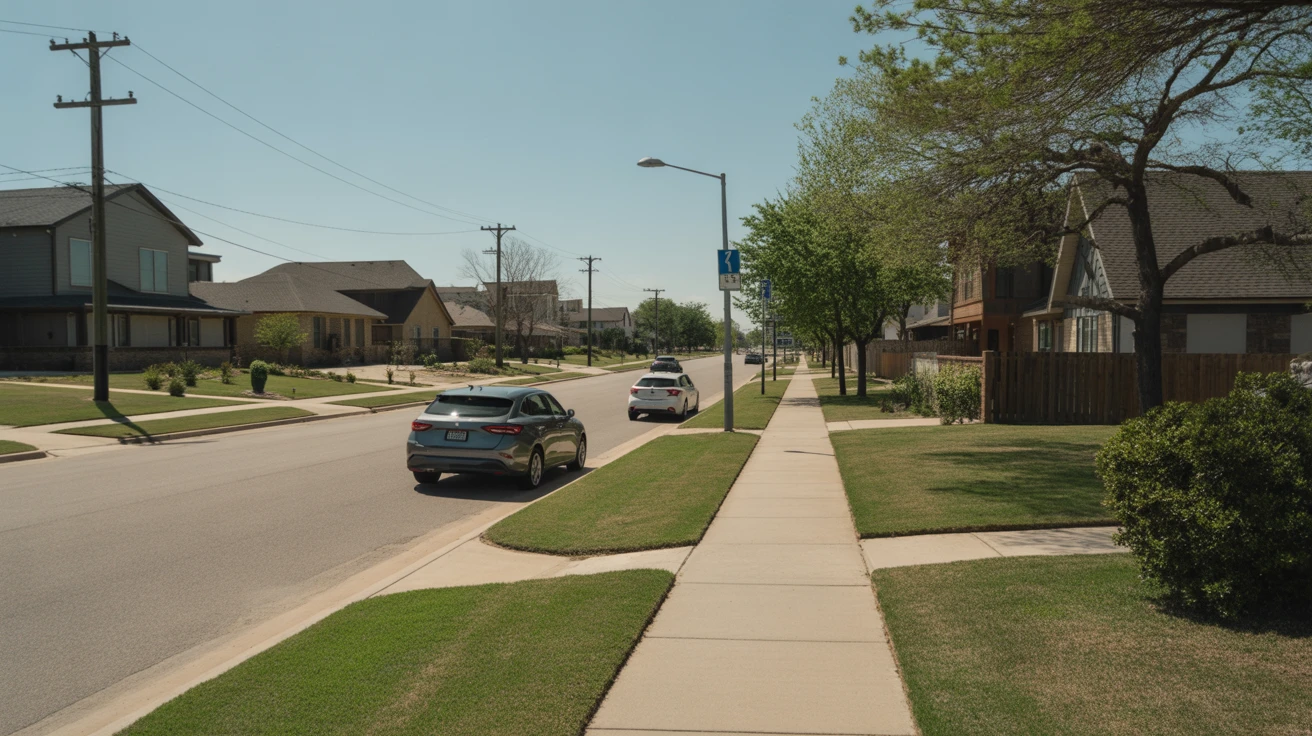
Driving is the default mode of transportation in Allen, and the infrastructure reflects that. Roads are wide, parking is abundant, and most destinations—workplaces, shopping centers, medical offices—are designed with the assumption that visitors will arrive by car. This makes driving convenient and predictable, but it also makes car ownership a non-negotiable expense for nearly all households.
The city’s layout spreads residential neighborhoods across a broad area, with commercial corridors concentrated along major roads like US-75 and State Highway 121. This pattern works well for drivers, who can move quickly between home, work, and errands, but it creates friction for anyone trying to rely on walking, cycling, or rideshares for daily needs. Even within walkable pockets—areas where sidewalks and bike lanes support local trips—residents still need a car to reach employment centers, healthcare facilities, or regional retail.
Parking availability is rarely a concern in Allen, which distinguishes it from denser suburbs closer to Dallas. Driveways, garages, and surface lots are standard, and street parking conflicts are uncommon. For families with multiple vehicles, this is a practical advantage, though it reinforces the expectation that each working adult will have their own car.
Commuting Patterns & Daily Mobility
Commuting in Allen typically means leaving the city. The 30-minute average commute time reflects trips to nearby employment hubs—Plano’s corporate corridors, Richardson’s tech centers, or Dallas’s urban core—rather than jobs within Allen itself. Most commuters drive alone, using US-75 as the primary north-south route and tolled highways like the Dallas North Tollway for faster regional access.
The structure of these commutes varies by household type. Single-income households or those with flexible schedules can often time their drives to avoid peak congestion, keeping commute times closer to the 30-minute average. But dual-income families, especially those with school-age children, face more complex logistics: staggered start times, daycare drop-offs, and after-school pickups all add stops and extend total travel time. For these households, the 21.5% long-commute figure becomes more relevant—it represents the share of workers whose daily travel exceeds an hour each way, a threshold where commuting begins to constrain evening routines and weekend flexibility.
Remote work remains relatively uncommon in Allen, with just 7.7% of workers operating from home. This is lower than the national suburban average and suggests that many residents work in industries or roles that require physical presence—healthcare, education, retail management, or hands-on technical work. For these households, transportation isn’t a discretionary cost; it’s a structural requirement tied directly to employment.
Who Transit Works For — and Who It Doesn’t
Public transit does not work for any household type in Allen as a primary transportation mode. The absence of bus routes, rail stations, and regional connections means that even residents who prefer transit have no viable option. This is a binary constraint: either a household can absorb the cost and logistics of car ownership, or Allen becomes difficult to live in.
The households most affected by this car dependence are those with limited vehicle access—young renters, single parents, or older adults who no longer drive. In cities with functional transit, these groups can trade time for money, using buses or trains to access jobs and services even without a car. In Allen, that tradeoff doesn’t exist. A household with one car and two working adults must either coordinate schedules tightly, rely on rideshares for secondary trips, or accept that one partner’s job options are geographically constrained.
Conversely, households that already own multiple vehicles and prioritize driving convenience find Allen’s infrastructure well-suited to their needs. Families with school-age children, dual-income couples with separate work locations, and retirees who value easy highway access all benefit from the city’s car-first layout. The notable cycling infrastructure does offer a secondary option for local errands or recreation, but it functions as a supplement to car ownership, not a replacement.
Transportation Tradeoffs in Allen
The central tradeoff in Allen is between transportation control and transportation cost. Driving offers predictability, flexibility, and direct access to the entire Dallas metro job market, but it requires owning, insuring, fueling, and maintaining at least one vehicle per working adult. There is no lower-cost fallback—no bus pass option, no carpool infrastructure, no rail line that reduces the need for a second car.
This structure creates different pressures depending on household composition. For established families with stable incomes, the cost of car ownership is manageable and the convenience is high. For younger households, new arrivals, or those with variable income, the inability to phase into car ownership gradually—starting with transit and adding a vehicle later—means higher upfront costs and less financial flexibility.
The presence of walkable pockets and cycling infrastructure does reduce some transportation friction. Households located near grocery stores, schools, or parks can handle more daily tasks without driving, which lowers fuel consumption and reduces wear on vehicles. But these benefits are localized and don’t extend to the commute itself, which remains the largest transportation cost driver for most working households.
Time is another tradeoff. The 30-minute average commute is moderate by suburban standards, but it represents a fixed daily cost—an hour of total travel time that cannot be reclaimed for other activities. For the 21.5% facing longer commutes, that time cost escalates, and the lack of transit options means there’s no way to convert commute time into productive or restful time, as train or bus riders in other cities can.
FAQs About Transportation in Allen (2026)
Is public transit usable for daily commuting in Allen?
No. Allen lacks the bus routes, rail stations, and regional transit connections needed for daily commuting. Residents depend on personal vehicles for work travel, and there is no practical public transit alternative for reaching employment centers in Plano, Richardson, or Dallas.
Do most people in Allen rely on a car?
Yes. The city’s layout, density, and lack of transit infrastructure make car ownership essential for nearly all working adults. Even households in walkable neighborhoods need a vehicle for commuting, medical appointments, and errands beyond the immediate area.
Which areas of Allen are easiest to live in without a car?
No area of Allen is truly car-free viable. Some neighborhoods with higher pedestrian and cycling infrastructure allow residents to walk or bike for groceries and local errands, but commuting to work outside Allen still requires a car. Reducing to one vehicle per household is possible in these areas, but going car-free is not realistic.
How does commuting in Allen compare to nearby cities?
Allen’s 30-minute average commute is similar to other northern Dallas suburbs like McKinney or Frisco. The difference lies in destination: Allen residents often commute south toward Plano or Dallas, while residents of cities farther north may face longer drives. The 21.5% long-commute rate suggests that a meaningful share of workers travel well beyond nearby suburbs.
Does Allen have bike lanes or trails for commuting?
Yes. Allen has notable cycling infrastructure, with bike lanes and paths that support local trips within the city. However, these routes are better suited for errands, recreation, or short neighborhood travel than for commuting to regional job centers. Cycling can reduce reliance on a car for some daily tasks, but it does not replace the need for a vehicle for work travel.
How Transportation Fits Into the Cost of Living in Allen
Transportation in Allen is not a discretionary budget line—it’s a structural cost tied directly to employment access and household logistics. Because public transit is absent and car ownership is required, every working adult in a household typically needs a vehicle, and that need drives insurance, fuel, maintenance, and financing costs that cannot be avoided or reduced through behavior change alone.
This makes transportation a foundational factor in your monthly budget in Allen: where it breaks. Unlike cities where households can choose between owning a car and using transit, Allen offers no such tradeoff. The decision is binary: either a household can absorb the cost of car ownership, or the city becomes difficult to navigate. For families with multiple working adults, this often means maintaining two or more vehicles, which compounds insurance and maintenance expenses.
The interaction between transportation and housing choice is also significant. Households that prioritize shorter commutes may pay more for housing closer to employment centers in Plano or Richardson, trading higher rent or mortgage costs for reduced drive time and fuel consumption. Conversely, those who choose more affordable housing farther from job centers absorb longer commutes and higher transportation costs, a tradeoff that affects both time and money.
For households evaluating whether Allen fits their financial structure, transportation clarity is essential. The city works well for those who already own vehicles, value driving convenience, and can manage the fixed costs of car ownership. It works less well for those hoping to phase into car ownership gradually, reduce transportation costs through transit use, or avoid the time cost of daily commuting. Understanding these constraints early helps align expectations with reality and prevents transportation friction from becoming a source of ongoing financial or logistical stress.
How this article was built: In addition to public economic data, this article incorporates location-based experiential signals derived from anonymized geographic patterns—such as access density, walkability, and land-use mix—to reflect how day-to-day living actually feels in Allen, TX.