
Mia scrolls through apartment listings in Allen, calculator open on her phone. She’s earning more than she ever has, but the rent figures keep forcing her to recalculate. A one-bedroom that feels right costs more than her last two-bedroom did in another state. She wonders: is her income the problem, or is it Allen?
The question isn’t really about the number on her paycheck. It’s about whether that number gives her room to breathe here—or whether every month will feel like walking a tightrope.
What “Living Comfortably” Means in Allen
Comfort in Allen isn’t about luxury. It’s about having enough margin that a surprise AC repair in July doesn’t derail your month. It’s being able to choose a place that doesn’t require an hour-long commute or a compromise on safety. It’s not wondering whether you can afford to replace your tires or take a weekend trip without checking your account twice.
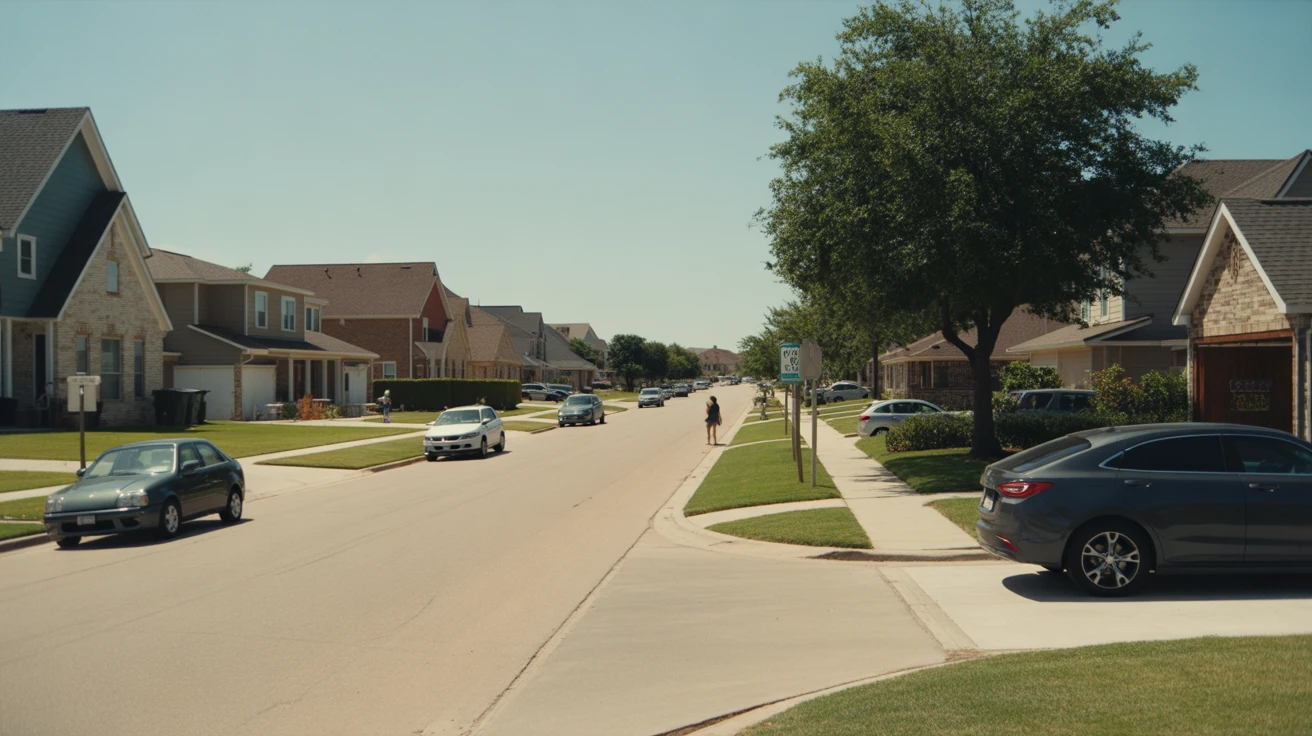
Allen sits in the northern Dallas metro, a suburban city where expectations around space, privacy, and convenience run high. Homes here are typically single-family, with yards and garages. Summers bring triple-digit heat, which means air conditioning isn’t optional—it’s a fixed cost that swings with the season. People expect to drive most places, even though day-to-day costs for groceries and errands are broadly accessible once you’re in the car.
Comfort here means your income can cover housing without forcing you into a 45-minute commute, absorb utility bills that spike in summer and dip in winter, and still leave enough for the occasional dinner out or school activity. It’s not about having everything—it’s about not having to constantly choose between everything.
Where Income Pressure Shows Up First
Housing is the dominant force. The median home value in Allen is $390,200, and median rent is $1,747 per month. These aren’t entry-level figures. They reflect a market where space, school access, and neighborhood quality are baked into the price. If your income can’t comfortably absorb that baseline, every other decision gets harder.
Renters feel it as a fixed monthly obligation that doesn’t flex. Owners feel it as a mortgage payment that compounds with property taxes, insurance that’s climbing, and maintenance that can’t be deferred. Either way, housing takes a large share before anything else gets paid.
Utilities add a second layer of pressure, especially in summer. Electricity in Allen runs 16.11¢ per kWh, and cooling a home through a Texas summer means high usage for months on end. Natural gas, priced at $30.71 per MCF, handles heating in the shorter winter season. The swings aren’t symmetric—summer bills dominate. Households without a buffer find themselves adjusting thermostats not for comfort, but for survival.
Transportation costs are less about price and more about time. Gas is $2.41 per gallon, which is manageable, but the average commute is 30 minutes. That’s an hour a day in the car, plus wear, insurance, and the occasional repair. The city has walkable pockets and notable bike infrastructure, but most people still drive to work. The cost isn’t just financial—it’s the daily erosion of time and flexibility.
For families, the pressure multiplies. School and playground density in Allen is limited, meaning parents often drive kids to activities, manage pickups across multiple locations, and coordinate schedules that don’t align with a single neighborhood. Even with parks integrated throughout the city, the logistics burden is real. Families feel income pressure not just in dollars, but in the time and complexity required to make daily life work.
How the Same Income Feels Different by Household
A single adult earning $70,000 gross per year in Allen faces a different reality than a couple earning $70,000 each, and both face a different reality than a family of four at $140,000 combined. The income might look similar on paper, but the pressure points shift entirely.
Single adults feel housing costs most acutely. A one-bedroom apartment near $1,400–$1,600 per month takes a large share of gross income, leaving less room for savings, travel, or unexpected expenses. But the upside is simpler logistics: no coordination, no school zones, no need to optimize for family infrastructure. Errands are broadly accessible, and healthcare access includes a hospital, so daily friction stays low. The question is whether the income leaves enough margin after housing and utilities to build a life, not just survive one.
Couples without children have more flexibility. Splitting housing pressure makes a significant difference, and two incomes create buffer capacity that single earners don’t have. If both work locally, the 30-minute average commute is manageable. If one works remotely or part-time, the walkable pockets and mixed-use areas offer real lifestyle value. Couples at similar income levels often experience very different pressure depending on how they divide labor, commute burden, and housing tradeoffs.
Families feel every cost category more intensely. Housing needs grow with children—more bedrooms, more space, often a yard. Rent or mortgage payments climb accordingly. Utility bills rise with more people home during the day. Transportation becomes a multi-vehicle necessity, and the limited school and playground density means more driving, more time, more coordination. Even at incomes well above the median, families report feeling stretched because the complexity compounds faster than the income grows.
The Comfort Threshold (Qualitative)
There’s a point where income stops dictating every decision. It’s not a number—it’s a feeling. You stop checking your account before saying yes to dinner. You can handle a $1,200 car repair without panic. You’re saving, not just hoping to save.
In Allen, that threshold is shaped by housing. If your rent or mortgage feels manageable—not tight, not a stretch—you’re probably above it. If utility swings in summer don’t force you to adjust your thermostat for financial reasons, you’re above it. If you can absorb an unexpected expense without borrowing or skipping something else, you’re above it.
The threshold isn’t the same for everyone. A single adult might cross it at a lower income than a family of four, simply because the cost structure is simpler. A couple with no debt and modest housing might feel comfortable at an income that would leave a family with three kids feeling constantly behind.
What defines the threshold isn’t the income itself—it’s whether the income gives you choices. Can you pick where you live based on preference, not just price? Can you say yes to opportunities without calculating the cost first? Can you plan for the future instead of just managing the present?
If the answer is yes, you’re comfortable. If the answer is “sometimes” or “it depends,” you’re close but not there. If the answer is no, the income doesn’t fit the place yet.
Why Online Cost Calculators Get Allen Wrong
Most cost-of-living calculators give you a total. They add up housing, utilities, transportation, groceries, and healthcare, then spit out a number. The problem is, totals don’t tell you how life actually feels.
A calculator might say Allen costs 3% more than another city, but it won’t tell you that the 3% is concentrated entirely in housing and summer utilities. It won’t explain that the difference between a 25-minute commute and a 40-minute commute isn’t just time—it’s whether you can pick up your kid from school or make it to a doctor’s appointment without taking half a day off work.
Calculators assume average behavior. They assume you’ll use a typical amount of electricity, drive a typical number of miles, and spend a typical amount on groceries. But if you’re sensitive to heat and run your AC colder, your utility bill isn’t typical. If you’re commuting to Dallas instead of working locally, your transportation cost isn’t typical. If you have dietary restrictions or preferences that require specialty stores, your grocery cost isn’t typical.
People feel surprised after moving because the total was close to what they expected, but the distribution was wrong. They budgeted for rent but not for the summer utility spike. They budgeted for gas but not for the time cost of a longer commute. They budgeted for groceries but not for the reality that even with broadly accessible food and grocery density, you’re still driving to get there.
The calculator gives you a number. It doesn’t give you the texture of daily life. And in Allen, texture matters more than the total.
How to Judge Whether Your Income Fits Allen
Instead of asking “Is my income enough?”, ask these questions:
Can you absorb Allen’s housing cost without forcing a long commute? If paying rent or a mortgage near the median means you have to live 40 minutes away to make it work, your income might not match the city’s housing reality. Comfort starts with proximity, not just affordability.
Do you have buffer capacity for seasonal utility swings? Summer bills in Allen aren’t a surprise—they’re a certainty. If a $200–$300 spike in July would force you to cut something else, your income doesn’t have the margin this climate demands.
Is time or money your limiting factor? If you’re spending an hour or more commuting every day to make the rent work, you’re trading time for money. That trade might be worth it in the short term, but it’s not comfort. Comfort means both time and money work in your favor.
How much logistics complexity can you handle? If you have kids, Allen’s limited school and playground density means more driving, more coordination, more mental load. If your income can’t support the time and transportation cost of that complexity, the city will feel harder than the numbers suggest.
How sensitive are you to cost volatility? Allen’s costs aren’t flat. Utilities swing with the season. Insurance and property taxes adjust over time. Maintenance and repairs happen when they happen, not when you’re ready. If your income leaves little room for variability, every swing will feel like a crisis.
Do you expect flexibility month to month? Comfort isn’t just covering the bills—it’s having enough left over to say yes to things. A weekend trip. A nicer dinner. A hobby. If your income covers obligations but leaves nothing discretionary, you’re surviving, not living comfortably.
These questions don’t produce a number. They produce clarity. And clarity is more useful than a threshold you might not trust anyway.
How this article was built: In addition to public economic data, this article incorporates location-based experiential signals derived from anonymized geographic patterns—such as access density, walkability, and land-use mix—to reflect how day-to-day living actually feels in Allen, TX.
FAQs About Living Comfortably in Allen
Is the median household income in Allen enough to live comfortably?
The median household income in Allen is $121,259 per year. For many households, that’s enough to cover housing, utilities, transportation, and daily expenses with some margin. But “enough” depends entirely on household size, debt load, and expectations. A couple with no kids and modest housing can live very comfortably at that income. A family of four with childcare costs, student loans, or medical expenses might feel stretched. The median tells you what’s typical—it doesn’t tell you whether it’s comfortable for your situation.
What’s the biggest financial surprise people face after moving to Allen?
Summer utility bills. People expect Texas to be hot, but they underestimate how much it costs to cool a home through months of triple-digit heat. A household that budgets $150 for utilities might see $300+ in July and August. The spike isn’t occasional—it’s predictable and unavoidable. If your income doesn’t have room for that swing, the first summer will be a wake-up call.
Can you live in Allen without a car?
Technically, yes. Practically, no. Allen has walkable pockets, notable bike infrastructure, and broadly accessible errands density, but most jobs, schools, and services still require a car. The average commute is 30 minutes, and only 7.7% of workers work from home. Public transit exists but doesn’t cover the city comprehensively. You can reduce car dependency in certain neighborhoods, but eliminating it entirely means significant lifestyle compromise.
How do families manage in Allen if school and playground density is limited?
They drive more. Parents coordinate pickups, shuttle kids to activities, and plan logistics around scattered resources. The city has integrated park access, which helps, but the limited school and playground density means families spend more time in the car and more mental energy managing schedules. It’s doable, but it’s a hidden cost that doesn’t show up in a budget. Families who thrive here either have flexible work schedules, a stay-at-home parent, or enough income to outsource some of the logistics burden.
Does earning more than the median guarantee comfort in Allen?
No. Comfort isn’t just about income—it’s about how your income matches your lifestyle, obligations, and expectations. A household earning $150,000 with high debt, medical expenses, or private school tuition might feel more pressure than a household earning $100,000 with no debt and modest housing. Earning above the median gives you more options, but it doesn’t eliminate tradeoffs. Comfort happens when your income gives you choices, not when it hits a certain number.
Allen can work well for some households—but only if expectations match reality.