
“It’s gorgeous here, don’t get me wrong — but sometimes it feels more like a resort you’re visiting than a place you actually live.” That’s how one Scottsdale resident described the tension many people feel when they move to this polished desert city just east of Phoenix. Scottsdale has a reputation for luxury, and it delivers: pristine golf courses, upscale shopping, mountain views, and an aesthetic that feels intentionally curated. But that same polish creates a tradeoff. For some, Scottsdale feels like exactly what they’ve been looking for. For others, it feels like something’s missing — texture, spontaneity, a sense of roots.
Understanding whether Scottsdale feels like a good fit comes down to knowing what you value most and what you’re willing to trade away. This city rewards people who prioritize comfort, safety, space, and a resort-style quality of life. It tends to frustrate people who crave walkability, cultural grit, nightlife variety, or the kind of neighborhoods where you bump into strangers and strike up conversations. Scottsdale isn’t trying to be everything to everyone — and that clarity is part of what makes the emotional experience so predictable.
What It Feels Like to Live Here
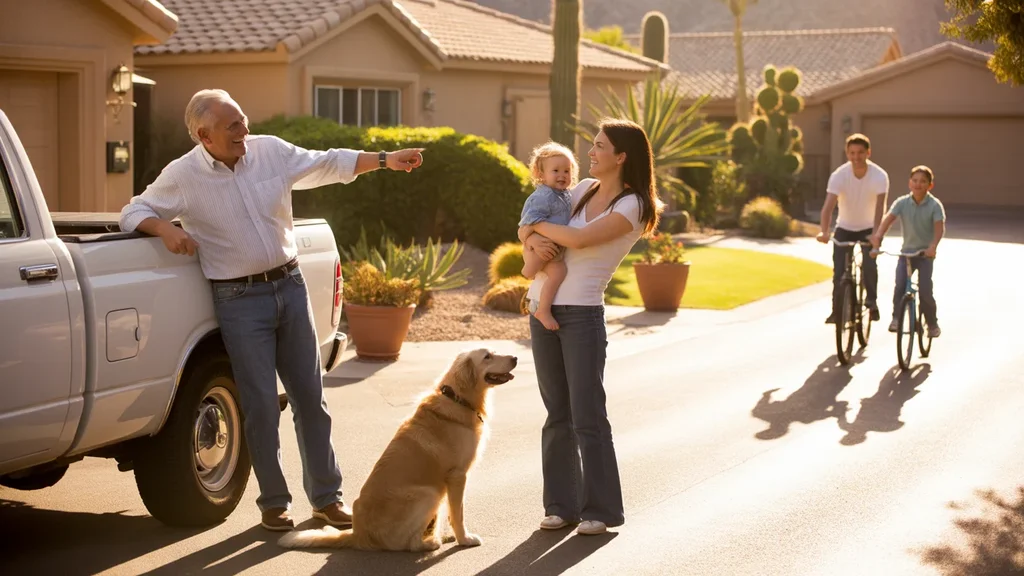
Scottsdale’s vibe is shaped by a few dominant forces: wealth, space, heat, and a strong sense of aesthetic control. The city feels meticulously maintained. Landscaping is deliberate, architecture leans modern or Southwestern, and public spaces feel designed rather than organic. That creates a sense of order and visual calm that many people find deeply appealing, especially if they’re coming from denser, grittier, or more chaotic environments.
But it also creates a certain emotional distance. Scottsdale doesn’t feel scrappy or spontaneous. It doesn’t have the kind of neighborhoods where corner stores, dive bars, and vintage shops sit side by side. Instead, it has planned districts, gated communities, and commercial corridors that require intentional trips by car. That’s not a flaw — it’s a design choice. But it does mean that people who thrive on serendipity, walkable exploration, or urban energy often feel like they’re working against the grain here.
The heat is another defining force. Scottsdale’s summers are intense — not just warm, but relentlessly hot in a way that changes how you move through the day. From June through September, outdoor activity shifts to early mornings and late evenings. Midday feels punishing. For people who love the desert and don’t mind planning around the heat, this is manageable. For people who expected year-round outdoor freedom, it can feel like a limitation they didn’t fully anticipate.
What tends to work well here: quiet, space, safety, and access to high-end amenities without the density or intensity of a major urban core. What tends to feel limiting: car dependency, lack of spontaneous social infrastructure, and a sense that everything is a little too controlled.
What People Talk About Online
Scottsdale’s online communities — on Reddit, Facebook groups, and neighborhood platforms — tend to reflect a mix of pride, defensiveness, and occasional frustration. Conversations often circle around a few recurring themes: the cost of living, the summer heat, the tension between old Scottsdale and new development, and the question of whether the city feels “real” or just “nice.”
One common thread: “It’s beautiful, but you pay for it.” People acknowledge that Scottsdale delivers on aesthetics and amenities, but they also note that housing, dining, and services come with a premium. There’s a sense that the city knows what it is and prices accordingly.
Another frequent sentiment: “Great place to retire, but tough if you’re starting out.” Younger professionals and renters sometimes express feeling like they’re not the target audience. The city’s infrastructure, social rhythms, and price points seem calibrated for established households, retirees, and high earners rather than people in their twenties or early thirties trying to build community on a budget.
Heat complaints are consistent but not bitter — more resigned than angry. “You get used to it, but summers are brutal” is a phrase that shows up in various forms. People talk about planning their lives around air conditioning, avoiding midday errands, and learning to appreciate the cooler months in a way that feels almost compensatory.
There’s also a thread of protectiveness. Long-time residents sometimes express concern about growth, traffic, and the loss of “old Scottsdale” character, while newer arrivals defend the city’s evolution and amenities. It’s not hostile, but it reflects a tension between preservation and progress that many fast-growing suburbs experience.
How Local Coverage Frames the City
Local news and community coverage in Scottsdale tends to focus on growth, development, amenities, and quality-of-life debates. The tone is generally civic-minded and polished, reflecting the city’s self-image as a desirable, well-managed place. Headlines and story angles often fall into a few recognizable categories:
- “New Luxury Development Brings Dining and Retail to North Scottsdale”
- “Residents Weigh Growth and Neighborhood Character”
- “Scottsdale’s Arts District Sees Renewed Interest”
- “Summer Heat Prompts Reminder About Outdoor Safety”
- “Community Debates Future of Public Spaces and Trails”
The framing is rarely alarmist. Instead, it tends to emphasize opportunity, planning, and community input. That reflects Scottsdale’s relatively stable economic base and its identity as a place where change is managed rather than chaotic. But it also means that coverage can feel a bit sanitized — less likely to dig into friction, inequality, or the experiences of people who don’t fit the city’s dominant demographic profile.
For readers trying to get a sense of the city’s emotional climate, local coverage suggests a place that values order, aesthetics, and incremental improvement. It’s not a city in crisis, but it’s also not a city that spends much time examining its own contradictions.
What Reviews and Public Feedback Reveal
Public reviews of Scottsdale — whether on Google, Yelp, or neighborhood platforms — tend to cluster around a few predictable themes. Positive reviews emphasize cleanliness, safety, natural beauty, and access to recreation. People who love Scottsdale often describe it as peaceful, well-maintained, and visually stunning. They appreciate the golf courses, hiking trails, mountain views, and the sense that the city takes pride in its appearance.
Common praise: “Feels like a resort,” “Great place to raise a family,” “Safe and quiet,” “Beautiful sunsets and desert scenery.”
Criticism tends to focus on cost, car dependency, and a lack of character. People who feel disappointed often describe Scottsdale as expensive, spread out, and lacking the kind of spontaneous, walkable neighborhoods they were hoping for. There’s also a recurring sense that the city feels more like a collection of amenities than a cohesive community.
Common complaints: “Everything requires driving,” “Feels sterile,” “Too expensive for what you get,” “Not much to do unless you golf or shop.”
Neighborhood variation does show up in reviews, though it’s often framed generically. Newer planned areas tend to be described as modern and family-friendly but lacking personality. Older pockets near downtown Scottsdale get credit for having more character and walkability, though they’re still car-dependent by most urban standards. North Scottsdale is frequently mentioned as particularly upscale and isolated, appealing to people who want space and exclusivity but frustrating for those seeking convenience or community density.
The pattern that emerges: Scottsdale delivers exactly what it promises — polish, space, and resort-style living. People who wanted that tend to be satisfied. People who wanted something grittier, denser, or more spontaneous tend to feel like they’re in the wrong place.
How Scottsdale Compares to Nearby Cities
| Factor | Scottsdale | Phoenix | Tempe |
|---|---|---|---|
| Overall Vibe | Polished, resort-like, affluent | Sprawling, diverse, urban core emerging | Younger, college-town energy, more walkable |
| Walkability | Low, car-dependent | Low overall, pockets of improvement | Moderate, especially near ASU |
| Cost Perception | High, premium pricing | Moderate, wide range | Moderate to high, student-driven variation |
| Social Texture | Quiet, controlled, less spontaneous | More varied, grittier, culturally diverse | Lively, younger, more casual |
| Who It Fits | Retirees, families, high earners | Broad range, urban seekers | Students, young professionals, renters |
Scottsdale sits in an interesting position relative to its neighbors. Phoenix offers more variety, more density, and more cultural texture, but it also feels more chaotic and less visually cohesive. People who want urban energy, nightlife, and diversity often find Phoenix more satisfying, even if it lacks Scottsdale’s polish.
Tempe, home to Arizona State University, skews younger and more casual. It has better walkability, a livelier social scene, and a less expensive entry point for renters. But it also feels more transient and less family-oriented than Scottsdale. People who want a college-town vibe or prefer renting near activity hubs often find Tempe a better match.
Scottsdale’s advantage is clarity: it knows what it is and doesn’t apologize. If you want space, safety, and a resort-style quality of life, Scottsdale delivers more consistently than Phoenix or Tempe. If you want spontaneity, density, or affordability, those other cities offer more flexibility — but with tradeoffs of their own.
What Locals Are Saying
“I moved here for work and honestly, it’s been hard to meet people. Everything feels so spread out, and there’s not really a ‘hang out and see who shows up’ kind of spot. It’s beautiful, but it’s lonely if you’re single and don’t golf.”
“We love it here. The schools are great, the neighborhoods feel safe, and our kids can ride bikes without us worrying. Yes, it’s expensive, but we’re at a point in life where we can afford it, and it’s worth it for the peace of mind.”
“Scottsdale is perfect if you’re retired and want to enjoy your money. Golf, dining, hiking — it’s all here. But if you’re trying to save or build wealth, this city will drain you.”
“The heat is no joke. I thought I was ready for it, but July and August are just brutal. You can’t do anything outside during the day. It’s like being trapped indoors for three months.”
“I appreciate how clean and well-maintained everything is. Coming from a bigger city, it’s refreshing to see streets that aren’t covered in trash and parks that actually feel cared for.”
“It’s nice, but it feels a little fake. Like everything is designed to look perfect but there’s no real soul underneath. I miss neighborhoods where things feel a little messier and more human.”
“If you’re okay with driving everywhere and you value space over convenience, Scottsdale is great. But if you want to walk to a coffee shop or grab a drink without planning it, you’ll be frustrated.”
Does Scottsdale Feel Like a Good Fit?
Scottsdale doesn’t ask you to figure it out — it tells you exactly what it is. It’s a city built for comfort, space, and a resort-style quality of life. It rewards people who value safety, aesthetics, and access to high-end amenities. It works well for retirees, established families, and high earners who want a polished environment and don’t mind trading walkability and spontaneity for peace and visual order.
It tends to frustrate people who crave density, cultural texture, or the kind of neighborhoods where you can walk out your door and stumble into something interesting. It’s not a city for people in their twenties trying to build community on a budget, and it’s not a city for people who want urban energy or nightlife variety. The heat is a real factor, and the car dependency is non-negotiable.
If you’re trying to decide whether Scottsdale feels right, ask yourself: Do I value calm over stimulation? Do I prioritize space and safety over convenience and spontaneity? Am I okay with planning my social life rather than letting it happen organically? If the answer is yes, Scottsdale will likely feel like exactly what you’ve been looking for. If the answer is no, you’ll probably feel like you’re working against the city’s grain.
For more insight into what it costs to live here day-to-day, explore A Month of Expenses in Scottsdale: What It Feels Like. If you’re weighing renting vs buying in Scottsdale, that guide breaks down the real tradeoffs. And if you’re curious about what quality of life actually requires here, Living Comfortably in Scottsdale: What ‘Enough’ Actually Means offers a grounded look at the financial and lifestyle thresholds that shape daily experience.
The perspectives shown reflect commonly expressed local sentiment and recurring themes in public discussion, rather than individual accounts.