
“Gilbert feels like the kind of place where you can actually find a park when you need one—and that matters more than people think.”
That sentiment, shared by a parent on a local forum, captures something essential about life in Gilbert, AZ. This is a city where suburban comfort meets accessible infrastructure, where families find what they’re looking for, and where growth has brought both polish and tension. But it’s not a place that works for everyone. Understanding Gilbert’s vibe means understanding the tradeoffs: predictability versus spontaneity, family-first design versus urban texture, and the emotional weight of a city that’s still figuring out what it wants to be as it grows.
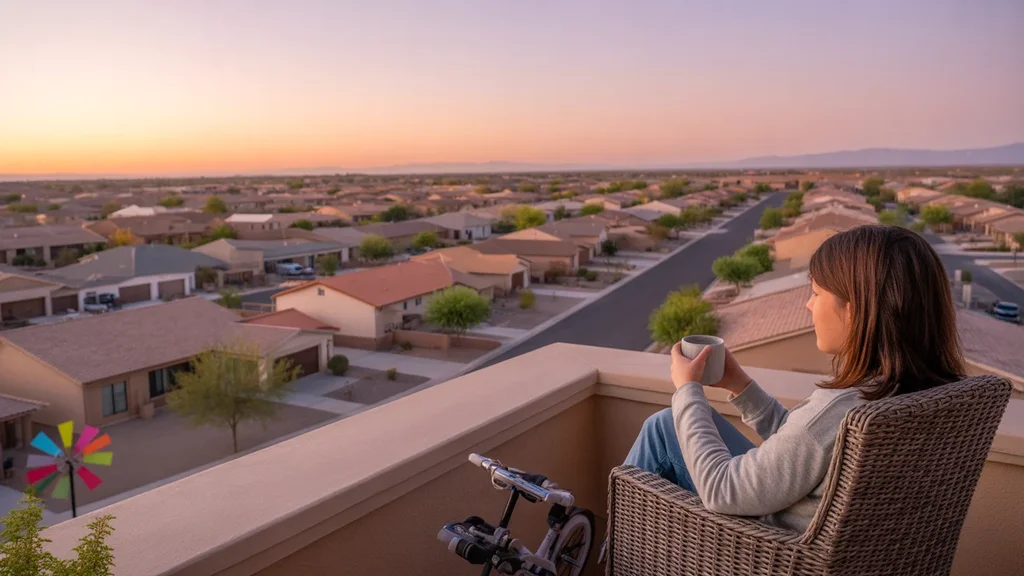
What It Feels Like to Live Here
Gilbert tends to feel organized. Parks are plentiful and well-maintained. Grocery stores, pharmacies, and everyday errands are broadly accessible. Schools and playgrounds anchor neighborhoods. The city’s low-rise character and mixed land use create pockets where walking feels natural, even if most people still drive most of the time. For families prioritizing safety, green space, and a sense of order, Gilbert often delivers exactly what they’re looking for.
But that same organization can feel flat to people who crave variety, grit, or spontaneity. The city’s suburban rhythm—clean, planned, predictable—doesn’t offer much in the way of nightlife, cultural experimentation, or walkable urban density. Renters, especially, can feel the financial squeeze without the equity-building upside of ownership. And longtime residents sometimes express a quiet frustration with growth: more traffic, more sameness, more loss of the small-town intimacy that once defined the place.
The emotional tone of Gilbert is shaped by alignment. People who wanted a family-oriented suburb with accessible parks, strong schools, and a low-rise feel tend to feel at home. People who wanted urban texture, spontaneous walkability, or a more eclectic community tend to feel restless.
Social Media Buzz in Gilbert
On platforms like Reddit, Facebook groups, and X (formerly Twitter), Gilbert residents tend to talk about a few recurring themes: pride in parks and schools, frustration with traffic and growth, and a protective instinct around the city’s identity.
Positive conversations often center on quality of life factors—how easy it is to find a playground, how safe neighborhoods feel, how well the city maintains its green spaces. Parents, in particular, express relief at finding what they need without constant logistical friction.
“We moved here for the schools and the parks, and honestly, it’s been exactly what we hoped for. Everything just works.”
But there’s also a thread of ambivalence. Growth is a constant topic, and not everyone is happy about it. Traffic, crowding, and the arrival of new developments stir up anxiety about whether Gilbert can stay “Gilbert” as it scales.
“It’s not the quiet town it used to be. Every year, it feels a little more like everywhere else.”
And for younger residents or those without kids, the city’s suburban rhythm can feel limiting. Complaints about a lack of nightlife, walkable entertainment districts, or cultural variety come up regularly, often tinged with resignation.
“If you’re not raising a family, there’s just not much here for you.”
Local News Tone
Local coverage of Gilbert tends to frame the city through the lens of growth, change, and community identity. Headlines and story angles often reflect the tension between progress and preservation, between new amenities and the loss of small-town character.
- “Community Debates What Growth Should Look Like”
- “New Amenities Arrive as Town Identity Evolves”
- “Residents Weigh Convenience Against Quiet”
- “Schools and Parks Anchor Family Appeal”
- “Traffic Concerns Rise Alongside Population Growth”
The tone is rarely alarmist, but it’s not purely celebratory either. Coverage tends to acknowledge that Gilbert is in transition—still suburban, still family-focused, but no longer the small town it once was. That transition is the emotional backdrop for much of the city’s public conversation.
Review-Based Public Perception
On platforms like Google Reviews, Yelp, and Nextdoor, Gilbert’s public perception reflects a pattern: high marks for safety, cleanliness, and family infrastructure; mixed feelings about variety, walkability, and cost.
People who wanted suburban comfort tend to praise the city’s execution. Parks are accessible, errands are manageable, and the low-rise character feels spacious without feeling empty. Families, especially, appreciate the density of schools and playgrounds, and the sense that the city was designed with their needs in mind.
But people who wanted more texture—more walkability, more nightlife, more cultural variety—tend to express disappointment. The city’s suburban rhythm, while predictable, doesn’t offer much in the way of surprise or spontaneity. And for renters, the high cost of housing can feel like a poor fit when the lifestyle payoff skews so heavily toward families with kids.
Neighborhood variation exists, but it’s subtle. Newer planned areas tend to feel more polished and uniform; older pockets offer a bit more character and tree cover. But the overall vibe remains consistent: organized, family-first, and car-dependent with pockets of walkability.
Comparison to Nearby Cities
| Aspect | Gilbert | Chandler | Mesa |
|---|---|---|---|
| Overall Vibe | Family-oriented, organized, suburban comfort | Tech-hub energy, polished, slightly more urban | More varied, older pockets, less uniform |
| Walkability | Pockets of walkability, mostly car-dependent | Similar, with some denser corridors | More uneven, some walkable districts |
| Family Appeal | Strong schools, parks, playgrounds | Also strong, slightly more corporate feel | Good infrastructure, more diverse neighborhoods |
| Nightlife/Culture | Limited, family-first focus | Slightly more options, still suburban | More variety, older entertainment districts |
| Growth Tension | Noticeable, identity in flux | Similar, but more established tech presence | Less acute, already scaled |
Gilbert, Chandler, and Mesa all sit in the Phoenix metro’s suburban belt, but they feel different in practice. Gilbert leans hardest into family-first suburban comfort, with strong parks and schools but limited nightlife or cultural texture. Chandler has a similar suburban rhythm but with a bit more tech-sector energy and slightly denser corridors. Mesa, older and more varied, offers more neighborhood diversity and entertainment options, but with less of the polished uniformity that defines Gilbert.
If you want predictability, safety, and family infrastructure, Gilbert delivers. If you want a bit more urban texture or nightlife without leaving the suburbs, Chandler or Mesa might feel like a better fit. If you’re not raising kids, all three can feel limiting—but Gilbert especially so.
What Locals Are Saying
“We moved here from California, and Gilbert has been everything we hoped for. The parks are amazing, the schools are solid, and we finally feel like we can breathe. It’s not flashy, but it’s ours.”
— Family with young kids, moved in 2021
“I like Gilbert, but I miss having more to do. If you’re not into the family scene, it can feel pretty quiet. I end up driving to Tempe or Phoenix for anything interesting.”
— Young professional, renting
“The traffic has gotten so much worse in the last five years. I get why people keep moving here, but it’s starting to feel crowded in a way it didn’t used to.”
— Longtime resident, homeowner
“I work remotely, and Gilbert has been a great fit. I can walk to coffee or the grocery store from my neighborhood, and the parks are perfect for clearing my head between meetings. It’s not urban, but it’s not isolating either.”
— Remote worker, renting
“We’re retired, and Gilbert feels safe and manageable. Everything we need is close by, and we love the trails and green space. It’s not the most exciting place, but we’re past that phase anyway.”
— Retirees, homeowners
“I appreciate what Gilbert is, but I also know it’s not forever for me. It’s a great place to raise kids, but once they’re grown, I think I’ll want something with more variety.”
— Parent, mid-30s
“The cost of living here is higher than I expected, especially for rent. I’m paying a lot for a lifestyle that’s really designed for families, and I’m not sure it’s worth it for me long-term.”
— Single renter, late 20s
Does Gilbert Feel Like a Good Fit?
Gilbert tends to work for people who want suburban predictability, family infrastructure, and accessible green space. If you’re raising kids, prioritizing schools and parks, and comfortable with a car-dependent baseline that includes some walkable pockets, Gilbert often delivers exactly what you’re looking for. The city’s low-rise character, strong family amenities, and organized feel create a sense of order and safety that many households find deeply reassuring.
But Gilbert tends to frustrate people who want urban texture, spontaneous walkability, or cultural variety. The city’s suburban rhythm—clean, planned, family-first—doesn’t offer much in the way of nightlife, grit, or surprise. Renters, especially, can feel the financial pressure without the equity-building upside of ownership. And longtime residents sometimes wrestle with the emotional weight of growth: more traffic, more sameness, more loss of the small-town intimacy that once defined the place.
The question isn’t whether Gilbert is “happy.” The question is whether its tradeoffs align with what you need. If you value family infrastructure, accessible errands, and suburban comfort, Gilbert tends to feel like home. If you crave variety, walkability, or urban energy, it tends to feel limiting.
To explore how these tradeoffs play out financially, see a breakdown of monthly expenses in Gilbert. And if you’re weighing Gilbert against other options in the Phoenix metro, understanding housing tradeoffs can help clarify what you’re gaining—and what you’re giving up.
How this article was built: In addition to public economic data, this article incorporates location-based experiential signals derived from anonymized geographic patterns—such as access density, walkability, and land-use mix—to reflect how day-to-day living actually feels in Gilbert, AZ.
The perspectives shown reflect commonly expressed local sentiment and recurring themes in public discussion, rather than individual accounts.