
If you could ask 100 people in Frisco how they feel about living here, 74 would tell you they’re happy. But what does that number really mean? Happiness in Frisco isn’t a simple yes or no—it’s a negotiation between what the city offers and what you’re willing to trade for it. This is a place where newness, amenities, and family-friendly infrastructure meet high costs, rapid growth, and a still-evolving identity. Understanding whether Frisco feels like home depends less on whether people are satisfied and more on whether the tradeoffs align with your priorities.
What It Feels Like to Live in Frisco
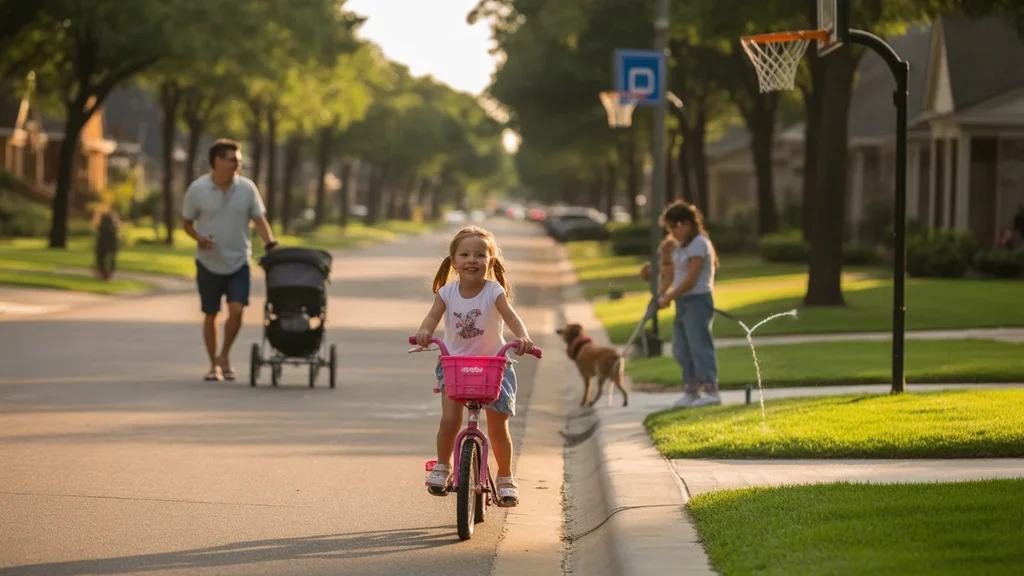
Frisco’s emotional tone is shaped by its youth. This is a city that didn’t exist in its current form a generation ago, and that newness shows up everywhere—in the clean streets, the planned neighborhoods, the abundance of parks, and the sheer volume of construction. For people who value organization, safety, and access to modern conveniences, Frisco delivers a sense of order and predictability. The city feels managed, and for many families, that’s exactly the appeal.
But newness also means a lack of established character. There’s little historic texture here, few quirky local institutions, and not much that feels rooted in time. People who thrive in Frisco tend to be those who don’t need a city to have a long story—they’re writing their own. Those who feel restless often describe a sense of sameness, a feeling that every neighborhood looks like the last, and that the city’s identity is still being built rather than lived in.
The cost of entry is another defining tension. With a median home value of $531,400 and median rent at $1,803 per month, Frisco is not a place where you can ease in financially. The city rewards high earners with excellent amenities—top-rated schools, hospital access, integrated green space, and broadly accessible grocery and dining options—but it doesn’t leave much room for households stretching to afford the basics. The result is a community that skews affluent, and that shows up in both the lifestyle expectations and the social fabric.
Social Media Buzz in Frisco
Online discussions about Frisco tend to cluster around a few recurring themes: pride in the city’s growth and amenities, frustration with traffic and construction, and a protective instinct when outsiders question whether the cost is worth it. On platforms like Reddit and local Facebook groups, you’ll find residents celebrating new parks, praising school quality, and sharing recommendations for family-friendly activities. There’s a sense of optimism here, especially among newer arrivals who feel they’ve found exactly what they were looking for.
At the same time, there’s a thread of fatigue. Growth is constant, and with it comes congestion, noise, and a feeling that the city is always under construction. One common sentiment: “I love what Frisco offers, but I miss being able to get across town in ten minutes.” Another: “It’s a great place to raise kids, but it’s not cheap, and you have to be okay with everything feeling new and a little generic.”
There’s also a recurring conversation about what Frisco is—whether it’s a suburb, a city, or something in between. Some residents bristle at being lumped in with “Dallas suburbs,” while others embrace the suburban identity. The tension isn’t hostile, but it reflects a community still figuring out its own character. A third voice: “Frisco has everything I need, but it doesn’t have much personality yet. Maybe that comes with time.”
Local News Tone
Local coverage of Frisco tends to frame the city through the lens of growth, investment, and community debate. Headlines often reflect the city’s rapid evolution and the questions that come with it:
- “New Development Brings Retail and Dining Options to Growing Area”
- “Residents Weigh Convenience Against Congestion as City Expands”
- “Community Debates What Growth Should Look Like”
- “Schools and Parks Expand to Meet Demand from New Families”
- “Frisco’s Identity Evolves as Population Climbs”
The tone is generally forward-looking and optimistic, but not without tension. Coverage acknowledges that growth brings both opportunity and friction, and that residents don’t always agree on how fast is too fast or what should be preserved versus developed. The city is portrayed as a place in motion, and the news reflects that—stories about infrastructure, amenities, and planning decisions dominate, while coverage of established traditions or historic preservation is sparse.
Review-Based Public Perception
On platforms like Google Reviews, Yelp, and Nextdoor, Frisco’s public perception reflects a mix of enthusiasm and expectation management. People who moved here for suburban comfort, family amenities, and access to quality schools tend to leave glowing reviews. They praise the cleanliness, the parks, the hospital access, and the sense of safety. For these households, Frisco delivers exactly what it promises.
Criticism, when it appears, tends to focus on cost, sameness, and the tradeoffs of rapid growth. Some reviewers note that dining and entertainment options, while improving, still feel limited compared to more established cities. Others mention that the city’s car-oriented layout makes errands feel time-consuming, even though grocery and food density is high. A recurring theme: “Everything you need is here, but you’ll drive to get it.”
Neighborhood variation exists but is often framed in terms of age rather than character. Newer planned areas tend to feel more polished and amenity-rich, while older pockets offer slightly more affordability and a bit more established landscaping. Neither is described as “bad,” but the difference in feel is noticeable, especially for buyers trying to decide where to land.
Expectation alignment is key. People who wanted walkable urbanism, nightlife, or historic charm tend to feel disappointed. People who wanted a clean, organized, family-friendly suburban environment with access to modern conveniences tend to feel they’ve found their fit. The city doesn’t try to be everything—it knows what it is, and reviews reflect whether that matches what the reviewer was looking for.
Comparison to Nearby Cities
| Dimension | Frisco | Plano | McKinney |
|---|---|---|---|
| Overall Vibe | New, fast-growing, family-centric, affluent | Established, diverse, more urban texture | Historic downtown, slower pace, more character |
| Housing Pressure | High cost, competitive, newer builds | Moderate to high, more variety in age and style | Moderate, mix of historic and new |
| Walkability & Transit | Car-oriented with walkable pockets, bus service | More walkable areas, better transit access | Walkable downtown, car-dependent elsewhere |
| Amenities & Errands | Broadly accessible, modern, well-distributed | Extensive, mature retail and dining | Growing, charming local options downtown |
| Community Feel | Optimistic, growth-focused, still forming identity | Settled, diverse, established rhythms | Tight-knit, historic pride, slower change |
Frisco, Plano, and McKinney all sit in the northern Dallas metro, but they offer different emotional experiences. Frisco is the youngest and fastest-growing of the three, appealing to families who want newness and don’t mind paying for it. Plano feels more established, with a wider range of housing ages, better walkability in some areas, and a more diverse population. McKinney offers a slower pace and a historic downtown that gives the city a sense of place Frisco hasn’t yet developed.
If you prioritize cutting-edge amenities, brand-new infrastructure, and a family-first environment, Frisco is likely your best match. If you want more urban texture, better transit access, and a city that feels lived-in, Plano may be a better fit. If you’re drawn to historic character, a walkable downtown, and a community that feels less rushed, McKinney offers that. None of these cities is objectively better—they’re different, and the right choice depends on what you’re optimizing for.
What Locals Are Saying
“We moved here from out of state for my husband’s job, and Frisco has been everything we hoped for. The schools are excellent, the parks are beautiful, and we feel safe letting our kids play outside. It’s expensive, but we knew that going in.” — Family with young children
“I like Frisco, but I do miss having a downtown or a main street with local shops. Everything here feels new and a little corporate. It’s clean and convenient, just not very unique.” — Young professional, renting
“The traffic has gotten worse every year, and the construction never stops. I love the amenities, but getting anywhere during rush hour is a test of patience.” — Long-time resident
“Frisco is perfect if you have the income to support it. If you’re stretching to afford rent or a mortgage, the lifestyle pressure adds up fast. It’s not a city where you can live cheaply and still feel comfortable.” — Remote worker, single
“I appreciate that I can walk to the grocery store from my neighborhood, and there are trails nearby. It’s not a walkable city overall, but there are pockets where you don’t have to drive for every single errand.” — Retiree, townhome owner
“We chose Frisco because we wanted suburban space without giving up access to good healthcare, shopping, and dining. It’s delivered on that, but it’s definitely a car town. You won’t get by without one.” — Dual-income household, no kids
“It’s a great place to raise a family, but it’s not for everyone. If you’re looking for nightlife, culture, or a gritty urban feel, you’ll be disappointed. Frisco knows what it is, and it’s unapologetic about it.” — Parent, mid-30s
Does Frisco Feel Like a Good Fit?
Frisco’s emotional profile is defined by its newness, its affluence, and its family-first infrastructure. This is a city that works beautifully for households who value safety, organization, modern amenities, and access to quality schools and healthcare. It’s a place where you can find housing tradeoffs that prioritize space and newness, where parks and green space are integrated into daily life, and where errands are broadly accessible even if you’re driving to get there.
But Frisco doesn’t work for everyone. It’s expensive, and that cost filters the community in ways that show up socially and culturally. It’s still forming its identity, which means it lacks the character and texture of older cities. And while walkable pockets exist, the city remains car-dependent overall, which can feel limiting for households hoping to reduce their reliance on driving.
If you’re a high-earning family looking for suburban comfort with urban conveniences, Frisco is likely to feel like home. If you’re budget-conscious, drawn to historic neighborhoods, or hoping for transit independence, the city may feel like a poor fit. The question isn’t whether Frisco is a happy place—it’s whether the tradeoffs it asks you to make align with what you value most.
To explore how those tradeoffs play out financially, take a look at your monthly budget in Frisco or dive into what ‘enough’ actually means in a city where expectations run high and costs follow close behind.
How this article was built: In addition to public economic data, this article incorporates location-based experiential signals derived from anonymized geographic patterns—such as access density, walkability, and land-use mix—to reflect how day-to-day living actually feels in Frisco, TX.
The perspectives shown reflect commonly expressed local sentiment and recurring themes in public discussion, rather than individual accounts.