
Is Chandler the kind of place you grow roots—or just pass through? For many, it’s the former: a city that rewards those seeking suburban stability, family-friendly infrastructure, and accessible amenities without the intensity of a major urban core. But for others—especially those craving spontaneity, cultural texture, or walkable-everywhere living—Chandler can feel a bit too planned, a bit too quiet, and a bit too hot when summer arrives in full force.
Understanding whether Chandler feels like home depends less on what the city has and more on what you’re hoping to feel. This is a place where the grocery store is close, the parks are plentiful, and the schools draw families from across the metro. It’s also a place where the building character stays low-rise, the street grid favors cars in most areas, and the summer heat shapes daily rhythms in ways newcomers don’t always anticipate.
The Emotional Landscape of Chandler
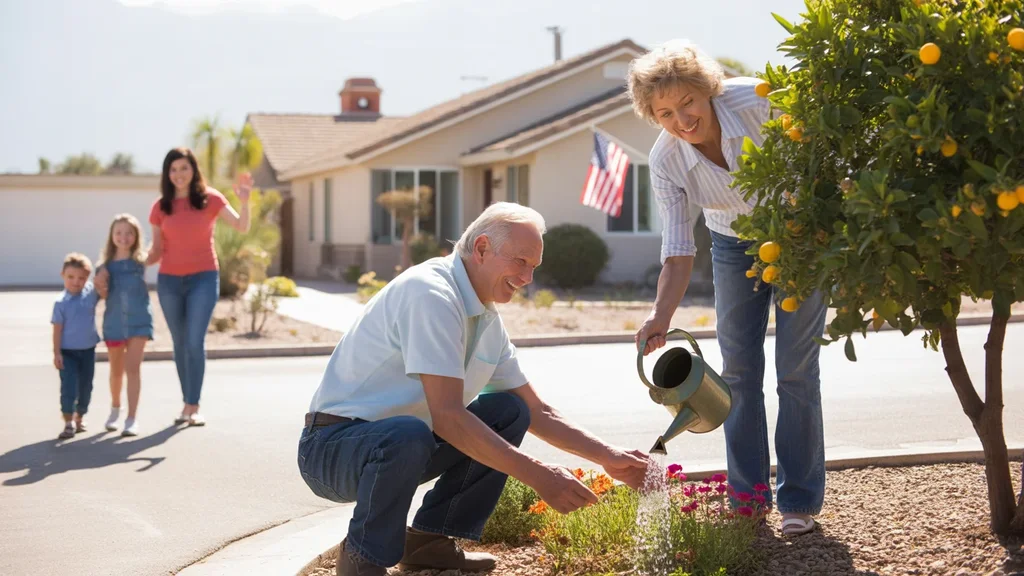
Chandler tends to work best for people who value predictability and convenience. The city offers broadly accessible food and grocery options, integrated green space, and strong family infrastructure—all supported by walkable pockets that make errands manageable without requiring a car for every trip. For families with school-age children, retirees seeking a warm climate with hospital access, and professionals who want suburban comfort with easy metro connectivity, Chandler delivers a reliable, well-maintained environment.
But that same reliability can feel limiting to those who thrive on variety and spontaneity. The low-rise building character and planned community feel create a sense of order that some find comforting and others find homogeneous. People who moved from denser, more eclectic cities sometimes describe Chandler as “nice but a little bland”—a place where you know what to expect, but rarely get surprised.
The heat is another defining feature. Triple-digit summer temperatures aren’t just a statistic here; they shape when you go outside, how you plan your day, and whether you feel energized or drained. For some, the long cooling season and desert climate are part of the appeal. For others, it’s a relentless pressure that makes six months of the year feel like survival mode.
What People Are Talking About Online
In Chandler-focused social media groups and broader Phoenix metro discussions, a few themes come up repeatedly. There’s pride in the city’s growth and development, especially around new dining options and retail centers. There’s also nostalgia for what the city used to be—smaller, quieter, less crowded.
“It’s not the sleepy suburb it was ten years ago, and I’m not sure how I feel about that,” one commenter reflects. “I love the new restaurants, but I miss knowing my neighbors.”
Another recurring topic is the balance between convenience and character. People appreciate that day-to-day costs feel manageable compared to other metro areas, and that errands don’t require long drives. But there’s also a sense that the city lacks a distinct identity—that it’s easy to live here, but hard to describe what makes it Chandler rather than just another Phoenix suburb.
“Everything you need is here, but nothing feels unique,” one resident notes. “It’s comfortable, but it doesn’t have a soul yet.”
Summer heat dominates seasonal conversation. People swap tips for managing cooling bills, avoiding midday exposure, and finding indoor activities for kids. There’s a shared understanding that June through September requires a different rhythm—early morning walks, late evening socializing, and a lot of time in air-conditioned spaces.
How Local Coverage Frames the City
Local news and community coverage tend to focus on growth, infrastructure, and quality-of-life debates. Headlines and story themes often reflect the tension between development and preservation:
- “New Mixed-Use Development Promises More Walkability”
- “Residents Debate What Growth Should Look Like”
- “Schools and Parks Expand to Meet Demand”
- “Community Weighs Convenience Against Congestion”
- “Desert Living: Balancing Water Use and Green Space”
The tone is generally optimistic but cautious. There’s recognition that Chandler is changing, and that change brings both opportunity and friction. Coverage often highlights family amenities, economic stability, and regional connectivity, but also acknowledges concerns about traffic, water sustainability, and maintaining neighborhood character as density increases.
Review-Based Public Perception
On platforms like Google Reviews, Yelp, and Nextdoor-style forums, Chandler earns consistent praise for safety, cleanliness, and family-friendliness. Parents frequently highlight the quality of schools and playgrounds, the accessibility of parks, and the ease of running errands. Retirees appreciate the hospital presence, the cycling infrastructure, and the warm climate.
But the same reviews often include a caveat: “Great place to raise kids, but not much nightlife.” Or: “Very safe and clean, but everything closes early.” Or: “Perfect if you like suburbs, but don’t expect much culture.”
People who moved from more urban environments sometimes express disappointment with the lack of walkable entertainment districts, the car dependency outside of specific pockets, and the limited variety in dining and arts. Those who moved from rural areas or smaller towns, by contrast, often describe Chandler as surprisingly vibrant—a place with more options than they expected, and better infrastructure than they’re used to.
Neighborhood variation exists, though it’s often framed in general terms: newer planned areas with more amenities versus older pockets with more established trees and character. The city’s mixed land use supports some local errands on foot, but most residents still rely on cars for work commutes and broader metro access.
How Chandler Compares to Nearby Cities
| Dimension | Chandler | Gilbert | Tempe |
|---|---|---|---|
| Overall Vibe | Suburban comfort with accessible amenities | Family-focused, more conservative tone | College-town energy, younger demographic |
| Walkability Feel | Walkable pockets, mostly car-dependent | Similar suburban layout, planned paths | More walkable core, urban texture |
| Nightlife & Culture | Limited, family-oriented | Quieter, fewer late-night options | Active nightlife, arts scene, college influence |
| Growth Tension | Moderate, balancing development and character | Rapid growth, newer feel throughout | Established density, infill development |
| Heat Exposure | High, long cooling season | Similar desert climate | Similar, slightly more shade in older areas |
Chandler sits in the middle of a spectrum. It’s more developed and accessible than Gilbert, but quieter and more family-oriented than Tempe. If you want a college-town vibe with walkable nightlife, Tempe is the better fit. If you want newer construction and a more conservative community feel, Gilbert might appeal more. Chandler offers a balance: enough amenities to avoid feeling isolated, but not so much activity that it feels chaotic.
For people deciding between these three, the question often comes down to lifestyle priorities. Do you value spontaneity and cultural variety, or do you value stability and predictability? Do you want to be near the action, or do you want to be able to retreat from it?
Voices from the Community
“We moved here from California five years ago, and it’s been exactly what we needed. The schools are solid, the parks are everywhere, and we can actually afford a house with a yard. Yeah, it’s hot in the summer, but we knew that coming in. For us, it’s worth it.”
“I work remotely, and Chandler is fine for that. Everything I need is close, the internet is reliable, and it’s quiet enough to focus. But I do miss having more to do on weekends. It feels like you have to drive to Phoenix or Scottsdale if you want any real variety.”
“As a retiree, this place checks a lot of boxes. The weather is warm most of the year, there’s a hospital nearby, and I can bike to the grocery store. My only complaint is the summer—it’s brutal. I end up staying inside more than I’d like.”
“Chandler is great if you have kids. There are so many family-friendly activities, and the neighborhoods feel safe. But if you’re single and in your twenties, it’s going to feel pretty quiet. Most of my friends who live here are married with kids.”
“I grew up here, and it’s changed a lot. It used to feel like a small town. Now it’s just another suburb. I appreciate the new restaurants and shops, but I do miss the sense of community we used to have.”
“The heat is no joke. I thought I was prepared, but those first few summers were rough. You really do have to plan your life around it—early morning walks, indoor hobbies, and a lot of AC. If you can handle that, the rest of the year is beautiful.”
“We chose Chandler because it felt like a good middle ground. It’s not as expensive as Scottsdale, not as crowded as Phoenix, and not as far out as some of the other suburbs. It’s not perfect, but it works for our family right now.”
Does Chandler Feel Like a Good Fit?
Chandler tends to work for people who value structure, accessibility, and family-friendly infrastructure. It’s a place where you can run errands on foot in certain areas, where parks and schools are plentiful, and where the overall environment feels safe and well-maintained. For families, retirees, and professionals seeking suburban stability with metro access, it offers a reliable foundation.
But it’s not a place that rewards spontaneity or cultural exploration. The low-rise building character, limited nightlife, and planned community feel create an environment that some find comforting and others find stifling. And the summer heat is a real factor—not just a seasonal inconvenience, but a defining feature of daily life for half the year.
If you’re deciding whether Chandler feels right, ask yourself: Do I want a place where I know what to expect, or do I want a place that surprises me? Do I value convenience and predictability, or do I value variety and texture? Do I see the heat as a tradeoff I’m willing to make, or as a dealbreaker?
For those still weighing the decision, it may help to explore what quality of life factors matter most in your day-to-day experience, or to understand what drives housing pressure and whether the tradeoffs align with your priorities.
How this article was built: In addition to public economic data, this article incorporates location-based experiential signals derived from anonymized geographic patterns—such as access density, walkability, and land-use mix—to reflect how day-to-day living actually feels in Chandler, AZ.
The perspectives shown reflect commonly expressed local sentiment and recurring themes in public discussion, rather than individual accounts.