

West Jordan and Sandy sit just miles apart in the Salt Lake City metro, sharing similar climates, commute corridors, and access to the Wasatch Range. Yet the cost pressures households face in each city diverge in ways that matter deeply for 2026 budgets. Both cities attract families seeking space, proximity to employment hubs, and outdoor recreation, but the decision between them isn’t about which is universally cheaper—it’s about which cost structure aligns with your household’s specific sensitivities. Housing entry barriers, transportation exposure, and healthcare access create distinct financial textures that affect renters, first-time buyers, and established families differently.
This comparison focuses on how costs show up, not what they add up to. West Jordan and Sandy share many structural similarities—both offer rail transit access, substantial pedestrian infrastructure in parts of the city, and high densities of grocery and food establishments—but differences in housing prices, gas costs, and medical facility availability shift where financial pressure concentrates. For households prioritizing lower entry costs, West Jordan offers meaningful relief. For those valuing hospital proximity or slightly lower transportation expenses, Sandy’s structure may justify the housing premium. The right choice depends on which costs dominate your day-to-day reality and which tradeoffs you’re equipped to manage.
Understanding these differences requires looking beyond sticker prices to examine volatility, predictability, and the hidden friction costs that emerge from commute patterns, home size, and access to services. In 2026, both cities remain viable options for a range of household types, but the financial experience of living in each diverges in ways that become clear only when you map your specific needs against each city’s cost structure.
Housing Costs
Housing represents the most visible cost difference between West Jordan and Sandy. West Jordan’s median home value sits at $412,100, while Sandy’s reaches $492,300—a gap that translates directly into down payment requirements, mortgage obligations, and property tax exposure for buyers. For renters, West Jordan’s median gross rent of $1,489 per month contrasts with Sandy’s $1,640 per month, creating a monthly differential that compounds over lease terms. These aren’t small distinctions for households managing tight budgets or saving toward ownership, and they shape not just monthly cash flow but also long-term wealth accumulation and housing flexibility.
The housing premium in Sandy reflects a combination of factors: proximity to employment clusters, hospital access, and perceived neighborhood stability. West Jordan’s lower entry costs don’t signal inferior housing stock—both cities feature mixed building heights, blended residential and commercial land use, and similar infrastructure quality. Instead, the difference reflects market positioning and buyer priorities. Families seeking single-family homes with yard space may find West Jordan’s pricing more accessible, while households prioritizing walkable access to medical facilities or shorter commutes to certain employment nodes may view Sandy’s premium as justified. Renters face similar tradeoffs: West Jordan offers lower monthly obligations, while Sandy’s rental market may provide proximity advantages that reduce transportation costs or time burdens.
For first-time buyers, the gap in median home values affects not just affordability but also the timeline to ownership. A household saving for a down payment will reach the threshold faster in West Jordan, potentially avoiding years of rent payments and gaining equity sooner. For established homeowners considering a move, the difference in property tax bases—driven by assessed home values—creates ongoing obligations that persist long after the mortgage is paid. Renters, meanwhile, must weigh the monthly savings in West Jordan against the potential for reduced commute friction or healthcare access in Sandy. Neither city offers a universal advantage; the decision hinges on whether housing cost relief or proximity-driven convenience dominates your household’s financial and logistical priorities.
| Housing Type | West Jordan | Sandy |
|---|---|---|
| Median Home Value | $412,100 | $492,300 |
| Median Gross Rent | $1,489/month | $1,640/month |
Housing Takeaway: West Jordan offers lower entry barriers for both renters and buyers, making it more accessible for households prioritizing cost relief or faster paths to ownership. Sandy’s housing premium reflects proximity advantages and hospital access, appealing to households willing to absorb higher ongoing obligations in exchange for reduced friction in daily logistics. The primary pressure in both cities is front-loaded—down payments and initial lease commitments—but Sandy’s elevated baseline extends that pressure across property taxes and long-term mortgage obligations.
Utilities and Energy Costs
Utility costs in West Jordan and Sandy share similar seasonal rhythms but diverge in subtle ways that affect predictability and exposure. West Jordan’s electricity rate stands at 12.88¢/kWh, while Sandy’s rate is 12.99¢/kWh—a negligible difference that won’t materially shift monthly bills for most households. Natural gas pricing, however, shows a clearer gap: West Jordan’s rate of $11.28/MCF compares to Sandy’s $10.82/MCF, a distinction that matters most during extended heating seasons when usage climbs. For households in older, less-insulated homes, this difference compounds over winter months, creating a modest but persistent cost advantage in Sandy for heating-dependent properties.
Both cities experience hot, dry summers and cold winters, driving dual-season utility exposure. Cooling dominates summer bills, while heating drives winter costs. The similarity in electricity rates means air conditioning expenses will feel nearly identical across both cities for comparable home sizes and insulation quality. Natural gas exposure, however, introduces variability: households relying heavily on gas heating—common in single-family homes with forced-air systems—will experience slightly lower winter bills in Sandy, while those in newer, well-insulated properties or apartments with shared heating infrastructure may see minimal difference. The key driver isn’t the rate itself but how much energy the home requires, which depends on square footage, construction age, and thermostat habits.
Household size and housing type amplify these differences. A family in a larger, older single-family home will face higher absolute utility costs in both cities, but the natural gas rate gap in Sandy provides modest relief during peak heating months. Couples or single adults in smaller apartments experience lower baseline usage, making rate differences less consequential. Renters in properties where utilities are included avoid direct exposure entirely, though those costs are typically embedded in rent. Homeowners, meanwhile, bear full volatility and must manage seasonal spikes through efficiency upgrades, thermostat discipline, or budget smoothing strategies. Neither city offers a dramatic utility advantage, but Sandy’s lower natural gas pricing provides a slight edge for heating-intensive households, while West Jordan’s marginally lower electricity rate offers negligible benefit.
Utility Takeaway: Utility costs in both cities are driven more by home size, insulation quality, and seasonal usage patterns than by rate differences. Sandy’s lower natural gas pricing benefits households with high heating exposure, particularly those in older or larger single-family homes. West Jordan’s electricity rate is fractionally lower but unlikely to shift decision-making. Predictability is similar across both cities, with volatility concentrated in winter heating and summer cooling peaks. Households in newer construction or smaller units will see minimal difference; those in older, larger homes should consider heating season exposure when evaluating Sandy’s natural gas advantage.
Groceries and Daily Expenses
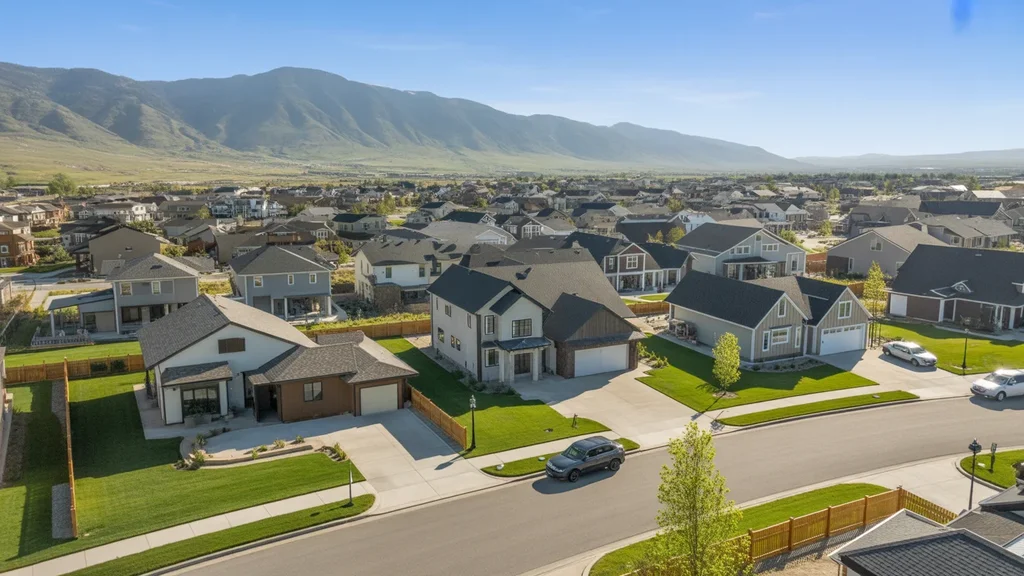
Grocery and daily spending patterns in West Jordan and Sandy reflect similar access structures but differ in how households experience price sensitivity and convenience tradeoffs. Both cities show high densities of food and grocery establishments, meaning residents in either location can access staples, prepared foods, and specialty items without extensive travel. This broad accessibility reduces the friction cost of grocery shopping—households aren’t forced into long drives or limited to a single store format—but it doesn’t eliminate price variability across store types. Discount grocers, big-box retailers, and neighborhood markets coexist in both cities, giving households flexibility to trade time for savings or pay a premium for convenience.
The cost pressure in groceries isn’t driven by scarcity or access gaps but by household habits and price discipline. Families managing larger grocery volumes—buying in bulk, cooking most meals at home—benefit from the presence of warehouse clubs and discount chains in both cities, though the specific mix of retailers and their proximity to residential neighborhoods may vary. Single adults and couples, meanwhile, face different tradeoffs: smaller households often prioritize convenience over bulk savings, leading to higher per-unit costs at neighborhood stores or increased spending on prepared foods and dining out. Both cities support a range of strategies, but the cost outcome depends on whether households prioritize time savings, price optimization, or dietary preferences.
Dining out and convenience spending introduce another layer of variability. Both West Jordan and Sandy feature a mix of fast-casual chains, local restaurants, and coffee shops, creating opportunities for discretionary spending that can quietly inflate monthly budgets. Households with tight schedules or limited cooking capacity may lean more heavily on takeout, delivery, or grab-and-go meals, which carry higher per-meal costs than home cooking. The availability of these options in both cities is similar, meaning the cost difference emerges from behavior rather than access. Families with children face additional pressure from snack purchases, school lunches, and convenience items that accumulate over the month, while single adults may spend more per capita on dining out or specialty groceries.
Grocery Takeaway: Grocery and daily expense pressure in both cities is driven more by household habits and store choice than by structural access differences. Both West Jordan and Sandy offer high densities of food and grocery options, giving households flexibility to optimize for price or convenience. Families managing larger volumes benefit from bulk-buying access in both cities, while smaller households face higher per-unit costs if they prioritize convenience. The primary cost driver is behavioral: households that plan meals, cook at home, and limit convenience spending will experience similar costs in either city, while those relying on prepared foods or frequent dining out will see expenses climb regardless of location.
Taxes and Fees
Tax and fee structures in West Jordan and Sandy share regional similarities but diverge in ways that affect homeowners and long-term residents more than renters or short-term movers. Both cities fall under Utah’s statewide sales tax framework, meaning consumption-based taxes on groceries, goods, and services remain consistent across locations. Property taxes, however, vary based on assessed home values and local millage rates, creating ongoing obligations that scale with housing costs. Sandy’s higher median home values translate into elevated property tax bills for owners, even if millage rates are comparable, while West Jordan’s lower home values reduce that baseline exposure. For renters, property taxes are embedded in lease rates but not directly visible, making this difference less immediate.
Local fees—trash collection, water, sewer, and stormwater management—add another layer of cost that varies by provider and service structure. Some neighborhoods in both cities may bundle these services through HOA fees, while others bill separately, creating variability in predictability and total monthly obligations. HOA fees themselves differ widely depending on neighborhood amenities: communities with shared landscaping, pools, or recreational facilities carry higher monthly assessments, while areas without such infrastructure impose minimal or no HOA costs. Homeowners must evaluate not just the presence of HOA fees but what they cover and whether those services reduce other expenses or simply add to the total burden.
The structural difference in tax and fee exposure between West Jordan and Sandy is one of magnitude and predictability. Sandy’s higher property tax base—driven by elevated home values—creates a larger ongoing obligation for homeowners, though this is partially offset by the wealth-building potential of owning a more valuable asset. West Jordan’s lower property tax exposure provides immediate cash flow relief, particularly for households on fixed incomes or those prioritizing monthly budget flexibility. Renters in both cities face indirect exposure through lease rates but gain the flexibility to move without the long-term tax obligations that homeowners carry. For households planning to stay several years, the cumulative difference in property taxes can be substantial, making West Jordan more appealing for cost-conscious buyers and Sandy more attractive for those prioritizing asset value and proximity advantages.
Taxes and Fees Takeaway: Property tax exposure in Sandy is elevated due to higher home values, creating larger ongoing obligations for homeowners compared to West Jordan. Renters face indirect exposure through lease rates but avoid direct property tax bills. Local fees and HOA assessments vary by neighborhood in both cities, with predictability depending on service bundling and community amenities. Homeowners planning long-term stays should weigh West Jordan’s lower property tax baseline against Sandy’s higher asset values and proximity benefits. The primary difference is magnitude and structure: West Jordan offers lower ongoing obligations, while Sandy’s tax burden reflects higher housing values and the services that accompany them.
Transportation & Commute Reality
Transportation costs in West Jordan and Sandy diverge most visibly at the gas pump, where West Jordan’s price of $4.20/gal contrasts sharply with Sandy’s $3.40/gal. For households dependent on daily driving—commuting to work, running errands, or managing family logistics—this gap compounds quickly. A household driving frequently will feel the difference in weekly fill-ups, particularly if commute distances are long or if multiple vehicles are in use. Sandy’s lower gas price provides meaningful relief for car-dependent households, while West Jordan’s elevated fuel costs add friction to transportation budgets, especially for those with limited flexibility to reduce driving.
Commute patterns in both cities reflect similar time burdens: West Jordan averages 24 minutes, while Sandy averages 23 minutes. The difference is negligible in daily experience, but the percentage of residents facing long commutes diverges slightly—33.9% in West Jordan versus 30.9% in Sandy. This suggests that a larger share of West Jordan households may be commuting to employment centers farther afield, amplifying the impact of higher gas prices. Both cities show low work-from-home rates at 4.0%, indicating that most residents are commuting regularly and bearing the associated transportation costs. The combination of higher gas prices and a slightly larger long-commute population makes West Jordan more exposed to transportation volatility.
Both cities offer rail transit access and substantial pedestrian infrastructure in parts of the city, providing alternatives to car dependence for households whose daily routines align with transit corridors. However, the effectiveness of these alternatives depends on where you live, where you work, and how your errands are distributed. Households able to rely on rail for commuting or walkable access for groceries and services can reduce car usage and insulate themselves from gas price swings. Those in less transit-accessible neighborhoods or with dispersed daily destinations will remain car-dependent, making Sandy’s lower gas prices a persistent advantage. The decision isn’t just about price—it’s about whether your household’s logistics allow you to reduce driving or whether you’re locked into car dependence regardless of location.
Transportation Takeaway: Sandy offers a clear advantage in gas pricing, providing relief for car-dependent households and those with long or frequent commutes. West Jordan’s higher gas costs compound for households driving regularly, particularly those in the larger long-commute population. Both cities provide rail transit and walkable infrastructure in parts of the city, but the viability of reducing car dependence depends on neighborhood location and daily logistics. Households able to leverage transit or walkability can mitigate transportation costs in either city, but those locked into driving will feel the gas price gap most acutely in West Jordan.
Cost Structure Comparison
Housing dominates the cost experience in both West Jordan and Sandy, but the pressure shows up differently. West Jordan’s lower entry costs—both for renters and buyers—provide immediate relief for households prioritizing monthly cash flow or faster timelines to ownership. Sandy’s elevated housing baseline creates a larger upfront and ongoing obligation, but that premium reflects proximity advantages and hospital access that reduce friction in other areas. For first-time buyers or families stretching to afford a home, West Jordan’s structure is more forgiving. For established households prioritizing convenience and medical access, Sandy’s housing costs may feel justified by the logistical benefits they enable.
Utilities introduce modest variability, with Sandy’s lower natural gas pricing offering slight relief during heating-intensive months. The difference isn’t dramatic—both cities experience similar seasonal patterns and electricity rates—but households in older, larger homes with high heating exposure will see the benefit in Sandy’s natural gas costs. West Jordan’s marginally lower electricity rate provides negligible advantage. For most households, utility costs will feel similar across both cities, with the primary driver being home size and insulation quality rather than location.
Transportation patterns create the most visible ongoing cost difference outside of housing. Sandy’s lower gas prices provide persistent relief for car-dependent households, particularly those with long commutes or multiple vehicles. West Jordan’s higher gas costs compound for households driving frequently, adding friction to monthly budgets that can’t easily be reduced without changing commute patterns or vehicle usage. Both cities offer rail transit and walkable infrastructure in parts of the city, but the viability of reducing car dependence depends on where you live and how your daily logistics are structured. Households able to leverage transit or walkability can mitigate this difference; those locked into driving will feel the gap most acutely in West Jordan.
Daily living costs—groceries, dining, and convenience spending—show minimal structural difference between the cities. Both offer high densities of food and grocery establishments, giving households flexibility to optimize for price or convenience. The cost outcome depends more on household habits than on location: families cooking at home and buying in bulk will experience similar costs in either city, while those relying on prepared foods or frequent dining out will see expenses climb regardless of where they live. The difference is behavioral, not structural.
The decision between West Jordan and Sandy isn’t about which city is universally cheaper—it’s about which cost structure aligns with your household’s specific sensitivities. Households prioritizing lower housing entry costs and willing to absorb higher gas prices may find West Jordan more manageable. Those valuing hospital access, lower transportation costs, and proximity advantages may view Sandy’s housing premium as a worthwhile tradeoff. For households sensitive to transportation volatility, Sandy’s gas pricing provides meaningful relief. For those focused on minimizing housing obligations, West Jordan offers a clearer path. The better choice depends on which costs dominate your day-to-day reality and which tradeoffs you’re equipped to manage.
How the Same Income Feels in West Jordan vs Sandy
Single Adult
For a single adult, housing becomes the first non-negotiable cost, and West Jordan’s lower rent or mortgage entry point creates immediate breathing room in the monthly budget. Flexibility exists in dining out, entertainment, and convenience spending, but that flexibility disappears quickly if commute costs climb due to West Jordan’s higher gas prices. In Sandy, the higher housing baseline tightens the budget upfront, but lower gas prices and hospital proximity reduce friction in transportation and healthcare access, potentially offsetting the housing premium for those with frequent medical needs or long commutes.
Dual-Income Couple
A dual-income couple faces less housing pressure in West Jordan, where lower entry costs allow for more discretionary spending or faster savings accumulation. Flexibility exists in managing two commutes, but if both partners drive frequently, West Jordan’s gas prices erode that advantage. In Sandy, the housing premium becomes more manageable with two incomes, and the lower gas costs provide ongoing relief if both partners commute by car. The role of commute friction matters more here: couples able to leverage rail transit or walkability in either city gain flexibility, while those locked into driving will feel the gas price gap most acutely in West Jordan.
Family with Kids
For families, housing space becomes non-negotiable, and West Jordan’s lower home values make single-family ownership more accessible. Flexibility disappears quickly as childcare, groceries, and school-related expenses pile up, leaving little room for discretionary spending. In Sandy, the higher housing costs strain budgets upfront, but hospital access and slightly lower gas prices reduce friction in managing family logistics—fewer long drives for medical care, lower fuel costs for school drop-offs and errands. The time cost of commuting and the cash cost of transportation compound differently in each city, with West Jordan offering lower housing obligations but higher ongoing transportation exposure for car-dependent families.
Decision Matrix: Which City Fits Which Household?
| Decision factor | If you’re sensitive to this… | West Jordan tends to fit when… | Sandy tends to fit when… |
|---|---|---|---|
| Housing entry + space needs | You prioritize lower down payments, monthly rent, or faster timelines to ownership | You need immediate cost relief or are stretching to afford a home | You value proximity advantages and can absorb higher ongoing housing obligations |
| Transportation dependence + commute friction | You drive frequently, have long commutes, or manage multiple vehicles | You can leverage rail transit or reduce driving through walkable access | You’re locked into car dependence and need lower gas costs to manage transportation exposure |
| Utility variability + home size exposure | You live in an older, larger home with high heating or cooling needs | You’re in newer construction or smaller units where rate differences are negligible | You face high heating exposure and benefit from lower natural gas pricing |
| Grocery strategy + convenience spending creep | You cook at home, buy in bulk, and limit dining out | You have access to discount grocers and can optimize for price over convenience | You prioritize time savings and are willing to pay a premium for convenience |
| Fees + friction costs (HOA, services, upkeep) | You want predictable, lower ongoing obligations and minimal HOA fees | You prioritize lower property tax exposure and fewer bundled services | You value bundled services and accept higher property tax baselines for proximity benefits |
| Time budget (schedule flexibility, errands, logistics) | You manage complex family logistics or have limited schedule flexibility | You can absorb longer drives or less convenient access in exchange for housing savings | You need hospital proximity, shorter errands loops, and reduced friction in daily logistics |
Lifestyle Fit
West Jordan and Sandy share similar lifestyle foundations: both offer rail transit access, substantial pedestrian infrastructure in parts of the city, and high densities of parks and outdoor spaces. Residents in either city can access the Wasatch Range for hiking, skiing, and mountain recreation, and both cities feature mixed building heights and blended residential and commercial land use that support walkable errands in certain neighborhoods. The outdoor environment is a draw for both locations, with park density exceeding high thresholds and water features present, creating integrated green space access that appeals to families, active adults, and outdoor enthusiasts. Both cities show similar commute times—24 minutes in West Jordan, 23 minutes in Sandy—making daily travel burdens nearly identical.
The lifestyle distinction between the cities emerges less from recreation or mobility infrastructure and more from healthcare access and proximity to services. Sandy’s hospital presence provides a meaningful advantage for families with young children, older adults managing chronic conditions, or anyone prioritizing immediate access to emergency and specialized medical care. West Jordan offers clinic-level healthcare access, which suffices for routine needs but requires travel to nearby cities for hospital services. This difference doesn’t affect day-to-day life for healthy households but becomes critical during medical emergencies or when managing ongoing health conditions. Both cities show rail transit access and cycling infrastructure in limited areas, making car-free living viable for households whose daily routines align with transit corridors.
Lifestyle costs in both cities are shaped more by household choices than by structural differences. Both West Jordan and Sandy offer broadly accessible food and grocery options, meaning residents can manage daily errands without extensive travel. The presence of schools and playgrounds in both cities supports family life, though neither city shows exceptionally high densities of these amenities—families will find adequate infrastructure but may need to prioritize proximity when choosing neighborhoods. For households prioritizing outdoor recreation, green space access, and mobility options, both cities deliver similar experiences. For those valuing hospital proximity or slightly lower transportation costs, Sandy’s structure may reduce friction in ways that improve quality of life beyond the financial ledger.
Frequently Asked Questions
Is West Jordan or Sandy cheaper for renters in 2026?
West Jordan offers lower median rent at $1,489 per month compared to Sandy’s $1,640 per month, providing immediate monthly savings for renters. The difference compounds over lease terms and matters most for households managing tight budgets or saving toward other goals. Sandy’s higher rent reflects proximity advantages and hospital access, which may reduce transportation or healthcare friction for some renters. The better choice depends on whether monthly cost relief or convenience-driven proximity dominates your priorities.
How do gas prices in West Jordan and Sandy affect commuting costs in 2026?
West Jordan’s gas price of $4.20/gal is significantly higher than Sandy’s $3.40/gal, creating a persistent cost gap for car-dependent households. This difference compounds for those with long commutes or multiple vehicles, making Sandy more appealing for households driving frequently. Both cities offer rail transit access, but the viability of reducing car dependence depends on where you live and how your daily logistics are structured. Households locked into driving will feel the gas price gap most acutely in West Jordan.
Which city has lower property taxes, West Jordan or Sandy?
West Jordan’s lower median home value of $412,100 compared to Sandy’s $492,300 translates into lower property tax exposure for homeowners, even if millage rates are similar. This creates ongoing savings for West Jordan homeowners, particularly those on fixed incomes or prioritizing monthly budget flexibility. Sandy’s higher property tax baseline reflects elevated home values and the proximity advantages that accompany them. The difference is one of magnitude: West Jordan offers lower ongoing obligations, while Sandy’s tax burden reflects higher asset values.
Do West Jordan and Sandy have similar access to groceries and daily services in 2026?
Both West Jordan and Sandy show high densities of food and grocery establishments, meaning residents in either city can access staples, prepared foods, and specialty items without extensive travel. The cost difference in groceries emerges from household habits—whether you cook at home, buy in bulk, or rely on convenience options—rather than from structural access gaps. Both cities support a range of shopping strategies, making the cost outcome dependent on behavior rather than location.
Which city is better for families: West Jordan or Sandy in 2026?
West Jordan offers lower housing entry costs, making single-family ownership more accessible for families stretching to afford space. Sandy provides hospital access and slightly lower gas prices, reducing friction in managing family logistics and medical needs. Both cities offer similar family infrastructure—schools, playgrounds, and parks—though neither shows exceptionally high densities. The better choice depends on whether your family prioritizes lower housing obligations or reduced friction in healthcare access and transportation costs.
Conclusion
West Jordan and Sandy present distinct cost structures that affect households differently depending on which financial pressures dominate daily life. West Jordan offers lower housing entry costs for both renters and buyers, providing immediate relief for households prioritizing monthly cash flow or faster timelines to ownership. Sandy’s elevated housing baseline creates larger upfront and ongoing obligations, but that premium reflects hospital access and lower gas prices that reduce friction in transportation and healthcare logistics. For households sensitive to housing costs, West Jordan delivers meaningful savings. For those prioritizing proximity advantages and lower transportation exposure, Sandy’s structure may justify the housing premium.
The decision isn’t about which city is universally cheaper—it’s about which cost structure aligns with your household’s specific sensitivities and which tradeoffs you’re equipped to manage. Households locked into car dependence will feel Sandy’s lower gas prices as a persistent advantage, while those able to leverage rail transit or walkable access can mitigate that difference. Families managing tight budgets or saving toward ownership will benefit from West Jordan’s lower housing baseline, while those with frequent medical needs or complex family logistics may find Sandy’s hospital access and reduced transportation costs worth the elevated housing obligations