
Can you live in West Jordan without a car? The short answer depends entirely on where in the city you settle and where you need to go. West Jordan sits in the Salt Lake Valley with a suburban layout that historically leaned car-first, but the presence of rail transit and pockets of walkable infrastructure mean the reality is more textured than the stereotype suggests. Understanding how people actually move through West Jordan—and what that means for daily life—requires looking past assumptions and into the structure of the city itself.
How People Get Around West Jordan
West Jordan’s transportation landscape reflects a blend of suburban car dependence and emerging transit access. The city developed primarily as a residential suburb, and most neighborhoods were built around the assumption that households own at least one vehicle. But infrastructure has evolved: rail service now connects parts of West Jordan to downtown Salt Lake City and other regional employment centers, and certain corridors show substantial pedestrian infrastructure relative to road networks. This creates a split reality. Some residents structure their entire week around a car. Others—particularly those near transit stations—rely on rail for commuting and use a car only for errands or weekend trips.
What newcomers often misunderstand is that West Jordan isn’t uniformly car-dependent. The city has pockets where walking to a grocery store, catching a train, and managing daily errands without driving is entirely practical. But step outside those zones, and the infrastructure shifts quickly. Sidewalks thin out, distances stretch, and the car becomes non-negotiable. The dominant pattern is still driving, but transit plays a real role for a meaningful subset of households.
Public Transit Availability in West Jordan
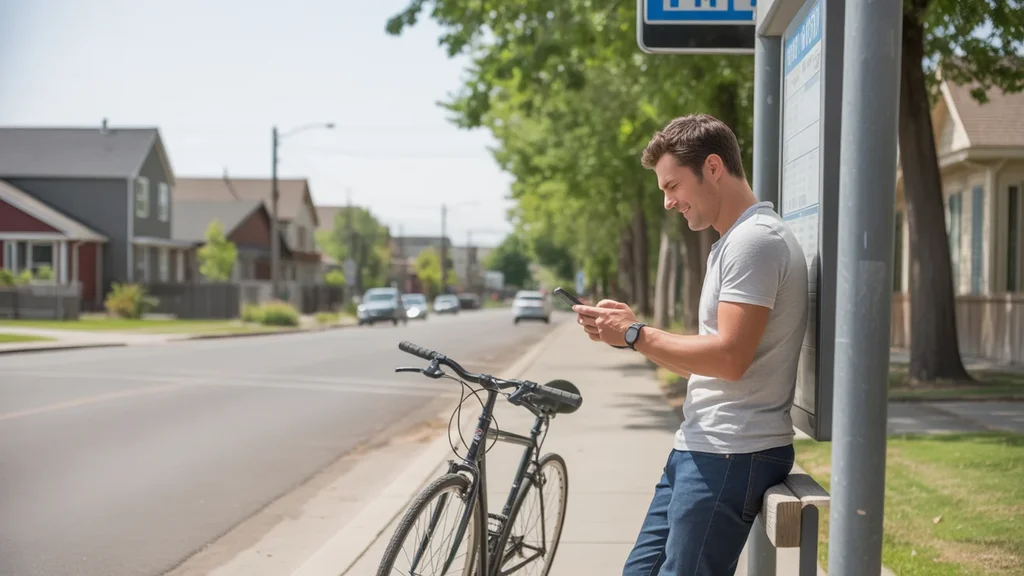
Public transit in West Jordan often centers around systems such as UTA (Utah Transit Authority), which operates light rail and bus service throughout the Salt Lake Valley. The presence of rail stations in West Jordan is significant—it means residents in proximity to those stops have direct, predictable access to downtown Salt Lake City, the University of Utah, and other major employment and activity centers. Rail service tends to work best for commuters with fixed schedules and destinations along the line. It offers predictability, avoids traffic variability, and eliminates parking friction.
Bus service supplements rail coverage, extending reach into neighborhoods farther from stations. However, bus routes in suburban areas like West Jordan often run less frequently than in denser urban cores, and coverage can thin out in the evenings and on weekends. For someone living near a rail stop and working downtown, transit is a viable daily tool. For someone in a peripheral neighborhood needing to reach multiple destinations across the valley, transit becomes a secondary option at best.
Transit works well in corridors. It struggles in the gaps. West Jordan’s layout means that access to high-quality transit is uneven, and proximity to a station can define whether a household views transit as essential or irrelevant.
Driving & Car Dependence Reality
For most West Jordan households, driving remains the primary mode of transportation. The city’s residential areas spread across a wide footprint, and many daily destinations—schools, grocery stores, medical offices, recreational facilities—are distributed in ways that make driving the fastest and most flexible option. Parking is generally abundant and free, which removes one of the friction points that makes driving costly or inconvenient in denser cities. Commute flexibility matters here: families managing school drop-offs, multi-stop errands, or irregular work hours find that a car offers control that transit cannot match.
Car dependence in West Jordan is tied to geography and infrastructure, not preference alone. The city’s development pattern prioritized road access and residential lots over dense, walkable commercial districts. Even in areas with good pedestrian infrastructure, the distances between home, work, and errands often exceed what most people are willing to walk regularly. Owning a car isn’t just about convenience—it’s about access to the full range of services and opportunities the region offers.
Commuting Patterns & Daily Mobility
Commuting in West Jordan reflects the city’s role as a residential suburb within a larger metro economy. The average commute is 24 minutes, which is relatively moderate but varies widely depending on destination and mode. Only 4.0% of workers in West Jordan work from home, meaning the vast majority leave the house for work. A notable 33.9% face long commutes, typically those traveling to employment centers outside the immediate area or navigating congested corridors during peak hours.
Single-destination commuters—especially those working downtown or along the rail line—benefit from transit’s predictability. Multi-stop commuters, shift workers, and those traveling to dispersed job sites across the valley rely almost exclusively on driving. Daily mobility in West Jordan often involves a mix: rail for the work commute, a car for errands. Households that can structure their week around fixed transit schedules gain cost predictability and avoid fuel volatility. Those with variable schedules or multiple daily stops absorb the time and expense of driving.
Who Transit Works For — and Who It Doesn’t
Transit in West Jordan works best for renters and homeowners living near rail stations with commutes to downtown Salt Lake City or other stops along the line. Single adults, couples without children, and students often find that rail access reduces transportation costs and eliminates the need for a second car. Proximity to a station also correlates with access to grocery stores and services within walking distance, reinforcing a less car-dependent lifestyle.
Transit falls short for families managing school runs, households in peripheral neighborhoods, and anyone whose daily routine involves multiple scattered destinations. Evening and weekend service limitations mean that even transit-friendly households often keep a car for non-commute needs. Shift workers, especially those with early-morning or late-night schedules, find that transit doesn’t align with their hours. In these cases, driving isn’t a choice—it’s the only practical option.
The fit isn’t about ideology. It’s about alignment between where you live, where you need to go, and when you need to be there.
Transportation Tradeoffs in West Jordan
Choosing between transit and driving in West Jordan involves tradeoffs in predictability, control, flexibility, and exposure. Transit offers fixed costs, predictable schedules, and insulation from fuel price swings. It works when your routine aligns with service patterns and your destinations sit along the network. Driving offers flexibility, speed for multi-stop trips, and access to the entire valley. It exposes households to fuel volatility, maintenance cycles, and the friction of traffic during peak hours.
Households near rail stations face a genuine choice. Those farther out face a structural constraint. The tradeoff isn’t always financial—it’s often about time, convenience, and the cognitive load of planning around transit schedules versus the autonomy of driving. Neither option is universally better. The right choice depends on household structure, work location, and daily rhythm.
How this article was built: In addition to public economic data, this article incorporates location-based experiential signals derived from anonymized geographic patterns—such as access density, walkability, and land-use mix—to reflect how day-to-day living actually feels in West Jordan, UT.
FAQs About Transportation in West Jordan (2026)
Is public transit usable for daily commuting in West Jordan?
Yes, if you live near a rail station and commute to destinations along the transit line, particularly downtown Salt Lake City. Rail service provides predictable, traffic-independent access to regional employment centers. Households farther from stations or with multi-stop commutes will find transit less practical and may rely primarily on driving.
Do most people in West Jordan rely on a car?
Yes. The majority of West Jordan residents drive for daily transportation. The city’s suburban layout, dispersed services, and low work-from-home rate mean that car ownership remains the norm. However, proximity to rail transit allows some households—especially those near stations—to reduce car dependence significantly.
Which areas of West Jordan are easiest to live in without a car?
Neighborhoods near rail stations with walkable access to grocery stores and services offer the most viable car-free or car-light living. These areas combine transit access with pedestrian infrastructure, making it possible to handle commutes and errands without driving daily. Peripheral neighborhoods with limited sidewalk networks and greater distances to services require a car for practical daily life.
How does commuting in West Jordan compare to nearby cities?
West Jordan’s average commute of 24 minutes is moderate within the Salt Lake Valley. The presence of rail transit distinguishes it from purely car-dependent suburbs, offering an alternative for commuters heading to downtown or along the transit corridor. However, long commutes affect about one-third of workers, reflecting the reality that many residents travel outside the immediate area for work.
Can you save money by using public transit instead of driving in West Jordan?
Transit can reduce exposure to fuel price swings and eliminate costs like parking and some maintenance, but the savings depend entirely on how well transit aligns with your daily needs. Households that can replace most car trips with transit may see meaningful cost reductions. Those who still need a car for errands, evening trips, or family logistics may find that transit supplements rather than replaces a month of expenses in West Jordan: what it feels like.
How Transportation Fits Into the Cost of Living in West Jordan
Transportation in West Jordan isn’t just a budget line—it’s a structural factor that shapes where you can live, how you spend your time, and what tradeoffs you accept. Proximity to rail transit can reduce the need for a second car, lower fuel exposure, and simplify commutes. Living farther from transit increases car dependence, adds time to daily routines, and ties household costs more tightly to gas prices and vehicle maintenance cycles.
The choice between transit-accessible and car-dependent neighborhoods often mirrors the choice between predictability and flexibility. Transit households trade geographic reach for cost stability. Car-dependent households trade fuel exposure for autonomy and speed. Neither path is inherently cheaper—the right fit depends on work location, household composition, and daily rhythm.
West Jordan offers both options, but not evenly. Understanding where transit works and where it doesn’t helps clarify what kind of mobility your household actually needs—and what you’ll pay, in time or money, to get it.