
74 out of 100 residents say they’re happy in St Matthews. But what does that number actually mean when you’re deciding whether this Louisville suburb feels like home? Happiness scores don’t tell you whether you’ll feel energized by the rhythm of daily life here or quietly restless. They don’t explain who thrives in St Matthews and who finds themselves driving elsewhere for the things that matter most.
St Matthews occupies a specific emotional space: it’s a low-rise, established suburb with strong grocery and food access, hospital proximity, and pockets of walkability—but it’s not trying to be urban Louisville, and it’s not trying to be a sleepy bedroom community either. The vibe here reflects that in-between identity. People who want suburban calm without feeling isolated tend to settle in comfortably. People who crave nightlife texture, extensive transit options, or vertical density often feel the limits quickly.
This article translates the emotional tone of living in St Matthews through the lens of public discussion—what people praise, what they negotiate, and what keeps coming up as a tradeoff.
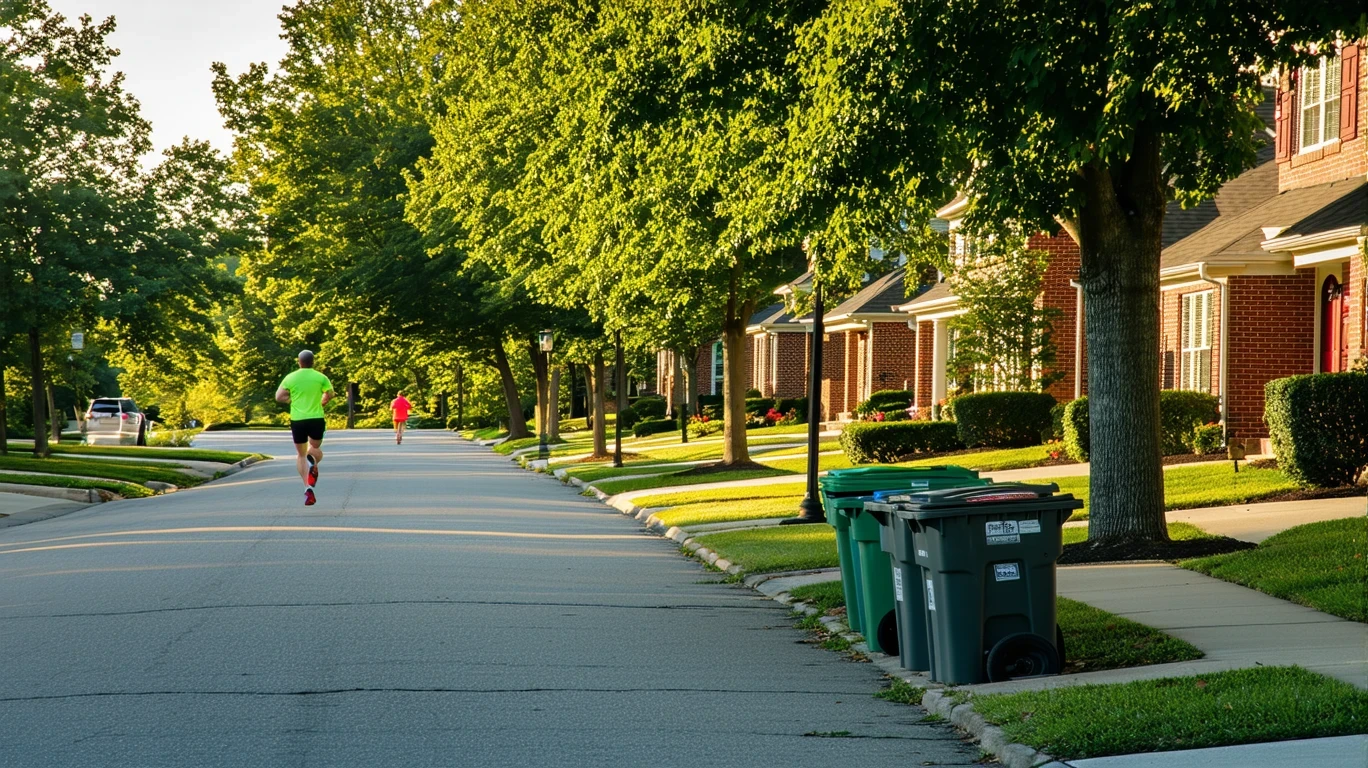
The Emotional Landscape of St Matthews
St Matthews feels like a place that rewards people who value convenience within a suburban framework. Because food and grocery density exceeds typical thresholds and both residential and commercial land use mix throughout the city, running errands doesn’t require the kind of planning burden common in more isolated suburbs. You’re not driving 20 minutes for basics. That accessibility—combined with hospital presence and moderate park access—creates a rhythm where daily life feels manageable without feeling urban.
But that same structure creates friction for people who want more than manageability. The pedestrian-to-road ratio is high in certain areas, but cycling infrastructure remains limited to pockets, and transit is bus-only. If you’re someone who imagined biking to work or taking rail into Louisville, the infrastructure doesn’t support that vision consistently. The city’s low-rise character and established neighborhoods appeal to families and people seeking residential calm, but they also mean less density, fewer late-night options, and a quieter social scene than some newcomers expect.
The recurring emotional tension isn’t about whether St Matthews is “good” or “bad”—it’s about whether its specific mix of accessibility and suburban pace matches what you’re actually looking for. People who feel at home here tend to describe it as “everything I need without the chaos.” People who feel restless tend to say “it’s fine, but I’m always driving somewhere else for what I actually want to do.”
Social Media Buzz in St Matthews
In cities like St Matthews, locals often describe the vibe as a blend of pride in convenience and mild frustration with sameness. Conversations on platforms like Facebook and Reddit tend to circle around a few recurring themes: appreciation for accessible shopping and dining, debates about traffic along major corridors, and a protective tone when comparisons to Louisville come up.
One common sentiment: “I can get groceries, go to the doctor, grab dinner, and be home in an hour—that’s worth a lot when you have kids.” The accessibility that comes from high food and grocery density shows up frequently as a quality-of-life win, especially for families managing logistics.
But there’s also a thread of restlessness: “It’s comfortable, but I wouldn’t call it exciting. If I want to do something interesting, I’m heading into Louisville.” That tension—between comfort and stimulation—runs through a lot of public discussion. People who moved here for suburban ease tend to feel satisfied. People who moved here hoping for a hybrid suburban-urban experience tend to feel like they’re compromising more than they expected.
Another recurring theme: “The walkable parts are nice, but you still need a car for most things.” The presence of pedestrian infrastructure in pockets creates just enough walkability to be noticeable, but not enough to change the fundamental car-oriented rhythm of daily life. That gap between “some walkability” and “walkable lifestyle” shows up in sentiment frequently, especially among younger professionals or people relocating from denser cities.
Local News Tone
Local coverage of St Matthews tends to frame the city through the lens of evolution and identity—how growth, retail shifts, and proximity to Louisville shape what the community is becoming. The tone is rarely dramatic, but it’s not purely celebratory either. It reflects a community negotiating change while trying to preserve the suburban character that drew people here in the first place.
Typical framing includes:
- “New Retail Arrives as Older Anchors Close”
- “Community Debates What Growth Should Look Like”
- “Residents Weigh Convenience Against Traffic Concerns”
- “St Matthews Balances Proximity to Louisville with Distinct Identity”
- “Healthcare Access Expands in Established Suburb”
The recurring narrative isn’t about crisis or transformation—it’s about incremental shifts and the emotional work of staying relevant without losing familiarity. That tone mirrors what you hear in public discussion: people appreciate what’s here, but they’re also aware that the city isn’t standing still, and not everyone agrees on what direction feels right.
Review-Based Public Perception
On platforms like Google, Yelp, and Nextdoor-style forums, St Matthews tends to earn praise for the same things that show up in the experiential data: accessibility, healthcare proximity, and a manageable day-to-day rhythm. But the reviews also reveal where expectations don’t align.
People who wanted suburban comfort with easy errands tend to write positively: “Everything you need is close by, and it doesn’t feel chaotic. Good for families.” The combination of broadly accessible food and grocery options, hospital presence, and moderate green space creates a functional baseline that meets a lot of household needs without requiring constant driving or planning.
People who wanted more texture or variety tend to write more cautiously: “It’s convenient, but it all feels kind of the same. I wish there were more local spots with personality.” The low-rise character and established retail corridors don’t generate the kind of discovery or surprise that some residents crave, especially those relocating from denser or more eclectic areas.
Neighborhood variation exists—newer planned areas tend to feel more uniform, while older pockets near walkable corridors offer a bit more character—but the overall tone remains suburban and car-friendly. That consistency is either reassuring or limiting, depending on what you’re looking for.
Comparison to Nearby Cities
| Aspect | St Matthews | Jeffersontown | Middletown |
|---|---|---|---|
| Overall Vibe | Established suburban convenience with walkable pockets | Quieter, more residential, fewer mixed-use areas | Family-focused, newer development, more spacious |
| Errands & Access | High grocery and food density, easy daily logistics | Moderate access, more driving required | Accessible but spread out, car-dependent |
| Walkability | Pockets of high pedestrian infrastructure | Limited, car-oriented throughout | Minimal, designed for driving |
| Social Scene | Suburban calm, some dining variety | Very quiet, limited nightlife | Family-oriented, minimal nightlife |
St Matthews sits in the middle of a spectrum. If you want more walkability and errands accessibility than Jeffersontown or Middletown offer, St Matthews delivers that without requiring a move into Louisville proper. If you want more space, newer construction, and a quieter residential feel, Middletown might align better. If you’re looking for a true urban experience with rail transit and nightlife density, none of these three will satisfy—you’d need to look at Louisville itself.
The comparison isn’t about declaring a winner. It’s about understanding that St Matthews offers a specific tradeoff: more accessibility and mixed-use character than outer suburbs, but less intensity and fewer transit options than the urban core. Whether that tradeoff feels like a win or a compromise depends entirely on your [lifestyle requirements](/st-matthews-ky/lifestyle-requirements/).
What Locals Are Saying
“We moved here from a smaller town, and the convenience has been huge. I can get to the grocery store, the doctor, and my kids’ school without it turning into an all-day thing. That matters more than I thought it would.” — Family with young children
“It’s fine. I like that it’s not as busy as Louisville, but I also feel like I’m always driving into the city when I want to do something fun. St Matthews is comfortable, but it’s not where things happen.” — Young professional
“I’ve been here for 20 years, and it’s changed, but not in a bad way. There’s more traffic, sure, but we’ve also got better restaurants and services than we used to. It still feels like a neighborhood.” — Long-time resident
“The walkable parts are nice, but they’re small. I thought I’d be able to walk more, but I still drive almost everywhere. It’s not as car-dependent as some suburbs, but it’s close.” — Remote worker
“For retirees, it’s pretty ideal. The hospital is close, errands are easy, and it’s quiet without being isolated. I don’t need nightlife, so the pace works for me.” — Retiree
“I like the mix of residential and commercial areas. It doesn’t feel like a strip mall suburb, but it also doesn’t feel urban. It’s somewhere in between, and that’s what I wanted.” — Newcomer from out of state
“If you have kids and you want suburban safety with decent access to stuff, it’s a solid choice. If you’re single and want a social scene, you’ll probably feel bored.” — Parent and former city dweller
Does St Matthews Feel Like a Good Fit?
St Matthews doesn’t try to be everything. It’s not urban Louisville, and it’s not a quiet bedroom community. It’s an established suburb with strong errands accessibility, hospital proximity, and pockets of walkability—designed for people who want suburban calm without feeling cut off from daily conveniences.
This tends to work for families managing school and household logistics, retirees who value healthcare access and manageable errands, and people relocating from smaller towns who want more services without urban intensity. It tends to frustrate people seeking vibrant nightlife, extensive transit options, or a walkable-first lifestyle, and those who want the energy and texture of a denser, more eclectic environment.
The emotional profile here isn’t about happiness as a fixed state—it’s about alignment. If the tradeoffs St Matthews offers (accessibility and calm in exchange for less intensity and fewer transit options) match what you’re actually looking for, the city tends to feel like it fits. If those tradeoffs feel like compromises you’re making rather than choices you’re embracing, the restlessness shows up quickly.
Understanding [what drives housing costs](/st-matthews-ky/housing-costs/) and [where your monthly budget breaks](/st-matthews-ky/monthly-budget/) can help you see whether the financial structure supports the lifestyle rhythm you’re hoping for—or whether you’re paying for convenience you won’t actually use.
How this article was built: In addition to public economic data, this article incorporates location-based experiential signals derived from anonymized geographic patterns—such as access density, walkability, and land-use mix—to reflect how day-to-day living actually feels in St Matthews, KY.
The perspectives shown reflect commonly expressed local sentiment and recurring themes in public discussion, rather than individual accounts.