
—
St Matthews and Louisville sit in the same metro area, share the same utility rates, and experience the same regional price environment—yet the cost experience between them diverges sharply in 2026. The difference isn’t about whether one is “cheaper overall.” It’s about where cost pressure shows up, how predictable it is, and which household types feel it most. St Matthews offers a low-rise suburban structure with hospital access and broadly distributed grocery options, while Louisville delivers rail transit, notable bike infrastructure, and a more vertical urban form with integrated parks. For households deciding between them, the choice hinges on whether front-loaded housing costs, ongoing transportation dependence, or day-to-day errand friction matter more to your budget and schedule.
Both cities benefit from Kentucky’s below-national-average regional price parity (RPP index of 79), meaning the same dollar stretches further here than in many U.S. metros. But that shared advantage doesn’t eliminate the structural differences in how costs accumulate. St Matthews tends to concentrate pressure in housing access and car dependency, while Louisville shifts more weight to transit logistics, parking, and the tradeoffs of denser living. Understanding these patterns—before committing to a lease or mortgage—helps households avoid mismatched expectations and budget surprises six months in.
This comparison explains how housing, utilities, groceries, transportation, and taxes behave differently in each city, and which households are more exposed to volatility, convenience costs, or time friction in 2026. It’s not about finding the “winner.” It’s about identifying which cost structure aligns with your household’s income sources, commute needs, and tolerance for variability.
Housing Costs
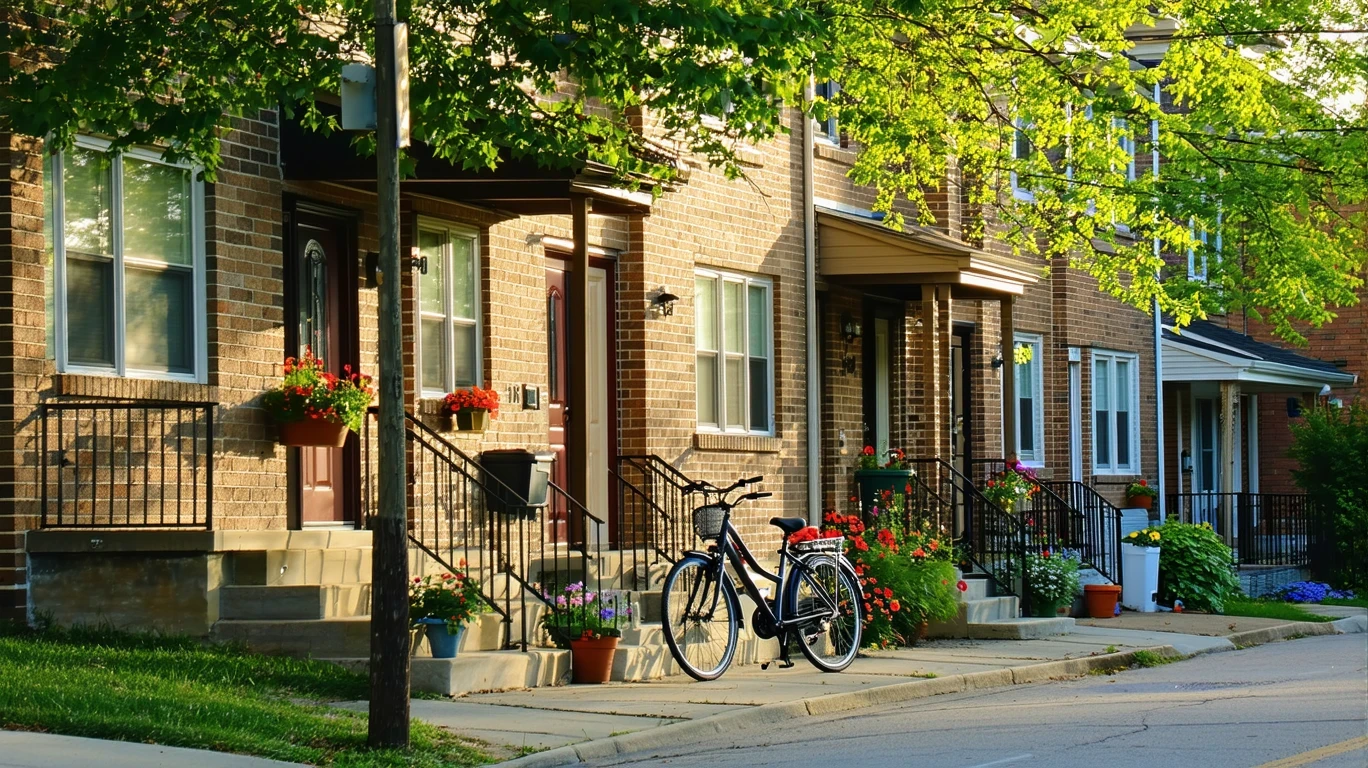
Louisville reports a median home value of $13,000 and median gross rent of $789 per month, figures that suggest either highly localized data or a snapshot of specific housing stock rather than the broader market. St Matthews housing data is not available in the same form, but the experiential signals reveal a low-rise, mixed-use environment with both residential and commercial land use present. This suggests a suburban structure where single-family homes and smaller apartment complexes dominate, rather than high-density multifamily buildings.
The housing difference between these cities is less about price points and more about form and access. St Matthews’ low-rise character typically means fewer large apartment complexes and more detached or attached single-family options, which can shift cost pressure toward down payments, maintenance, and yard upkeep rather than monthly rent predictability. Louisville’s more vertical profile suggests a wider range of apartment sizes and layouts, which can offer more flexibility for renters but may also introduce variability in rent renewals, parking fees, and building amenities that aren’t always optional.
For renters, Louisville’s corridor-clustered grocery access and rail transit may reduce the need to live in the most expensive neighborhoods to stay connected, while St Matthews’ broadly accessible groceries mean less geographic constraint but potentially more reliance on car-accessible housing. For first-time buyers, the low-rise form in St Matthews may mean competing for a smaller pool of starter homes, while Louisville’s mix of building heights could offer more condo or townhome entry points. Families prioritizing space may find St Matthews’ suburban structure more aligned with larger lots and detached homes, while those prioritizing walkability and transit access may find Louisville’s urban form reduces the need for a second car, indirectly offsetting housing costs.
Housing takeaway: St Matthews concentrates housing pressure in access and competition for low-rise stock, favoring households that prioritize space and can absorb car dependency. Louisville spreads pressure across rent variability and parking logistics but offers more housing form diversity, favoring households that value transit access and can tolerate denser living.
Utilities and Energy Costs
Both St Matthews and Louisville share identical utility rates: electricity at 13.42¢/kWh and natural gas at $14.45/MCF. This eliminates rate-based differences and shifts the comparison entirely to usage patterns, housing stock, and seasonal exposure. Kentucky’s climate brings hot, humid summers and cold winters, meaning both cooling and heating seasons drive meaningful utility costs. The difference between these cities lies in how housing form and density affect consumption, not in what residents pay per unit.
St Matthews’ low-rise housing stock—predominantly single-family homes—tends to increase heating and cooling exposure compared to apartments or townhomes, where shared walls reduce surface area loss. Older single-family homes, common in suburban areas, may also lack modern insulation or efficient HVAC systems, amplifying seasonal swings. Families in detached homes should expect higher baseline usage during summer cooling months and winter heating periods, with less ability to offset costs through shared infrastructure. Apartments in St Matthews, where present, may offer more predictable utility bills due to smaller square footage and reduced exposure.
Louisville’s more vertical urban form introduces more multifamily housing, where utility costs per household often run lower due to smaller unit sizes and shared building systems. However, older apartment buildings in denser areas may pass through higher water, trash, or common-area energy costs, and renters may face less control over thermostat settings or window efficiency. Households in Louisville’s walkable pockets may also spend less time driving, indirectly reducing transportation energy costs, though this doesn’t appear on the utility bill itself.
For single adults or couples in smaller apartments, Louisville’s denser housing stock may deliver more predictable utility expenses with lower seasonal peaks. For families in larger homes, St Matthews’ suburban form increases exposure to heating and cooling volatility, especially in older construction. Households sensitive to unpredictable bills may prefer Louisville’s multifamily options, while those prioritizing space and control over home systems may accept St Matthews’ higher but more controllable usage.
Utility takeaway: St Matthews increases utility exposure through larger, detached housing stock, favoring households that value space and can absorb seasonal variability. Louisville reduces per-household usage through denser, vertical housing but may introduce less control over building-level costs, favoring smaller households prioritizing predictability over square footage.
Groceries and Daily Expenses

Grocery costs in both cities reflect the same regional price environment, with derived estimates showing bread at $1.43/lb, ground beef at $5.29/lb, and eggs at $1.85/dozen. These figures are modeled from national baselines adjusted for Kentucky’s below-average regional price parity and are not observed local prices. The meaningful difference between St Matthews and Louisville isn’t in what items cost, but in how access, convenience, and shopping patterns shape daily spending behavior.
St Matthews shows broadly accessible food and grocery density, meaning options are distributed throughout the city rather than concentrated along a few corridors. This reduces the need to plan trips around specific stores or make longer drives to access affordable options, lowering both time friction and the temptation to rely on convenience purchases when the preferred store isn’t nearby. Households that cook frequently or manage larger grocery volumes benefit from this distribution, as it supports more flexible shopping schedules and reduces the likelihood of paying premium prices at the closest option.
Louisville’s corridor-clustered grocery access means food and grocery options concentrate along specific routes, with high food density but medium grocery density. This can work well for households whose commute or daily routine already passes through these corridors, but it may increase errand friction for those living outside them. The tradeoff often shows up in convenience spending: grabbing takeout or prepared foods because the grocery store isn’t on the way home, or making fewer, larger shopping trips that require more planning and storage space.
For single adults or couples with flexible schedules, Louisville’s clustered access may feel seamless if they live or work near the right corridors, and the higher food density supports more dining-out options without driving far. For families managing weekly grocery hauls, St Matthews’ broadly accessible distribution reduces logistical complexity and the risk of convenience creep when time is tight. Households sensitive to impulse spending may find St Matthews’ structure more forgiving, while those who value walkable dining and café culture may prefer Louisville’s concentrated food density.
Grocery takeaway: St Matthews reduces errand friction and convenience spending risk through broadly distributed grocery access, favoring families and planners. Louisville concentrates food and dining options along corridors, favoring singles and couples whose routines align with those routes but increasing friction for others.
Taxes and Fees
Kentucky’s tax structure applies uniformly across both cities at the state level, but local property taxes, service fees, and HOA prevalence can vary significantly based on housing type and neighborhood. St Matthews’ low-rise, suburban form often correlates with higher property tax exposure per household, as single-family homes typically carry higher assessed values than individual apartment units. Homeowners in St Matthews should anticipate property taxes as a recurring, predictable cost that scales with home value, along with potential HOA fees in newer subdivisions that may bundle landscaping, trash, or neighborhood amenities.
Louisville’s more vertical, mixed-use structure shifts some tax and fee pressure away from individual property owners and toward building-level assessments or landlord pass-throughs. Renters in Louisville may see fewer direct tax bills but could face higher rent to cover landlord property tax obligations, along with building fees for parking, trash, water, or shared amenities. Condos and townhomes in Louisville may carry HOA fees that cover exterior maintenance and shared systems, reducing direct upkeep costs but introducing less flexibility over spending decisions.
For long-term homeowners, St Matthews’ property tax structure offers more predictability and control, as taxes are tied directly to assessed value and don’t fluctuate with landlord decisions or building budgets. For renters or recent movers, Louisville’s structure may feel simpler in the short term, with fewer separate bills, but offers less visibility into how taxes and fees are allocated. Households planning to stay several years should consider whether they prefer direct control over property tax payments and home maintenance (St Matthews) or bundled, landlord-managed obligations with less decision-making friction (Louisville).
Tax and fee takeaway: St Matthews concentrates tax and fee exposure in property taxes and HOA obligations, favoring homeowners who value control and predictability. Louisville distributes fees through rent and building-level assessments, favoring renters and short-term residents who prefer fewer separate bills but less transparency.
Transportation & Commute Reality
St Matthews shows walkable pockets with a high pedestrian-to-road ratio and bus service present, while Louisville shows walkable pockets with rail transit and notable bike infrastructure. Both cities support some level of non-car mobility, but the depth and reach of that infrastructure differ meaningfully. Gas prices sit at $4.15/gallon in both cities, so the cost difference comes down to how often households must drive, how far, and whether alternatives exist for daily errands or commuting.
St Matthews’ bus-only transit and medium bike-to-road ratio suggest that while walking is viable in certain areas, most households still rely on cars for grocery runs, medical appointments, and commuting beyond the immediate neighborhood. The broadly accessible grocery distribution helps reduce trip frequency, but the lack of rail transit means longer commutes to Louisville’s job centers or regional destinations require personal vehicles. Households with one car may find this manageable if work-from-home schedules or flexible hours reduce daily commute pressure, but two-car households are common here, and that doubles insurance, maintenance, and fuel exposure.
Louisville’s rail transit and high bike-to-road ratio expand mobility options significantly, especially for households living near transit corridors or within biking distance of work, groceries, or schools. The more vertical urban form concentrates destinations, making shorter trips more feasible without a car. However, corridor-clustered grocery access means households living outside those corridors may still need a car for weekly shopping, and parking costs in denser areas can add friction that doesn’t exist in St Matthews’ suburban layout. Families with school-age children may find Louisville’s transit useful for older kids gaining independence, while St Matthews’ car-dependent structure requires more parental logistics.
For single adults or couples working in Louisville’s urban core, rail transit and bike infrastructure can eliminate the need for a second car or reduce commuting stress, indirectly lowering transportation costs despite similar gas prices. For families managing multiple schedules across schools, activities, and work, St Matthews’ car-oriented structure may feel simpler but locks in higher fuel, insurance, and maintenance exposure. Households sensitive to commute time versus commute cost should weigh whether Louisville’s transit access offsets parking and density friction, or whether St Matthews’ suburban predictability justifies the car dependency.
Cost Structure Comparison
Housing pressure behaves differently in each city, even within the same metro. St Matthews concentrates cost in access to low-rise, single-family stock, where competition for detached homes and limited apartment inventory can create entry barriers for renters and first-time buyers. Louisville spreads housing pressure across a wider range of forms—apartments, condos, townhomes—offering more entry points but introducing variability in rent renewals, parking fees, and building-level costs. Renters prioritizing flexibility may find Louisville’s options more forgiving, while buyers seeking space and control may prefer St Matthews despite tighter inventory.
Utilities introduce more volatility in St Matthews due to larger, detached housing stock that amplifies heating and cooling exposure. Louisville’s denser, vertical housing reduces per-household usage but may pass through building-level costs that renters can’t control. Families in older single-family homes should expect seasonal swings in St Matthews, while smaller households in Louisville apartments may see more predictable bills with lower peaks. The difference isn’t in rates—it’s in how housing form translates energy consumption into monthly obligations.
Daily living costs shift based on access structure. St Matthews’ broadly accessible groceries reduce errand friction and convenience spending risk, favoring households that cook frequently or manage larger volumes. Louisville’s corridor-clustered food and grocery density works well for those whose routines align with those corridors but can increase takeout or prepared food spending when the store isn’t on the way. Singles and couples may not feel this difference as acutely, but families managing weekly shopping and meal planning will notice the logistical gap.
Transportation patterns matter more in Louisville, where rail transit and bike infrastructure can genuinely reduce car dependency for households living near the right corridors. St Matthews’ bus-only service and walkable pockets help, but most households still need at least one car, and many need two. The $4.15/gallon gas price hits both cities equally, but the frequency and distance of trips differ. Households sensitive to commute friction versus commute cost should weigh whether Louisville’s transit access offsets parking and density challenges, or whether St Matthews’ suburban predictability justifies the fuel and insurance exposure.
The better choice depends on which costs dominate your household. For renters prioritizing transit access and lower utility bills, Louisville’s denser form and rail service may reduce overall friction despite corridor-clustered groceries. For families prioritizing space, hospital access, and errand convenience, St Matthews’ suburban structure may justify higher utility exposure and car dependency. Households sensitive to predictability may prefer St Matthews’ direct control over housing and transportation, while those valuing flexibility and mobility options may find Louisville’s infrastructure worth the tradeoff in density and parking logistics.
How the Same Income Feels in St Matthews vs Louisville
Single Adult
In St Matthews, housing access becomes the first non-negotiable, as low-rise inventory limits apartment options and pushes many singles toward renting older single-family homes or splitting costs with roommates. Flexibility exists in grocery spending due to broadly accessible options, but car ownership is nearly mandatory, locking in insurance and fuel costs. In Louisville, rail transit and walkable corridors allow some singles to skip car ownership entirely, freeing up cash for rent in denser areas, though corridor-clustered groceries may increase convenience spending if the store isn’t on the commute route. The tradeoff is between St Matthews’ space and predictability versus Louisville’s transit access and mobility flexibility.
Dual-Income Couple
In St Matthews, couples face front-loaded pressure in securing housing that fits two work schedules, often requiring two cars if commutes diverge, which doubles transportation exposure. Flexibility appears in utility management if they choose a smaller home or newer construction, and grocery access reduces errand friction for shared meal planning. In Louisville, couples can leverage rail transit to reduce car dependency if both work near transit corridors, lowering transportation costs but introducing parking logistics if one partner still drives. The role of housing form matters more here: denser apartments reduce utility exposure but may feel tighter for couples working from home or managing different schedules.
Family with Kids
In St Matthews, families encounter non-negotiable costs in housing space and car dependency, as school drop-offs, activities, and grocery runs require reliable vehicles and larger homes with yards. Flexibility exists in choosing between newer subdivisions with HOA-managed services or older homes with lower property taxes but higher maintenance. In Louisville, families gain access to rail transit for older kids and integrated parks for outdoor recreation, but corridor-clustered groceries increase logistical complexity for weekly shopping. The time cost versus cash cost tradeoff becomes acute: St Matthews demands more driving but offers simpler errands, while Louisville reduces car dependency but requires more planning around transit schedules and grocery access.
Decision Matrix: Which City Fits Which Household?
| Decision factor | If you’re sensitive to this… | St Matthews tends to fit when… | Louisville tends to fit when… |
|---|---|---|---|
| Housing entry + space needs | You prioritize detached homes, yards, and control over housing form | You can absorb competition for low-rise stock and accept limited apartment inventory | You value housing form diversity and can tolerate denser living with less outdoor space |
| Transportation dependence + commute friction | You want to minimize car ownership or reduce commute stress | You accept car dependency and prefer suburban predictability over transit logistics | You live near transit corridors and can leverage rail or bike infrastructure daily |
| Utility variability + home size exposure | You want predictable bills or lower seasonal peaks | You prioritize space and control over home systems despite higher heating and cooling exposure | You prefer smaller units with lower usage even if building-level costs reduce control |
| Grocery strategy + convenience spending creep | You cook frequently and manage larger grocery volumes | You value broadly accessible options that reduce errand friction and impulse spending | Your routine aligns with corridor-clustered access and you can absorb convenience costs when needed |
| Fees + friction costs (HOA, services, upkeep) | You want direct control over property taxes and maintenance decisions | You prefer predictable, owner-managed obligations over landlord pass-throughs | You value bundled, building-managed services even with less transparency |
| Time budget (schedule flexibility, errands, logistics) | You need to minimize planning complexity and errand coordination | You can absorb car dependency in exchange for simpler grocery and service access | You can plan around transit schedules and corridor-clustered errands for mobility flexibility |
Lifestyle Fit
St Matthews and Louisville offer distinct lifestyle textures shaped by urban form, mobility infrastructure, and access patterns. St Matthews’ low-rise, suburban structure supports a quieter, more car-oriented rhythm where errands, medical appointments, and social activities typically require driving but benefit from broadly accessible grocery options and on-site hospital access. Louisville’s more vertical, mixed-use environment concentrates activity along walkable corridors and transit routes, making it easier to run errands on foot or by bike if you live near the right areas, though this comes with denser living and more logistical planning around parking and transit schedules.
For families, St Matthews’ medium school density and present family infrastructure suggest a suburban environment where kids’ activities, school drop-offs, and playdates are car-dependent but predictable. Louisville’s integrated parks and rail transit offer more outdoor recreation options and the possibility of older kids using public transit independently, though lower playground density and corridor-clustered grocery access may increase coordination complexity for parents managing multiple schedules. Singles and couples may find Louisville’s walkable pockets and notable bike infrastructure more aligned with active, urban lifestyles, while those prioritizing space, quiet, and hospital proximity may prefer St Matthews’ suburban predictability.
Cultural and recreational differences emerge from infrastructure. Louisville’s rail transit and high park density support spontaneous outings, outdoor exercise, and social activities that don’t require driving, while St Matthews’ bus-only service and present green space still offer outdoor access but with less density and more reliance on personal vehicles. Both cities benefit from Kentucky’s moderate climate, with warm summers and cold winters shaping outdoor activity patterns and utility exposure similarly. The lifestyle tradeoff isn’t about climate—it’s about whether you value the flexibility of transit and walkable corridors (Louisville) or the simplicity of car-oriented access and lower-density living (St Matthews).
St Matthews hospital access: Hospital facility present on-site, reducing emergency travel time and specialist appointment logistics.
Louisville park density: Integrated green space with water features detected, supporting outdoor recreation and walkable access to nature.
Frequently Asked Questions
Is St Matthews or Louisville cheaper for renters in 2026?
The cost difference for renters depends more on housing form and access than on price alone. Louisville reports median gross rent of $789 per month and offers more apartment inventory due to its vertical urban form, which may provide more entry points and flexibility. St Matthews lacks comparable rent data, but its low-rise structure suggests fewer large apartment complexes and more single-family rentals, which can shift cost pressure toward utilities and car dependency. Renters prioritizing transit access and lower utility bills may find Louisville’s denser housing more manageable, while those seeking space and quieter surroundings may prefer St Matthews despite potentially higher transportation costs.
How do transportation costs differ between St Matthews and Louisville in 2026?
Both cities share the same $4.15/gallon gas price, so transportation cost differences come down to how often you drive and whether alternatives exist. St Matthews offers walkable pockets and bus service but remains largely car-dependent, especially for families managing school, work, and errands. Louisville’s rail transit and notable bike infrastructure allow some households to reduce or eliminate car ownership if they live near transit corridors, lowering fuel, insurance, and maintenance exposure. The tradeoff is between St Matthews’ suburban predictability with higher car dependency and Louisville’s transit access with parking and density logistics.
Which city has lower utility bills, St Matthews or Louisville?
Both cities share identical electricity rates (13.42¢/kWh) and natural gas prices ($14.45/MCF), so utility cost differences come from housing form and usage patterns, not rates. St Matthews’ low-rise, single-family housing stock typically increases heating and cooling exposure due to larger square footage and more exterior surface area, leading to higher seasonal bills. Louisville’s more vertical, multifamily housing reduces per-household usage through smaller units and shared walls, offering more predictable bills with lower peaks. Families in detached homes should expect higher utility exposure in St Matthews, while smaller households in Louisville apartments may see lower overall usage.
Are groceries more expensive in St Matthews or Louisville in 2026?
Grocery prices reflect the same regional price environment in both cities, with derived estimates showing bread at $1.43/lb and ground beef at $5.29/lb (modeled from national baselines, not observed local prices). The meaningful difference is access structure, not item cost. St Matthews offers broadly accessible grocery density, reducing errand friction and convenience spending risk for households that cook frequently. Louisville’s corridor-clustered grocery access works well if your routine aligns with those corridors but may increase takeout or prepared food spending when the store isn’t on the way. Families managing weekly shopping may find St Matthews’ distribution more forgiving, while singles and couples near Louisville’s corridors may not notice the difference.
Which city is better for families, St Matthews or Louisville, in 2026?
The better city for families depends on which cost pressures and logistics matter most to your household. St Matthews offers low-rise housing with more space, hospital access on-site, and broadly accessible groceries, but requires car dependency for school, activities, and errands. Louisville provides rail transit for older kids, integrated parks for outdoor recreation, and more housing form diversity, but corridor-clustered groceries and denser living increase coordination complexity. Families prioritizing space, quiet, and simpler errands may prefer St Matthews, while those valuing transit access, outdoor recreation, and mobility flexibility may find Louisville’s infrastructure worth the tradeoff in density and planning.
Conclusion
St Matthews and Louisville sit in the same metro, share the same utility rates and regional price environment, yet deliver fundamentally different cost experiences in 2026. St Matthews concentrates pressure in housing access, car dependency, and utility exposure through its low-rise, suburban structure, but offsets that with broadly accessible groceries, hospital proximity, and predictable errand logistics. Louisville spreads cost across denser housing, transit and parking friction, and corridor-clustered groceries, but rewards households that can leverage rail transit, bike infrastructure, and integrated parks to reduce car ownership and outdoor access costs. Neither city is universally cheaper—each fits different household types based on which costs dominate your budget and which tradeoffs you can absorb.
For renters prioritizing transit access and lower utility bills, Louisville’s vertical housing and rail service reduce car dependency and per-household energy usage, though corridor-clustered groceries may increase convenience spending. For families seeking space, hospital access, and simpler errands, St Matthews’ suburban form justifies higher utility exposure and car dependency through predictability and control. Singles and couples with flexible schedules may find Louisville’s walkable corridors and bike infrastructure more aligned with active lifestyles, while those prioritizing quiet, low-density living may prefer St Matthews’ car-oriented rhythm. The decision comes down to whether you value front-loaded housing and transportation costs with suburban predictability (St Matthews) or distributed costs across transit, parking, and density logistics with urban flexibility (Louisville). Both cities offer viable paths—understanding where cost pressure shows up helps you choose the one that fits your household’s income, schedule, and tolerance for variability.
How this article was built: In addition to public economic data, this article incorporates location-based experiential signals derived from anonymized geographic patterns—such as access density, walkability, and land-use mix—to reflect how day-to-day living actually feels in St Matthews, KY.