
Is Schertz the kind of place you grow roots—or just pass through? That question cuts to the heart of what living here actually feels like. Schertz sits northeast of San Antonio, caught in the middle of a familiar suburban tension: it’s shedding its small-town skin while trying to hold onto the things that made it feel like home in the first place. For some, that evolution feels exciting—new restaurants, better parks, more options. For others, it feels like watching something slip away. Understanding whether Schertz fits you means understanding which side of that tradeoff feels more like opportunity and which feels more like loss.
The Emotional Landscape of Schertz
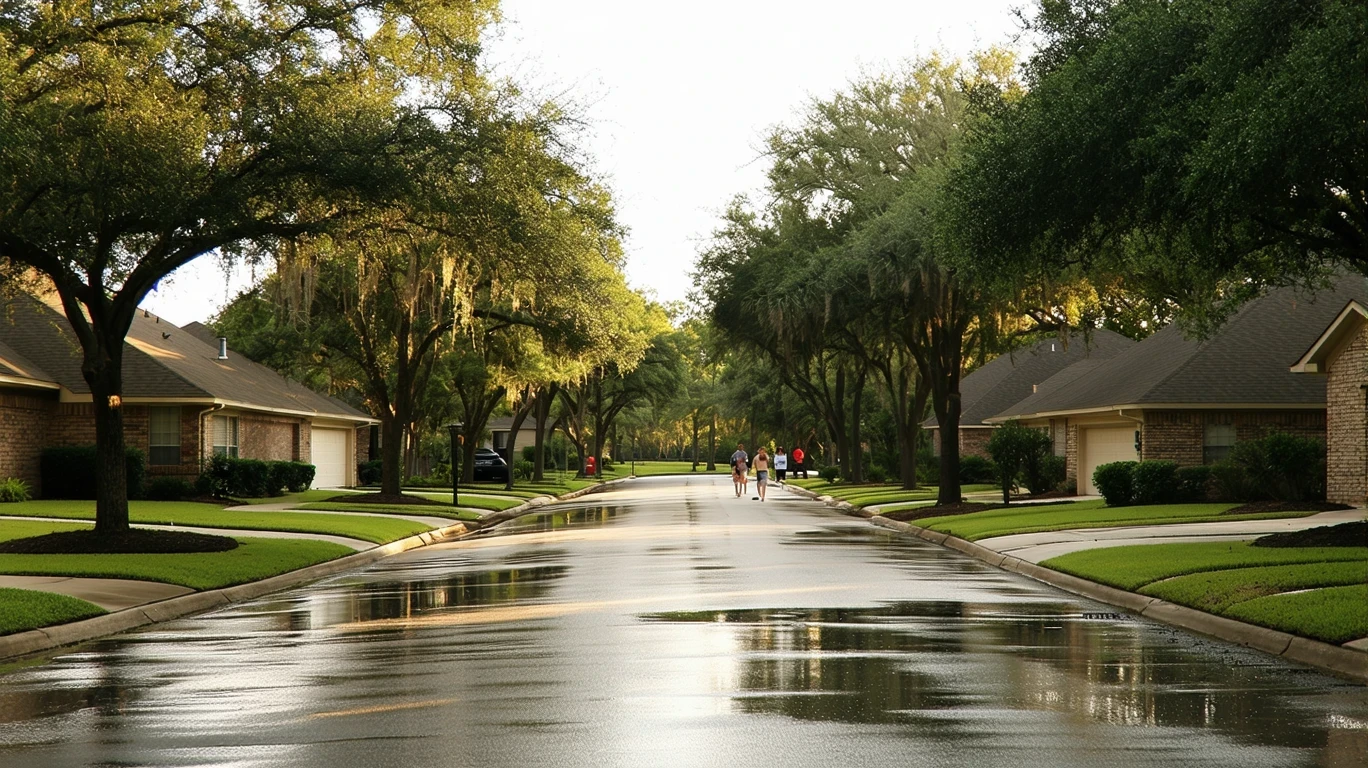
Schertz tends to work best for people who want suburban comfort, outdoor access, and a slower pace without paying premium prices for San Antonio’s inner neighborhoods. The city offers strong park density and water features that create genuine lifestyle satisfaction—places where families can spend weekend mornings without driving far or spending much. The pedestrian-to-road ratio in certain pockets supports walking, but food and grocery options cluster along corridors rather than spreading evenly across neighborhoods. That means errands often require planning and a car, even if your own street feels walkable.
What keeps coming up emotionally is the gap between “family-friendly reputation” and “family infrastructure visibility.” School density sits below typical thresholds, and while healthcare access includes a hospital, the overall texture feels more like a place families move to for space and value than for walkable school zones or hyperlocal convenience. The building profile stays low-rise, and land use mixes residential and commercial, but the layout rewards those who think in terms of weekly grocery runs and weekend park visits—not daily strolls to coffee or spontaneous errands on foot.
People who feel at home here tend to be those who wanted exactly this: a place that doesn’t demand constant stimulation, where you can afford a yard, where your kids can bike to a park, and where you’re not paying for walkability you didn’t want anyway. People who feel restless tend to be those who assumed “San Antonio suburb” would mean more dining variety, easier access to culture, or neighborhoods that feel less car-dependent throughout.
What People Are Talking About Online
Conversations in local Facebook groups and regional subreddits tend to circle around a few recurring themes: growth, traffic, parks, and the question of what Schertz is becoming. There’s pride mixed with protectiveness, optimism mixed with fatigue.
“We moved here because it felt like a real neighborhood, not just another cookie-cutter suburb. But now it’s starting to feel like everywhere else.”
“The parks are honestly some of the best around. We’re out there every weekend, and it never feels crowded or run-down.”
“I love that it’s quiet and affordable, but I wish there were more local spots—places that aren’t chains, you know?”
The tone isn’t angry, but it’s not uncomplicated either. People appreciate what they have, but they’re also watching it change faster than they expected. Growth gets framed as both progress and intrusion, depending on whether you’re new or established, whether you wanted more amenities or more continuity.
How Local Coverage Frames the City
Local news and community coverage tend to focus on infrastructure, identity, and the mechanics of managing growth. Headlines don’t declare crises, but they do reflect ongoing negotiation:
- “Community Debates What Growth Should Look Like”
- “New Retail and Dining Options Arrive Along Major Corridors”
- “Residents Weigh Convenience Against Quiet”
- “Schertz Expands Park Access as Population Grows”
- “Commuters Navigate Changing Traffic Patterns”
The framing is less about celebration or alarm and more about adjustment. The city is in transition, and the coverage reflects that—stories about what’s opening, what’s being debated, what’s being preserved. It’s the kind of tone that fits a place trying to figure out its next chapter without losing the plot entirely.
What Reviews and Public Perception Reveal
On platforms like Google, Yelp, and Nextdoor-style forums, Schertz gets praised for things that matter to suburban households: safety, parks, value, and a sense of order. It gets critiqued for things that matter to people who wanted more texture: dining sameness, car dependency for errands, and limited nightlife or cultural variety.
Newer planned areas tend to get described as clean, family-friendly, and well-maintained—but also a bit sterile. Older pockets get described as more established and neighborly, though sometimes lacking the amenities that newer sections enjoy. The common thread is expectation matching: people who wanted suburban predictability tend to be pleased; people who wanted walkable spontaneity or urban energy tend to be disappointed.
Parks and outdoor spaces come up again and again as a genuine strength. Families talk about spending entire afternoons at local parks without needing to drive to San Antonio. That access feels integrated into daily life, not like a special occasion. On the other hand, day-to-day costs tied to driving—gas, maintenance, time—come up as a friction point for households that underestimated how much of their routine would require a car.
How Schertz Compares to Nearby Cities
| Dimension | Schertz | Cibolo | New Braunfels |
|---|---|---|---|
| Overall Vibe | Suburban comfort, growth in transition | Quieter, more residential, less retail | More established, tourist-adjacent, livelier downtown |
| Walkability Feel | Pockets of pedestrian infrastructure, corridor-dependent errands | Minimal walkable texture, car-first layout | Stronger downtown walkability, mixed elsewhere |
| Dining and Retail | Chain-heavy, growing but predictable | Very limited, mostly chains | More variety, local spots, tourist influence |
| Outdoor Access | Strong park density, water features | Good parks, less dense | River access, tourism-driven outdoor culture |
| Commute Tradeoff | 30-minute average to San Antonio, nearly half face long commutes | Similar commute profile, fewer job options locally | Slightly farther from San Antonio, more local employment |
Schertz sits in the middle emotionally: it’s more developed than Cibolo but less textured than New Braunfels. If you want maximum quiet and don’t mind limited retail, Cibolo might feel more aligned. If you want a livelier downtown, more dining variety, and don’t mind tourist traffic, New Braunfels might feel more complete. Schertz works for people who want suburban ease, strong outdoor access, and housing tradeoffs that favor space and value over walkable spontaneity or cultural density.
Voices from Daily Life in Schertz
“We wanted a place where our kids could ride bikes safely and we could actually afford a house with a yard. Schertz checked those boxes. The parks are fantastic, and we don’t feel like we’re constantly scraping by.”
“I work remotely, and honestly, the lack of walkable coffee shops or coworking spaces gets old. I end up driving to San Antonio more than I thought I would just to feel like I’m around people.”
“It’s not flashy, but it’s stable. Good schools, low crime, people take care of their homes. That’s what we were looking for.”
“The commute wears on you. Thirty minutes doesn’t sound bad until you’re doing it twice a day, five days a week, and traffic on 35 is unpredictable.”
“We love that it’s growing—new restaurants, better shopping. But I do miss when it felt smaller, when you’d run into neighbors at the grocery store and it felt like a real community.”
“If you’re expecting walkable neighborhoods or a vibrant nightlife scene, you’ll be frustrated. But if you want space, quiet, and access to San Antonio when you need it, it’s a solid choice.”
“The outdoor access is no joke. We’re at the park or on a trail almost every weekend. That alone makes it worth it for us.”
Does Schertz Feel Like a Good Fit?
Schertz doesn’t try to be everything. It works for people who want suburban predictability, strong outdoor access, and lifestyle needs that prioritize space and value over walkability or cultural density. It frustrates people who wanted more spontaneous errands, more dining variety, or neighborhoods that feel less car-dependent throughout. The city is in transition—growing, adding amenities, adjusting its identity—and how that feels depends entirely on what you were hoping to find.
If you value parks, affordability relative to San Antonio, and a low-rise suburban feel, Schertz tends to deliver. If you value walkable texture, hyperlocal convenience, or vibrant nightlife without a drive, it tends to disappoint. The question isn’t whether Schertz is happy—it’s whether the tradeoffs it offers match the life you’re trying to build.
How this article was built: In addition to public economic data, this article incorporates location-based experiential signals derived from anonymized geographic patterns—such as access density, walkability, and land-use mix—to reflect how day-to-day living actually feels in Schertz, TX.
The perspectives shown reflect commonly expressed local sentiment and recurring themes in public discussion, rather than individual accounts.