
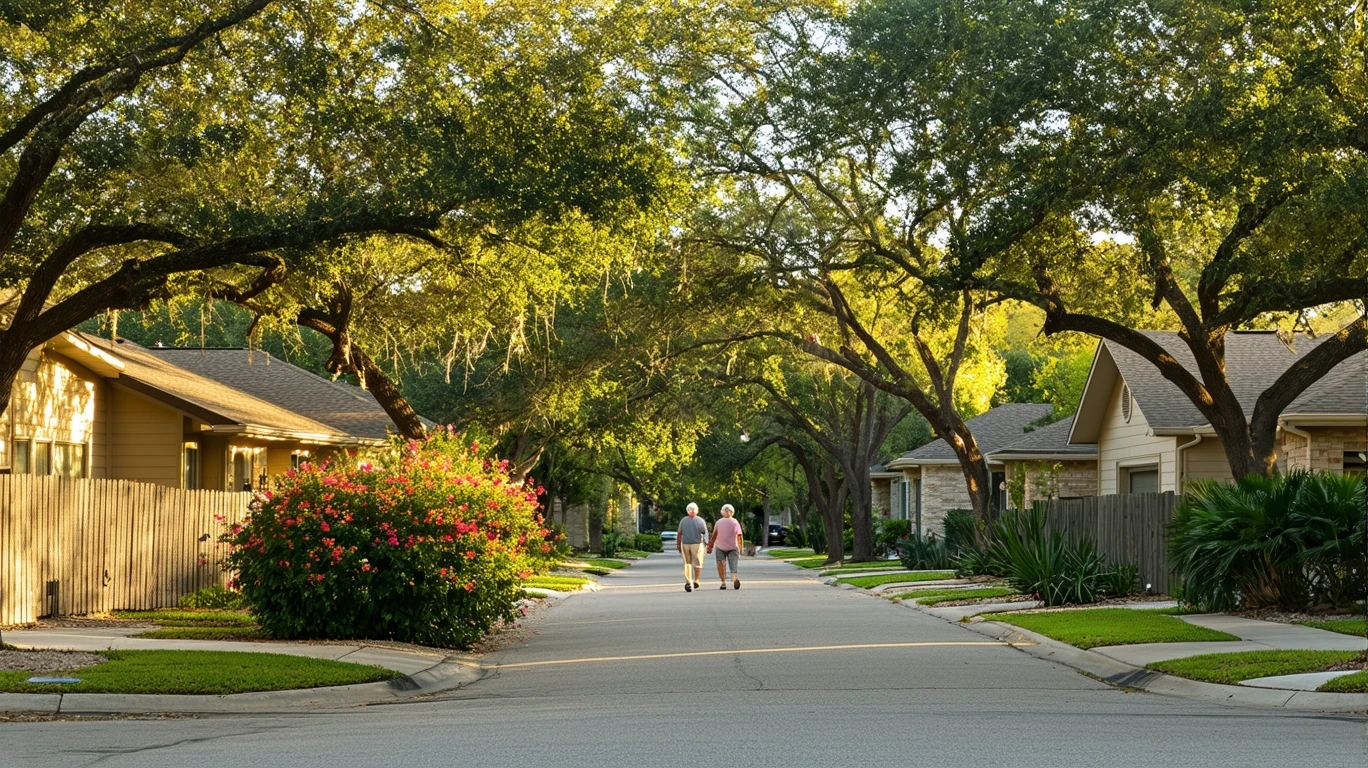
Why Retirees Choose San Antonio
What makes a city truly retirement-ready—and does San Antonio deliver on the promise? For many retirees, the answer comes down to a combination of healthcare infrastructure, cost structure, climate, and the ability to maintain independence without constant car dependency. San Antonio scores well on several of these fronts, earning a retirement suitability score of 78 out of 100. That rating reflects strong healthcare access with hospital facilities and pharmacies present, an integrated park system that supports active outdoor living, rail transit that reduces the need for daily driving, and housing costs that sit below the national baseline. The warm climate eliminates winter ice hazards, and the city’s mixed urban form—with walkable pockets and both residential and commercial land use—creates options for aging in place without requiring a move to a specialized facility.
San Antonio’s appeal isn’t just theoretical. The city has been recognized as a retirement destination for years, and the infrastructure shows it. Hospital presence means access to specialists and emergency care without long drives. The park density exceeds high thresholds, offering green space for walking, social groups, and outdoor exercise. Rail service provides an alternative to driving for errands and appointments, which becomes increasingly important as reflexes slow or night driving becomes uncomfortable. And because the regional price parity index sits at 95—five points below the national average—retirees stretching fixed incomes find that dollars go further here than in many comparable metros.
The extended cooling season does mean higher summer utility exposure, and the intensity of triple-digit heat requires adjusting outdoor schedules to early mornings or evenings. Errands and grocery options cluster along corridors rather than spreading evenly across neighborhoods, so some planning is necessary. But for retirees prioritizing healthcare access, cost predictability, and the ability to stay active year-round, San Antonio offers a compelling combination that’s hard to replicate in higher-cost sunbelt markets.
Healthcare Access for Seniors
Healthcare infrastructure is non-negotiable for retirees, and San Antonio delivers hospital presence, pharmacy access, and the density of clinical services that support aging populations. The city’s hospital facilities handle everything from routine procedures to specialist care, and the presence of pharmacies throughout the area means prescription access doesn’t require long drives or special trips. For seniors managing chronic conditions—diabetes, heart disease, arthritis—this infrastructure reduces friction and keeps care local.
Drive times to major medical centers remain manageable because the city’s layout includes both vertical development and mixed land use, concentrating services rather than scattering them across sprawling suburbs. Urgent care facilities supplement hospital emergency rooms, offering faster service for non-critical issues like minor injuries, infections, or medication adjustments. Physical therapy, cardiology, and orthopedic specialists operate within the metro, and Medicare acceptance rates are strong across providers. This isn’t a market where seniors struggle to find in-network care or face months-long waits for routine appointments.
The rail transit system also plays a role in healthcare access. For seniors who’ve stopped driving or prefer not to navigate traffic during peak hours, rail service connects residential areas to medical districts. That reduces reliance on family members for rides and preserves independence longer. Prescription delivery services have expanded in recent years, but the density of local pharmacies means most retirees can still walk or take a short trip to pick up medications, maintaining the social interaction and routine that supports mental health.
Senior-Friendly Amenities and Services
San Antonio’s amenity structure reflects its role as a retirement city. Senior centers operate throughout the metro, offering everything from fitness classes and health screenings to social events and volunteer coordination. Adult day programs provide respite for caregivers and structured activity for seniors with cognitive or mobility limitations. Recreational facilities—many located within the integrated park system—host walking groups, tai chi classes, and seasonal events that keep retirees engaged without requiring expensive memberships or long commutes.
Transportation options extend beyond personal vehicles. The rail system serves key corridors, and bus service covers areas where rail doesn’t reach. Some senior centers and nonprofit organizations operate shuttle services for grocery trips, medical appointments, and social outings, reducing isolation for those who no longer drive. Ride services—both app-based and traditional taxi companies—are widely available, though costs add up quickly for frequent users. The walkable pockets identified in the city’s infrastructure mean that some neighborhoods support car-light living, with grocery stores, pharmacies, and restaurants accessible on foot or via short transit trips.
Shopping accessibility varies by neighborhood. Food and grocery options cluster along commercial corridors, so retirees living in purely residential areas may need to plan trips rather than walking to the corner store. Grocery delivery has become standard across major chains, and meal programs—both nonprofit and commercial—serve seniors who find cooking burdensome or unsafe. Libraries offer more than books; many host technology classes, book clubs, and community events that provide low-cost social opportunities. Community colleges welcome older learners through lifelong learning programs, covering everything from art and history to practical skills like smartphone navigation or financial planning.
Cost of Living for Retirees
Housing costs anchor retirement budgets, and San Antonio’s median home value of $198,000 sits well below comparable sunbelt metros. For retirees downsizing from larger homes or relocating from higher-cost markets, that figure translates to lower property tax bills, reduced maintenance expenses, and the ability to buy outright or carry smaller mortgages. Condos and townhomes in 55+ communities typically price higher per square foot but include amenities like lawn care, exterior maintenance, and social programming that reduce both labor and isolation. Single-family homes in established neighborhoods offer more space and privacy, though upkeep responsibilities increase.
Renters face a median gross rent of $1,189 per month, which includes some utilities in many complexes but rarely covers electricity in a climate with extended cooling demands. Senior apartments and age-restricted communities may offer slightly lower rents in exchange for income verification or reduced amenities. Property taxes in Texas carry weight because the state relies on them in the absence of income tax. Senior exemptions and deferrals exist, but the specifics vary by county and require proactive application—this isn’t automatic relief, and retirees should verify eligibility and filing deadlines before assuming savings.
Utility costs fluctuate with season and usage. Electricity rates sit at 15.69¢ per kWh, and typical household usage of around 1,000 kWh per month would result in roughly $157 in electricity costs before fees and taxes during moderate months. Summer months drive usage higher as air conditioning runs continuously through triple-digit heat, while winter heating needs remain modest given the warm climate. Natural gas, priced at $16.51 per MCF, supports water heating and cooking in many homes, adding another modest line item. Some utility providers offer senior rate programs or budget billing that smooths seasonal spikes, reducing the risk of surprise bills during peak cooling months.
Texas does not tax Social Security income, pension distributions, or retirement account withdrawals, which preserves more of fixed income compared to states with broad income taxes. However, property and sales taxes offset some of that advantage, and retirees should model total tax exposure rather than focusing on income tax alone. Medicare supplement costs vary by plan and provider, but the competitive insurance market in Texas keeps premiums relatively accessible. Prescription drug costs depend on coverage, formularies, and whether medications are generic or brand-name, but the presence of multiple pharmacy chains and discount programs provides leverage for cost-conscious seniors.
Monthly Retirement Budget in San Antonio
Here’s what a typical monthly retirement budget might look like in San Antonio:
| Category | Modest Lifestyle | Comfortable Lifestyle |
|---|---|---|
| Housing (mortgage/rent + insurance) | $1,100 | $1,600 |
| Utilities (electric, gas, water, internet) | $220 | $260 |
| Healthcare (premiums, copays, Rx) | $400 | $550 |
| Food (groceries + occasional dining) | $350 | $500 |
| Transportation (car/transit, fuel, maintenance) | $250 | $350 |
| Entertainment (hobbies, travel, social) | $150 | $400 |
| Miscellaneous (clothing, personal care, gifts) | $130 | $240 |
| Total | $2,600 | $3,900 |
Estimates based on average senior spending patterns and local costs. Housing reflects typical ownership or rental costs; utilities assume moderate usage with seasonal variation; healthcare includes Medicare supplement and typical out-of-pocket expenses; transportation reflects reduced commuting but ongoing vehicle or transit use.
Community and Social Opportunities
Retirement isn’t just about managing costs—it’s about maintaining connection, purpose, and engagement. San Antonio’s senior community benefits from a strong network of volunteer organizations, faith communities, and recreational programs that welcome older adults. Volunteer opportunities range from hospital auxiliaries and library support to mentoring programs and environmental conservation projects. These roles provide structure, social interaction, and the satisfaction of contributing without the pressure of employment deadlines or performance reviews.
Walking groups take advantage of the integrated park system, meeting regularly for morning or evening loops that combine exercise with conversation. Hobby clubs—gardening, photography, woodworking, quilting—operate through senior centers, community colleges, and nonprofit organizations, offering both instruction and camaraderie. Cultural activities include theater, museums, and seasonal festivals that reflect the city’s history and diversity. Intergenerational programs connect seniors with schools and youth organizations, creating mentorship opportunities and reducing the isolation that sometimes accompanies aging.
Faith communities remain central to social life for many retirees, offering not just worship but also small groups, service projects, and pastoral care. The density of congregations across denominations means finding a community that aligns with beliefs and preferences is rarely difficult. For retirees relocating to be near family, San Antonio’s accessibility—via major highways and a regional airport—makes visits from out-of-town relatives manageable. The warm climate and outdoor amenities also make the city an attractive destination for adult children and grandchildren, turning visits into vacations rather than obligations.
Aging in Place Considerations
Aging in place—remaining in your home as mobility, health, or cognitive function changes—requires both physical infrastructure and access to services. San Antonio’s mixed urban form, with walkable pockets and transit options, supports this goal better than purely car-dependent suburbs. Neighborhoods where grocery stores, pharmacies, and medical offices sit within walking distance or a short transit ride reduce the need for daily driving, preserving independence longer. The rail system offers a backup when driving becomes uncomfortable or unsafe, and the presence of hospitals and clinics means emergency care remains local.
Home modification services—installing grab bars, widening doorways, adding ramps—are widely available through contractors and occupational therapy providers. Some nonprofit organizations offer assistance with modifications for low-income seniors, though waitlists can be long. In-home care, ranging from a few hours of help per week to full-time assistance, is accessible through agencies and private caregivers, though costs vary widely and aren’t typically covered by Medicare. Assisted living facilities operate throughout the metro, offering a middle ground between full independence and nursing home care, with pricing that reflects amenities, location, and level of medical support.
Walkability varies by neighborhood. The walkable pockets identified in the city’s infrastructure mean some areas support car-free errands, while others require vehicles for even basic tasks. Climate considerations matter: the extended cooling season and intensity of summer heat mean outdoor activity shifts to early morning or evening, and seniors with heat sensitivity or cardiovascular conditions need to plan accordingly. Winter remains mild, with rare freezing nights that pose minimal hazard compared to northern climates where ice and snow create fall risks and mobility barriers.
Emergency services response times are generally strong, and the city’s disaster preparedness programs include outreach to seniors, particularly during extreme heat events or severe weather. However, retirees should establish their own plans—backup power for medical equipment, emergency contacts, medication reserves—rather than relying solely on public systems during crises.
FAQs About Retirement in San Antonio
What’s the average cost of retirement in San Antonio?
Monthly costs for a modest retirement lifestyle typically run around $2,600, covering housing, utilities, healthcare, food, and transportation. A more comfortable lifestyle, with additional discretionary spending on travel, dining, and entertainment, pushes closer to $3,900 per month. These figures assume Medicare coverage, moderate housing costs, and typical senior spending patterns. Individual budgets will vary based on housing choice, health status, and lifestyle preferences.
How good is healthcare access for seniors?
Healthcare access is strong. Hospital facilities, pharmacies, and specialist providers operate throughout the metro, and Medicare acceptance rates are high. Drive times to major medical centers remain manageable, and the rail transit system connects residential areas to medical districts for seniors who no longer drive. Urgent care facilities supplement emergency rooms, and prescription delivery services are widely available. This is a market where finding in-network care and scheduling appointments doesn’t require months of waiting or extensive travel.
Are there active senior communities?
Yes. Senior centers, walking groups, volunteer organizations, and recreational programs create a robust social infrastructure. The integrated park system supports outdoor activity year-round, and cultural events, hobby clubs, and lifelong learning programs through community colleges keep retirees engaged. Faith communities and intergenerational programs add additional layers of connection. For retirees prioritizing social engagement, San Antonio offers both structured programming and informal opportunities to build community.
What are the tax implications of retiring in Texas?
Texas does not tax Social Security income, pension distributions, or retirement account withdrawals, which preserves more of fixed income compared to states with broad income taxes. However, property taxes are significant and fund local services in the absence of state income tax. Senior exemptions and deferrals exist but require proactive application. Sales taxes also apply to most purchases. Retirees should model total tax exposure—property, sales, and any applicable federal taxes—rather than focusing solely on the absence of state income tax.
Making the Move: Is San Antonio Right for Your Retirement?
San Antonio offers a strong case for retirement: hospital and pharmacy infrastructure, integrated green space, rail transit that reduces car dependency, and cost structure that sits below the national average. The warm climate eliminates winter hazards, and the city’s mixed urban form supports aging in place without requiring a move to specialized housing. For retirees prioritizing healthcare access, outdoor activity, and the ability to stretch fixed income, the city delivers on multiple fronts.
The extended cooling season and intensity of summer heat require adjustment, particularly for seniors with heat sensitivity or cardiovascular conditions. Errands cluster along corridors rather than spreading evenly, so some neighborhoods require more planning than others. Property taxes carry weight in the absence of state income tax, and senior exemptions aren’t automatic. But these are manageable tradeoffs, not disqualifying factors.
Before committing, visit during summer to experience the heat firsthand. Explore neighborhoods on foot and via transit to assess walkability and accessibility. Research senior tax exemptions and verify eligibility timelines. Tour senior centers, healthcare facilities, and recreational amenities to confirm they align with your expectations. Talk to current retirees about their experiences—what works, what doesn’t, and what they wish they’d known before moving.
Retirement is about more than cost—it’s about maintaining independence, connection, and quality of life as circumstances change. San Antonio’s infrastructure, climate, and community support that goal for many retirees, but the fit depends on individual priorities, health status, and lifestyle preferences. Evaluate the city on your terms, not on generic rankings or assumptions, and make the decision that aligns with how you want to spend your next chapter.
How this article was built: In addition to public economic data, this article incorporates location-based experiential signals derived from anonymized geographic patterns—such as access density, walkability, and land-use mix—to reflect how day-to-day living actually feels in San Antonio, TX.