
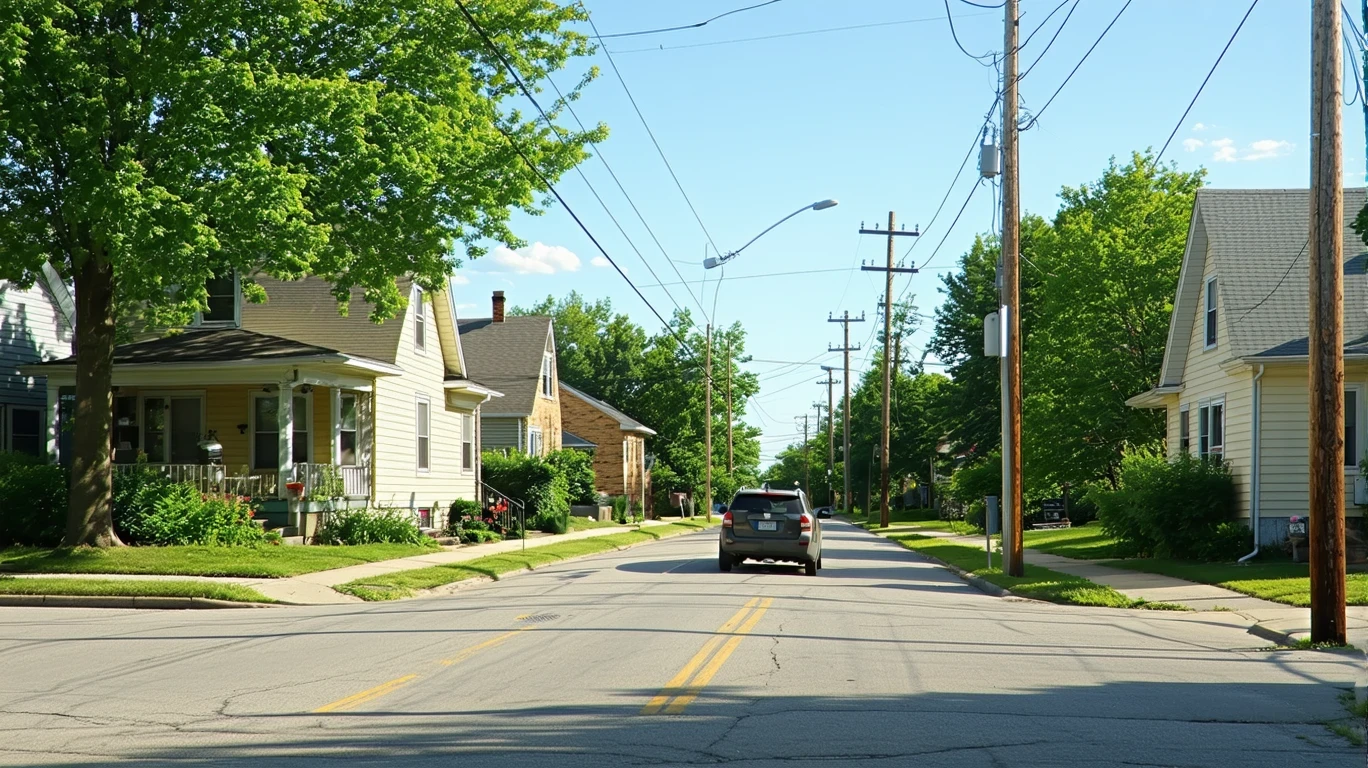
Saint Paul and Bloomington sit just miles apart in the Twin Cities metro, yet the way cost pressure shows up in daily life differs more than their proximity suggests. Saint Paul, Minnesota’s capital, offers rail transit access, walkable commercial corridors, and a mixed-height urban fabric that supports errands on foot. Bloomington, home to the Mall of America and a major college presence, leans more vertical in building form but relies on bus-only transit and corridor-clustered grocery access. For households deciding between the two in 2026, the question isn’t which city costs less overall—it’s where your specific cost sensitivities land hardest, and whether your household can absorb transit friction, housing entry barriers, or daily logistics planning.
Both cities share the same utility rates, gas prices, and regional price parity, so differences in monthly financial pressure come down to structure: how housing stock affects energy exposure, how transit options shape car dependence, and how errands accessibility changes the time-versus-money tradeoff. A dual-income couple prioritizing walkable errands and rail commutes will experience Saint Paul differently than a family seeking predictable school access and park density. A single adult managing a tight budget may find Bloomington’s shorter average commute appealing, but face higher friction costs from car dependence and corridor-based grocery runs. This comparison explains where those tradeoffs show up, household by household, without declaring a universal winner.
The decision between Saint Paul and Bloomington hinges on which costs dominate your household’s daily reality—and whether you’re trading entry barriers for ongoing flexibility, or front-loading convenience to reduce logistics creep over time.
Housing Costs
Housing pressure in Bloomington centers on entry barriers and ongoing obligations that are easy to quantify. The median home value sits at $327,100, and median gross rent reaches $1,426 per month. These figures reflect a market where single-family homes, condos, and apartment complexes coexist in a more vertical building landscape, offering options across price tiers but requiring households to meet concrete thresholds to access them. For renters, that monthly obligation is predictable and non-negotiable. For buyers, the entry barrier is front-loaded, and households sensitive to down payment requirements or mortgage qualification will feel that pressure immediately.
Saint Paul’s housing market operates without the same numeric visibility in available data, but the city’s mixed-height urban form and strong presence of both residential and commercial land use suggest a broader range of housing types—older single-family homes, duplexes, walk-up apartments, and newer infill construction. Without concrete rent or home value figures, the comparison becomes structural: Saint Paul’s walkable pockets and rail transit access may support households willing to trade space for location, while Bloomington’s more vertical character and bus-only transit may favor households prioritizing square footage and parking over transit convenience. Renters in Saint Paul may encounter more variability in unit age, layout, and included utilities, which shifts cost predictability toward the tenant’s ability to navigate lease terms and manage seasonal energy exposure.
For first-time buyers, Bloomington’s median home value provides a clear benchmark, but it also signals a market where competition and financing requirements are transparent. Saint Paul’s housing stock, shaped by older construction and mixed zoning, may offer lower entry points in some neighborhoods, but those opportunities come with trade-offs in renovation needs, property tax structures, and proximity to transit nodes. Families seeking predictable housing costs may find Bloomington’s newer construction and corridor-based retail easier to budget around, while households prioritizing walkability and rail access may accept Saint Paul’s variability in exchange for reduced car dependence.
Housing takeaway: Bloomington’s housing costs are front-loaded and quantifiable, making budgeting straightforward but entry barriers high. Saint Paul’s housing pressure is more distributed across unit type, age, and location, favoring households that can absorb variability in exchange for transit access and walkable errands. Renters sensitive to monthly obligations face clear thresholds in Bloomington; buyers sensitive to entry barriers may find more flexibility in Saint Paul’s older, mixed-use neighborhoods.
Utilities and Energy Costs
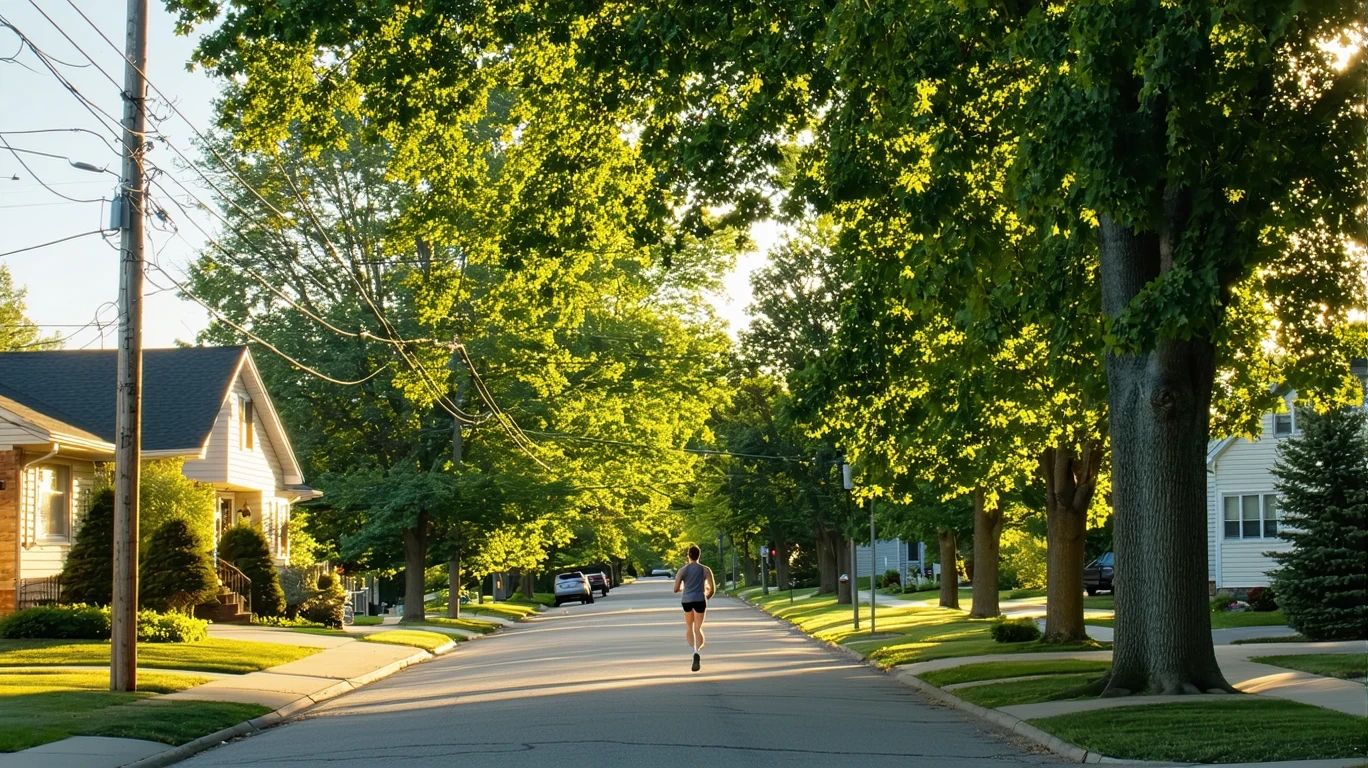
Both cities share identical electricity and natural gas rates—15.39¢/kWh and $11.17/MCF—so differences in utility exposure come down to housing stock, building age, and household size rather than price structure. Bloomington’s more vertical building character, with higher average building levels, suggests a mix of newer apartment complexes and mid-rise condos where insulation standards and shared-wall construction reduce heating and cooling loads per unit. Single-family homes in Bloomington, particularly older stock, still face full exposure to Minnesota’s long heating season, but the prevalence of newer construction in parts of the city means some households benefit from tighter building envelopes and more predictable baseline usage.
Saint Paul’s mixed-height urban form includes substantial older housing stock—walk-ups, duplexes, and single-family homes built before modern energy codes took hold. These homes often carry higher heating exposure during winter months, when natural gas usage climbs and older windows, insulation gaps, and uninsulated basements amplify costs. Apartments in Saint Paul’s walkable pockets may benefit from shared-wall construction and landlord-paid heat, but renters in older buildings without those protections face seasonal volatility that’s harder to control. Households in single-family homes, regardless of city, experience the full brunt of heating season, but Saint Paul’s older stock means more variability in how much that exposure costs month to month.
Cooling exposure in both cities is moderate compared to southern climates, but households in poorly insulated homes or top-floor apartments still face summer spikes. Bloomington’s newer construction and more vertical building stock may reduce per-unit cooling loads, while Saint Paul’s older single-family homes and walk-ups without central air may rely on window units, portable fans, or strategic ventilation—lower upfront cost, but less predictable comfort and efficiency. Families managing larger homes in either city face higher baseline usage regardless of building age, and those differences compound when housing stock is older or HVAC systems are undersized.
Utility takeaway: Bloomington’s more vertical and newer housing stock reduces per-unit energy exposure for some households, favoring renters in mid-rise buildings and buyers in recent construction. Saint Paul’s older, mixed-height stock increases heating season volatility, particularly for single-family homes and older apartments. Households sensitive to seasonal spikes may find more predictability in Bloomington’s newer builds; those willing to manage variability in exchange for walkable access may accept Saint Paul’s older housing trade-offs.
Groceries and Daily Expenses
Grocery and daily spending pressure in Saint Paul and Bloomington differs less in price than in access structure and planning burden. Saint Paul’s food and grocery establishment density exceeds high thresholds across the city, meaning households encounter supermarkets, corner stores, co-ops, and specialty grocers within walkable or short-drive distances in most neighborhoods. This density supports flexible shopping strategies—grabbing missing ingredients on foot, comparing prices across nearby stores, or splitting trips between discount chains and specialty shops without adding significant travel time. For households managing tight budgets, that access reduces the penalty for buying smaller quantities or waiting for sales, and it lowers the friction cost of forgetting an item or running out mid-week.
Bloomington’s grocery access is corridor-clustered, meaning food and grocery options concentrate along major commercial strips rather than distributing evenly across neighborhoods. This structure works well for households with cars and predictable weekly shopping routines, but it increases planning burden for those relying on bus transit or trying to minimize drive time. A family running a large weekly grocery trip in Bloomington can consolidate errands efficiently along a single corridor, but a single adult without a car faces longer travel times and fewer fallback options if a preferred store is out of stock or closed. The corridor model also concentrates big-box retailers, warehouse clubs, and chain grocers, which can lower per-unit prices for bulk buyers but offer less flexibility for small-basket shoppers or those seeking specialty items.
Dining out, coffee runs, and convenience spending follow similar patterns. Saint Paul’s broadly accessible food density means cafes, quick-service spots, and takeout options appear frequently in walkable pockets, making it easier to spend incrementally without noticing—grabbing lunch near work, stopping for coffee on a walk, or picking up dinner on the way home. Bloomington’s corridor clustering reduces that ambient spending temptation for households outside commercial zones, but it also means dining out requires intentional travel, which can increase per-trip spending when it happens. Families in Bloomington may find it easier to control convenience creep by batching errands and meals, while single adults in Saint Paul may face more frequent small purchases that add up over time.
Grocery takeaway: Saint Paul’s broadly accessible grocery density favors households that value flexibility, walkable access, and the ability to shop incrementally without car dependence. Bloomington’s corridor-clustered model works better for car-dependent households managing predictable weekly routines and bulk purchasing. Singles and couples without cars feel grocery friction more acutely in Bloomington; families with vehicles may find corridor efficiency reduces time cost, even if it limits spontaneous shopping.
Taxes and Fees
Property taxes, sales taxes, and recurring city-specific fees shape ongoing cost obligations differently depending on housing type and length of residence. Minnesota’s property tax structure relies heavily on local assessments, meaning homeowners in both cities face annual obligations tied to assessed home values, mill rates, and local levy decisions. Bloomington’s median home value of $327,100 provides a concrete reference point for estimating property tax exposure, but the actual burden depends on neighborhood, school district funding, and whether the property sits in a tax increment financing district or special assessment area. Newer developments in Bloomington may carry HOA fees that bundle services like landscaping, snow removal, or shared amenity maintenance, which can stabilize some costs but add non-negotiable monthly obligations.
Saint Paul’s property tax exposure varies more widely due to its mixed housing stock and older construction. Homes in established neighborhoods may benefit from slower assessment growth, while properties near transit nodes or in redevelopment zones may see faster increases. Renters in both cities don’t pay property taxes directly, but landlords pass those costs through in rent, so the structure still matters—especially in Saint Paul, where older buildings may face higher maintenance-driven levies or special assessments for infrastructure upgrades. Sales tax rates apply uniformly across the metro, so differences in consumption tax burden come down to spending habits rather than location.
Recurring fees for trash collection, water, sewer, and stormwater management appear in both cities, but billing structures and inclusion in rent vary. Some Bloomington apartment complexes bundle utilities and fees into rent, offering predictability at the cost of transparency. Saint Paul renters may encounter more variability in what’s included, with some landlords covering water and trash while tenants pay electricity and gas separately. Homeowners in both cities manage these fees directly, and the predictability depends on whether rates are flat, tiered, or usage-based.
Tax and fee takeaway: Bloomington’s property tax exposure is more predictable for buyers due to clearer home value benchmarks and newer construction, but HOA fees add non-negotiable obligations in some developments. Saint Paul’s older housing stock introduces more variability in property tax growth and special assessments, favoring long-term residents who can absorb gradual increases. Renters in both cities face indirect property tax exposure through rent, but Bloomington’s bundled fee structures offer more predictability, while Saint Paul’s variability requires closer lease review.
Transportation & Commute Reality
How people move through Saint Paul and Bloomington on a daily basis shapes both time budgets and car dependence in ways that ripple through monthly costs. Saint Paul’s rail transit presence and walkable pockets mean some households can structure their lives around fixed-route transit, biking, or walking for errands and commutes. The pedestrian-to-road ratio exceeds high thresholds, and the bike-to-road ratio follows the same pattern, signaling infrastructure that supports non-car trips in parts of the city. For a single adult working downtown or along a rail corridor, this reduces the need for a personal vehicle, cutting insurance, parking, and maintenance obligations entirely. Dual-income couples can split transit and car use, with one partner commuting by rail while the other drives to a job outside the transit network.
Bloomington operates on bus-only transit, and while bus stops are present throughout the city, the lack of rail means longer travel times for trips into downtown Minneapolis or Saint Paul. The average commute in Bloomington clocks in at 21 minutes, which is manageable for car commuters but extends significantly for bus riders making multi-leg trips. The work-from-home percentage sits at just 3.0%, meaning the vast majority of Bloomington workers travel to a physical workplace daily, and 25.6% face long commutes that push beyond typical thresholds. For households relying on cars, gas prices at $4.02/gal apply uniformly, but the frequency of driving—daily commutes, weekend errands, school drop-offs—determines how much that rate compounds over time.
Families in Bloomington managing school runs, grocery trips, and extracurricular logistics face higher car dependence due to corridor-clustered errands and limited family infrastructure density. Saint Paul’s strong school and playground density means some families can walk or bike to daily destinations, reducing the number of car trips required each week. Singles and couples in Saint Paul who live near rail stations can avoid car ownership entirely, while those in Bloomington’s residential zones outside bus routes face fewer alternatives. The time cost of commuting in Bloomington is lower on average for drivers, but the cash cost of maintaining a vehicle becomes non-negotiable for most households.
Transportation takeaway: Saint Paul’s rail transit and walkable infrastructure reduce car dependence for households near transit nodes, cutting ongoing vehicle costs and offering time flexibility. Bloomington’s bus-only system and corridor-based errands increase car reliance, favoring households that already own vehicles and can absorb fuel, insurance, and maintenance. Singles and couples sensitive to transportation costs may find Saint Paul’s rail access more forgiving; families managing multiple daily trips may prefer Bloomington’s shorter average drive times, even if car dependence is higher.
Cost Structure Comparison
Housing pressure dominates the cost experience in Bloomington, where entry barriers and ongoing rent obligations are front-loaded and quantifiable. The median home value and median gross rent provide clear thresholds that households must meet to access the market, and those numbers don’t flex based on proximity to transit or errands density. Saint Paul’s housing costs are more distributed across unit type, building age, and neighborhood, offering flexibility for households willing to navigate variability in exchange for walkable access and rail transit proximity. Renters in Bloomington face predictable monthly obligations; renters in Saint Paul encounter more lease-to-lease differences in what’s included and how much seasonal utility exposure they inherit.
Utilities introduce more volatility in Saint Paul due to older housing stock and mixed-height construction, particularly for single-family homes and walk-up apartments without modern insulation. Bloomington’s more vertical building character and newer construction reduce per-unit energy exposure for some households, making heating and cooling costs more predictable. Families managing larger homes in either city face higher baseline usage, but Saint Paul’s older stock amplifies seasonal swings, while Bloomington’s newer builds dampen them. Households sensitive to month-to-month bill variability may find Bloomington’s energy exposure easier to budget around, while those prioritizing lower rent or home prices may accept Saint Paul’s utility trade-offs.
Transportation patterns matter more in Saint Paul, where rail transit and walkable errands density allow some households to reduce or eliminate car ownership. Bloomington’s bus-only system and corridor-clustered grocery access make car dependence nearly universal, which shifts the cost structure from optional to obligatory. For singles and couples without children, Saint Paul’s transit flexibility can erase hundreds of dollars in monthly vehicle costs; for families managing school runs and weekend logistics, Bloomington’s shorter average commute and car-friendly layout may reduce time friction, even if fuel and maintenance costs remain constant.
Grocery and daily spending pressure differs more in structure than price. Saint Paul’s broadly accessible food and grocery density reduces planning burden and supports incremental shopping, but it also increases the temptation for convenience spending—coffee runs, quick takeout, small purchases that accumulate. Bloomington’s corridor-clustered model forces more intentional trip planning, which can reduce ambient spending but increases friction for households without cars or those managing last-minute needs. Families with vehicles may find Bloomington’s corridor efficiency lowers time cost; singles relying on transit may find Saint Paul’s walkable density lowers cash cost by eliminating car trips.
For households sensitive to housing entry barriers, Bloomington’s transparent pricing and newer construction offer predictability at the cost of higher thresholds. For those sensitive to transit dependence and daily logistics friction, Saint Paul’s rail access and errands density reduce ongoing obligations, even if housing and utility costs carry more variability. The better choice depends on which costs dominate your household’s daily reality—and whether you’re trading front-loaded entry barriers for long-term flexibility, or accepting higher car dependence to stabilize housing and energy predictability.
How the Same Income Feels in Saint Paul vs Bloomington
Single Adult
For a single adult, housing and transportation become the first non-negotiable costs, and the structure of each city determines how much flexibility remains afterward. In Saint Paul, rail transit access and walkable errands density mean some singles can avoid car ownership entirely, redirecting insurance, fuel, and maintenance costs toward rent or discretionary spending. In Bloomington, car dependence is nearly universal due to bus-only transit and corridor-clustered grocery access, so vehicle costs become fixed obligations before groceries or utilities enter the equation. Saint Paul’s older housing stock may introduce more utility volatility, but the ability to walk or bike for daily errands reduces the time cost of managing a tight budget. Bloomington’s shorter average commute lowers drive time, but the need to own and maintain a vehicle eliminates the flexibility that transit-dependent singles in Saint Paul retain.
Dual-Income Couple
Dual-income couples face tradeoffs between predictability and logistics friction. In Bloomington, housing costs are front-loaded and transparent, making it easier to budget around a fixed rent or mortgage payment, but corridor-clustered errands and bus-only transit increase the planning burden for households trying to minimize car trips. In Saint Paul, rail transit and broadly accessible grocery density reduce the need for two vehicles, allowing couples to split transit and car use based on work locations and schedules. The time saved on errands in Saint Paul—grabbing groceries on foot, stopping for coffee near a rail station—compounds over weeks, while Bloomington’s corridor model requires batching trips and driving intentionally. Couples prioritizing predictable housing and energy costs may prefer Bloomington’s newer construction; those prioritizing time flexibility and lower transportation obligations may find Saint Paul’s transit access more forgiving, even if housing variability is higher.
Family with Kids
Families managing school runs, extracurricular logistics, and grocery volume face the sharpest differences in how daily life unfolds. Saint Paul’s strong school and playground density means some families can walk or bike to daily destinations, reducing the number of car trips required each week and lowering the cumulative time cost of household logistics. Bloomington’s limited family infrastructure density—despite integrated park access—means families rely more heavily on cars for school drop-offs, activity shuttles, and weekend errands. The corridor-clustered grocery model in Bloomington works well for families running large weekly shopping trips, but it increases friction for mid-week top-ups or last-minute needs. Saint Paul’s broadly accessible errands density supports more flexible shopping patterns, but it also increases the risk of convenience spending creep when kids request stops or parents grab takeout on the way home. Families prioritizing walkable school access and reduced car dependence may find Saint Paul’s infrastructure lowers ongoing time and fuel costs; those prioritizing predictable housing, energy, and commute patterns may prefer Bloomington’s structure, even if car reliance is higher.
Decision Matrix: Which City Fits Which Household?
| Decision factor | If you’re sensitive to this… | Saint Paul tends to fit when… | Bloomington tends to fit when… |
|---|---|---|---|
| Housing entry + space needs | You need predictable rent or clear home value benchmarks to budget around | You can absorb variability in unit age and layout in exchange for proximity to rail transit and walkable errands | You prioritize transparent pricing and newer construction, even if entry barriers are higher |
| Transportation dependence + commute friction | You want to minimize or eliminate car ownership to reduce ongoing obligations | You live near a rail corridor and can structure daily life around transit and walkable errands | You already own a vehicle and value shorter average drive times over transit flexibility |
| Utility variability + home size exposure | You need predictable monthly energy bills without seasonal spikes | You’re willing to manage older housing stock and heating season volatility in exchange for lower rent or home prices | You prioritize newer construction and tighter building envelopes that reduce per-unit energy exposure |
| Grocery strategy + convenience spending creep | You want walkable access to multiple stores without needing a car for every trip | You value flexibility to shop incrementally and compare prices across nearby options on foot | You prefer batching weekly trips along commercial corridors and controlling ambient spending through intentional planning |
| Fees + friction costs (HOA, services, upkeep) | You want to avoid non-negotiable monthly fees beyond rent or mortgage | You can navigate variability in what landlords include and manage property tax exposure in older neighborhoods | You accept bundled HOA or service fees in exchange for predictable maintenance and amenity access |
| Time budget (schedule flexibility, errands, logistics) | You need to minimize the time cost of daily errands and household logistics | You benefit from walkable errands density and rail transit that reduce trip frequency and planning burden | You value shorter drive times and corridor efficiency for batched trips, even if car dependence is higher |
Lifestyle Fit
Saint Paul and Bloomington offer distinct lifestyle textures shaped by transit access, urban form, and the density of family-oriented amenities. Saint Paul’s rail transit presence and walkable pockets create a rhythm where errands, social outings, and commutes can happen without a car for households near transit nodes. The city’s mixed-height building character and strong school and playground density support families managing daily logistics on foot or by bike, while integrated park access and water features provide outdoor recreation options within short distances. For singles and couples prioritizing cultural access, Saint Paul’s capital city role brings museums, theaters, and civic events into the daily landscape, and the broadly accessible food and grocery density means dining out or grabbing coffee rarely requires intentional travel.
Bloomington’s more vertical building character and corridor-clustered commercial zones create a different pattern—one where driving is the default mode for most trips, but the payoff is shorter average commute times and efficient batching of errands along major strips. The city’s college presence adds energy and amenities geared toward younger adults, while integrated park density and water features offer outdoor space for recreation and weekend outings. Families in Bloomington face limited school and playground density compared to Saint Paul, which increases car dependence for daily logistics, but the city’s proximity to the Mall of America and major retail corridors means shopping, dining, and entertainment options are abundant for households willing to drive. The bus-only transit system works for some commuters, but it lacks the flexibility and speed of rail, making car ownership nearly essential for most residents.
Both cities benefit from Minnesota’s four-season climate, with long winters that demand heating infrastructure and outdoor gear, and warm summers that support biking, park use, and outdoor dining. Saint Paul’s older housing stock and walkable neighborhoods carry a different aesthetic than Bloomington’s newer, more vertical construction, and that difference shows up in everything from street character to the availability of front porches, sidewalk cafes, and mixed-use storefronts. Households prioritizing walkability, transit access, and family infrastructure density will find Saint Paul’s structure more aligned with those values, while those prioritizing predictable housing, shorter drive times, and corridor-based efficiency may prefer Bloomington’s layout, even if it requires higher car dependence.
Saint Paul’s unemployment rate sits at 2.9%, reflecting a stable labor market with opportunities across government, healthcare, education, and professional services. Bloomington’s unemployment rate is slightly lower at 2.8%, supported by retail, hospitality, and corporate employment tied to the Mall of America and nearby business parks.
Frequently Asked Questions
Is Saint Paul or Bloomington cheaper for renters in 2026?
Bloomington’s median gross rent reaches $1,426 per month, providing a clear benchmark for budgeting, while Saint Paul lacks comparable numeric data but offers more variability in unit type, age, and what landlords include. Renters in Bloomington face predictable monthly obligations and newer construction, while those in Saint Paul encounter more lease-to-lease differences and older housing stock that may carry higher utility exposure. The better choice depends on whether you prioritize transparent pricing and energy efficiency or flexibility in location and proximity to rail transit.
How does getting around without a car compare between Saint Paul and Bloomington in 2026?
Saint Paul’s rail transit presence and walkable errands density allow some households to eliminate car ownership entirely, reducing insurance, fuel, and maintenance costs. Bloomington operates on bus-only transit and corridor-clustered grocery access, making car dependence nearly universal for most residents. Singles and couples in Saint Paul near rail corridors can structure daily life around transit and biking, while those in Bloomington face longer travel times and fewer alternatives to driving, even with bus service present.
Which city is better for families with kids in Saint Paul vs Bloomington?
Saint Paul’s strong school and playground density supports families managing daily logistics on foot or by bike, reducing car trip frequency and time costs. Bloomington shows limited family infrastructure density despite integrated park access, meaning families rely more heavily on vehicles for school runs, activities, and errands. Families prioritizing walkable school access and reduced car dependence may find Saint Paul’s structure more forgiving, while those valuing predictable housing costs and shorter drive times may prefer Bloomington’s layout, even if car reliance is higher.
Do utility bills differ between Saint Paul and Bloomington in 2026?
Both cities share identical electricity and natural gas rates, so differences in utility exposure come down to housing stock and building age rather than price. Bloomington’s more vertical and newer construction reduces per-unit energy exposure for some households, while Saint Paul’s older, mixed-height stock increases heating season volatility, particularly for single-family homes and walk-up apartments. Households in newer Bloomington buildings may experience more predictable bills, while those in older Saint Paul homes face higher seasonal swings that require closer budget management.