
A newcomer scrolling through Roswell, GA forums late at night might ask: Will I actually like living here? It’s the question beneath all the logistics—the one that doesn’t show up in cost calculators or school rankings. Roswell sits in the northern Atlanta metro, a city where tree-lined streets and low-rise neighborhoods create a distinctly suburban rhythm. But whether that rhythm feels like relief or restraint depends entirely on what you’re leaving behind and what you’re hoping to find.
The vibe here isn’t loud. It’s the kind of place where people describe feeling settled rather than stimulated, where daily life unfolds through intentional trips rather than spontaneous encounters. For families seeking stability, good schools, and a quieter pace, Roswell tends to deliver exactly what it promises. For those craving walkable texture, transit flexibility, or dense urban energy, it often feels like a compromise they’re still negotiating.
The Emotional Landscape of Roswell
Roswell’s character is shaped by its structure. The city features a mixed mobility texture—pedestrian infrastructure exists, but it coexists with car-oriented design rather than replacing it. Errands and groceries cluster along commercial corridors, meaning daily life requires a bit of planning. You don’t stumble into your third coffee shop of the week here; you drive to the one you know, park, and get what you need. For some, that’s simplicity. For others, it’s friction.
Green space is present and accessible, with parks woven into neighborhoods and water features adding natural relief. Schools are distributed at moderate density, supporting the family-oriented identity many residents describe. But playgrounds are less common than you might expect, and healthcare access leans toward clinics rather than hospital presence. The urban form is decidedly low-rise, with residential and commercial land uses mixing just enough to avoid feeling purely bedroom-community, but not enough to create the layered, walkable density some newcomers expect.
Bus service exists, but without rail transit, car dependency is the default. That shapes everything—commute stress, errand logistics, household costs, and the kinds of social spontaneity that do (or don’t) happen here. People who thrive in Roswell tend to be comfortable with that tradeoff. People who struggle often weren’t.
Social Media Buzz in Roswell
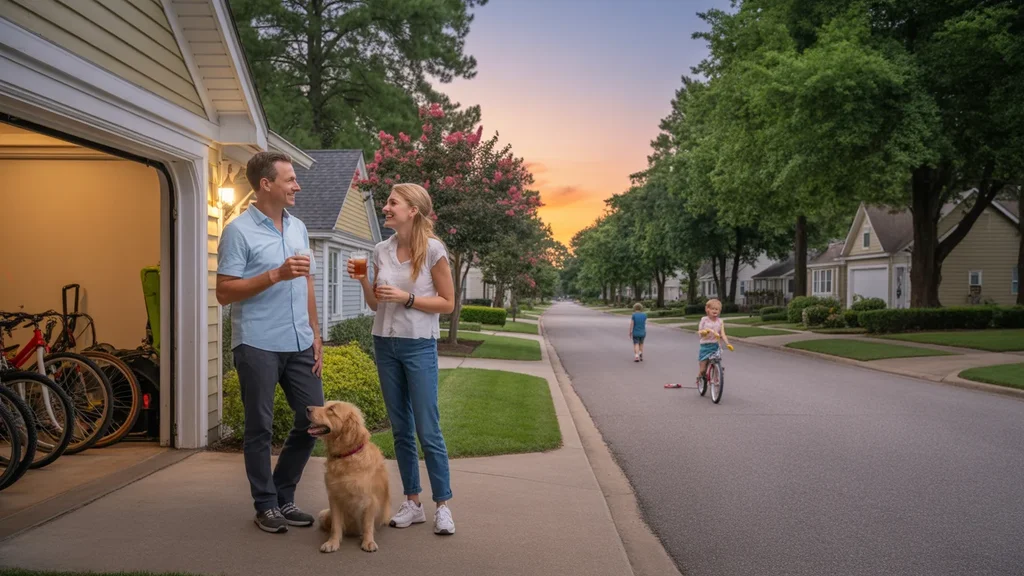
Online, Roswell residents talk about the city with a mix of pride and pragmatism. Conversations on local Facebook groups and regional subreddits often center on growth tension—new development bringing amenities and concerns in equal measure. There’s affection for the historic downtown area, frustration with traffic on certain corridors, and ongoing debate about what the city should become as the metro expands.
“It’s a great place to raise kids, but you definitely need a car for everything,” one commenter notes. “I love the parks and the schools, but I miss being able to walk to dinner or grab groceries on a whim.”
“Roswell has that small-town feel even though it’s not small anymore,” another writes. “You see the same faces at the farmers market, but you’re also sitting in traffic trying to get there.”
The tone isn’t bitter, but it’s not uncomplicated either. People appreciate what Roswell offers—safety, greenery, good schools—but they’re also aware of what it doesn’t: transit options, spontaneous walkability, late-night culture. The vibe is protective but realistic, with long-time locals often expressing concern that growth will erode the quiet character they value, while newcomers sometimes express surprise at how car-dependent daily life feels.
Local News Tone
Local coverage of Roswell tends to frame the city through the lens of managed suburban growth. Stories focus on infrastructure updates, school performance, parks and recreation expansions, and community events that reinforce the family-friendly identity. There’s less emphasis on controversy or crisis, and more on incremental change and civic participation.
Typical headline themes include:
- “Community Debates What Growth Should Look Like”
- “New Amenities Arrive as Town Identity Evolves”
- “Residents Weigh Convenience vs Quiet”
- “Parks and Schools Remain Top Priorities”
- “Traffic and Development Shape Neighborhood Conversations”
The tone is measured and civic-minded, reflecting a community that sees itself as stable but not static. There’s pride in local history and a cautious optimism about the future, but also an undercurrent of concern that rapid change could disrupt the balance people moved here to find.
Review-Based Public Perception
On platforms like Google Reviews, Yelp, and Nextdoor-style forums, Roswell earns praise for what it does well: family infrastructure, safety, and suburban comfort. Parents highlight school quality and park access. Homeowners appreciate the low-rise residential character and the sense of space. Retirees and remote workers mention the quiet, the greenery, and the proximity to Atlanta without the urban intensity.
But the complaints are consistent, too. Renters note that housing tradeoffs often favor ownership, with fewer walkable apartment complexes and limited transit access making car ownership non-negotiable. Younger professionals and transplants from denser cities describe feeling isolated, especially in the evenings. “Everything closes early, and there’s not much to do unless you drive somewhere else,” one review reads.
Errands are a recurring theme. Because grocery stores and services cluster along corridors rather than being broadly accessible, even short trips require intentionality. “It’s not a ‘pop out for milk’ kind of place,” someone writes. “You plan your errands, you drive, you come home.”
Neighborhood variation exists but is often described in broad strokes—newer planned areas with HOA amenities versus older pockets with larger lots and more mature trees. The distinction matters less for walkability (which is limited across the board) and more for aesthetic preference and community feel.
Comparison to Nearby Cities
| Dimension | Roswell | Alpharetta | Johns Creek |
|---|---|---|---|
| Overall Vibe | Quiet suburban, family-focused, historic touches | Corporate suburban, newer development, tech-oriented | Affluent suburban, planned communities, school-driven |
| Walkability | Mixed, corridor-dependent | Limited, car-oriented | Very limited, car-essential |
| Errands & Dining | Corridor-clustered, requires planning | Strip mall dominant, chain-heavy | Suburban retail, less dense |
| Transit Access | Bus only, limited routes | Minimal, car-dependent | Minimal, car-dependent |
| Green Space | Present, accessible parks | Present, greenway trails | Present, planned parks |
| Community Feel | Established, protective of character | Transient, corporate influx | Tight-knit, family-centric |
Roswell, Alpharetta, and Johns Creek all occupy the northern Atlanta suburbs, but their emotional textures differ. Roswell leans on its historic identity and slightly older housing stock, giving it a more rooted, less corporate feel than Alpharetta, where newer development and tech employers create a more transient population. Johns Creek skews even more affluent and family-focused, with highly planned neighborhoods and top-tier school emphasis, but less of the historic charm Roswell retains.
If you want a suburban base with a bit more character and a slightly older, more established feel, Roswell tends to fit. If you prioritize cutting-edge amenities and don’t mind a more corporate suburban aesthetic, Alpharetta might appeal more. If schools and planned community infrastructure are the top priority and budget allows, Johns Creek often wins that comparison. None of them solve the transit or walkability question—that’s a metro-wide tradeoff.
What Locals Are Saying
“We moved here from Midtown Atlanta and knew we’d be trading walkability for space. What surprised me was how much I miss just being able to walk to a coffee shop or run an errand on foot. Everything here requires getting in the car.”
— Young professional, newcomer
“Roswell is exactly what we wanted—great schools, safe neighborhoods, parks where the kids can play. We don’t mind driving everywhere because we’re used to it, and honestly, the quiet is a relief after years in a busier area.”
— Parent of two, homeowner
“I’ve been here for twenty years and I’ve watched it grow. It’s still a good place, but the traffic is worse and the small-town feel is fading. I hope we don’t lose what made people want to move here in the first place.”
— Long-time resident
“As a retiree, I appreciate the slower pace and the greenery. I can drive to what I need, and I’m close enough to Atlanta if I want culture or dining. It’s a nice balance.”
— Retiree, downsized from larger home
“I work remotely and Roswell works well for me—quiet during the day, affordable compared to closer-in neighborhoods, and I don’t have to commute. But if I had to go into the city every day, I’d probably feel differently.”
— Remote worker, renter
“We looked at Alpharetta and Johns Creek too, but Roswell felt more lived-in, less cookie-cutter. The historic downtown area has some charm, even if it’s small. That mattered to us.”
— Couple, first-time homebuyers
“I like it here, but I do feel like I’m always planning my day around errands. Nothing is walkable, so you batch your trips. It’s efficient, but it’s also kind of exhausting.”
— Single professional, renter
Does Roswell Feel Like a Good Fit?
Roswell doesn’t ask you to love it unconditionally. It asks whether you’re willing to trade urban spontaneity for suburban stability, whether you’re comfortable with car dependency in exchange for green space and good schools, and whether you value a quieter, more rooted community feel over dense, walkable variety.
This tends to work for families who prioritize school quality and residential calm, for remote workers who don’t face daily commutes, and for homeowners who see value in low-rise neighborhoods with a bit of historic character. It tends to frustrate renters seeking walkable convenience, transit-dependent households, and younger professionals craving nightlife or street-level energy.
The city’s structure—corridor-clustered errands, bus-only transit, mixed but limited walkability—shapes where money goes and how daily life feels. If that structure aligns with your rhythms and priorities, Roswell can feel like exactly what you were looking for. If it doesn’t, you’ll likely feel the friction every time you get in the car.
Before deciding, it’s worth exploring what quality of life actually means to you in practice—not in theory, but in the daily texture of errands, commutes, and evenings at home. Roswell has a clear identity. The question is whether it matches yours.
How this article was built: In addition to public economic data, this article incorporates location-based experiential signals derived from anonymized geographic patterns—such as access density, walkability, and land-use mix—to reflect how day-to-day living actually feels in Roswell, GA.
The perspectives shown reflect commonly expressed local sentiment and recurring themes in public discussion, rather than individual accounts.