
Owning a home in Roswell means committing to more than the mortgage. Property taxes scale to a $479,400 median home value—substantially above the national baseline—creating ongoing exposure that renters avoid entirely. Homeowners insurance premiums reflect replacement cost on an expensive asset, and maintenance reserves must account for HVAC systems working hard through hot, humid summers. These hidden costs don’t appear in the purchase price, but they define the ownership experience and separate monthly housing pressure from the entry barrier alone.
Roswell sits in the northern arc of metro Atlanta, where suburban development blends established neighborhoods with commercial corridors. The $122,924 median household income supports housing costs better than in many markets, but the 111 regional price index confirms that goods, services, and housing all cost more here than the national average. For newcomers weighing rent against ownership, the decision hinges not just on affordability but on cost structure—which expenses are predictable, which grow over time, and which you control.
The Housing Market in Roswell Today
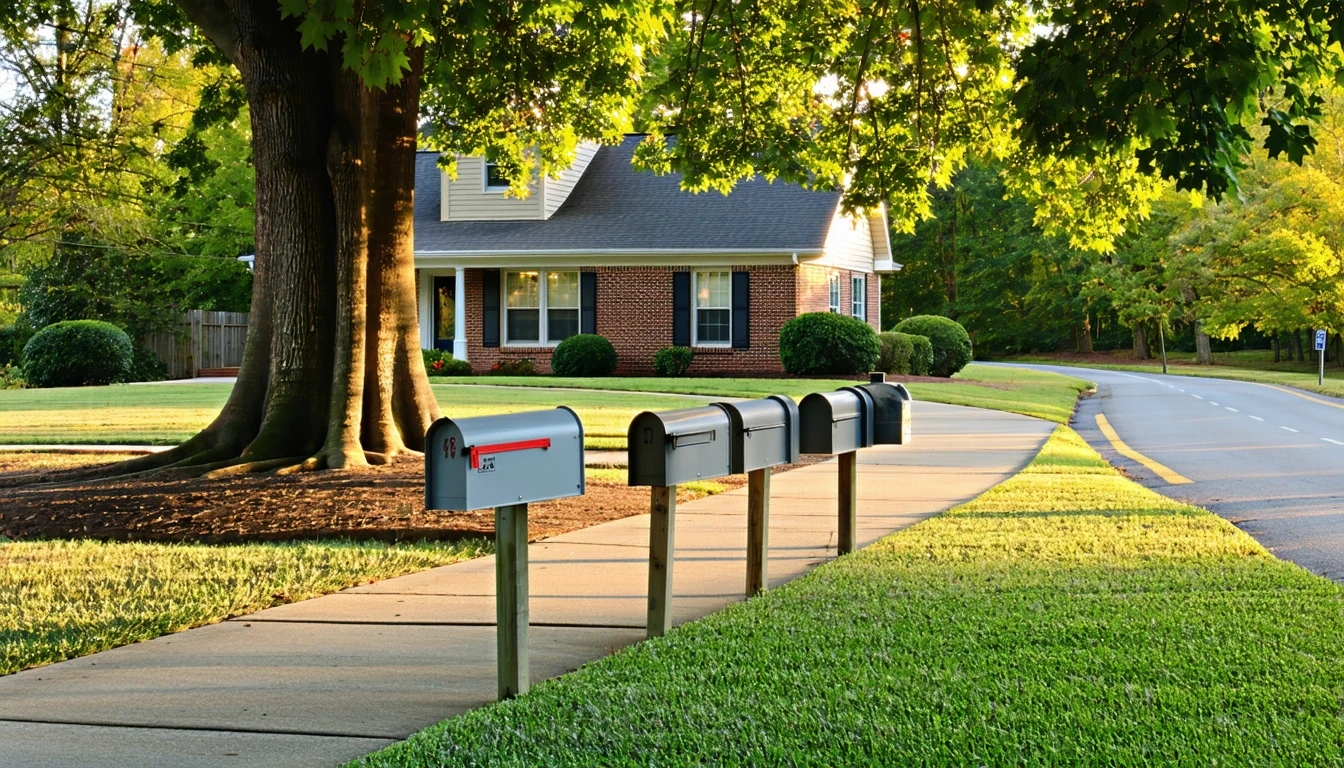
Roswell’s housing market reflects its position as a desirable suburban anchor within a major metro area. The $479,400 median home value signals a market where ownership requires significant capital and income qualification. This isn’t a starter-home suburb; it’s a place where buyers typically arrive with equity, dual incomes, or both. The premium pricing stems from a combination of factors: proximity to Atlanta employment centers, established neighborhoods with mature trees and low-rise character, and a mixed land-use pattern that supports both residential quiet and corridor-based errands.
What newcomers often misunderstand is that Roswell’s housing costs don’t just reflect the physical structure—they reflect access. The city’s infrastructure supports car-dependent living with moderate pedestrian texture in pockets. Errands cluster along commercial corridors rather than distributing evenly across neighborhoods, meaning your specific location within Roswell determines how much friction you face running daily tasks. Buyers paying the median price aren’t just purchasing square footage; they’re purchasing position within a geography where convenience varies sharply by subdivision.
The rental market, with a $1,619 median gross rent, operates under the same regional price pressure. Renters avoid the equity equation but still absorb the cost of living in a premium-priced metro suburb. For households deciding whether Roswell fits, the question isn’t whether it’s expensive—it is—but whether the income, employment access, and neighborhood character justify the expense relative to alternatives.
Renting in Roswell
Renting in Roswell means accepting the regional price premium without building equity, but it also means avoiding the volatility and exposure that come with ownership in a high-value market. The $1,619 median gross rent represents a significant monthly obligation, but it includes a degree of predictability: lease terms lock in cost for a year at a time, and landlords absorb property tax increases, insurance swings, and major maintenance events during that period.
Rental availability and pressure vary by housing type and location. Apartment complexes cluster near commercial corridors, offering proximity to grocery stores, pharmacies, and bus stops—important in a city where car dependency dominates but not every household owns multiple vehicles. Single-family rentals scatter across neighborhoods, often appealing to families seeking yard space and school access without the commitment of ownership. Both markets reflect the same underlying cost structure: Roswell’s housing stock, whether rented or owned, carries a price shaped by metro Atlanta demand and limited supply of suburban land close to employment centers.
Renters should expect lease renewals to track broader market conditions. When demand tightens or property costs rise, landlords pass through what they can. The advantage is that renters can relocate when a lease ends, avoiding the transaction costs and long-term exposure that owners face. For households prioritizing flexibility—whether due to job uncertainty, family planning, or simply testing whether Roswell fits—renting remains the lower-risk path, even at a higher monthly outlay than in less expensive markets.
Owning a Home in Roswell
Ownership in Roswell begins with a substantial entry barrier. A $479,400 median home value requires a down payment, closing costs, and income sufficient to qualify for a mortgage that likely exceeds $400,000 for most buyers. But the purchase price is only the first cost. Property taxes, calculated as a percentage of assessed value, generate an annual obligation that scales with the home’s worth. In a market where the median home sits well above the national baseline, that means a tax bill that many first-time buyers underestimate.
Homeowners insurance follows similar logic. Replacing a $479,400 home costs more than replacing a $250,000 one, and premiums reflect that exposure. Add in the risk of severe weather—Roswell’s location in the Southeast means occasional storms, high winds, and heavy rain—and insurance becomes a non-negotiable cost that rises over time as replacement costs and claim patterns shift.
Maintenance and repair reserves represent the third major ownership exposure. Roswell’s hot, humid summers stress HVAC systems, and cooling a single-family home through a long season means compressors, ductwork, and filters wear faster than in milder climates. Roofs, siding, and exterior paint face UV exposure and moisture, shortening replacement cycles. Owners can’t defer these costs indefinitely; a failed air conditioner in July isn’t optional spending.
Ownership also introduces governance and regulatory exposure. Many Roswell neighborhoods operate under homeowners associations, which levy dues, enforce aesthetic rules, and occasionally assess special fees for community improvements. Even outside HOA boundaries, local ordinances govern everything from fence height to lawn maintenance, and code enforcement can compel costly compliance.
The ownership experience differs from renting not just in cost but in control and risk. Owners lock in principal and interest payments, gaining predictability on the largest line item. But they absorb all the volatility that renters avoid: tax increases, insurance swings, maintenance surprises, and the risk that the market turns before they’re ready to sell. For households with stable income, long time horizons, and reserves to handle shocks, ownership builds equity and eliminates the risk of lease non-renewal. For those without that stability, ownership in a high-value market like Roswell concentrates risk rather than dispersing it.
Apartment vs House in Roswell — Cost Behavior Comparison
| Expense Category | Apartment | House |
|---|---|---|
| Cooling Costs | Shared walls and smaller square footage reduce cooling load; landlord often controls system efficiency | Standalone structure and larger square footage increase cooling exposure; owner controls efficiency investment but bears full seasonal cost |
| Maintenance Responsibility | Landlord handles HVAC, roofing, exterior; tenant avoids capital expenditure and emergency repair risk | Owner funds all repairs and replacements; HVAC stress from humid summers and occasional severe weather increases frequency and cost |
| Errands Accessibility | Apartments cluster near commercial corridors, reducing drive time for groceries and pharmacies | Single-family neighborhoods scatter across Roswell; errands accessibility depends on subdivision location relative to corridor retail |
| Outdoor Space | Limited or shared; reduces yard maintenance cost but eliminates private outdoor use | Private yards common; adds mowing, landscaping, and irrigation cost but provides space for families and pets |
Methodology note: The table reflects differences driven by Roswell’s climate (hot, humid summers that stress cooling systems), housing stock (low-rise, predominantly single-family character), and errands infrastructure (corridor-clustered retail rather than evenly distributed walkable access). Categories like water/sewer and trash are excluded because cost behavior doesn’t vary meaningfully by housing type in this market. The comparison focuses on where living in an apartment versus a house changes your cost exposure or household logistics in Roswell specifically.
Utilities & Upkeep Differences
Utility and maintenance exposure in Roswell splits sharply between apartment and house living, driven by climate and housing form. The 14.13¢/kWh electricity rate applies to all residents, but how much electricity you use depends on square footage, insulation, and system efficiency. Single-family homes, with larger footprints and standalone construction, face higher cooling loads during Roswell’s extended summer heat. Running air conditioning from May through September isn’t optional—it’s a baseline cost of living here. Apartments, with shared walls and smaller conditioned space, reduce that exposure, though tenants rarely control thermostat settings or system upgrades.
Natural gas, priced at $15.63 per thousand cubic feet, plays a smaller role in Roswell than in colder climates. Winters are mild, and heating demand stays modest. Gas water heaters and ranges appear in many homes, but the seasonal swing favors electricity as the dominant utility cost driver. Homeowners can invest in efficiency—programmable thermostats, improved insulation, high-SEER HVAC systems—but those upgrades require capital and time to pay back. Renters lack that control and instead rely on landlords to maintain systems, which may or may not be optimized for cost.
Maintenance differences extend beyond utilities. Houses in Roswell face exterior exposure: roofs that take sun and storm damage, siding that weathers, gutters that clog with seasonal debris. Yards require mowing, trimming, and irrigation during dry spells, and many neighborhoods enforce appearance standards through HOAs or local codes. Apartment tenants avoid these costs entirely, though they pay indirectly through rent that reflects the landlord’s maintenance overhead.
The upkeep gap widens over time. A house’s mechanical systems—HVAC, water heater, appliances—age on the owner’s balance sheet. Replacing a failing air conditioner in a 2,500-square-foot home can cost several thousand dollars, and the expense arrives on the system’s schedule, not the owner’s. Apartment tenants call maintenance when something breaks and resume life. That convenience costs more per square foot in rent, but it eliminates the volatility and reserve requirements that homeowners face.
Rent vs Buy: Long-Term Exposure in Roswell
The rent-versus-buy decision in Roswell isn’t a simple math problem—it’s a tradeoff between different risk profiles. Renters face lease renewal uncertainty and the possibility that rent rises faster than income, but they avoid property tax increases, insurance volatility, and the capital risk of owning an expensive, illiquid asset in a market that may not appreciate on a convenient timeline. Owners lock in their principal and interest payment, gaining predictability on the largest line item, but they absorb every other cost increase: tax reassessments, insurance premium swings, maintenance surprises, and the opportunity cost of capital tied up in a down payment.
Over time, ownership shifts the cost structure from monthly outflow to equity accumulation, but only if the household remains stable and the market cooperates. Selling a home in Roswell involves transaction costs—agent commissions, closing fees, repair concessions—that can erase years of equity gains if the holding period is short. Renters avoid that friction and can relocate when a lease ends, adjusting to job changes, family needs, or cost pressure without the multi-month process of listing, negotiating, and closing.
Ownership also concentrates exposure to local fiscal and regulatory decisions. Property tax rates, assessment practices, and municipal fee structures all affect the cost of owning in Roswell, and homeowners can’t opt out. Renters experience those costs indirectly, filtered through landlords who may or may not pass them through immediately. That buffer matters in a high-value market where a small percentage increase in assessed value translates to a large dollar increase in the tax bill.
The long-term fit depends on household stability, income trajectory, and risk tolerance. Buyers with strong income, long time horizons, and reserves to handle maintenance shocks benefit from locking in housing cost and building equity. Renters with variable income, short timelines, or uncertainty about staying in Roswell benefit from flexibility and the ability to walk away when the lease ends. Neither path is universally better; each fits different circumstances, and the $479,400 entry price ensures that the stakes are high either way.
How this article was built: In addition to public economic data, this article incorporates location-based experiential signals derived from anonymized geographic patterns—such as access density, walkability, and land-use mix—to reflect how day-to-day living actually feels in Roswell, GA.
How Roswell’s Layout Shapes Housing Decisions
Roswell’s physical structure—how streets, shops, and homes connect—directly affects which housing choice makes sense. The city’s moderate pedestrian infrastructure and corridor-clustered errands mean that your specific neighborhood determines how much you rely on a car for daily tasks. Apartments near commercial corridors put groceries, pharmacies, and bus stops within a short drive or even a walk, reducing the friction of car dependency. Single-family homes in residential subdivisions often sit farther from those corridors, adding drive time and making a second vehicle more practical for many households.
This isn’t abstract urban planning—it’s where money goes every week. Families in low-rise neighborhoods with limited walkable access spend more time driving kids to school, activities, and errands, which translates to fuel cost, vehicle wear, and schedule complexity. Renters in corridor-adjacent apartments reduce some of that friction but give up yard space and private outdoor access. Buyers purchasing a $479,400 home in a quiet subdivision gain space and control but commit to a car-dependent logistics pattern that doesn’t ease over time.
The presence of bus service offers a baseline alternative, but without rail transit and with mixed pedestrian texture, most Roswell households treat the car as essential. That reality shapes housing affordability in ways the purchase price or rent figure alone doesn’t capture. Owning in a neighborhood that requires two cars to function effectively means adding insurance, fuel, maintenance, and registration costs to the housing expense. Renting near a corridor with better errands access can reduce some of that pressure, but only if the apartment’s location aligns with work commutes and household needs.
Roswell’s low-rise character and mixed land use create pockets of convenience rather than uniform accessibility. Buyers and renters alike need to evaluate not just the housing cost but the logistics cost—how much time, fuel, and vehicle dependency the location demands. In a city where the housing market already commands a premium, those secondary costs determine whether the total picture fits or quietly erodes the budget over time.
FAQs About Housing Costs in Roswell
Is renting or buying more common in Roswell, GA?
Ownership dominates Roswell’s housing market, reflecting the city’s character as an established suburban community with predominantly single-family neighborhoods. Rental options exist, particularly in apartment complexes near commercial corridors, but the $479,400 median home value signals a market oriented toward buyers with significant capital and income. Renters typically cluster in multifamily developments or single-family homes offered by individual landlords, often as a transitional step before purchasing or while testing whether Roswell fits long-term needs.
How do property taxes affect homeownership costs in Roswell?
Property taxes in Roswell scale to the assessed value of the home, and with a $479,400 median, that means a substantial annual obligation. Taxes fund local schools, infrastructure, and services, and reassessments can increase the bill over time as property values rise. Owners can’t avoid this cost, and it doesn’t decrease when the mortgage is paid off. For buyers comparing Roswell to other metro Atlanta suburbs, the tax burden relative to home value and the quality of services funded by those taxes become key considerations.
What drives the difference in utility costs between apartments and houses in Roswell?
Square footage and building form drive the gap. Single-family homes, with larger conditioned space and standalone construction, require more energy to cool during Roswell’s hot, humid summers. Apartments, with shared walls and smaller footprints, reduce cooling loads and often include water, sewer, and trash in the rent, simplifying budgeting. Homeowners control efficiency investments—better insulation, high-efficiency HVAC—but must fund those upgrades themselves and wait years to recover the cost through lower bills.
Does Roswell’s housing market favor first-time buyers or experienced owners?
Roswell’s high median home value creates a significant barrier for first-time buyers, who must qualify for large mortgages and fund substantial down payments. The market favors experienced owners with equity from prior sales, dual incomes, or both. First-time buyers without those advantages often struggle to compete or must accept smaller, older homes at the lower end of the market. The trade-off is access to strong schools, established neighborhoods, and proximity to Atlanta employment—benefits that come at a premium entry price.
How does living in Roswell compare to renting or owning in nearby metro Atlanta suburbs?
Roswell sits in the higher tier of metro Atlanta suburban housing costs, with both rent and home values exceeding many nearby alternatives. Buyers and renters pay for proximity to employment centers, established infrastructure, and a mature community character. Less expensive suburbs farther from the urban core offer lower entry costs but often increase commute time and reduce access to amenities. The decision hinges on whether Roswell’s specific advantages—location, schools, neighborhood quality—justify the cost premium relative to other options within the metro area.
Making Housing Choices in Roswell
Housing costs in Roswell reflect the city’s position as a premium suburban market within metro Atlanta. The $479,400 median home value and $1,619 median rent both signal that living here requires significant income and careful planning. Ownership builds equity and locks in the largest cost component, but it also concentrates risk: property taxes, insurance, maintenance, and the illiquidity of a high-value asset all fall on the buyer. Renting preserves flexibility and avoids those exposures, but it means accepting lease renewal uncertainty and the possibility that rent rises faster than income.
The decision between renting and buying, or between an apartment and a house, depends on more than monthly cost. It depends on how long you plan to stay, whether your income can absorb volatility, and whether Roswell’s specific geography—car-dependent, corridor-clustered errands, low-rise neighborhoods—fits your household’s logistics. Families with school-age children and stable dual incomes often find ownership worthwhile despite the high entry price. Young professionals, single-income households, or anyone uncertain about long-term plans may find renting reduces risk and preserves options, even at a higher monthly outlay.
Roswell’s housing market doesn’t offer easy answers, but it does offer clarity: costs are high, predictability requires ownership, and flexibility requires renting. Understanding which expenses you control, which you absorb, and which grow over time allows you to choose the path that fits your circumstances rather than the one that simply looks affordable on paper.