

Redmond and Bellevue sit minutes apart on the Eastside of Seattle, share similar weather, and draw from the same regional job market—yet the way costs show up in daily life differs more than the map suggests. Redmond tilts toward newer suburban neighborhoods with tech-campus commuters and single-family subdivisions. Bellevue blends high-rise downtown density with established residential enclaves, offering more walkable urban pockets alongside sprawling suburbs. For households deciding between them in 2026, the question isn’t which costs less overall—it’s where cost pressure concentrates, how predictable monthly obligations feel, and which trade-offs match your household’s priorities.
Housing dominates the financial experience in both cities, but the type of housing you’re targeting and the fees that come with it create different entry barriers and ongoing obligations. Transportation costs hinge less on gas prices than on commute direction, parking availability, and whether your daily errands require a car or can be handled on foot. Utilities behave similarly in both cities due to shared climate and regional providers, but housing age and size determine exposure more than location. The decision comes down to which costs you can control, which you can’t, and how much flexibility your household needs when those costs shift.
This comparison explains how housing structure, transportation dependence, HOA prevalence, and daily logistics differ between Redmond and Bellevue—and which households feel those differences most acutely. It’s not about finding the cheaper option; it’s about understanding where your money goes and why that matters for your situation.
Housing Costs
Housing in both Redmond and Bellevue reflects Eastside demand, but the form and availability of housing differ in ways that affect entry barriers and monthly predictability. Redmond’s housing stock skews toward single-family homes built in the last two decades, many within planned communities that include HOA fees covering landscaping, community amenities, and sometimes exterior maintenance. Bellevue offers a wider mix: high-rise apartments and condos concentrated downtown, older single-family neighborhoods without HOAs, and newer townhome developments with varying fee structures. For renters, Bellevue’s downtown density provides more apartment inventory, while Redmond’s rental market leans toward single-family homes and townhomes, often with fewer units available at any given time.
For buyers, the distinction matters more in ongoing obligations than purchase price alone. Redmond’s prevalence of HOA-managed communities means many homeowners face monthly fees that add predictability (covered services) but reduce flexibility (mandatory payments regardless of use). Bellevue’s older neighborhoods often lack HOAs entirely, shifting responsibility for landscaping, exterior upkeep, and repairs to the homeowner—more control, but less predictable monthly costs. Newer Bellevue developments mirror Redmond’s HOA structure, but the city’s broader housing age range gives buyers more choice in how they want to manage ongoing obligations.
First-time buyers sensitive to monthly payment predictability may find Redmond’s HOA-inclusive model easier to budget around, even if it raises the baseline obligation. Buyers prioritizing autonomy and lower fixed costs may prefer Bellevue’s older stock, accepting the trade-off of variable maintenance expenses. Renters seeking walkable access to dining, transit, and services will find more options in Bellevue’s urban core, while those prioritizing yard space and quieter streets may lean toward Redmond’s suburban rental inventory. Families looking for newer construction and community amenities often gravitate toward Redmond; those seeking established neighborhoods with mature trees and varied architectural styles may find Bellevue’s older areas more appealing.
Housing takeaway: Redmond’s housing pressure centers on HOA fees and newer-home premiums, making monthly obligations more predictable but less flexible. Bellevue’s mix of housing ages and forms creates more variability in both entry cost and ongoing expenses, offering more control but requiring more active management. Households that value bundled services and predictable fees fit Redmond’s model; those who want to manage their own maintenance and avoid mandatory fees may find Bellevue’s older neighborhoods a better match.
Utilities and Energy Costs
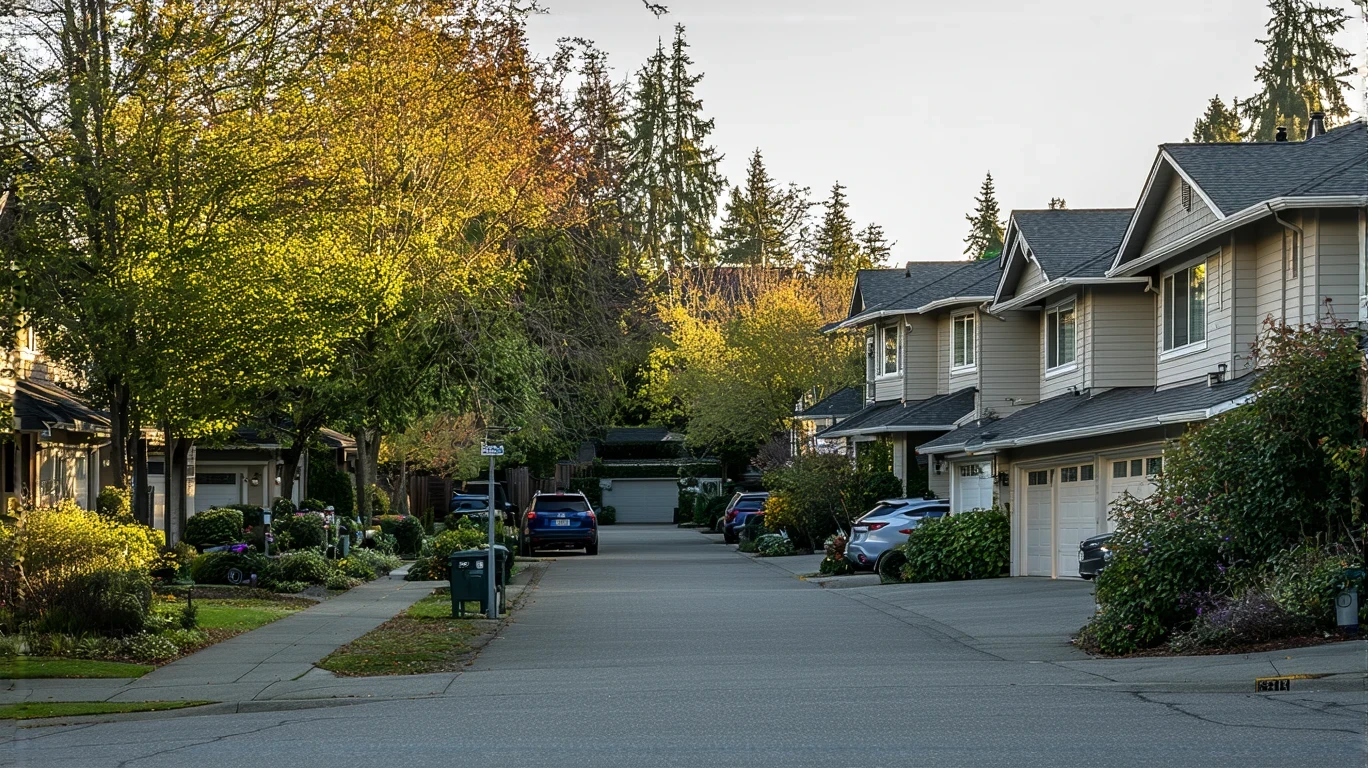
Utilities in Redmond and Bellevue behave similarly because both cities share the same regional climate—mild, wet winters and warm, dry summers—and draw from overlapping utility providers. Heating needs dominate winter months, while cooling costs remain modest compared to hotter U.S. regions. The primary driver of utility cost differences isn’t location; it’s housing age, size, and insulation quality. Newer homes in Redmond, built to more recent energy codes, tend to experience lower heating and cooling exposure than older Bellevue homes with single-pane windows, minimal insulation, and older HVAC systems.
For households in single-family homes, utility costs scale with square footage and the efficiency of heating systems. Larger homes in either city face higher baseline usage, but older construction amplifies that exposure during colder months. Apartment renters in Bellevue’s downtown high-rises often see lower utility bills due to shared-wall insulation and smaller unit sizes, while Redmond renters in townhomes or single-family homes may face higher heating costs during extended cold snaps. Predictability depends more on housing type than city: newer construction offers more stable bills, while older homes introduce seasonal volatility.
Households planning to stay long-term in older homes can reduce exposure through efficiency upgrades—improved insulation, programmable thermostats, and weatherization—but those measures require upfront investment and time. Renters have less control and must rely on landlord decisions about building efficiency. Families with larger homes and multiple occupants face higher baseline usage regardless of efficiency, while single adults or couples in smaller units experience lower absolute costs but similar seasonal swings if the housing stock is older.
Utility takeaway: Utility cost exposure in Redmond vs Bellevue depends more on housing age and size than city boundaries. Redmond’s newer housing stock generally offers more predictable, lower utility costs, while Bellevue’s older homes introduce more seasonal volatility. Households sensitive to heating costs should prioritize newer construction or efficiency upgrades regardless of city; those in apartments or smaller units will see lower baseline exposure in either location.
Groceries and Daily Expenses
Grocery and daily spending pressure in Redmond and Bellevue reflects access patterns more than price differences. Both cities offer big-box retailers, regional grocery chains, and specialty stores, but the density and walkability of those options differ. Bellevue’s downtown core provides more walkable access to grocery stores, cafes, and convenience retail, reducing the need to drive for every errand. Redmond’s suburban layout typically requires a car to reach grocery stores, though newer mixed-use developments near tech campuses offer some walkable retail clusters.
Price sensitivity depends less on where you shop than how you shop. Households that plan weekly grocery trips and cook at home face similar costs in either city, assuming access to discount grocers or bulk retailers. Those who rely on convenience—grabbing prepared meals, eating out frequently, or shopping at smaller neighborhood stores—will find more of those options within walking distance in Bellevue, which can either increase spending (more temptation) or reduce it (less driving, more flexibility). Redmond’s car-dependent errands add time cost and reduce spontaneity, but they don’t necessarily raise grocery prices.
Families managing larger grocery volumes benefit from proximity to big-box stores and the ability to stock up less frequently, which both cities support but require driving to access. Single adults and couples with flexible schedules may find Bellevue’s walkable grocery access reduces the friction of daily errands, while those working from home in Redmond may prefer fewer, larger shopping trips. Dining out and takeout frequency matters more than location: both cities offer similar restaurant density in their respective commercial zones, but Bellevue’s downtown concentration makes casual dining more accessible without a car.
Grocery takeaway: Grocery costs in Redmond and Bellevue depend more on shopping habits and household size than city-level price differences. Bellevue’s walkable downtown reduces errand friction for smaller, more frequent trips, while Redmond’s suburban layout favors planned, car-based shopping. Households sensitive to convenience spending may find Bellevue’s access both a benefit (less driving) and a risk (more temptation); those who batch errands and cook at home will see little difference between the two.
Taxes and Fees
Washington State’s tax structure applies uniformly across Redmond and Bellevue—no state income tax, but higher reliance on sales tax and property tax to fund local services. Both cities fall under similar county and regional tax rates, so the primary differences come from city-specific fees, utility billing structures, and HOA prevalence rather than tax policy itself. Property taxes depend on assessed home values and local levy rates, which fluctuate with school funding measures and infrastructure bonds. Homeowners in either city face similar property tax exposure relative to home value, though newer homes in Redmond may carry higher assessments due to recent construction.
HOA fees represent a more significant structural difference. Redmond’s newer subdivisions often include mandatory HOA fees that cover services like landscaping, snow removal, community amenities, and sometimes water or trash collection. These fees add predictability but also create a fixed monthly obligation that doesn’t scale with usage. Bellevue’s older neighborhoods typically lack HOAs, meaning homeowners pay directly for trash, water, and landscaping without the bundled convenience—but also without the mandatory fee. Newer Bellevue developments mirror Redmond’s HOA model, so the distinction depends more on housing age than city policy.
Renters in either city don’t pay property taxes directly, but those costs are embedded in rent. Utility fees, parking permits, and trash collection may be billed separately or included in rent depending on the landlord and building type. Bellevue’s downtown apartments more often include utilities or charge flat fees, while Redmond’s single-family rentals typically pass utility costs directly to tenants. Homeowners planning to stay long-term should account for HOA fee increases, which tend to rise over time as community infrastructure ages and maintenance needs grow.
Tax and fee takeaway: Tax structures in Redmond and Bellevue are nearly identical, but fee predictability differs based on housing type and HOA prevalence. Redmond’s newer communities bundle more services into HOA fees, creating predictable monthly obligations but less flexibility. Bellevue’s older neighborhoods shift more responsibility to homeowners, offering more control but less predictability. Renters face similar tax exposure in either city, but utility billing structures vary more by building type than location.
Transportation & Commute Reality
Transportation costs in Redmond and Bellevue hinge on commute direction, parking availability, and whether daily errands require a car. Both cities are car-dependent for most households, but the degree of dependence and the friction it creates differ. Redmond’s suburban layout and employment concentration around tech campuses mean many residents live and work within the same city, shortening commute distances but requiring a car for nearly all errands. Bellevue’s denser downtown core offers more walkable access to transit, retail, and services, but many residents still commute by car to job centers in Redmond, Seattle, or other Eastside suburbs.
Commute direction matters more than distance. Households working in Redmond but living in Bellevue face reverse-commute patterns that may avoid the worst traffic, while those commuting from Redmond to Seattle or Bellevue’s downtown encounter more congestion and longer travel times. Parking availability also differs: Bellevue’s downtown charges for street parking and garage access, adding cost and friction for car-dependent households, while Redmond’s suburban layout provides more free parking at residential and commercial sites.
Transit access exists in both cities through regional bus service, but frequency and convenience vary. Bellevue’s downtown benefits from more frequent bus routes and future light rail expansion, making car-free or car-light living more feasible for households willing to plan around transit schedules. Redmond’s transit options serve commuters heading to Seattle or Bellevue but offer less coverage for intra-city errands, reinforcing car dependence. Households with two working adults may need two cars in Redmond, while Bellevue’s walkable core allows some couples to share one vehicle if both work downtown or use transit.
Transportation takeaway: Both Redmond and Bellevue require car ownership for most households, but the intensity of car dependence differs. Redmond’s suburban layout makes a car essential for nearly all errands, while Bellevue’s downtown density offers more walkable and transit-accessible options for daily life. Households sensitive to commute time should prioritize proximity to their workplace over city choice; those seeking to reduce car dependence will find more flexibility in Bellevue’s urban core.
Cost Structure Comparison
Housing pressure dominates the cost experience in both Redmond and Bellevue, but the form that pressure takes differs. Redmond’s newer housing stock and HOA prevalence create more predictable monthly obligations—bundled services, consistent fees, and less variability in maintenance costs—but also reduce flexibility and increase baseline fixed expenses. Bellevue’s mix of older and newer housing offers more control and lower mandatory fees in established neighborhoods, but shifts more responsibility to homeowners and introduces more seasonal or event-driven costs like roof repairs, landscaping, and exterior upkeep.
Utilities introduce similar exposure in both cities due to shared climate and regional providers, but housing age amplifies the difference. Redmond’s newer homes generally offer more stable, lower utility costs, while Bellevue’s older stock creates more seasonal volatility, especially for heating. Households in larger, older homes face higher exposure regardless of city, while those in newer apartments or townhomes experience more predictable bills.
Transportation patterns matter more in Bellevue, where walkability and transit access reduce car dependence for some households, particularly those living and working downtown. Redmond’s suburban layout makes car ownership non-negotiable for nearly all residents, but shorter intra-city commutes may offset that dependence for households working locally. Daily errands and grocery access follow similar logic: Bellevue’s density reduces friction for frequent, small trips, while Redmond’s layout favors planned, batched errands.
Taxes and fees show minimal city-level differences, but HOA prevalence creates a structural divide. Households that value predictability and bundled services fit Redmond’s model; those prioritizing autonomy and lower fixed costs may prefer Bellevue’s older neighborhoods. The better choice depends on which costs dominate your household’s priorities—predictability vs flexibility, car dependence vs walkability, newer construction vs established character.
How the Same Income Feels in Redmond vs Bellevue
Single Adult
For a single adult, housing and transportation become non-negotiable first, leaving less flexibility for discretionary spending. In Redmond, a car is essential for commuting and errands, and rental options skew toward townhomes or single-family homes rather than compact apartments. Bellevue’s downtown offers more studio and one-bedroom apartments within walking distance of transit, dining, and grocery stores, reducing car dependence but often at higher rent for comparable square footage. Flexibility exists in dining out and entertainment, but both cities require careful budgeting around housing and transportation before discretionary costs feel manageable.
Dual-Income Couple
A dual-income couple gains more flexibility, but housing form and commute logistics still dominate. In Redmond, HOA fees and newer-home premiums raise baseline housing costs, while car dependence may require two vehicles if both partners commute in different directions. Bellevue’s walkable downtown allows some couples to share one car if both work nearby or use transit, reducing transportation costs but potentially increasing rent. Predictability matters more than total cost: Redmond’s bundled HOA services create stable monthly obligations, while Bellevue’s older neighborhoods shift more variability into maintenance and repairs that arrive unpredictably.
Family with Kids
Families face the least flexibility, as housing size, school access, and logistics complexity become non-negotiable. Redmond’s suburban layout and newer subdivisions offer more yard space, community amenities, and family-oriented neighborhoods, but HOA fees and larger home sizes increase baseline costs. Bellevue’s established neighborhoods provide more housing age diversity and access to mature parks, but older homes may require more maintenance and utility costs rise with square footage. Time cost matters as much as cash cost: Redmond’s car-dependent errands add logistical friction, while Bellevue’s walkable pockets reduce errand complexity for families living near downtown or mixed-use areas.
Decision Matrix: Which City Fits Which Household?
| Decision factor | If you’re sensitive to this… | Redmond tends to fit when… | Bellevue tends to fit when… |
|---|---|---|---|
| Housing entry + space needs | You want predictable monthly obligations and newer construction with bundled services | You prioritize HOA-managed amenities, yard space, and stable baseline costs | You prefer older neighborhoods with lower fixed fees and more control over maintenance timing |
| Transportation dependence + commute friction | You want to minimize car dependence or avoid owning multiple vehicles | You work locally in Redmond and accept car-based errands as routine | You live or work downtown and value walkable access to transit, dining, and services |
| Utility variability + home size exposure | You want stable, predictable utility bills without seasonal spikes | You prioritize newer construction with better insulation and energy efficiency | You accept older-home character and are willing to invest in efficiency upgrades over time |
| Grocery strategy + convenience spending creep | You want to batch errands and avoid frequent, impulse-driven trips | You plan weekly shopping trips and prefer car-based access to big-box stores | You value walkable grocery access and frequent, smaller trips without driving |
| Fees + friction costs (HOA, services, upkeep) | You want to avoid mandatory fees and retain full control over home services | You value bundled landscaping, amenities, and exterior maintenance handled by the HOA | You prefer managing your own services and avoiding fixed monthly HOA obligations |
| Time budget (schedule flexibility, errands, logistics) | You want to minimize time spent on errands and household logistics | You accept car-dependent errands and prioritize proximity to work over walkability | You value walkable errands and transit access that reduce driving frequency |
Lifestyle Fit
Redmond and Bellevue offer distinct lifestyle textures despite their proximity. Redmond’s suburban character centers on newer residential developments, tech-campus employment, and family-oriented amenities like community parks, trails, and recreational facilities. The city feels quieter and more car-dependent, with most social and commercial activity clustered around shopping centers and planned community hubs. Bellevue blends urban density with suburban neighborhoods, offering walkable downtown streets, high-rise living, and more diverse dining and entertainment options alongside quieter residential enclaves with mature landscaping and established schools.
Commute times depend more on workplace location than city choice. Households working in Redmond’s tech corridor benefit from living locally, while those commuting to Seattle or Bellevue’s downtown face longer, more congested drives. Bellevue’s downtown offers better transit connectivity and future light rail access, making car-free commuting more viable for some households. Redmond’s layout prioritizes driving, with limited walkable retail outside specific mixed-use zones. Families seeking community amenities, newer parks, and suburban predictability often prefer Redmond; those valuing urban walkability, dining variety, and transit access lean toward Bellevue’s core.
Lifestyle factors indirectly affect costs in both cities. Redmond’s car dependence increases transportation expenses but may reduce housing costs in specific neighborhoods compared to Bellevue’s downtown. Bellevue’s walkability lowers car dependence for some households but may increase rent or purchase prices for units near transit and retail. Newer housing stock in Redmond reduces utility costs through better insulation, while Bellevue’s older homes offer more architectural character at the cost of higher heating exposure. The choice depends on whether you prioritize suburban predictability and family infrastructure or urban density and walkable access.
Quick fact: Redmond’s Sammamish River Trail and Marymoor Park provide extensive outdoor recreation without leaving the city, appealing to active families and outdoor enthusiasts.
Quick fact: Bellevue’s downtown core offers more walkable dining, shopping, and entertainment within a compact area, reducing the need to drive for evening or weekend activities.
Frequently Asked Questions
Is Redmond or Bellevue more affordable for renters in 2026?
Affordability depends more on housing type than city. Bellevue’s downtown offers more apartment inventory, including studios and one-bedrooms with walkable access to transit and services, while Redmond’s rental market skews toward townhomes and single-family homes with more space but less density. Renters prioritizing compact, walkable living may find more options in Bellevue’s core; those seeking yard space and quieter neighborhoods may prefer Redmond’s suburban rentals. Neither city is universally cheaper—it depends on what type of housing fits your needs.
Do Redmond and Bellevue have different tax rates in 2026?
Both cities fall under Washington State’s tax structure, which includes no state income tax but higher sales and property taxes. City-level tax differences are minimal, but fee structures differ based on HOA prevalence and utility billing. Redmond’s newer subdivisions often bundle services into HOA fees, while Bellevue’s older neighborhoods shift those costs directly to homeowners. Renters face similar tax exposure in either city, but utility and fee predictability varies more by housing type than location.
Which city requires more car dependence, Redmond or Bellevue?
Redmond’s suburban layout makes car ownership essential for nearly all households, as most errands, grocery trips, and commutes require driving. Bellevue’s downtown core offers more walkable access to transit, retail, and dining, allowing some households to reduce car dependence or share one vehicle. Outside Bellevue’s downtown, car dependence mirrors Redmond’s suburban pattern. Households seeking to minimize driving will find more flexibility in Bellevue’s urban core; those working in Redmond or preferring suburban living should expect to rely on a car for most activities.
How do HOA fees differ between Redmond and Bellevue in 2026?
Redmond’s newer housing stock includes more HOA-managed communities, where monthly fees cover landscaping, amenities, and sometimes utilities or exterior maintenance. Bellevue’s older neighborhoods typically lack HOAs, giving homeowners more control but also more variability in maintenance costs. Newer Bellevue developments mirror Redmond’s HOA structure, so the distinction depends on housing age rather than city policy. Households valuing predictable, bundled services fit Redmond’s model; those preferring autonomy and lower fixed fees may lean toward Bellevue’s older stock.
Does living in Redmond vs Bellevue change utility costs in 2026?
Utility costs depend more on housing age, size, and efficiency than city boundaries. Both cities share the same regional climate and utility providers, so baseline exposure is similar. Redmond’s newer homes generally offer better insulation and energy efficiency, reducing heating and cooling costs, while Bellevue’s older homes introduce more seasonal volatility. Households in larger, older homes face higher utility exposure regardless of city; those in newer apartments or townhomes experience more stable bills in either location.
Conclusion
Redmond and Bellevue don’t differ dramatically in total cost of living, but the way costs show up—and the control you have over them—creates distinct experiences. Redmond’s newer housing stock, HOA prevalence, and suburban layout favor households that value predictability, bundled services, and family-oriented amenities. Bellevue’s mix of urban density and established neighborhoods offers more walkability, transit access, and housing age diversity, appealing to households that prioritize flexibility, autonomy, and reduced car dependence. Neither city is universally cheaper; the better fit depends on which cost pressures your household can absorb and which trade-offs align with your priorities.
For families seeking newer construction, community amenities, and stable monthly obligations, Redmond’s HOA-managed subdivisions and proximity to tech employment create a predictable, car-dependent lifestyle. For singles, couples, or families valuing walkable errands, transit connectivity, and more control over housing maintenance, Bellevue’s downtown core and older neighborhoods offer more flexibility at the cost of less predictability. The decision isn’t about finding the cheaper option—it’s about understanding where your money goes, how much control you have over those costs, and whether the lifestyle trade-offs match your household’s needs in 2026.