
Poway sits in a part of San Diego County where the numbers look good on paper—median household income of $135,605 per year—but the experience of living here depends less on what you earn and more on how your income interacts with the city’s cost structure, infrastructure, and daily rhythms. Comfort isn’t a salary threshold. It’s the point where your money stops dictating every housing tradeoff, every errand route, every decision about whether to drive or wait for the train.
This article explains how income pressure actually shows up in Poway, which households feel it first, and how to judge whether your earnings and expectations align with what life here demands.
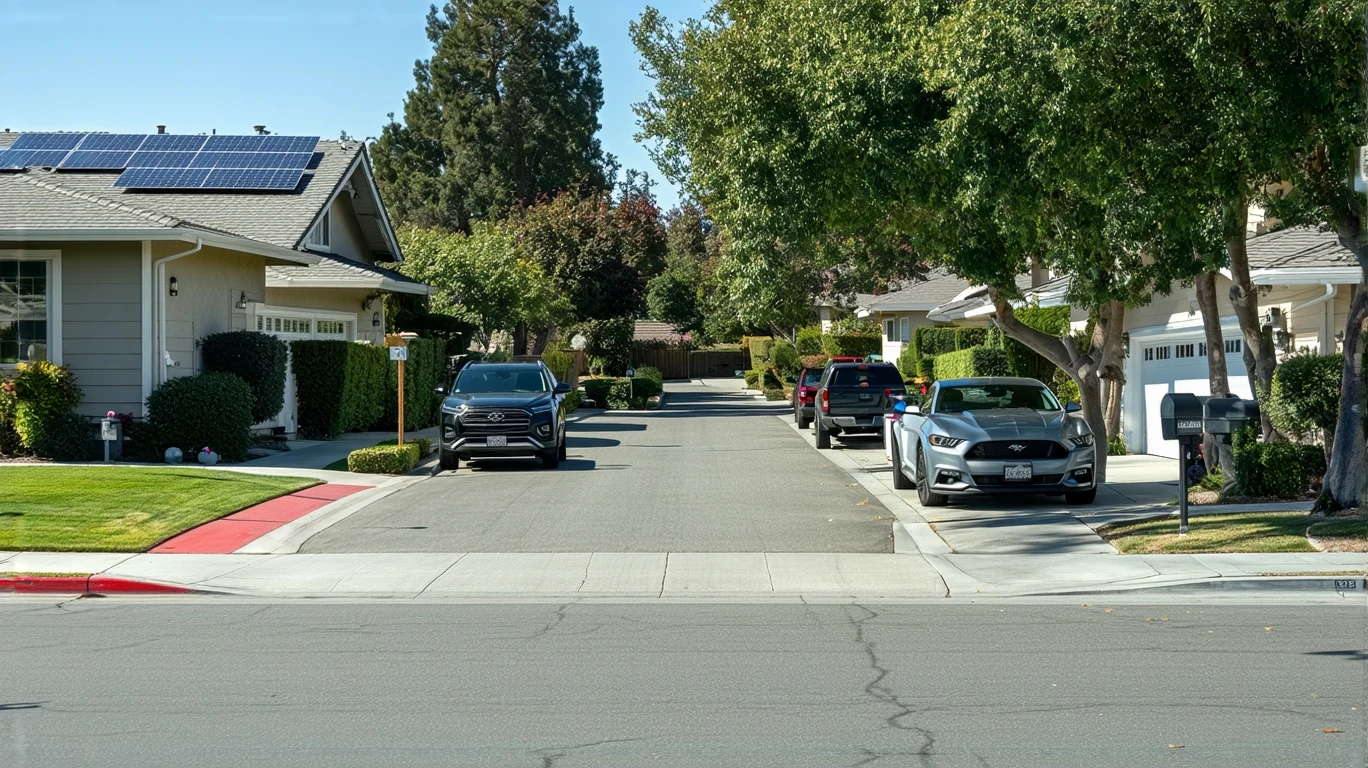
What “Living Comfortably” Means in Poway
Comfort in Poway means securing housing without sacrificing space, location, or quality. It means absorbing seasonal utility swings without reworking your budget. It means choosing how you get around based on convenience, not cost desperation. And for families, it means managing school runs, grocery trips, and weekend plans without every outing becoming a logistical puzzle.
The city’s median home value sits at $911,500, and median gross rent runs $2,165 per month. Those figures set the baseline, but they don’t capture the tradeoffs households face when deciding between a smaller place in a walkable pocket near the rail line versus a larger home in a car-dependent area where every errand requires a drive. Comfort here isn’t about hitting a magic number—it’s about having enough margin that housing doesn’t force you into a compromise you’ll resent, and enough flexibility that transportation and errands don’t become a second job.
Climate plays a quieter but persistent role. Poway’s warm, dry summers drive cooling costs, and with electricity rates at 33.22¢ per kWh, air conditioning isn’t a luxury—it’s a recurring expense that swells in the hottest months. Comfortable living means those seasonal bills don’t destabilize your month or force you to choose between comfort and savings.
Where Income Pressure Shows Up First
Housing dominates financial stress in Poway. Whether you’re renting or buying, the cost is high enough that it shapes every other decision. Renters at the median rate face over $2,100 monthly before utilities, which leaves less room for transportation flexibility, dining out, or building savings. Buyers confront not just the purchase price but property taxes, insurance, and maintenance on homes valued near $1 million. For households earning near or below the city’s median income, housing isn’t just the biggest line item—it’s the one that determines what’s possible everywhere else.
Transportation pressure compounds differently depending on where you live and how you move. Gas prices in the area run $5.92 per gallon, and while Poway has rail service and pockets with strong pedestrian infrastructure, much of the city remains car-oriented. If you live near the rail line or in one of the walkable areas, you can reduce car dependency and soften fuel costs. But if your home, work, and errands all require driving, transportation becomes a fixed, high-frequency expense that climbs every time you fill the tank.
Daily errands add friction in ways that aren’t immediately obvious. Food and grocery options in Poway are corridor-clustered, not broadly accessible. That means running out for milk or picking up dinner often requires a deliberate trip, not a quick stop on the way home. For households juggling work, school, and activities, that planning burden compounds. It’s not unmanageable, but it’s a tax on time and fuel that households in more accessible environments don’t pay.
Utility volatility surfaces during the extended cooling season. Electricity costs rise as temperatures climb, and because rates are elevated compared to many other parts of the country, the swings are sharper. Households with older homes, poor insulation, or west-facing exposure feel it first. Comfortable households absorb those swings. Stretched households adjust behavior—raising the thermostat, closing blinds, timing appliance use—to keep bills predictable.
How the Same Income Feels Different by Household
A single adult earning near the city’s median income experiences Poway very differently than a family at the same level. For someone living alone, monthly expenses tilt heavily toward rent, but the rest of the budget offers more flexibility. If you’re near the rail line or in a walkable pocket, you can reduce car use, skip a second vehicle, and treat transportation as a variable cost rather than a fixed drain. Errands require planning, but you’re only planning for one. Utility costs are easier to control in a smaller space. The pressure is real, but it’s manageable if you’re willing to optimize location and lifestyle.
Couples at similar income levels gain breathing room, especially if both partners work. Dual incomes ease the housing burden, though they don’t eliminate it. A couple can more comfortably afford the median rent or stretch toward homeownership, and shared transportation—whether that’s one car or coordinated schedules—reduces per-person costs. Utility expenses spread across two people feel less volatile. The tradeoffs don’t disappear, but they soften. Comfort becomes more accessible, particularly if both partners have flexible work arrangements or can take advantage of Poway’s rail access.
Families face compounding pressure. Space needs grow, pushing households toward larger homes or rentals that sit above the median. School density in Poway is low, though playground infrastructure is present, meaning families often navigate longer school commutes or rely on specific neighborhoods. Errands multiply—groceries, activities, doctor visits—and the corridor-clustered layout means more driving, more fuel, more time. Even with two incomes, families at the median often feel stretched, not because any single cost is unmanageable, but because every category demands more: more space, more transportation, more planning, more margin for the unexpected.
The Comfort Threshold (Qualitative)
Comfort in Poway arrives when housing stops forcing impossible tradeoffs. It’s the point where you can choose a home based on fit—neighborhood, layout, proximity to work or school—rather than pure cost tolerance. It’s when transportation becomes a matter of preference, not desperation: you can live near the rail line because you want to, not because you can’t afford gas. It’s when utility bills in July don’t require a budget adjustment, just a glance and a payment.
It’s also when errands shift from planned expeditions to spontaneous decisions. Comfortable households don’t map every grocery run or calculate whether it’s worth the drive. They go when they need to, without the mental overhead of optimizing every trip. And for families, it’s when school logistics, activities, and weekend plans don’t require constant negotiation between time and money.
This threshold isn’t a number. It’s a feeling: the absence of financial friction in daily decisions. Some households reach it below the median income by living strategically—smaller space, walkable location, one car, tight errands planning. Others need significantly more to feel the same ease, especially if they’re managing multiple dependents, health needs, or irregular income.
Why Online Cost Calculators Get Poway Wrong
Most cost-of-living calculators treat Poway as a data point: plug in the rent, add average utilities, multiply transportation by a standard commute, and spit out a total. But totals don’t explain how life feels here. They don’t capture the difference between living near the rail line and living in a car-dependent pocket. They don’t account for the time cost of corridor-clustered errands or the seasonal swings in cooling expenses. They don’t distinguish between a single adult optimizing for walkability and a family managing school runs across low-density infrastructure.
Calculators assume average behavior, but Poway rewards—and punishes—based on specifics. Where you live, how you move, what you prioritize: those details determine whether your income feels sufficient or strained. A household earning $120,000 might feel comfortable in a smaller rental near transit with minimal driving, while another at $150,000 feels stretched in a larger home farther out, managing two cars and constant errands logistics.
The surprise comes after the move, when the budget that looked tight but workable on paper turns into a daily negotiation. That’s why cost structure matters more than totals. Understanding which expenses are fixed, which are variable, and which are driven by location and lifestyle gives you a clearer picture than any single number ever could.
How to Judge Whether Your Income Fits Poway
Start by asking how sensitive you are to housing tradeoffs. Can you live in a smaller space to access walkability and transit? Are you willing to rent longer to avoid the financial weight of homeownership? Or do you need space, a yard, and a specific school zone, even if it means higher costs and more driving? Your answer shapes everything else.
Next, consider transportation. If you’re car-dependent, can you absorb fuel costs at $5.92 per gallon without constant mental math? If you’re near rail or in a walkable pocket, are you comfortable with the planning friction that comes with corridor-clustered errands? Transportation in Poway isn’t one-size-fits-all, and your income needs depend heavily on how you move.
Ask yourself how much seasonal utility volatility you can handle. If your budget has margin, summer cooling costs are an annoyance, not a crisis. If you’re stretched thin, those swings force behavior changes that wear on you over time. Comfort isn’t just about paying the bill—it’s about not thinking about it.
For families, evaluate how much logistical complexity you’re willing to manage. Poway has hospital access, playgrounds, and some school infrastructure, but density is lower than in more urban parts of the county. If you thrive on planning and don’t mind driving kids to activities, school, and errands, the city works. If you need everything within walking distance, you’ll feel the friction daily.
Finally, consider how much financial flexibility you expect month to month. Comfortable living here means absorbing the unexpected—a higher utility bill, an extra tank of gas, a last-minute grocery run—without reworking your budget. If your income leaves little room for variability, Poway’s cost structure will test you constantly.
FAQs About Living Comfortably in Poway
Is Poway affordable for single adults?
It depends on your priorities. If you’re willing to live in a smaller space near transit or in a walkable pocket, you can reduce transportation costs and make the numbers work. But rent is high, and if you need a car for work and errands, fuel and maintenance add up quickly. Comfort is possible, but it requires intentional tradeoffs.
Can a family live comfortably in Poway on the median household income?
Families at the median income often feel stretched, not because any single cost is unmanageable, but because every category demands more: more space, more transportation, more planning. If both partners work and you’re strategic about location and vehicle use, it’s workable. But there’s little margin for surprises, and comfort—true financial ease—usually requires income above the median.
Does living near the rail line make a big difference?
Yes, especially if you can reduce car dependency. Rail access opens up transportation flexibility, lowers fuel costs, and gives you an alternative when gas prices spike. But you’ll still face corridor-clustered errands, so you won’t eliminate driving entirely. The difference is meaningful, but it’s not a total reset.
How much do utilities actually swing in the summer?
Electricity rates are elevated, and Poway’s warm, dry summers drive cooling costs higher. The exact swing depends on your home’s insulation, size, and exposure, but it’s enough that stretched households notice and adjust behavior. Comfortable households pay the bill and move on. If you’re budgeting tightly, plan for seasonal variability.
Why do people feel surprised after moving to Poway?
Because the sticker prices—rent, home values, gas—look manageable in isolation, but the interactions catch people off guard. High rent plus car dependency plus corridor-clustered errands plus seasonal utility swings add up to a cost structure that feels heavier than the sum of its parts. The surprise isn’t any one expense—it’s the cumulative friction of managing them all at once.
How this article was built: In addition to public economic data, this article incorporates location-based experiential signals derived from anonymized geographic patterns—such as access density, walkability, and land-use mix—to reflect how day-to-day living actually feels in Poway, CA.
Poway can work well for some households—but only if expectations match reality. Comfort here isn’t about hitting a specific income level. It’s about understanding where pressure shows up, how your household type and lifestyle interact with the city’s cost structure, and whether you have enough margin to absorb the friction without constant negotiation. If you do, Poway offers space, access to healthcare, and pockets of walkability and transit that soften the edges. If you don’t, the tradeoffs compound quickly, and what looked workable on paper becomes exhausting in practice.