
Owning a home in Poway means confronting costs that don’t appear on the listing price. Property taxes, insurance premiums, maintenance reserves, and utility exposure all compound after closing, and in a market where the median home value sits at $911,500, these hidden layers add up quickly. For buyers focused solely on mortgage math, the gap between affordability on paper and actual monthly outflow can be jarring. Understanding what drives ownership costs here—and how they differ from renting—requires looking past the purchase price to the structure beneath it.
The Housing Market in Poway Today
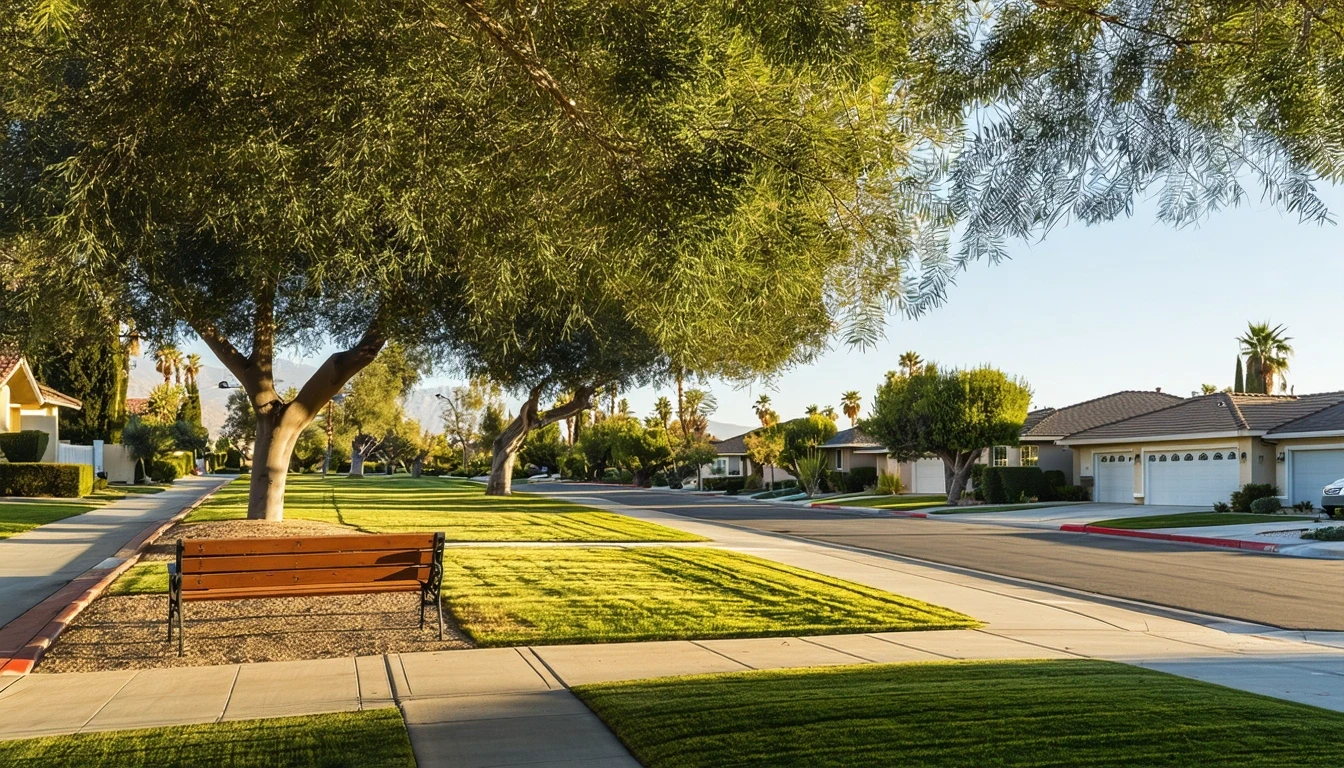
Poway operates as a commuter-oriented suburb within the San Diego metro, drawing households seeking family infrastructure, relative space, and distance from coastal density. The $911,500 median home value reflects this positioning: high enough to filter for income stability, but not quite at the premium tier of nearby coastal enclaves. What shapes the market here isn’t scarcity of land—it’s demand from households willing to trade proximity for square footage, school access, and a quieter residential character.
The regional price parity index of 179 confirms that Poway’s costs sit well above the national baseline, a pattern driven by Southern California’s broader housing pressure and wage structure. Median household income of $135,605 per year suggests the market has calibrated around dual-income professional households, but that income level doesn’t eliminate cost strain—it just shifts the question from “can I afford to be here” to “which tradeoffs make sense.”
Newcomers often misread Poway as a low-cost alternative to coastal San Diego. It isn’t. It’s a different cost structure: less density, more ownership orientation, and a housing stock that assumes car dependency in most neighborhoods despite pockets of walkable infrastructure near commercial corridors.
Renting in Poway
Median gross rent of $2,165 per month reflects the same regional premium that drives ownership costs, but renting here shifts exposure in predictable ways. Renters avoid property tax volatility, maintenance surprises, and the capital risk of a high-value asset in a market where price corrections can be sharp. What they gain in flexibility and predictable monthly outflow, they lose in control and equity accumulation.
Rental availability in Poway skews toward single-family homes and smaller apartment complexes rather than large multifamily developments, a pattern tied to the city’s low-density zoning and suburban form. This limits options for renters seeking walkable, transit-adjacent living—most rental stock assumes car ownership and reflects the cost structure of detached or semi-detached housing.
For households prioritizing monthly expenses predictability or uncertain about long-term plans, renting in Poway offers a rational path. The rent burden is real, but it’s stable, and it doesn’t require navigating the down payment barrier or ongoing ownership risk that defines this market.
Owning a Home in Poway
Ownership in Poway means absorbing costs that renters never see. Property taxes in California operate under Proposition 13, which caps assessment increases at 2% annually for existing owners but resets to market value at sale. For a home purchased at $911,500, the initial tax bill will reflect that full valuation, and while growth is capped afterward, the entry-year exposure is significant.
Insurance costs in inland Southern California tend to reflect wildfire risk and regional claims history, even in areas without direct fire exposure. Poway’s position near open space and chaparral increases insurer caution, and premiums adjust accordingly. Maintenance reserves must account for aging HVAC systems, roofing wear under intense sun, and landscape irrigation costs in a climate where outdoor watering drives summer utility spikes.
Homeowners associations exist in many Poway neighborhoods, particularly in planned developments. Where present, HOA fees add another fixed monthly cost, often covering landscaping, community amenities, and exterior maintenance. These fees are not optional, and they tend to rise over time as infrastructure ages and reserve requirements grow.
What ownership offers in return is control, predictability of housing cost growth (thanks to fixed-rate mortgages and Prop 13), and the ability to build equity in a market where home values have historically appreciated. For established owners with significant equity, Poway’s governance stability and family-oriented infrastructure make it a strong long-term hold. For first-time buyers, the entry barrier is steep, and the hidden costs can overwhelm households that budget only for principal and interest.
Apartment vs House in Poway — Cost Behavior Comparison
| Expense Category | Apartment | House |
|---|---|---|
| Utility Exposure (Cooling) | Moderate—shared walls reduce heat gain; smaller square footage limits AC load | High—detached structure and larger square footage drive sustained cooling costs in triple-digit summer heat |
| Outdoor Maintenance | None—landlord or HOA handles landscaping and irrigation | Significant—yard care, irrigation, and drought-tolerant landscaping require ongoing labor or service contracts |
| Governance Fees | Embedded in rent or minimal HOA pass-through | Direct HOA fees common in planned communities; covers amenities, exterior upkeep, and reserves |
| Property Tax | Indirect—landlord pays, cost reflected in rent | Direct—owner pays annual bill based on assessed value; resets to market value at purchase |
Why these categories? Poway’s inland climate, suburban housing stock, and HOA prevalence create cost differences that are structural, not incidental. Cooling dominates summer utility bills due to extended heat exposure, and detached homes bear the full load. Outdoor space is common in houses but requires water and upkeep in a semi-arid environment. Governance structures vary widely, and the property tax reset rule under Prop 13 makes ownership timing a significant cost factor. Categories omitted (e.g., parking, trash) don’t vary meaningfully in Poway’s context.
Utilities & Upkeep Differences
Electricity costs in Poway reflect both regional rates and climate-driven usage. At 33.22¢/kWh, the rate sits well above the national average, and summer cooling loads amplify the impact. Houses with older HVAC systems, poor insulation, or west-facing exposure see the highest bills, while apartments benefit from shared-wall thermal buffering and smaller conditioned space.
Natural gas at $22.96/MCF plays a smaller role here than in colder climates—heating demand is minimal, and gas usage typically centers on water heating and cooking. For houses with gas-powered systems, winter bills remain modest, but the infrastructure cost is fixed regardless of usage intensity.
Maintenance exposure in Poway is shaped by sun, heat, and water scarcity. Roofing materials degrade faster under intense UV exposure, exterior paint fades and cracks, and irrigation systems require regular adjustment to balance lawn health against water cost and conservation mandates. Renters avoid these costs entirely; homeowners must budget for them or accept declining property condition.
Rent vs Buy: Long-Term Exposure in Poway
Renting in Poway means accepting annual rent adjustments that track regional demand and landlord cost recovery, but it also means avoiding the capital risk of a $911,500 asset in a market where price corrections are possible. Rent growth is unpredictable year to year, but the monthly obligation remains clear, and there’s no exposure to assessment surprises, special levies, or deferred maintenance costs.
Ownership locks in the mortgage payment (for fixed-rate loans) and caps property tax growth under Prop 13, creating long-term cost predictability that renting cannot match. But ownership also concentrates risk: if home values decline, equity disappears; if major systems fail, the repair cost is immediate and non-negotiable. Over time, owners gain the option to eliminate housing payments entirely by paying off the mortgage, a form of financial control renters never access.
The tradeoff isn’t rent versus buy in the abstract—it’s volatility and flexibility versus control and equity accumulation. In Poway’s market, where entry costs are high and cost structure reflects regional premiums across the board, the decision hinges on household stability, income trajectory, and tolerance for concentrated financial risk.
How this article was built: In addition to public economic data, this article incorporates location-based experiential signals derived from anonymized geographic patterns—such as access density, walkability, and land-use mix—to reflect how day-to-day living actually feels in Poway, CA.
FAQs About Housing Costs in Poway
What drives the high home values in Poway?
Poway’s median home value of $911,500 reflects demand from households seeking space, family infrastructure, and access to the San Diego metro without coastal density. The city’s suburban form, school reputation, and relative governance stability attract buyers willing to pay a premium for those qualities, and the regional price environment supports that valuation.
Is renting in Poway cheaper than owning?
Renting avoids the down payment, property tax reset, and maintenance exposure that come with ownership, but at $2,165 per month, rent still reflects the same regional cost premium. Over the long term, ownership offers equity accumulation and payment stability that renting does not, but the entry barrier and ongoing hidden costs make ownership expensive upfront.
How do property taxes work for homeowners in Poway?
California’s Prop 13 caps annual assessment increases at 2% for existing owners, but when a home is sold, the assessed value resets to the purchase price. For a buyer paying $911,500, the first-year tax bill will reflect that full amount, and future growth will be limited. This creates a significant advantage for long-term owners but a steep entry cost for new buyers.
Do most homes in Poway have HOA fees?
Many neighborhoods in Poway, particularly planned developments, include homeowners associations that charge monthly or annual fees. These fees cover landscaping, amenities, and exterior maintenance, and they are mandatory where applicable. The amount and services vary widely, so buyers must confirm HOA obligations before purchasing.
How does Poway’s climate affect housing costs?
Poway’s inland location brings triple-digit summer heat, which drives sustained air conditioning usage and higher electricity bills. Detached homes bear the full cooling load, while apartments benefit from shared-wall insulation. Outdoor maintenance also reflects the semi-arid climate—irrigation, drought-tolerant landscaping, and sun-related wear on roofing and exterior surfaces all add to homeowner upkeep costs.
Making Housing Choices in Poway
Housing costs in Poway are shaped by regional premiums, suburban infrastructure, and a market calibrated around ownership rather than density. Renters gain flexibility and avoid hidden ownership costs, but they pay a significant monthly premium and build no equity. Owners gain control and long-term cost predictability, but they absorb entry barriers, tax resets, and maintenance exposure that can overwhelm unprepared households.
The decision isn’t binary—it’s structural. Households with stable income, long-term plans, and capital reserves fit ownership here. Those prioritizing mobility, avoiding risk, or unable to clear the down payment threshold fit renting. Either path works in Poway, but neither is cheap, and both require understanding moving companies logistics and what the cost structure actually includes beyond the headline number.