
What does it actually feel like to live in Oldsmar, FL? According to composite sentiment drawn from public discussion, about 74 out of 100 residents say they’re happy here — but that number hides a more nuanced story. Oldsmar tends to reward people who want suburban calm, strong family infrastructure, and pockets of walkability, while frustrating those who expect dense urban amenities, easy healthcare access, or minimal car dependency. The city’s vibe isn’t about whether it’s “good” or “bad” — it’s about whether the tradeoffs match what you actually need day-to-day.
What Defines Oldsmar’s Emotional Tone
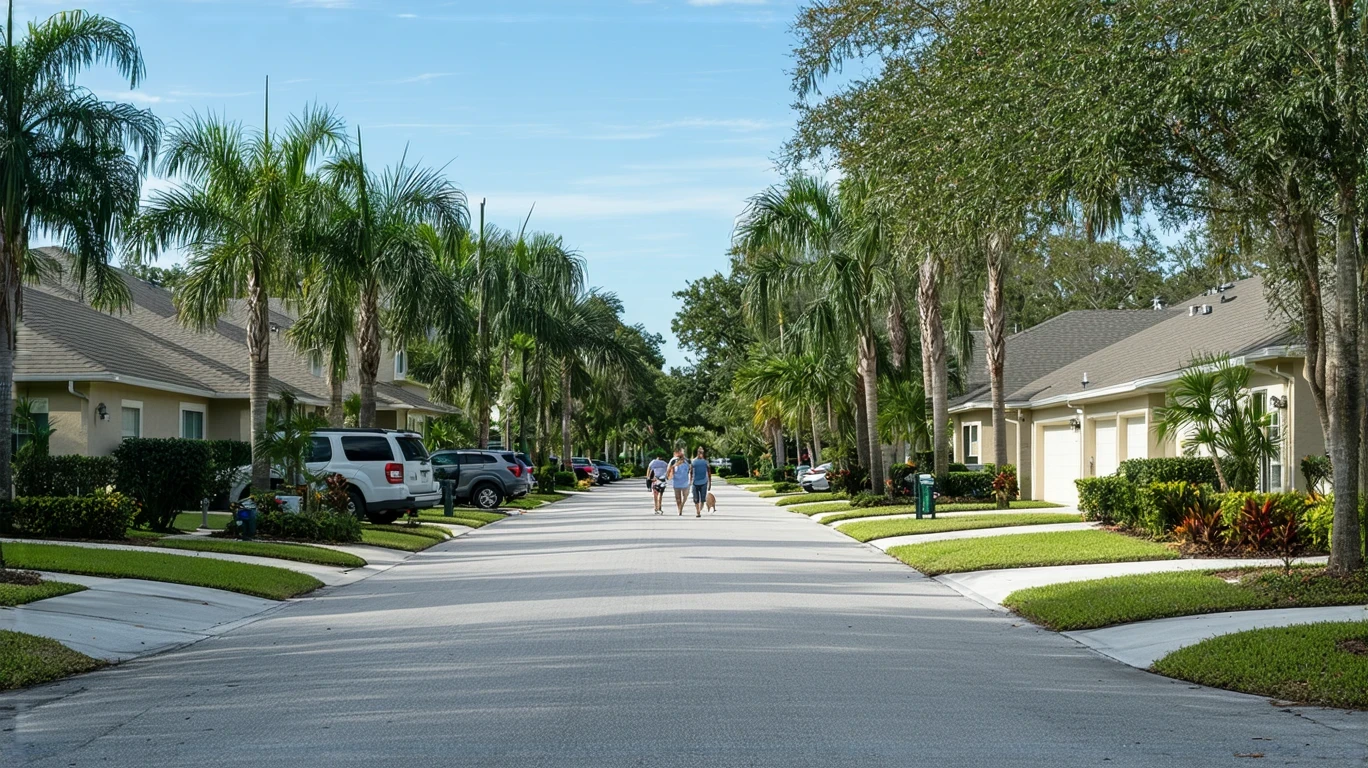
Oldsmar sits in the Tampa metro area with a residential character that leans suburban but isn’t entirely car-locked. The city has notable cycling infrastructure and walkable pockets where pedestrian-to-road ratios run high, yet errands and groceries tend to cluster along corridors rather than spreading evenly across neighborhoods. That creates a lived experience where some daily tasks feel convenient and others require planning and driving.
Families tend to feel well-supported here. Both school density and playground density meet meaningful thresholds, and parks are present throughout the city with water features adding to the outdoor environment. But healthcare access is limited — no hospital or clinics were detected locally, meaning anything beyond a pharmacy visit often means a drive to nearby hubs. For households with young kids or aging parents, that gap shows up as a recurring friction point.
The commute picture is mixed. The average is 25 minutes, but over 41% of workers face longer trips, and only 3.3% work from home. Bus service is available, but there’s no rail, so most people drive. Cycling infrastructure helps for recreation and short trips, but it doesn’t replace the car for most errands or work commutes. The result is a vibe that feels calm and family-friendly at home, but requires logistical planning and time in the car to access much of what you need.
Social Media Buzz in Oldsmar
On platforms like Facebook and Reddit, Oldsmar residents tend to express pride in the city’s quiet, family-oriented character, but also frustration with gaps in convenience and access. Conversations often revolve around balancing suburban comfort with the realities of car dependency and limited local services.
“It’s a great place to raise kids — parks, schools, safe streets. But if you need a doctor or want to grab groceries without driving, you’re out of luck.”
“I love the bike paths and the pockets where you can actually walk around. It’s not like some suburbs where you’re stuck in your car for everything. But it’s also not walkable everywhere, so you have to know where those spots are.”
“Commute is rough if you work in Tampa. It’s not terrible on paper, but the reality is you’re in the car a lot, and traffic can stretch that 25 minutes into something longer.”
The tone is rarely bitter, but it’s not blindly optimistic either. People seem to appreciate what Oldsmar offers while staying clear-eyed about what it doesn’t.
How Local Coverage Frames the City
Local news and community coverage tend to frame Oldsmar around themes of growth, family life, and infrastructure evolution. Headlines and story topics often reflect ongoing conversations about balancing residential character with access and convenience:
- “Families Find Strong School and Playground Access in Quiet Suburb”
- “Residents Weigh Convenience vs Calm as Errands Require Planning”
- “Cycling Infrastructure Grows, But Car Remains King for Most Trips”
- “Healthcare Access Gaps Send Residents to Nearby Hubs”
- “Commute Times Stretch for Many as Tampa Job Market Pulls Workers”
The framing isn’t alarmist, but it does reflect a city where tradeoffs are visible and frequently discussed. The narrative isn’t “everything’s perfect” or “everything’s broken” — it’s “this works if you’re prepared for what it asks of you.”
Review-Based Public Perception
On Google Reviews, Yelp, and Nextdoor-style platforms, Oldsmar tends to earn praise for safety, school quality, and outdoor access, while drawing mild criticism for limited walkable errands, healthcare gaps, and commute exposure.
People who wanted suburban comfort and family infrastructure tend to feel satisfied. Those who expected urban texture, dense amenities, or minimal driving tend to feel let down. The mismatch isn’t about the city failing — it’s about expectation alignment.
“We moved here for the schools and parks, and it’s been exactly what we hoped for. The kids are thriving, and the neighborhood feels safe and calm.”
“It’s fine if you like driving everywhere. But if you’re used to walking to the store or having a hospital nearby, you’ll notice what’s missing pretty quickly.”
“There are some nice pockets where you can bike or walk, but it’s not consistent. You have to live in the right spot, or you’re back to being car-dependent for everything.”
Newer planned areas tend to feel more polished and family-focused, while older pockets offer more character but sometimes less walkability. The variation matters, and locals recommend visiting specific neighborhoods before committing.
Comparison to Nearby Cities
| Dimension | Oldsmar | Palm Harbor | Safety Harbor |
|---|---|---|---|
| Overall Vibe | Suburban calm with selective walkability and strong family infrastructure | Larger suburban feel with more retail spread and similar car dependency | Smaller, more walkable downtown core with artsy, boutique character |
| Errands & Access | Corridor-clustered, requires planning and driving for most trips | More dispersed retail, similar car reliance but broader coverage | Compact downtown makes some errands walkable, but limited beyond core |
| Family Fit | Strong school and playground density, parks present throughout | Good family infrastructure, slightly more spread out | Fewer family-specific amenities, more oriented toward couples and retirees |
| Healthcare | Limited local access, requires driving to nearby hubs | Similar gaps, some clinics but no major hospital locally | Also limited, but closer proximity to regional medical centers |
| Commute Exposure | Moderate average, but over 40% face long trips | Similar commute pressure, slightly better highway access | Shorter average commute, closer to Tampa Bay employment centers |
Oldsmar sits between Palm Harbor’s larger suburban sprawl and Safety Harbor’s compact, walkable downtown. If you prioritize family infrastructure and don’t mind driving for errands and healthcare, Oldsmar tends to deliver. If you want a more walkable, boutique feel with less commute exposure, Safety Harbor may fit better. If you need broader retail access and don’t mind a more dispersed layout, Palm Harbor offers that trade. None of these cities is objectively “better” — they reward different priorities.
What Locals Are Saying
“We love it here. The parks are great, the schools are solid, and the neighborhood feels safe. But we drive everywhere — groceries, doctor visits, even just grabbing coffee. If you’re okay with that, it’s a good fit.”
“I work remotely, so the commute doesn’t hit me, but my partner drives to Tampa every day and it wears on them. The house and neighborhood are perfect, but the time in the car adds up.”
“There are some really nice spots where you can walk or bike, and we use them all the time. But it’s not like that everywhere, so you have to be intentional about where you live if that matters to you.”
“Healthcare is the big gap for us. We have young kids, and every time something comes up, we’re driving to Clearwater or Tampa. It’s not the end of the world, but it’s not convenient either.”
“It’s quiet, clean, and family-friendly. If that’s what you’re looking for, you’ll be happy. If you want nightlife, walkable restaurants, or a lot of cultural variety, this isn’t the place.”
“We moved from a denser area and honestly, we miss being able to walk to the store or grab dinner without getting in the car. Oldsmar is nice, but it’s definitely car-dependent.”
“The bike paths are a pleasant surprise. We use them more than we expected, and it makes the area feel less locked-in than some suburbs. But you still need a car for most things.”
Does Oldsmar Feel Like a Good Fit?
Oldsmar tends to work well for families who prioritize strong school and playground access, appreciate outdoor space, and don’t mind driving for errands and healthcare. It also fits people who value selective walkability and cycling infrastructure but understand that car dependency is still the baseline for most trips. The city rewards those who want suburban calm without complete isolation, and who are prepared for moderate to long commutes if they work outside the immediate area.
It tends to frustrate people who expect dense urban amenities, walkable daily errands, or easy access to healthcare without driving. It’s not a good match for those who want minimal car use, short commutes, or a lot of cultural and nightlife variety. The city’s vibe is steady and family-focused, not dynamic or textured.
If you’re considering Oldsmar, think carefully about your day-to-day logistics: how often you’ll need healthcare, how much you’ll commute, and whether you’re comfortable with corridor-clustered errands that require planning and driving. The city’s emotional tone isn’t about universal happiness — it’s about whether the specific tradeoffs align with your actual household needs. If they do, Oldsmar tends to feel like a solid, stable choice. If they don’t, the friction shows up quickly and doesn’t go away.
For a deeper look at what drives expenses in Oldsmar, or to explore housing tradeoffs and quality of life factors, those resources can help you build a clearer picture of whether this city matches your priorities.
How this article was built: In addition to public economic data, this article incorporates location-based experiential signals derived from anonymized geographic patterns—such as access density, walkability, and land-use mix—to reflect how day-to-day living actually feels in Oldsmar, FL.
The perspectives shown reflect commonly expressed local sentiment and recurring themes in public discussion, rather than individual accounts.