
Can you live in New Albany without a car? For most households, the answer is no—but the reality is more textured than a simple yes-or-no. New Albany’s development pattern creates pockets where walking, cycling, and limited bus service can handle some trips, but the city’s layout, errand distribution, and infrastructure still tilt heavily toward driving. Understanding transportation options in New Albany means recognizing where transit works, where it falls short, and how mobility shapes daily life in ways that go beyond the commute.
New Albany sits in a suburban context where the car remains the primary tool for getting around. The city’s pedestrian infrastructure is notably developed in certain areas—pedestrian-to-road ratios exceed typical suburban thresholds—but that doesn’t translate into transit independence for most residents. Food and grocery options cluster along corridors rather than spreading evenly across neighborhoods, and bus service, while present, operates on limited routes. The result is a city where some households can reduce car trips, but few can eliminate the need for one entirely.
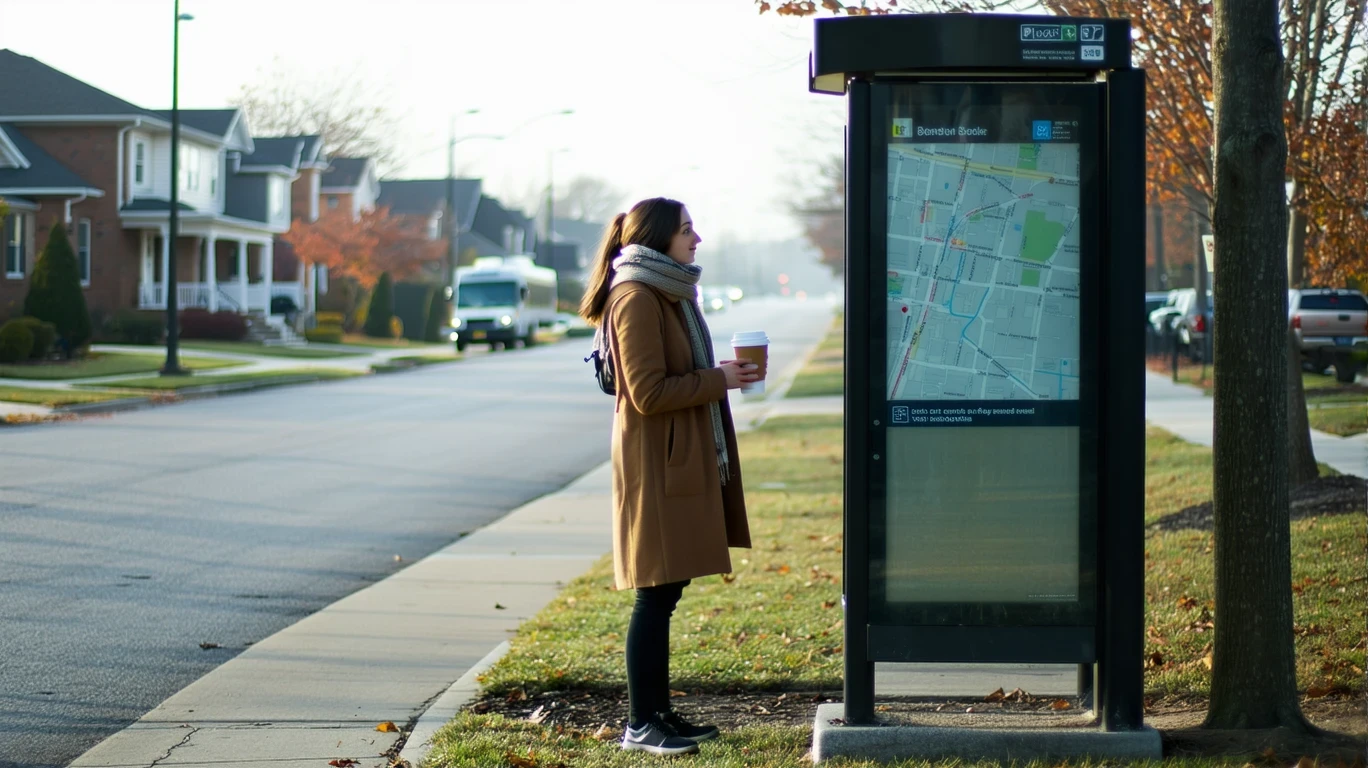
How People Get Around New Albany
Most people in New Albany drive. The city’s layout reflects a suburban development pattern where residential areas, commercial corridors, and employment centers are separated by distances that make walking or cycling impractical for many daily tasks. While some neighborhoods feature sidewalks, bike lanes, and mixed land use, these walkable pockets are not evenly distributed. Residents who live outside these zones—or who need to run errands across multiple parts of the city—find that a car is not optional.
What newcomers often misunderstand is that New Albany’s infrastructure supports some non-car trips, but not a car-free lifestyle. You might walk to a nearby park or bike to a local shop, but grocery runs, medical appointments, and commutes to Columbus or other regional employment centers almost always require driving. The city’s design assumes car ownership, and daily logistics reflect that assumption.
Public Transit Availability in New Albany
Public transit in New Albany centers around bus service. The system provides coverage along select routes, but frequency, span of service, and geographic reach are limited compared to denser urban cores. Transit works best for residents who live near bus stops and have schedules that align with service hours—typically commuters traveling to and from Columbus during peak periods.
Where transit falls short is in coverage and flexibility. Late-night service is minimal, weekend schedules are reduced, and many residential neighborhoods sit outside walking distance of the nearest stop. For households that need to make multi-stop trips—picking up kids, running errands, managing appointments—bus service rarely offers a practical alternative to driving. Transit exists, but it serves a narrow slice of daily mobility needs.
Driving & Car Dependence Reality
Driving is not just common in New Albany—it’s structurally necessary for most households. The city’s commercial activity clusters along corridors, residential density is low in many areas, and employment centers are often miles away. Parking is abundant, roads are designed for cars, and the time cost of driving is usually lower than the time cost of waiting for, transferring between, or walking to and from transit.
Car dependence here is tied to geography, not preference. Families with children, workers with irregular schedules, and households managing multiple daily stops find that driving offers control, predictability, and speed that transit cannot match. Even in neighborhoods with bike lanes and sidewalks, the distances involved and the need to carry groceries, equipment, or passengers make the car the default choice.
Commuting Patterns & Daily Mobility
Commuting in New Albany often means driving to Columbus or other nearby employment hubs. Some residents work locally, but many face regional commutes that require highway access and flexible timing. Single-job commutes are common, but so are multi-stop patterns—dropping off kids, stopping for errands, or managing appointments on the way to or from work.
Transit can handle straightforward, peak-hour commutes for residents near bus routes, but it struggles with anything more complex. Households that need to adjust schedules, make mid-day trips, or coordinate multiple stops find that the car offers the flexibility transit cannot. Proximity to employment centers and walkable corridors matters, but for most people, the commute still starts in the driveway.
Day-to-day mobility in New Albany reflects the tension between infrastructure and layout. Pedestrian-to-road ratios in parts of the city exceed typical suburban levels, and bike infrastructure is notably present, but food and grocery options cluster along corridors rather than spreading evenly across neighborhoods. That means even residents in walkable pockets often drive for weekly shopping or medical visits. The city supports some walking and cycling, but errands and appointments still pull most households back to the car. Transit exists, but it serves predictable, linear trips—not the multi-stop, time-sensitive logistics that define family and working life.
Who Transit Works For — and Who It Doesn’t
Transit in New Albany works best for single commuters with predictable schedules, who live near bus routes, and whose destinations align with service coverage. Renters in denser, mixed-use areas near transit stops can reduce car dependency more easily than homeowners in peripheral neighborhoods. Households without children, or with flexible work arrangements, may find bus service adequate for some trips.
Transit does not work well for families managing school drop-offs, grocery runs, and after-school activities. It struggles in neighborhoods far from bus routes, during off-peak hours, and for trips that require transfers or multiple stops. Homeowners in car-oriented subdivisions, workers with irregular hours, and anyone managing complex daily logistics will find that transit offers little practical help. The fit is narrow, and most households fall outside it.
Transportation Tradeoffs in New Albany
Choosing between transit and driving in New Albany is less about cost and more about control, time, and coverage. Driving offers flexibility—you leave when you want, stop where you need to, and adjust on the fly. Transit offers predictability in limited corridors, but it sacrifices speed, convenience, and geographic reach. For households that value spontaneity, manage multiple responsibilities, or live outside walkable zones, driving is not a tradeoff—it’s the only viable option.
The real tradeoff is not transit versus car, but proximity versus space. Living near bus routes and walkable corridors often means higher housing costs and less square footage. Living farther out means more space and lower prices, but it locks in car dependency and adds commute time. Neither choice eliminates transportation costs or friction—they just shift where the pressure lands.
FAQs About Transportation in New Albany (2026)
Is public transit usable for daily commuting in New Albany?
Public transit is usable for some daily commutes, particularly for residents near bus routes traveling to Columbus during peak hours. Coverage is limited, and service frequency does not support complex schedules or multi-stop trips. Most commuters rely on cars.
Do most people in New Albany rely on a car?
Yes. The city’s layout, errand distribution, and transit coverage make car ownership necessary for the majority of households. Even residents in walkable areas often drive for groceries, appointments, and regional commutes.
Which areas of New Albany are easiest to live in without a car?
Areas with higher pedestrian infrastructure, mixed land use, and proximity to bus routes offer the most potential for reducing car trips. However, even in these pockets, most households still need a car for errands and longer-distance travel.
How does commuting in New Albany compare to nearby cities?
New Albany’s commute patterns reflect its role as a suburban community with regional employment ties. Compared to denser cities with more robust transit, New Albany offers less coverage and frequency. Compared to more rural areas, it provides more infrastructure and bus access, but the car remains dominant across the region.
Can you bike for transportation in New Albany?
Cycling infrastructure is notably present in parts of New Albany, and bike-to-road ratios exceed typical suburban levels. Biking works for some trips—recreation, short errands, or commutes within walkable zones—but it does not replace the car for most households managing groceries, weather exposure, or longer distances.
How Transportation Fits Into the Cost of Living in New Albany
Transportation in New Albany is not just a line item—it’s a structural factor that shapes housing choice, time allocation, and daily flexibility. Living near transit or walkable corridors can reduce driving frequency, but it rarely eliminates the need for a car, and proximity often comes with higher housing costs. Living farther out lowers rent or mortgage payments but increases driving exposure and commute time. The tradeoff is not between cheap and expensive, but between proximity and space, control and coverage.
For a fuller picture of how transportation costs interact with housing, utilities, and what a budget has to handle in New Albany, the Monthly Budget article provides numeric context and household-level breakdowns. Transportation is one piece of a larger cost structure, and understanding how it fits helps clarify where flexibility exists and where it doesn’t.
New Albany’s transportation reality is not unusual for a suburban city, but it’s also not uniform. Some households can reduce car trips; most cannot eliminate them. The city’s infrastructure supports walking and cycling in pockets, but errands, commutes, and daily logistics still tilt toward driving. Knowing where you fall in that spectrum—and what tradeoffs you’re willing to make—matters more than assumptions about what “suburban” or “transit-accessible” should mean.
How this article was built: In addition to public economic data, this article incorporates location-based experiential signals derived from anonymized geographic patterns—such as access density, walkability, and land-use mix—to reflect how day-to-day living actually feels in New Albany, OH.