
Murrieta’s transportation reality is shaped by its low-rise suburban layout and the distances between daily destinations. While transportation options in Murrieta include bus service and pockets of pedestrian-friendly infrastructure, most residents rely on a car for the majority of their trips. The city’s development pattern—residential neighborhoods spread across a broad footprint with shopping and services clustered along major corridors—means that even short errands often require driving. Newcomers sometimes expect that proximity to Southern California’s denser metro areas translates to robust local transit, but Murrieta functions primarily as a car-first community with supplemental alternatives that work well for specific trips, not comprehensive daily mobility.
Understanding how people actually get around here requires looking beyond the presence of transit routes or bike lanes and focusing on how the city’s physical structure shapes movement. Murrieta has invested in pedestrian infrastructure in certain areas, and bus service does exist, but the practical question for most households is whether those options reduce the need for a car—or simply offer occasional convenience within a driving-dominant lifestyle.
How People Get Around Murrieta
Driving is the backbone of daily mobility in Murrieta. The city’s layout—low-rise residential blocks separated from commercial corridors by distances that feel walkable on a map but less so in practice—means that most households depend on a car for work commutes, grocery runs, school drop-offs, and errands. Parking is generally abundant and free, which removes one of the friction points that makes driving less appealing in denser cities. For families managing multiple stops in a day or commuting to jobs outside Murrieta, the car provides flexibility and control that transit or biking cannot match.
That said, Murrieta does have walkable pockets. Certain neighborhoods feature well-developed pedestrian infrastructure—sidewalks, crosswalks, and connectivity that make it feasible to walk to nearby parks, schools, or local shops. The pedestrian-to-road ratio in parts of the city exceeds typical suburban norms, meaning that some residents can incorporate walking into their routines for specific trips. But these pockets are exceptions, not the rule. Most of Murrieta’s residential areas are separated from grocery stores, medical offices, and other daily destinations by distances or road configurations that make walking impractical, especially when carrying items or managing time constraints.
Biking exists as an option in some areas, with dedicated infrastructure present along select routes. The bike-to-road ratio sits in a moderate range, indicating that cycling is viable for residents who live near those corridors and are comfortable sharing space with cars on less-protected streets. But biking in Murrieta is more recreational than utilitarian for most households. The distances, heat during much of the year, and lack of comprehensive protected networks mean that biking rarely replaces driving for errands or commutes—it supplements it for those who prioritize it.
Public Transit Availability in Murrieta
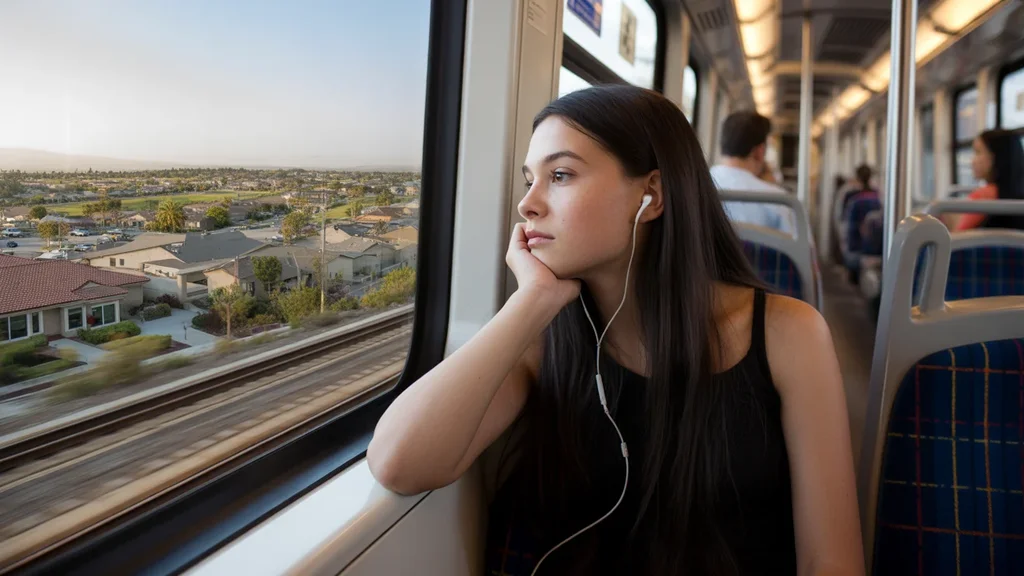
Public transit in Murrieta centers around bus service. The presence of bus stops throughout the city indicates that transit is available, but the structure of that service reflects the realities of a suburban layout. Buses in Murrieta tend to work best for residents who live near major corridors and whose destinations align with the routes and schedules. For someone commuting to a job along a main road or traveling to a regional hub, the bus can be a practical option. For someone trying to manage multiple errands across different parts of the city, or traveling outside peak hours, transit becomes less viable.
Transit coverage in Murrieta is corridor-focused, not neighborhood-comprehensive. This means that while some areas have reasonable access to stops, others require a car just to reach the bus. The city’s development pattern—residential subdivisions branching off from central arteries—creates gaps that transit cannot easily fill without frequent, flexible routing. Late-night and weekend service is typically more limited, which narrows the window during which transit can serve as a primary mobility tool.
For households evaluating whether they can rely on transit in Murrieta, the key question is not whether buses exist, but whether the specific routes and schedules align with their daily patterns. A renter living near a main corridor and working a standard schedule may find transit workable for commuting. A family managing school pickups, grocery runs, and weekend activities will almost certainly need a car.
Driving & Car Dependence Reality
Car dependence in Murrieta is not a preference—it’s a structural outcome of how the city is built. The distance between home and daily destinations, the limited coverage of transit, and the lack of dense mixed-use neighborhoods mean that most households cannot function without at least one vehicle. For families, two cars are common, particularly when adults work in different directions or children’s activities require simultaneous trips.
Parking is rarely a constraint. Residential properties typically include driveways or garages, and commercial areas provide ample surface lots. This removes one of the costs—both financial and logistical—that makes car ownership burdensome in denser cities. But it also reinforces the driving pattern: when parking is easy and free, and transit or walking adds significant time or inconvenience, the car becomes the default for nearly every trip.
The tradeoff is exposure to fuel costs, maintenance, insurance, and the time spent in the car. Murrieta’s layout means that even local trips can involve several miles of driving, and commutes to jobs in nearby cities or metro areas add substantial distance. The car provides flexibility and control, but it also locks households into a cost structure that scales with usage and is vulnerable to fuel price swings.
Commuting Patterns & Daily Mobility
Commuting in Murrieta often means leaving the city. Many residents work in nearby cities or regional employment centers, which requires a car and exposes them to traffic patterns on major highways. The commute is typically structured around a single job location, with the car serving as the primary—and often only—viable option. For households with two working adults, managing overlapping schedules and vehicle access becomes a logistical consideration.
Daily mobility extends beyond the work commute. Parents managing school drop-offs, grocery runs, medical appointments, and extracurriculars face a multi-stop pattern that transit cannot accommodate. The car allows households to chain errands efficiently, but it also means that nearly every activity requires driving. For retirees or residents working from home, the frequency of trips may decrease, but the reliance on a car for each trip remains.
Proximity to work or services does not eliminate driving in Murrieta—it reduces the distance driven. Even residents who live in walkable pockets or near bus routes typically own a car for trips that fall outside those narrow corridors. The question is not whether to drive, but how much.
Who Transit Works For — and Who It Doesn’t
Transit in Murrieta works best for individuals with predictable schedules, destinations along major routes, and the flexibility to build their day around bus timing. A single adult commuting to a job near a transit corridor, or a student traveling to a nearby campus, may find that the bus meets their needs for that specific trip. But transit does not work well for households managing multiple stops, off-peak travel, or destinations in residential areas far from main roads.
Renters living in apartments near central corridors have better access to transit than homeowners in subdivisions on the city’s edges. But even with proximity to a bus stop, the limited frequency and coverage mean that most renters still own a car for trips that transit cannot serve. The bus becomes a supplement, not a replacement.
Families, particularly those with children, face the greatest mismatch between transit availability and daily needs. School schedules, extracurriculars, grocery trips, and medical appointments require the flexibility and capacity that only a car provides. For these households, transit is not a realistic primary option—it is, at best, an occasional alternative for specific trips.
Retirees and older adults may find transit useful for certain errands, particularly if they live near routes and prefer not to drive. But the lack of comprehensive coverage and the physical demands of waiting for and boarding buses in Murrieta’s heat limit its appeal for this group as well.
Transportation Tradeoffs in Murrieta
The choice between driving and transit in Murrieta is not a balanced tradeoff—it is a question of whether transit can meet a specific need within a broader car-dependent lifestyle. Driving offers flexibility, control, and the ability to manage complex schedules and multiple stops. It allows households to live anywhere in the city and access any destination without waiting or transferring. The cost is exposure to fuel prices, maintenance, insurance, and the time spent behind the wheel.
Transit offers a lower direct cost for individual trips and removes the need to navigate traffic or find parking. But it requires living near a route, aligning schedules with bus timing, and accepting longer travel times for most trips. For the majority of Murrieta households, transit cannot replace the car—it can only reduce the number of trips driven, and only for residents whose circumstances align with the available service.
Walking and biking offer similar tradeoffs. In the pockets where infrastructure supports them, they provide low-cost, flexible mobility for short trips. But those pockets are limited, and the distances and heat make walking or biking impractical for most errands or commutes. These modes work as supplements within a car-primary lifestyle, not as replacements.
How this article was built: In addition to public economic data, this article incorporates location-based experiential signals derived from anonymized geographic patterns—such as access density, walkability, and land-use mix—to reflect how day-to-day living actually feels in Murrieta, CA.
FAQs About Transportation in Murrieta (2026)
Is public transit usable for daily commuting in Murrieta?
Public transit in Murrieta can work for daily commuting if your job is located along a major bus route and your schedule aligns with service hours. For residents commuting to regional employment centers or managing multiple stops, transit becomes less practical. Most commuters in Murrieta rely on a car for flexibility and coverage.
Do most people in Murrieta rely on a car?
Yes. Murrieta’s suburban layout, the distance between residential areas and daily destinations, and the limited coverage of transit mean that the vast majority of households depend on at least one car. Two-car households are common, particularly for families managing work commutes and children’s activities.
Which areas of Murrieta are easiest to live in without a car?
Neighborhoods near major corridors with bus service and higher pedestrian infrastructure offer the best chance of reducing car dependence, though even in these areas most residents still own a vehicle. Living without a car entirely in Murrieta is difficult unless your work, errands, and social life align closely with transit routes and walkable distances.
How does commuting in Murrieta compare to nearby cities?
Commuting in Murrieta is similar to other suburban cities in the Inland Empire: car-dependent, with distances and traffic patterns that favor driving over transit. Compared to denser coastal cities, Murrieta offers easier parking and less congestion, but fewer transit alternatives. Compared to more rural areas, Murrieta has better bus service, though it remains limited relative to urban centers.
Can you bike for errands in Murrieta?
Biking is possible in some areas where dedicated infrastructure exists, but it is not practical for most errands across the city. The distances, heat, and gaps in protected bike networks mean that cycling works best for recreation or short trips within specific neighborhoods, not as a primary mode of transportation.
How Transportation Fits Into the Cost of Living in Murrieta
Transportation in Murrieta is not just a line item—it is a structural factor that shapes where you can live, how you manage time, and what flexibility you have in daily life. A Month of Expenses in Murrieta: What It Feels Like provides numeric context for how transportation costs fit into the broader household budget, but the decision value of understanding mobility in Murrieta goes beyond dollars.
Car dependence means that households must plan for vehicle ownership, fuel exposure, and the time spent driving. It also means that proximity to work or services reduces travel distance but rarely eliminates the need for a car. Transit and walkable pockets offer limited relief for specific trips, but they do not fundamentally change the transportation structure for most residents.
For newcomers evaluating Murrieta, the key question is not whether you can avoid a car—it is whether the tradeoffs of car dependence (cost, time, flexibility) align with your household’s priorities and income. Murrieta’s layout rewards those who value space, parking ease, and suburban living, but it requires accepting that nearly every trip will involve driving. Understanding that reality before committing to a lease or purchase helps ensure that the city’s transportation structure supports your daily life rather than complicating it.
—