
“It’s a really nice place to raise kids, but if you’re looking for things to do on a Friday night, you’ll be driving somewhere else.” That single sentence, repeated in various forms across local forums and review sites, captures the essential tension of life in Murrieta: comfort and safety traded against texture and spontaneity.
Murrieta sits in the southwestern corner of Riverside County, part of the Inland Empire sprawl that has absorbed waves of families seeking affordable suburban space—though “affordable” has become a relative term as median home values approach $568,000. The city’s vibe reflects its relatively recent growth: planned neighborhoods with parks and playgrounds, wide streets designed for cars, and a community identity still forming around what it wants to be versus what it left behind.
The Emotional Landscape of Murrieta
The dominant sentiment in Murrieta is one of satisfied pragmatism. People who moved here for family-friendly infrastructure, newer homes, and outdoor access tend to feel they made the right call. The city delivers on parks—green space access is well-integrated throughout, with density exceeding typical suburban thresholds. Playgrounds are moderately distributed, and the low-rise building character creates a visual openness that many associate with “room to breathe.”
But that same openness comes with tradeoffs. Murrieta’s urban form is car-oriented at its core, even though walkable pockets exist in parts of the city. Errands tend to cluster along commercial corridors rather than being woven into neighborhoods, which means daily life involves planning around driving. For households that value spontaneity—grabbing coffee on foot, walking to dinner, browsing shops without a parking strategy—Murrieta can feel limiting.
The city’s transit infrastructure is bus-only, and bike presence is confined to some pockets with medium bike-to-road ratios. This isn’t a place where you can easily live without a car, and that reality shapes who thrives here and who feels friction. Remote workers and families with flexible schedules often describe Murrieta as “exactly what we needed.” Young professionals, singles, and anyone craving urban texture tend to describe it as “nice, but not for me.”
What People Are Talking About Online
Murrieta’s social media presence—across Facebook neighborhood groups, Reddit threads, and local X conversations—reveals a community that is protective of its suburban character but occasionally restless about what’s missing. Recurring themes include:
- Safety and schools: Frequent pride in low crime perception and family-oriented amenities, though school density is below low thresholds in some areas
- Commute fatigue: Complaints about drive times to jobs in San Diego, Orange County, or Riverside
- Dining and nightlife gaps: Frustration that “everything closes early” and “you have to drive to Temecula for anything interesting”
- Growth anxiety: Tension between welcoming new amenities and worrying about traffic, crowding, and losing the “small-town feel”
Composite sentiments capture the tone:
“We love the parks and the neighborhood vibe, but I wish there was more to do without getting in the car every single time.”
“It’s clean, it’s safe, the schools are decent. But it’s also kind of boring if you’re not in the ‘settle down and raise kids’ phase.”
“Murrieta is what you make of it. If you want quiet and space, it’s great. If you want culture and walkability, look elsewhere.”
The conversation is rarely angry—it’s more wistful. People aren’t fleeing Murrieta; they’re negotiating what they gave up to get what they wanted.
How Local Coverage Frames the City
Local news and community blogs tend to frame Murrieta through the lens of growth, identity, and infrastructure catch-up. Coverage doesn’t dwell on crisis or controversy; instead, it reflects a city in transition, figuring out how to absorb new residents without losing the suburban appeal that attracted them in the first place.
Typical topic buckets include:
- “New Retail and Dining Options Arrive Along Key Corridors”
- “Community Debates What Growth Should Look Like”
- “Residents Weigh Convenience vs Quiet”
- “Family Events and Outdoor Activities Draw Crowds”
- “Traffic and Commute Concerns Rise with Population”
The tone is generally optimistic but cautious—celebrating new amenities while acknowledging that infrastructure (roads, schools, healthcare access) is still catching up. There’s no hospital in Murrieta, only clinics, which becomes a talking point for families weighing emergency preparedness.
Review-Based Public Perception
On platforms like Google Reviews, Yelp, and Nextdoor-style forums, Murrieta earns praise for what it is and criticism for what it isn’t. The mismatch often comes down to expectations:
Common praise:
- Clean, well-maintained neighborhoods with newer housing stock
- Abundant parks and outdoor recreation options
- Family-friendly atmosphere with visible playgrounds and community events
- Perceived safety and low-key suburban rhythm
Common complaints:
- Limited walkability outside specific pockets; errands require driving
- Lack of diverse dining, entertainment, and nightlife options
- Long commutes for those working outside the Inland Empire
- High housing costs relative to amenities and job proximity
- Few options for transit-dependent or car-free lifestyles
Newer planned areas tend to receive higher marks for cohesion and amenities, while older pockets are described as quieter but less polished. The city’s mixed land use—residential and commercial zones are present—means some neighborhoods feel more integrated than others, but true walkable urbanism remains rare.
How Murrieta Compares to Nearby Cities
| Dimension | Murrieta | Temecula | Menifee |
|---|---|---|---|
| Overall Vibe | Quiet suburban, family-focused, still forming identity | More established, wine country tourism, livelier dining scene | Newer, more affordable, less polished infrastructure |
| Walkability | Pockets exist but car-dominant overall | Old Town offers walkable core; rest is car-oriented | Minimal walkable areas, heavily car-dependent |
| Dining & Nightlife | Limited; corridor-clustered, early closures | Stronger variety, wine bars, weekend activity | Sparse; mostly chain options |
| Housing Costs | High for suburban context | Comparable or slightly higher | Somewhat lower, trade-off in amenities |
| Parks & Outdoors | Well-integrated, high park density | Good access, plus wine country trails | Growing but less developed |
Murrieta sits between Temecula’s more developed identity and Menifee’s rawer affordability. If you want a bit more to do without leaving town, Temecula offers a livelier scene—but you’ll pay for it. If you’re prioritizing space and lower entry costs, Menifee trades polish for savings. Murrieta occupies the middle: comfortable, clean, family-friendly, but still figuring out its personality beyond “safe and suburban.”
What Locals Are Saying
“We moved here from Orange County for the space and the schools. The parks are amazing, and our kids are outside every day. But yeah, date night means driving to Temecula or even back to OC sometimes.”
— Family with young children, newer planned neighborhood
“I work remotely, so the commute thing doesn’t hit me. For me, Murrieta is perfect—quiet, safe, and I’m not paying LA prices. But I can see why someone who has to drive to San Diego every day would burn out.”
— Remote tech worker, early 30s
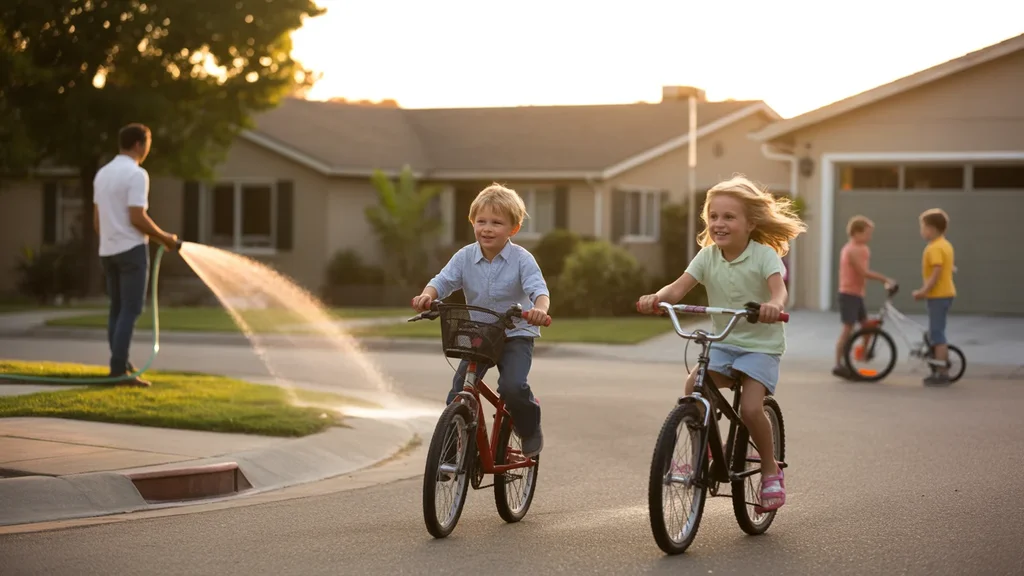
“It’s fine. It’s just… fine. If you’re looking for culture or spontaneity, this isn’t it. But if you want a yard, good neighbors, and a place where your kids can ride bikes, it delivers.”
— Long-time resident, older pocket near central Murrieta
“I thought I’d love the suburban quiet, but I miss being able to walk to a coffee shop or grab dinner without planning around parking. Everything here requires a car, and that gets old.”
— Single professional, renting, considering moving closer to urban core
“Murrieta is what we wanted after years in the city. We’re done with noise and crowds. This feels like we can finally relax. The tradeoff is we drive more, but that’s worth it for us.”
— Retiree couple, moved from Los Angeles area
“The healthcare thing worries me a little—no hospital here, just clinics. For routine stuff it’s fine, but I think about what happens in an emergency. Temecula has one, but that’s still a drive.”
— Parent of three, mid-40s
“It’s a great place if you’re in a certain life stage. If you’re not, it can feel like you’re waiting for your life to start happening somewhere else.”
— Young professional, planning to move within two years
Does Murrieta Feel Like a Good Fit?
Murrieta doesn’t try to be everything to everyone, and that clarity is both its strength and its limitation. The city works best for households that prioritize space, safety, parks, and family infrastructure over walkability, nightlife, and urban texture. It rewards people who are comfortable with car dependency and who see driving as a reasonable trade for quieter streets and newer homes.
It tends to frustrate those who crave spontaneity, cultural variety, or the ability to live without a car. The city’s corridor-clustered errands accessibility and limited transit options mean daily life requires planning and driving. For young professionals, singles, or anyone seeking a more urban rhythm, Murrieta can feel like a placeholder rather than a destination.
The emotional profile is one of comfortable compromise: people here tend to know what they gave up and feel okay about it, as long as the tradeoff delivers on the promise of family-friendly suburban calm. When it doesn’t—when commutes stretch too long, when housing costs climb without corresponding amenities, when the lack of walkable texture starts to grate—the restlessness shows up in online forums and quiet plans to move closer to work or culture.
If you’re considering Murrieta, the question isn’t “Is it happy?”—it’s “Does this tradeoff match what I need right now?” For families in the settling-down phase, remote workers seeking space, and households willing to drive for convenience, the answer is often yes. For those who need urban energy, transit access, or walkable daily life, the answer is usually no—or at least, not yet.
To understand how Murrieta’s costs and logistics play out day-to-day, explore A Month of Expenses in Murrieta: What It Feels Like for a breakdown of where money goes and how households manage the financial texture of suburban living. If you’re weighing housing pressure and what it takes to secure a place here, that guide covers availability, competition, and the compromises people make. And for a broader sense of what “enough” looks like in Murrieta—beyond just dollars—Living Comfortably in Murrieta: What ‘Enough’ Actually Means explores the quality-of-life factors that shape whether this city feels like home or just a stopping point.
How this article was built: In addition to public economic data, this article incorporates location-based experiential signals derived from anonymized geographic patterns—such as access density, walkability, and land-use mix—to reflect how day-to-day living actually feels in Murrieta, CA.
The perspectives shown reflect commonly expressed local sentiment and recurring themes in public discussion, rather than individual accounts.