

Which city wins on cost? For households weighing Murrieta against Chino Hills in 2026, the answer depends less on total spending and more on where financial pressure concentrates. Both cities sit in California’s Inland Empire, share the same regional price environment, and require similar strategies for managing utilities and transportation. But housing costs diverge sharply, and the infrastructure supporting daily life—schools, parks, errands, healthcare—shapes how the same income feels in each place.
This isn’t a contest between cheap and expensive. It’s a comparison of cost structures: Murrieta offers lower entry barriers and more predictable housing exposure, while Chino Hills demands higher upfront investment but delivers stronger family-oriented infrastructure. The better choice depends on which costs dominate your household budget, how much flexibility you need, and whether you’re optimizing for space, access, or long-term stability.
Below, we break down housing, utilities, groceries, transportation, taxes, and lifestyle fit—not to declare a winner, but to explain where each city creates pressure, where it offers relief, and which households feel the difference most acutely.
Housing Costs: Entry Barriers and Ongoing Obligations
Housing is where Murrieta and Chino Hills diverge most sharply. Murrieta’s median home value sits at $567,700, while Chino Hills reaches $776,200—a difference that translates directly into down payment requirements, mortgage obligations, and property tax exposure. For renters, the gap is smaller but still meaningful: Murrieta’s median gross rent is $2,150 per month, compared to $2,575 per month in Chino Hills. Both figures reflect single-family home rentals or larger apartments, not studio or one-bedroom units.
The structural difference matters most for households entering the market. In Murrieta, a conventional 20% down payment requires roughly $113,540, while Chino Hills demands approximately $155,240. That $41,700 gap represents months or years of additional savings for many buyers. Once inside, monthly mortgage obligations scale similarly: higher principal in Chino Hills means higher interest costs, higher property tax assessments, and less room for income volatility. Murrieta’s lower entry point doesn’t eliminate housing pressure—it shifts the burden from qualification to ongoing management.
For renters, the $425 monthly difference between cities compounds over time, but it also reflects different housing stock. Chino Hills skews toward larger single-family homes with more square footage, while Murrieta offers a broader mix of attached and detached units. Renters prioritizing space per dollar may find Murrieta more forgiving; those seeking newer construction or specific school access may accept Chino Hills’ premium. Neither city offers abundant small-unit rental inventory, so single adults and couples often pay for more space than they need.
| Housing Type | Murrieta | Chino Hills |
|---|---|---|
| Median Home Value | $567,700 | $776,200 |
| Median Gross Rent | $2,150/month | $2,575/month |
| Typical Down Payment (20%) | ~$113,540 | ~$155,240 |
Housing takeaway: First-time buyers and households with limited savings face lower barriers in Murrieta. Chino Hills requires higher income to qualify and sustain mortgage obligations, but delivers access to neighborhoods with denser family infrastructure. Renters sensitive to monthly cash flow will feel Chino Hills’ premium more acutely, while those prioritizing school quality or park access may view the difference as a tradeoff rather than a penalty.
Utilities and Energy Costs: Same Rates, Different Exposure
Murrieta and Chino Hills share identical utility rate structures: electricity costs 30.29¢/kWh and natural gas runs $22.96/MCF in both cities. The difference in household utility bills comes not from pricing, but from home size, age, and cooling demands. Inland Empire summers drive air conditioning usage for months, and larger homes—more common in Chino Hills—amplify that exposure. A 2,500-square-foot single-family home will cost more to cool than a 1,800-square-foot attached unit, even at the same rate per kilowatt-hour.
Seasonality dominates utility cost behavior in both cities. Summer cooling can double or triple baseline electricity usage, while winter heating (primarily natural gas) adds moderate but predictable expense. Homes built after 2010 typically include better insulation and more efficient HVAC systems, reducing peak-month volatility. Older homes—more prevalent in Murrieta’s earlier-developed neighborhoods—may experience sharper seasonal swings. Chino Hills’ newer construction stock offers some insulation against extreme bills, but larger floor plans and vaulted ceilings can offset efficiency gains.
Household size and daily routines also shape utility exposure. Families running multiple loads of laundry, keeping lights on in several rooms, and cooling bedrooms overnight will see higher baseline usage than single adults or couples. Apartments and townhomes with shared walls reduce heating and cooling surface area, lowering costs regardless of city. Renters in multi-unit buildings may find utilities more predictable, while single-family homeowners face greater variability tied to weather extremes and home maintenance.
Utility takeaway: Households moving into larger, detached homes in Chino Hills should expect higher cooling costs during summer months, even with identical rates. Murrieta’s mix of attached and detached housing offers more flexibility for households seeking lower utility exposure. In both cities, home age and square footage matter more than location—newer, smaller homes deliver the most predictable bills.
Groceries and Daily Expenses: Access, Density, and Spending Habits
Murrieta and Chino Hills share the same regional price parity index (103), meaning grocery staples cost roughly the same in both cities when shopping at comparable stores. The difference lies in how food and grocery establishments are distributed. Murrieta shows higher food establishment density—restaurants, cafes, and prepared food options concentrated along commercial corridors—while Chino Hills exceeds on grocery density, offering more supermarket access relative to population. Both patterns fall into the “corridor_clustered” category, meaning errands require intentional trips rather than walkable convenience.
For households prioritizing cost control, grocery strategy matters more than location. Big-box retailers, discount chains, and warehouse clubs operate in both cities, offering identical pricing on bulk staples. The difference emerges in convenience spending: Murrieta’s higher restaurant density may tempt frequent takeout, while Chino Hills’ supermarket access supports larger, less frequent shopping trips. Families managing weekly meal planning will find both cities workable, but those prone to last-minute dining out may face higher cumulative costs in Murrieta simply due to proximity and variety.
Single adults and couples often spend more per capita on groceries than families, not because prices differ, but because smaller households can’t leverage bulk purchasing as effectively. In both cities, proximity to discount grocers and willingness to drive for deals determine monthly spending more than the city itself. Prepared foods, coffee runs, and convenience store purchases add up quickly in either location, especially for households with unpredictable schedules or long commutes that encourage grab-and-go habits.
Groceries takeaway: Price-conscious households will find similar grocery costs in both cities when shopping strategically. Murrieta’s restaurant density may increase convenience spending for households that default to takeout, while Chino Hills’ supermarket access supports disciplined meal planning. The real difference isn’t price—it’s how access patterns interact with household routines and spending discipline.
Taxes and Fees: Predictable Burdens, Variable Structures
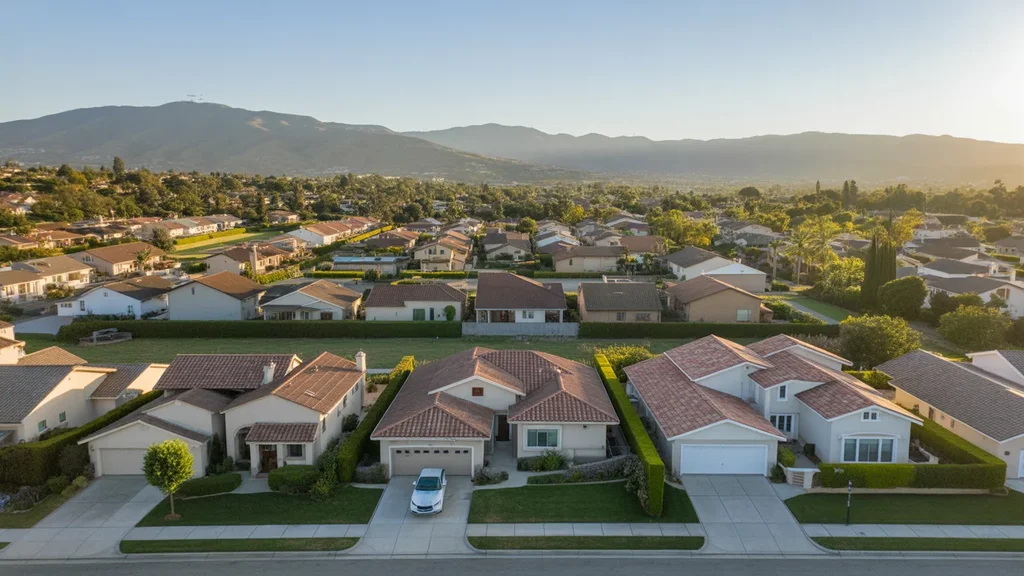
Property taxes in both Murrieta and Chino Hills follow California’s Proposition 13 framework, capping assessed value increases at 2% annually and setting the base rate near 1% of purchase price. Because Chino Hills’ median home value is higher, property tax obligations are correspondingly higher—not due to rate differences, but due to the larger tax base. A home purchased for $776,200 in Chino Hills generates roughly $7,762 annually in base property tax, compared to $5,677 for a $567,700 home in Murrieta. Special assessments, Mello-Roos districts, and local bonds can add to this base, and newer developments in both cities often carry supplemental fees.
Sales tax rates are set at the county and state level, so both cities share the same consumption tax burden on retail purchases, dining, and goods. The difference in tax exposure comes from homeownership duration and housing turnover. Long-term residents benefit from Proposition 13’s assessment cap, keeping property taxes predictable even as market values rise. Recent buyers pay taxes based on current purchase prices, making Chino Hills’ higher entry cost a permanent tax liability until the home is sold.
HOA fees vary widely within both cities, depending on neighborhood amenities and development age. Some communities bundle landscaping, trash, and shared infrastructure into monthly fees; others charge minimally or not at all. Renters typically don’t pay HOA fees directly, but landlords may pass costs through in rent pricing. Homeowners should verify HOA obligations before purchase, as fees can range from negligible to several hundred dollars monthly, adding meaningful ongoing expense regardless of city.
Taxes and fees takeaway: Chino Hills’ higher home values translate directly into higher property tax obligations, even at identical rates. Long-term homeowners in both cities benefit from assessment caps, while recent buyers face higher exposure. HOA fees vary by neighborhood rather than city, making due diligence essential for buyers prioritizing predictable monthly obligations.
Transportation and Commute Reality
Both Murrieta and Chino Hills are car-oriented cities with walkable pockets scattered throughout residential and commercial zones. Pedestrian infrastructure exists—sidewalks, crosswalks, and pathways—but daily errands, work commutes, and school runs typically require a vehicle. Bus service operates in both cities, but frequency and coverage are limited compared to urban transit systems. Neither city offers rail access, and commuting to job centers in Orange County, Los Angeles, or San Diego means long drives on congested freeways.
Gasoline costs $5.84/gal in both cities, reflecting California’s higher fuel taxes and environmental regulations. Households commuting 25 miles round-trip daily will consume roughly one gallon per day, translating to significant monthly fuel expense. Chino Hills sits closer to the 60 and 71 freeways, offering slightly faster access to some Inland Empire and Orange County job centers, while Murrieta’s position farther south extends commute times to coastal employment hubs. Time spent commuting isn’t just a lifestyle cost—it’s a financial one, measured in fuel, vehicle wear, and lost flexibility.
Cycling infrastructure exists in pockets of both cities, but bike-to-road ratios remain modest. Households hoping to reduce car dependence will find limited practical alternatives for work commutes, though recreational biking and local errands may be manageable in specific neighborhoods. The real transportation cost difference between cities comes from commute distance and frequency, not from infrastructure or fuel pricing.
Transportation takeaway: Both cities require car ownership for daily life. Chino Hills offers marginally better freeway access for some commutes, but the difference is measured in minutes rather than structural cost savings. Households with long commutes to coastal job centers will face similar fuel and time costs in either city, making remote work or flexible schedules more valuable than location.
Cost Structure Comparison
Housing dominates the cost experience in both Murrieta and Chino Hills, but the pressure shows up differently. Murrieta’s lower home values and rents reduce entry barriers and monthly obligations, making it more accessible for first-time buyers, single-income households, and families prioritizing financial flexibility. Chino Hills’ higher housing costs demand stronger income qualification and larger cash reserves, but deliver access to neighborhoods with denser school and playground infrastructure—a tradeoff that matters most to families with school-age children.
Utilities introduce similar volatility in both cities, driven by home size and seasonal cooling demands rather than rate differences. Larger homes in Chino Hills amplify summer electricity costs, while Murrieta’s mix of attached and detached housing offers more options for households seeking lower exposure. Neither city offers a structural advantage on energy costs—the difference comes from housing choices within each market.
Groceries and daily expenses follow regional pricing, with access patterns shaping spending habits more than location. Murrieta’s higher restaurant density may increase convenience spending for households prone to takeout, while Chino Hills’ supermarket access supports disciplined meal planning. Price-conscious households can manage costs effectively in either city by shopping strategically and limiting impulse purchases.
Transportation patterns matter more than most households expect. Both cities require cars, both face high gas prices, and both impose time costs on commuters heading to coastal job centers. The difference isn’t infrastructure—it’s how far you drive and how often. Households with remote work options or local employment will feel less transportation pressure in either city, while daily commuters face similar exposure regardless of location.
For households sensitive to overall living costs, the decision isn’t about which city is cheaper—it’s about which cost structure aligns with your income, savings, and priorities. Murrieta fits households prioritizing lower entry barriers and financial flexibility. Chino Hills fits households willing to absorb higher housing costs in exchange for stronger family infrastructure and newer housing stock. Both cities demand careful budgeting; neither offers escape from California’s high cost environment.
How the Same Income Feels in Murrieta vs Chino Hills
Single Adult
For a single adult, housing becomes the first non-negotiable expense, and Murrieta’s lower rent and home prices create more breathing room. Flexibility exists in grocery spending, dining out, and discretionary purchases, but both cities require car ownership, eliminating transportation savings. Chino Hills’ higher housing costs compress flexibility earlier, leaving less margin for lifestyle spending or emergency savings. Time costs remain similar—commutes, errands, and car dependence shape daily routines in both cities.
Dual-Income Couple
A dual-income couple can absorb Chino Hills’ higher housing costs more easily, but the tradeoff is front-loaded: larger down payments, higher monthly obligations, and less flexibility if one income disappears. Murrieta offers more predictable housing exposure, freeing up cash flow for travel, savings, or discretionary spending. Utility costs scale with home size in both cities, so couples choosing smaller homes face similar energy bills. The real difference is how much income gets locked into housing versus how much remains flexible for other goals.
Family with Kids
Families face the sharpest tradeoff between housing cost and infrastructure access. Chino Hills delivers denser school and playground availability, reducing the friction of managing school-age children’s schedules and activities. Murrieta offers adequate family infrastructure but at lower density, meaning more driving and planning to access the same resources. Housing costs in Chino Hills demand higher combined income, but families prioritizing school quality and park access may view the premium as non-negotiable. Grocery and utility costs scale with household size in both cities, but housing determines how much flexibility remains for everything else.
Decision Matrix: Which City Fits Which Household?
| Decision factor | If you’re sensitive to this… | Murrieta tends to fit when… | Chino Hills tends to fit when… |
|---|---|---|---|
| Housing entry + space needs | Down payment size, monthly mortgage obligations, rental affordability | You need lower entry barriers and more financial flexibility after housing costs | You can absorb higher upfront costs in exchange for access to newer, larger homes |
| Transportation dependence + commute friction | Commute distance, fuel costs, time spent driving | Your job is local or remote, minimizing daily commute exposure | You can tolerate long commutes or work closer to Chino Hills’ freeway access points |
| Utility variability + home size exposure | Summer cooling costs, seasonal bill swings, home efficiency | You prioritize smaller or attached homes that reduce cooling surface area | You accept higher cooling costs in exchange for larger floor plans and newer construction |
| Grocery strategy + convenience spending creep | Impulse takeout, meal planning discipline, access to discount grocers | You can resist restaurant density and maintain disciplined grocery shopping | You prioritize supermarket access and plan larger, less frequent shopping trips |
| Fees + friction costs (HOA, services, upkeep) | Predictability of monthly obligations, bundled services, special assessments | You seek neighborhoods with minimal HOA fees and lower property tax bases | You accept higher property taxes and potential HOA fees for access to maintained amenities |
| Time budget (schedule flexibility, errands, logistics) | Driving time to schools, parks, groceries, healthcare | You can tolerate moderate driving for errands and family activities | You prioritize denser school and playground access to reduce daily logistics friction |
Lifestyle Fit: Infrastructure, Access, and Daily Rhythms
Both Murrieta and Chino Hills offer low-rise to mixed-height suburban environments with parks, schools, and commercial corridors distributed throughout. Murrieta’s park density exceeds high thresholds, with water features adding recreational variety. Chino Hills matches that green space access while delivering stronger school and playground density—a meaningful difference for families managing multiple children’s schedules. Both cities blend residential and commercial land use, but errands remain car-dependent, with grocery stores and restaurants clustered along main roads rather than walkable from most neighborhoods.
Healthcare access in both cities is limited to clinics and pharmacies; neither offers a hospital within city limits. Routine medical care is available locally, but emergencies or specialized treatment require drives to nearby regional facilities. This similarity means healthcare access doesn’t differentiate the cities—it’s a shared constraint that affects all households equally.
Commute times vary by destination, but both cities impose time costs on workers heading to coastal job centers. Chino Hills sits closer to the 60 freeway, offering faster access to parts of Orange County and the eastern Los Angeles basin. Murrieta’s southern position extends commutes to San Diego and coastal Orange County but shortens drives to Temecula and southern Riverside County employment. Remote work or flexible schedules reduce this friction significantly, making lifestyle fit less about commute infrastructure and more about how often you need to leave the city.
Quick fact: Both cities feature integrated park access with water features, supporting outdoor recreation without requiring long drives.
Quick fact: Chino Hills’ school and playground density exceeds Murrieta’s, reducing the logistical burden for families with school-age children.
Frequently Asked Questions
Is Murrieta or Chino Hills cheaper for renters in 2026?
Murrieta’s median gross rent is $2,150 per month, compared to $2,575 per month in Chino Hills. The $425 monthly difference reflects housing stock and market demand, not quality or size disparities. Renters prioritizing lower monthly obligations will find Murrieta more accessible, while those seeking newer construction or specific school access may accept Chino Hills’ premium.
How do housing costs in Murrieta compare to Chino Hills for first-time buyers in 2026?
Murrieta’s median home value is $567,700, requiring roughly $113,540 for a 20% down payment. Chino Hills’ median home value is $776,200, demanding approximately $155,240 down. The $41,700 difference represents a significant savings barrier, making Murrieta more accessible for buyers with limited cash reserves or single-income households.
Do Murrieta and Chino Hills have different utility costs in 2026?
Both cities share identical electricity rates (30.29¢/kWh) and natural gas prices ($22.96/MCF). Differences in household utility bills come from home size, age, and cooling demands, not from rate structures. Larger homes in Chino Hills typically face higher summer cooling costs, while smaller or attached homes in Murrieta reduce energy exposure.
Which city is better for families with kids, Murrieta or Chino Hills, in 2026?
Chino Hills offers stronger school and playground density, reducing the logistical burden of managing children’s schedules and activities. Murrieta provides adequate family infrastructure but at lower density, requiring more driving to access schools and parks. Families prioritizing convenience and access may prefer Chino Hills, while those seeking lower housing costs with acceptable infrastructure may choose Murrieta.
Are groceries more expensive in Chino Hills than Murrieta in 2026?
Both cities share the same regional price parity index (103), meaning grocery staples cost roughly the same at comparable stores. The difference lies in access patterns: Murrieta has higher restaurant density, potentially increasing convenience spending, while Chino Hills offers denser supermarket access, supporting disciplined meal planning. Price-conscious households can manage costs effectively in either city.
Conclusion
Murrieta and Chino Hills don’t offer a simple cheaper-versus-expensive comparison. They present different cost structures that fit different households. Murrieta’s lower housing entry barriers, more predictable monthly obligations, and adequate family infrastructure suit first-time buyers, single-income households, and families prioritizing financial flexibility. Chino Hills’ higher housing costs demand stronger income and larger cash reserves, but deliver denser school and playground access, newer housing stock, and mixed-height neighborhoods that appeal to families willing to absorb upfront expense for long-term infrastructure benefits.
The decision hinges on which costs dominate your household budget and which tradeoffs you’re willing to accept. If housing flexibility and lower entry barriers matter most, Murrieta fits. If you can sustain higher housing obligations in exchange for stronger family infrastructure and newer construction, Chino Hills fits. Both cities require cars, both face high gas prices, and both impose similar utility and grocery costs when controlled for home size and shopping habits. Neither city escapes California’s high cost environment—they simply distribute pressure differently. Choose based on where you need flexibility and where you can tolerate constraint, not on which city promises lower total spending.
How this article was built: In addition to public economic data, this article incorporates location-based experiential signals derived from anonymized geographic patterns—such as access density, walkability, and land-use mix—to reflect how day-to-day living actually feels in Murrieta, CA.