
Moving from Washington, DC to Tampa, FL: What Changes in 2026
Introduction
The move from Washington, DC to Tampa, FL represents one of the more common southward relocations along the East Coast. People consider this move for a variety of reasons: escaping federal government career cycles, seeking warmer winters, reducing housing pressure, or simply trading the density and formality of the capital region for a more relaxed Gulf Coast rhythm.
What typically changes is not just temperature. The structure of daily life shifts—commute patterns, housing form, seasonal routines, and the way costs distribute across your monthly obligations. Washington operates as a high-income, high-density metro with robust public transit and walkable urban cores. Tampa spreads wider, leans heavily on car infrastructure, and organizes around neighborhoods that feel more suburban even close to downtown.
This guide explains where cost pressure moves, how housing markets behave differently, and what daily logistics look like after the transition. It does not calculate total affordability or declare a winner. Instead, it helps you understand which expenses grow, which shrink, and who tends to feel the shift most acutely.
Cost Pressure Shifts
Washington, DC operates as one of the most expensive metros in the United States, driven by high federal salaries, limited housing supply within the District, and a large population of high-earning professionals. Tampa’s cost structure tends to apply less pressure on housing entry and ongoing rent, but introduces different expense patterns tied to car dependence, cooling costs, and insurance exposure.
Housing costs in Washington—whether renting or buying—typically consume a larger share of household budgets, especially for those living in the District proper or close-in suburbs like Arlington or Bethesda. Tampa’s housing market has seen significant appreciation in recent years, but entry barriers for both rental and ownership remain lower than Washington’s. The tradeoff often appears in transportation: Washington’s Metro system and walkable corridors reduce car dependency, while Tampa’s sprawl makes vehicle ownership nearly mandatory for most households.
Utility costs shift noticeably. Washington experiences four distinct seasons with moderate heating and cooling needs. Tampa’s subtropical climate means air conditioning runs nearly year-round, and summer electricity bills can surprise newcomers. Conversely, heating expenses essentially disappear. Grocery and dining costs tend to feel similar in both cities, though Washington’s concentration of high-end restaurants and international markets can push food budgets higher for those who engage with that scene.
Insurance exposure increases in Tampa. Homeowners and renters face higher premiums due to hurricane risk, and auto insurance rates in Florida consistently rank among the highest in the nation. These are ongoing obligations that don’t always appear in initial cost comparisons but accumulate meaningfully over time.
Housing & Neighborhood Patterns
Washington’s housing market is defined by scarcity and competition. The District itself offers limited inventory, and desirable neighborhoods command premium prices. Renters often face bidding wars, and homebuyers compete in a market where properties frequently sell above asking price. Walkable neighborhoods near Metro stations—Dupont Circle, Capitol Hill, Columbia Heights—carry the highest premiums, while more affordable options push into Maryland or Virginia suburbs, lengthening commutes.
Tampa’s housing market spreads across a much larger geographic footprint. Neighborhoods like Hyde Park, Seminole Heights, and South Tampa offer urban-style living with tree-lined streets and local shops, but most of the metro area consists of single-family subdivisions, townhome communities, and mid-rise apartment complexes. Entry costs for both rent and purchase tend to be lower than Washington, but the market has tightened considerably since 2020, and inventory remains constrained in desirable areas.
Ownership dynamics differ. Washington’s condo market is active, and many young professionals buy small units as entry points. Tampa’s ownership market skews toward single-family homes, often with HOA fees in newer developments. Property taxes in Florida benefit from homestead exemptions for primary residents, which can reduce ongoing costs for owners but don’t apply to renters or investment properties.
Neighborhood form affects daily costs in subtle ways. Washington’s density supports walking, biking, and transit, reducing the need for multiple vehicles. Tampa’s layout typically requires at least one car per adult, and many households find two vehicles necessary. Parking is abundant and usually free in Tampa, while Washington charges for street parking in most neighborhoods and garage spaces add hundreds of dollars monthly.
Lifestyle & Daily Rhythms
Daily life in Washington revolves around work schedules, Metro lines, and a culture shaped by government, policy, and international institutions. The pace feels fast, formal, and achievement-oriented. Social life often centers on professional networks, happy hours, and cultural institutions like the Smithsonian museums, Kennedy Center, and embassy events. Walkability is high in core neighborhoods, and many residents go days without driving.
Tampa’s rhythm is slower and more casual. The city’s identity ties to the waterfront, outdoor recreation, and a Gulf Coast lifestyle that prioritizes sunshine and leisure. Social life often involves boating, beach trips, and backyard gatherings. The dress code is more relaxed, and the professional culture—anchored by healthcare, finance, and tourism—feels less intense than Washington’s policy-driven environment.
Commute patterns shift dramatically. Washington’s Metro system, while imperfect, allows many residents to avoid car ownership entirely. Tampa has minimal public transit infrastructure, and most commutes happen by car on highways like I-275 and the Veterans Expressway. Rush hour congestion is common, and commute times can stretch long despite shorter geographic distances.
Climate exposure changes fundamentally. Washington’s four seasons bring cold winters, humid summers, and pleasant spring and fall months. Tampa’s subtropical climate means hot, humid summers with frequent afternoon thunderstorms, mild winters, and little seasonal variation. Outdoor activity is possible year-round in Tampa, but summer heat can be oppressive, and hurricane season (June through November) introduces a layer of risk and preparation that doesn’t exist in Washington.
Cultural and recreational access differs. Washington offers world-class museums, theater, and international dining, most of it free or low-cost. Tampa’s cultural scene is growing but smaller, with highlights like the Tampa Museum of Art, Straz Center, and Ybor City’s historic district. The tradeoff is proximity to beaches, state parks, and water-based recreation that Washington lacks entirely.
Relocation Logistics & Practical Friction
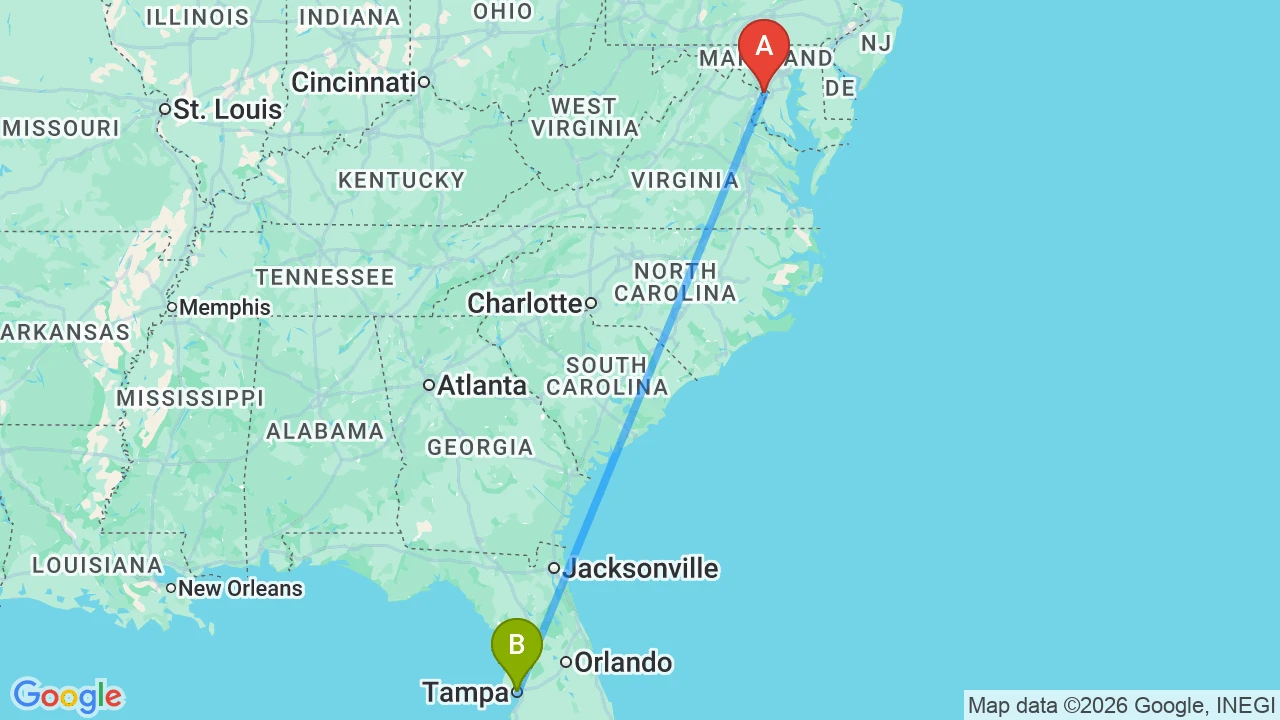
The move from Washington to Tampa covers roughly 900 miles and typically takes two days by road or a few hours by air. Most professional movers charge based on weight and distance, and the corridor is well-served by national moving companies. Driving yourself requires planning for overnight stops, and the route follows I-95 south through Virginia and the Carolinas before cutting west toward Florida’s Gulf Coast.
Timing matters. Summer moves in Tampa coincide with peak heat, humidity, and hurricane season, making late fall through early spring more comfortable for relocation. Washington’s winter weather can complicate moves between December and February, though snow is less predictable than Tampa’s summer storms.
Routine changes surprise many movers. Washington’s walkable neighborhoods and Metro access mean many residents never develop strong car habits. Tampa requires reorienting around driving, parking, and vehicle maintenance. Grocery shopping, errands, and social visits all assume car access, and the lack of sidewalks in many suburban areas makes walking impractical even for short distances.
Administrative tasks shift. Florida has no state income tax, which simplifies tax filing but shifts revenue collection to sales tax, property tax, and fees. Vehicle registration and driver’s license transfers must happen within 30 days of establishing residency, and Florida requires new residents to surrender out-of-state licenses. Auto insurance rates often increase, and homeowners insurance requires careful shopping due to hurricane exposure.
Social networks take time to rebuild. Washington’s transient professional population means many residents are also transplants, and social circles often form around work. Tampa’s population includes more long-term residents and families, and breaking into established social groups can take longer. Newcomers often find community through recreational activities, neighborhood associations, or professional organizations.
Frequently Asked Questions
- Is Tampa, FL cheaper than Washington, DC?
- Housing costs in Tampa typically apply less pressure than Washington, where rent and home prices rank among the highest in the nation. However, Tampa introduces higher transportation costs due to car dependency, elevated insurance premiums, and year-round cooling expenses. The shift is less about total cost and more about where expenses concentrate—Tampa reduces housing pressure but increases costs tied to vehicles, utilities, and climate risk.
- How do housing markets differ between Washington, DC and Tampa, FL?
- Washington’s housing market is constrained by limited inventory, high demand, and premium prices for walkable neighborhoods near Metro stations. Tampa’s market spreads across a larger area with more single-family homes and lower entry costs, though inventory has tightened since 2020. Washington favors condos and rowhouses in dense neighborhoods, while Tampa leans toward suburban subdivisions and townhome communities with HOA fees.
- What lifestyle differences do people notice when moving from Washington, DC to Tampa, FL?
- Daily life shifts from a fast-paced, transit-oriented, professionally intense environment to a slower, car-dependent, outdoor-focused lifestyle. Washington’s walkability and cultural density give way to Tampa’s sprawl, beach access, and casual social culture. The climate change is significant—Tampa’s year-round heat and humidity replace Washington’s four distinct seasons, and hurricane preparedness becomes a new routine.
- When is the best time of year to move to Tampa, FL?
- Late fall through early spring offers the most comfortable conditions, avoiding Tampa’s peak summer heat, humidity, and hurricane season, which runs from June through November. Moving during these months also aligns with lower demand for movers and rental inventory turnover. Summer moves are possible but require preparation for afternoon thunderstorms and oppressive heat.
- What are common challenges when relocating from Washington, DC to Tampa, FL?
- Adjusting to car dependency is the most frequent friction point, especially for those accustomed to Washington’s Metro and walkable neighborhoods. Higher auto and homeowners insurance costs surprise many newcomers, as do summer electricity bills from constant air conditioning. Rebuilding social networks takes time, and the lack of Washington’s cultural density and international flavor can feel isolating for some transplants.
- Who benefits most from moving from Washington, DC to Tampa, FL, and who might struggle?
- Remote workers, retirees, and families seeking lower housing costs and outdoor lifestyles tend to benefit most, especially those comfortable with car-dependent suburbs and year-round heat. People who rely on public transit, value walkable urban density, or thrive in Washington’s policy and cultural scene may struggle with Tampa’s sprawl and slower professional pace. Those with hurricane anxiety or sensitivity to heat and humidity should weigh climate exposure carefully.
Conclusion
The move from Washington, DC to Tampa, FL trades high housing costs and urban density for lower entry barriers, warmer weather, and a car-dependent suburban lifestyle. Housing pressure typically decreases, but transportation, insurance, and cooling costs rise. The professional intensity and cultural depth of the capital region give way to a more relaxed, outdoor-oriented Gulf Coast rhythm.
This move works best for those seeking relief from Washington’s cost structure, comfortable with driving as the primary mode of transportation, and drawn to year-round warmth and beach access. It presents challenges for those who value walkability, public transit, seasonal variety, and the cultural and professional density that define Washington’s identity.
Every relocation involves tradeoffs. Understanding where costs and lifestyle pressures shift—not just whether one city is “cheaper”—helps you decide whether Tampa’s structure aligns with your household’s priorities and routines.