
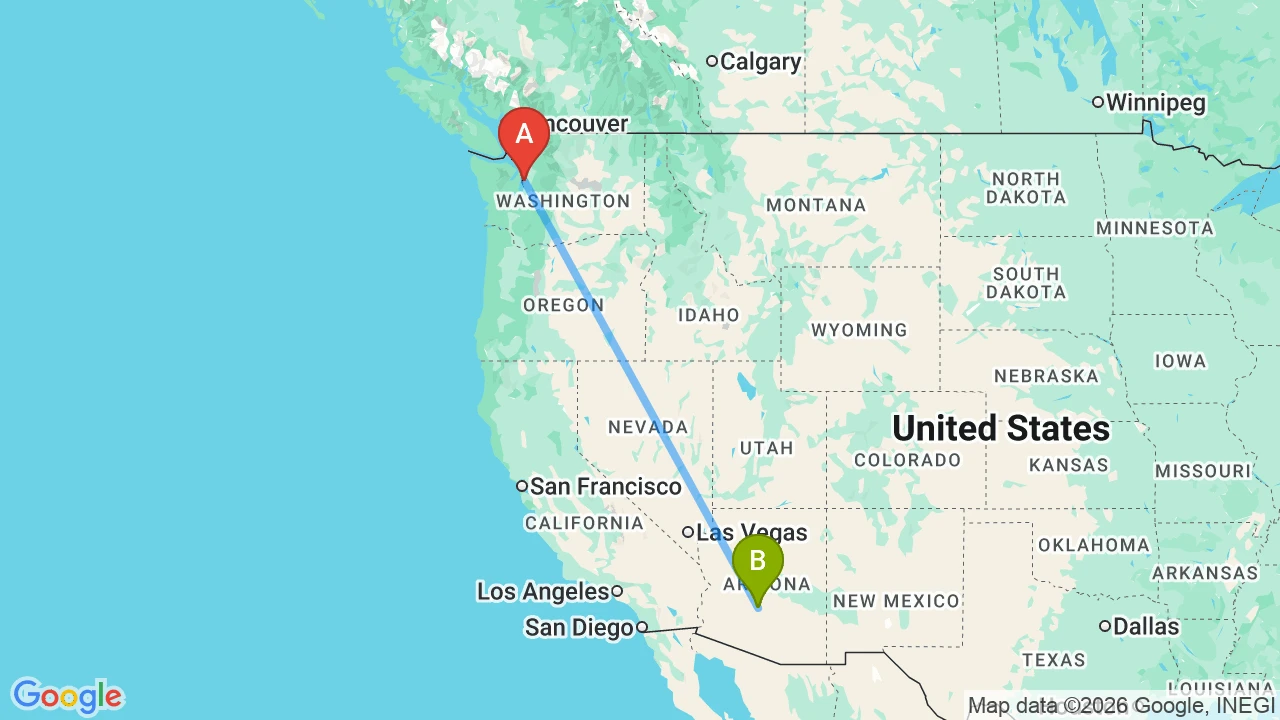
The move from Seattle to Phoenix represents one of the sharper lifestyle pivots available within the continental United States. It’s not just a change in address—it’s a fundamental reordering of how costs concentrate, how daily routines unfold, and what kinds of friction show up in household budgets. Seattle movers typically arrive in Phoenix chasing lower housing entry barriers, but the tradeoffs extend well beyond the purchase price or lease signature. Climate exposure inverts, transportation patterns restructure, and the rhythm of daily errands shifts in ways that aren’t always visible until you’re living it.
This guide explains where cost pressure moves when you relocate from Seattle to Phoenix in 2026, which household types tend to benefit, and where surprises most commonly emerge. It does not attempt to declare Phoenix “cheaper” or “better”—instead, it clarifies what changes, why it changes, and for whom those changes matter most.
Where Cost Pressure Concentrates Differently
Seattle’s cost structure is defined by its housing market. The median home value sits at $879,900, and median gross rent reaches $1,945 per month. Phoenix, by contrast, shows a median home value of $340,200 and median rent of $1,322 per month. The entry barrier to housing drops sharply, and for many movers, that single shift justifies the entire relocation.
But housing relief doesn’t mean universal cost relief. Phoenix’s electricity rate runs at 15.66¢/kWh, compared to Seattle’s 13.85¢/kWh—and Phoenix households face extended cooling seasons with triple-digit summer heat that can dominate utility bills for four to five months of the year. Seattle’s temperate climate rarely demands sustained air conditioning, so many households there treat cooling as optional. In Phoenix, it’s a baseline cost, and the intensity of summer exposure means utility bills can spike well above what Seattle residents are accustomed to during their mild summers.
Grocery costs also shift, though more subtly. Derived estimates suggest that staples like ground beef run around $7.09/lb in Phoenix compared to $7.56/lb in Seattle, and eggs come in at $2.87/dozen versus $3.06/dozen. These differences are modest on a per-item basis, but they reflect Phoenix’s lower regional price parity index (106 versus Seattle’s 113), which tends to ease pressure across many non-housing categories.
Transportation costs present a mixed picture. Phoenix gas prices average $2.98/gal, meaningfully lower than Seattle’s $3.93/gal. But Phoenix is a car-dependent metro where most households drive for nearly every errand, while Seattle offers walkable pockets, notable cycling infrastructure, and rail transit that allows some residents to avoid or minimize car ownership. The savings at the pump in Phoenix can be offset—or even reversed—by the necessity of owning, insuring, and maintaining a vehicle for every adult in the household.
Housing Markets and Neighborhood Form
Seattle’s housing market is vertically oriented, with substantial pedestrian infrastructure, mixed-use neighborhoods, and integrated green space. Phoenix, by contrast, is characterized by low-rise sprawl, where residential and commercial land uses are separated and daily errands typically require driving. This difference in urban form doesn’t just affect commute time—it reshapes the entire cost profile of daily life.
In Seattle, renters and owners in walkable neighborhoods can often reduce transportation costs by relying on transit, biking, or walking for routine errands. Grocery density is high, parks are integrated throughout the city, and rail transit provides a viable alternative to car ownership for some household types. Phoenix lacks that density. While food and grocery establishments are present, they tend to cluster along corridors rather than distributing evenly across neighborhoods, and the absence of rail transit outside limited light rail routes means most residents depend entirely on personal vehicles.
For buyers, Phoenix’s lower home prices translate to smaller mortgages, lower property tax bills, and reduced monthly obligations. But ongoing costs—especially cooling, water, and vehicle expenses—can accumulate in ways that Seattle homeowners don’t experience. Seattle’s housing costs are front-loaded; Phoenix’s are more distributed across the year, with seasonal spikes that require planning and budgeting discipline.
How Daily Rhythms and Lifestyle Patterns Shift
Seattle movers often describe Phoenix as feeling slower and more spread out. The average commute in Phoenix is 25 minutes, slightly shorter than Seattle’s 27 minutes, but the commute experience differs sharply. Seattle’s congestion is intense but geographically compressed; Phoenix’s sprawl means longer distances even when traffic flows freely. And because Phoenix lacks Seattle’s transit infrastructure, nearly every trip requires a car, which increases not just fuel costs but also wear, insurance premiums, and the cognitive load of route planning around heat exposure.
Phoenix’s pedestrian-to-road ratio is lower, and bike infrastructure is less prevalent. Errands that Seattle residents might handle on foot or by bike—picking up groceries, dropping off dry cleaning, meeting friends for coffee—become driving tasks in Phoenix. This shift doesn’t just add transportation costs; it changes the texture of daily life, making spontaneity harder and increasing the time cost of routine tasks.
Climate is the other major lifestyle variable. Seattle’s mild, overcast weather allows for year-round outdoor activity without extreme preparation. Phoenix’s summers are punishing, with extended periods of heat that restrict outdoor activity to early mornings and evenings. Households with children, pets, or outdoor hobbies often find themselves adjusting schedules around temperature rather than preference, and the need for climate-controlled indoor space becomes non-negotiable.
Where Relocation Friction Shows Up
The most common surprise for Seattle-to-Phoenix movers is the summer utility bill. Even households who budget carefully for the move often underestimate how much cooling costs can climb during peak heat months. Unlike Seattle, where heating is modest and cooling is rare, Phoenix households face sustained, high-intensity cooling demand that can double or triple monthly utility costs compared to winter baselines.
Another friction point is the loss of walkability. Seattle residents who rely on transit, biking, or walking for daily errands often don’t realize how much they’ve internalized that infrastructure until it’s gone. In Phoenix, the car becomes mandatory, and households that previously operated with one vehicle may find they need two. Insurance, registration, maintenance, and fuel costs all stack, and the convenience of car-free errands disappears.
Income dynamics also shift. Seattle’s median household income is $116,068 per year, compared to Phoenix’s $72,092 per year. For remote workers or retirees, this gap is irrelevant—they bring their income with them. But for movers seeking local employment, Phoenix’s lower wage floor can offset some of the housing savings, especially in industries where Seattle’s premium pay reflects cost-of-living adjustments that don’t transfer to Arizona markets.
Who This Move Tends to Favor
This relocation works best for households where housing costs dominate the budget and where car dependence is already the norm. Remote workers, retirees, and families priced out of Seattle’s homeownership market often find that Phoenix’s lower entry barriers unlock stability and equity-building opportunities that were inaccessible in the Pacific Northwest. The ability to buy a home—or rent a larger space—without stretching to the edge of affordability is a powerful draw, and for many movers, that single shift justifies the climate and lifestyle tradeoffs.
Phoenix also appeals to households that prefer driving over transit, value space over density, and prioritize low property taxes and predictable housing costs over walkable neighborhoods and temperate weather. The metro’s sprawl can feel liberating to families who want yards, garages, and separation from urban congestion, and the lower cost of entry makes it easier to secure those amenities without financial strain.
Who May Feel More Pressure After the Move
Households that rely on public transit, biking, or walking in Seattle often struggle in Phoenix. The loss of mobility options can feel isolating, especially for residents who don’t drive or who prefer not to. Car ownership becomes a prerequisite for participation in daily life, and the costs—both financial and logistical—can accumulate quickly.
Young professionals and creative-class workers who value Seattle’s density, cultural amenities, and walkable neighborhoods may find Phoenix’s sprawl disorienting. The metro lacks the concentration of arts venues, independent retail, and spontaneous street life that defines Seattle’s urban core, and the car-dependent layout makes casual social interaction harder to sustain.
Families with school-age children may also face adjustment challenges. While Phoenix offers strong family infrastructure—schools and playgrounds are present throughout the metro—the heat limits outdoor play for much of the year, and the lack of integrated green space means that parks and recreation often require driving rather than walking. Seattle’s temperate climate and dense park network allow for more spontaneous outdoor activity, and that loss can feel significant for households with active kids.
How this article was built: In addition to public economic data, this article incorporates location-based experiential signals derived from anonymized geographic patterns—such as access density, walkability, and land-use mix—to reflect how day-to-day living actually feels in Phoenix, AZ.
Frequently Asked Questions
- Does Phoenix feel more or less expensive than Seattle?
- Phoenix concentrates costs differently. Housing entry barriers drop sharply, but summer cooling costs, car dependence, and the need for climate-controlled space shift pressure to utilities and transportation. Households that prioritize homeownership and drive regularly tend to feel relief; those who rely on transit or prefer walkable neighborhoods may find Phoenix’s structure more expensive in time and convenience, even if dollar costs are lower.
- How do housing markets differ between Seattle and Phoenix?
- Seattle’s market is defined by high entry costs and vertical density, with median home values near $880,000 and rent near $1,945/month. Phoenix offers lower entry barriers—median home values around $340,200 and rent near $1,322/month—but sprawls horizontally, with separated land uses and car-dependent access. Seattle front-loads housing costs; Phoenix distributes them across utilities, transportation, and seasonal exposure.
- What feels different about daily life after moving from Seattle to Phoenix?
- The biggest shifts are climate and mobility. Phoenix summers dominate the calendar, restricting outdoor activity and driving up cooling costs. Car dependence replaces Seattle’s walkable neighborhoods and transit options, turning every errand into a driving task. The pace feels slower and more spread out, with less density, fewer spontaneous encounters, and more time spent in climate-controlled spaces or vehicles.
- When does the move from Seattle to Phoenix tend to feel easiest?
- Fall and winter relocations allow households to settle in before summer heat arrives, giving time to adjust routines, budget for cooling costs, and acclimate to car dependence without the immediate pressure of triple-digit temperatures. Spring moves work well for families aligning with school calendars, but summer arrivals can feel overwhelming as households navigate peak heat and utility spikes while still unpacking.
- What challenges do Seattle movers commonly face in Phoenix?
- The loss of walkability and transit surprises many movers, especially those who didn’t realize how much they relied on Seattle’s infrastructure. Summer utility bills often exceed expectations, and the need for a second vehicle can strain budgets. Socially, the sprawl makes casual meetups harder, and the heat limits outdoor activity for much of the year, which can feel isolating for households accustomed to Seattle’s temperate, park-rich environment.
- Who does this move work best for, and who may struggle?
- This move favors remote workers, retirees, and families seeking homeownership who are comfortable with car dependence and can absorb seasonal utility swings. It’s harder for transit-reliant households, young professionals who value walkable density, and families with young children who need year-round outdoor access. Phoenix rewards those who prioritize space and affordability over mobility and climate moderation.
Making the Decision
The Seattle-to-Phoenix move is not a simple cost arbitrage. It’s a fundamental restructuring of how daily life unfolds, where costs concentrate, and what kinds of friction households encounter. Housing relief is real and substantial, but it comes with tradeoffs in mobility, climate exposure, and the texture of daily routines. The move works best when those tradeoffs align with household priorities—when space, equity-building, and lower entry costs matter more than walkability, transit access, and temperate weather.
For deeper exploration of how costs behave in each metro, visit the Seattle cost of living hub and the Phoenix cost of living hub on IndexYard. Both hubs offer granular breakdowns of housing, utilities, transportation, and daily expenses, along with neighborhood-level context that can help refine your decision.