
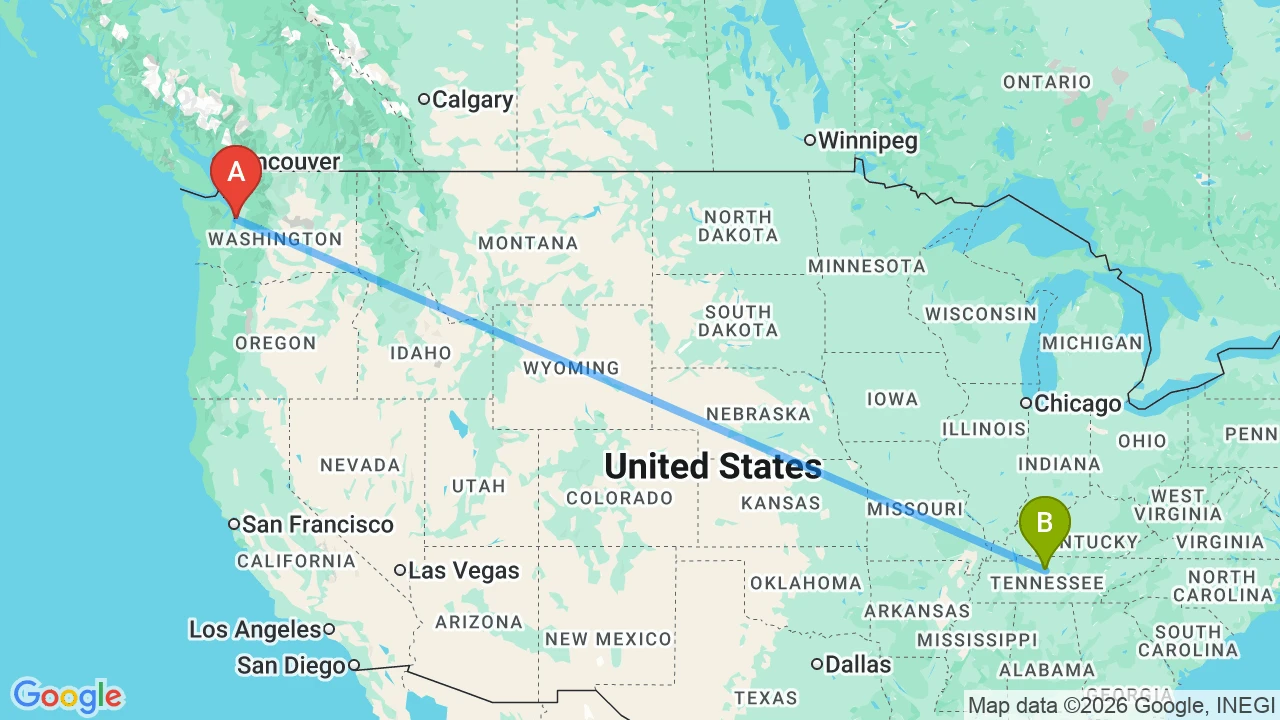
Moving from Seattle to Nashville represents one of the sharper lifestyle and cost recalibrations available within the U.S. relocation landscape. It’s not simply a question of whether Nashville is “cheaper”—though the regional price parity index does drop from 113 to 97—but rather where financial pressure concentrates, how daily routines reshape, and which household types find the transition smooth versus jarring.
This guide explains how costs behave differently between these two cities, where exposure increases or decreases, and what tends to surprise movers most. It does not predict your total budget or declare a financial winner. Instead, it maps the terrain so you can decide whether this move aligns with your priorities.
Cost Pressure Shifts: Where the Weight Moves
Seattle’s cost profile is dominated by housing entry barriers. The median home value of $879,900 and median gross rent of $1,945 per month create a high threshold for establishing residency, but once you’re in, many ongoing expenses—particularly transportation fuel at $3.85 per gallon and utilities—sit at or above national norms without being extreme. Nashville’s housing data is not available in the current feed, but the regional price parity suggests a lower baseline cost environment overall.
Where Nashville distinguishes itself is in the reduction of upfront housing pressure and the shift toward car-dependent logistics. Gas prices in Nashville sit at $2.54 per gallon, meaningfully lower than Seattle, but the lack of rail transit and the city’s sprawling form mean that driving becomes non-negotiable for most households. Seattle’s rail presence and high pedestrian-to-road ratio create viable alternatives to car ownership; Nashville does not offer that optionality.
Utility rates tell a similar story of modest relief. Electricity in Nashville runs 13.06¢/kWh compared to Seattle’s 14.06¢/kWh, and natural gas costs $20.33/MCF versus $24.71/MCF. These differences are directionally favorable but not transformative. The real shift comes in how you spend your time and money day-to-day: less on rent or mortgage, more on fuel and vehicle maintenance, and a different rhythm of errands and commuting.
Housing & Neighborhood Patterns: Entry vs. Ongoing Obligations
Seattle’s housing market imposes a steep entry cost but rewards those who can clear it with access to dense, mixed-use neighborhoods where daily needs are often within walking distance. The city’s more vertical building profile and integrated green space—park density exceeds high thresholds—mean that renters and owners alike can often manage without a car, or at least reduce vehicle dependence significantly.
Nashville’s housing market, by contrast, tends to distribute pressure differently. While upfront costs are generally lower, the city’s car-oriented infrastructure means that housing location decisions must account for commute exposure, fuel costs, and the time burden of driving to work, groceries, and services. Neighborhoods in Nashville are less likely to offer the pedestrian-friendly, errand-dense texture common in Seattle’s walkable pockets.
For renters, the shift often feels like trading rent pressure for transportation pressure. For prospective homeowners, Nashville may offer a more accessible entry point, but the ongoing obligation to own, insure, fuel, and maintain a vehicle becomes a fixed cost that Seattle households could sometimes avoid.
Lifestyle & Daily Rhythms: How Place Structure Shapes Time and Money
Seattle’s experiential texture is defined by walkable pockets, notable cycling infrastructure, and rail transit service. Food and grocery density exceeds high thresholds, meaning that daily errands can often be completed on foot or via short trips. This structure reduces the friction of routine tasks and creates a lifestyle where car ownership is optional for many households, particularly those living in core neighborhoods.
Nashville does not offer this optionality. The absence of rail transit and the lower density of pedestrian infrastructure mean that nearly all movement—commuting, errands, social plans—requires a car. This shift is not merely financial; it changes how you structure your day, how much time you spend in transit, and how much planning is required for routine tasks. Households accustomed to Seattle’s transit-rich, walkable environment often underestimate how much this change affects daily life.
Climate exposure also shifts, though both cities currently register similar winter temperatures (Seattle at 29°F, Nashville at 32°F). Seattle’s extended cool, damp seasons contrast with Nashville’s hot, humid summers, which drive higher cooling costs and longer air conditioning seasons. Heating exposure in Nashville is less intense than in many northern cities, but the summer cooling burden can be substantial, particularly in older or less-insulated housing stock.
Relocation Logistics & Practical Friction: What Surprises Movers Most
The most common surprise for Seattle-to-Nashville movers is the non-negotiable need for a car. In Seattle, particularly for those living in neighborhoods with strong transit access and high walkability, car ownership is a choice. In Nashville, it is a requirement. This means budgeting not only for a vehicle purchase or lease, but also for insurance, fuel, maintenance, and parking—costs that may have been minimal or absent in Seattle.
Another adjustment point is the loss of density-driven convenience. Seattle’s high food and grocery density means that running out of an ingredient or needing a last-minute item rarely requires significant planning. In Nashville, errands often require longer trips, and the rhythm of household logistics shifts toward batching tasks and planning routes. This is not inherently worse, but it is different, and it requires a recalibration of expectations.
Employment context also matters. Seattle’s unemployment rate of 4.1% is higher than Nashville’s 2.9%, suggesting a tighter labor market in Nashville. For those relocating with a job already secured, this is less relevant, but for those planning to job-hunt after arrival, Nashville’s lower unemployment rate may indicate stronger demand for labor, though this varies significantly by industry.
Frequently Asked Questions
- Does Nashville feel more or less expensive than Seattle?
- Nashville typically feels less expensive in terms of housing entry costs and some ongoing expenses like fuel and utilities, but the shift is not uniform. Transportation costs often rise due to mandatory car dependence, and the loss of Seattle’s walkable, transit-rich infrastructure means that convenience and time costs redistribute. The question is less about total expense and more about where pressure concentrates and whether that aligns with your household’s priorities and income structure.
- How do housing markets differ between Seattle and Nashville?
- Seattle imposes a high barrier to entry—median home values near $880,000 and rents near $1,945 per month—but rewards residents with dense, mixed-use neighborhoods and strong transit access. Nashville’s housing market generally offers lower entry costs, but neighborhoods tend to be more car-dependent, and the ongoing obligation to own and operate a vehicle becomes a fixed cost. Renters may feel less monthly pressure, but homeowners should account for the full cost of car ownership when comparing affordability.
- What feels different about daily life after moving from Seattle to Nashville?
- The most immediate change is the shift from optional to mandatory car use. Seattle’s walkable pockets, rail service, and high food density allow many households to minimize driving; Nashville’s sprawling form and lack of rail transit make driving essential for nearly all errands and commutes. The rhythm of daily life slows in some ways—less pedestrian bustle, more time in the car—and speeds up in others, particularly for those who value shorter commutes or less competition for housing.
- When does the move from Seattle to Nashville tend to feel easiest?
- Timing the move to avoid Seattle’s rainy season and Nashville’s peak summer heat can reduce logistical friction, but the bigger factor is employment and housing security. Moving with a job already in place and a clear sense of which Nashville neighborhoods align with your commute and lifestyle priorities tends to smooth the transition. Those who underestimate the need for a car or who expect Seattle-style walkability in Nashville often face a steeper adjustment curve.
- What are the most common challenges when relocating from Seattle to Nashville?
- The loss of transit optionality is the most frequently cited challenge, particularly for households that relied on Seattle’s rail and bus network. The shift to car dependence also means budgeting for vehicle costs that may have been minimal in Seattle. Another common friction point is the change in neighborhood texture—Nashville’s lower density and less integrated green space can feel isolating for those accustomed to Seattle’s pedestrian-rich, park-dense core neighborhoods.
- Who tends to benefit most from moving from Seattle to Nashville, and who may struggle?
- Households that prioritize lower housing entry costs, already own a car, and value a less competitive housing market tend to adapt most easily. Those who thrive in car-oriented, sprawling environments and who do not rely on public transit will find Nashville’s structure familiar and manageable. Conversely, households that valued Seattle’s walkability, transit access, and dense errand infrastructure—particularly those without a car or who prefer not to drive—often find Nashville’s car dependence and lower density challenging. Families with young children may appreciate Nashville’s strong family infrastructure, but the loss of Seattle’s integrated parks and pedestrian-friendly neighborhoods can be a tradeoff.
Conclusion: Tradeoffs, Not Totals
The Seattle-to-Nashville move is not a simple cost reduction. It is a reallocation of pressure: less on housing entry, more on transportation; less on rent, more on fuel and vehicle ownership; less pedestrian convenience, more driving necessity. For households that already own a car, value lower housing costs, and do not rely on transit or walkable neighborhoods, Nashville offers a structurally different but often more accessible cost profile.
For those who valued Seattle’s dense, transit-rich, pedestrian-friendly texture, the move requires a significant lifestyle recalibration. The question is not whether Nashville is “cheaper,” but whether the tradeoffs align with your priorities, your household structure, and your tolerance for car dependence.
Explore the full Seattle living guide and Nashville living guide for deeper context on neighborhoods, cost drivers, and household fit.
How this article was built: In addition to public economic data, this article incorporates location-based experiential signals derived from anonymized geographic patterns—such as access density, walkability, and land-use mix—to reflect how day-to-day living actually feels in Seattle, WA.